

Tested Applications
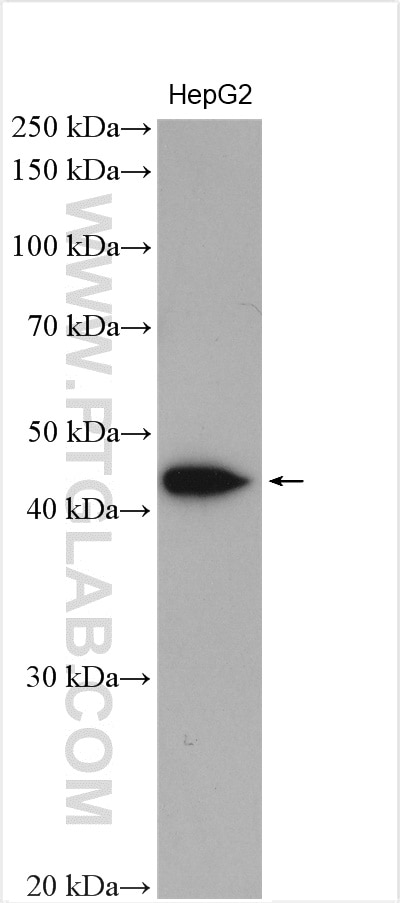
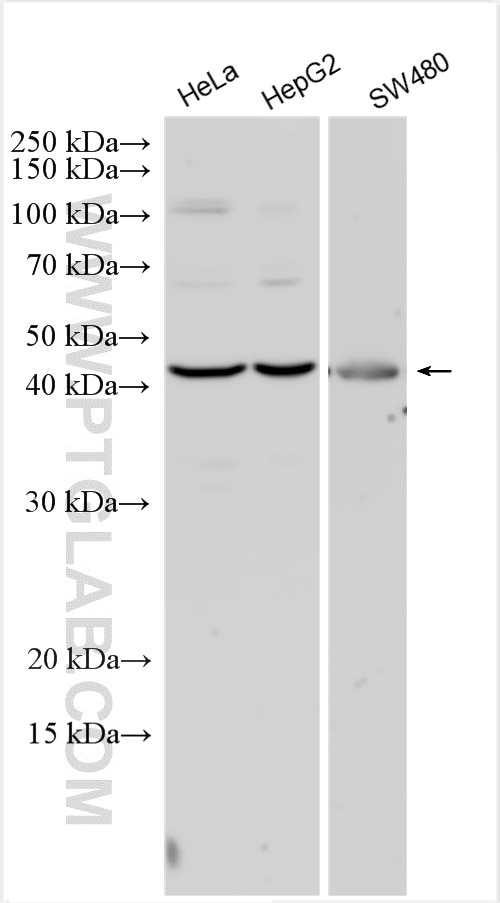
| Positive WB detected in | HepG2 cells, SW480 cells, HeLa cells |
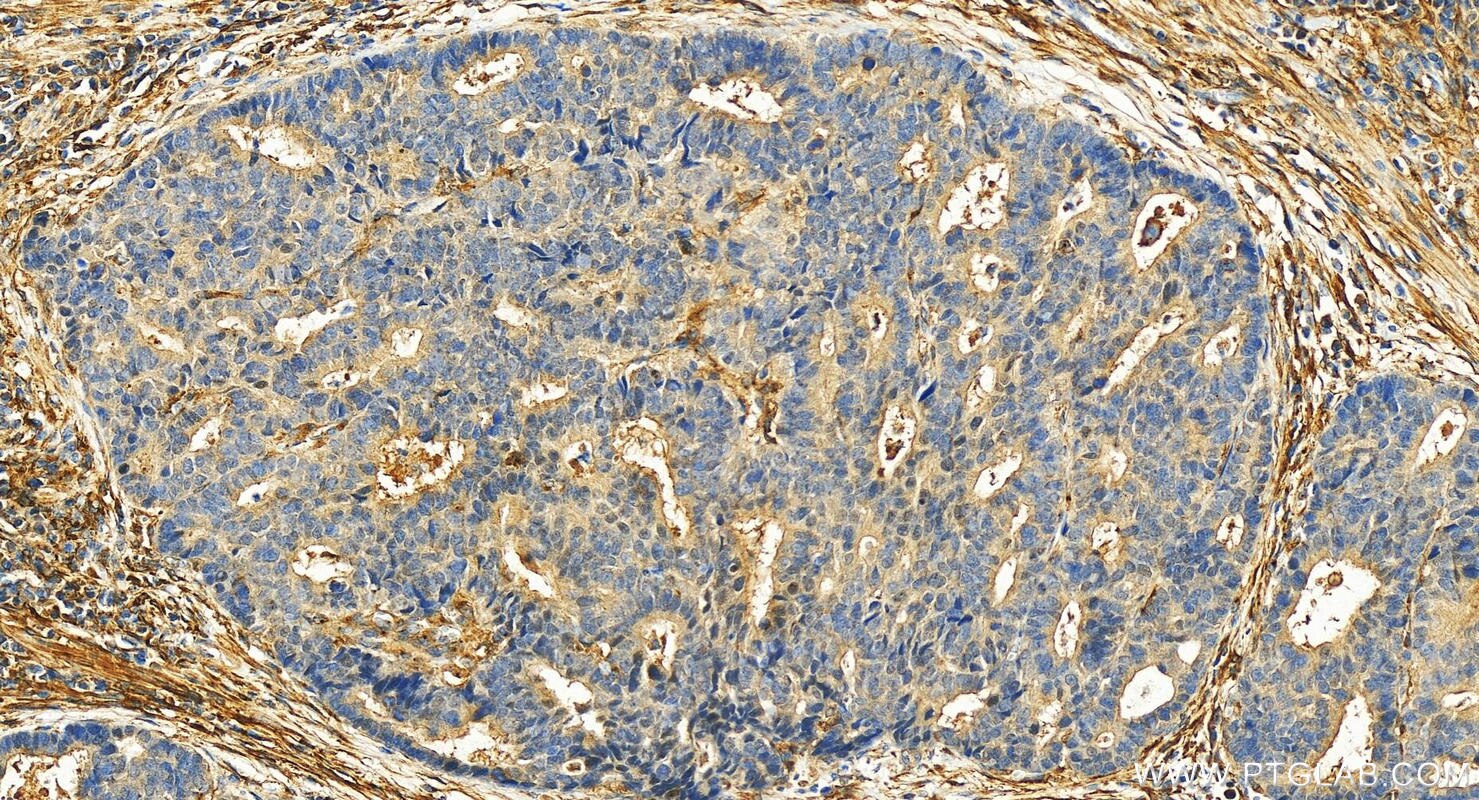
| Positive IHC detected in | human stomach cancer tissue Note: suggested antigen retrieval with TE buffer pH 9.0; (*) Alternatively, antigen retrieval may be performed with citrate buffer pH 6.0 |
Recommended dilution
| Application | Dilution |
|---|---|
| Western Blot (WB) | WB : 1:500-1:2000 |
| Immunohistochemistry (IHC) | IHC : 1:50-1:500 |
| It is recommended that this reagent should be titrated in each testing system to obtain optimal results. | |
| Sample-dependent, Check data in validation data gallery. | |
Product Information
27602-1-AP targets ASPN in WB, IHC, ELISA applications and shows reactivity with human samples.
| Tested Reactivity | human |
| Cited Reactivity | human |
| Host / Isotype | Rabbit / IgG |
| Class | Polyclonal |
| Type | Antibody |
| Immunogen |
CatNo: Ag26380 Product name: Recombinant human ASPN protein Source: e coli.-derived, PGEX-4T Tag: GST Domain: 53-330 aa of BC063114 Sequence: DDEEDNSLFPTREPRSHFFPFDLFPMCPFGCQCYSRVVHCSDLGLTSVPTNIPFDTRMLDLQNNKIKEIKENDFKGLTSLYGLILNNNKLTKIHPKAFLTTKKLRRLYLSHNQLSEIPLNLPKSLAELRIHENKVKKIQKDTFKGMNALHVLEMSANPLDNNGIEPGAFEGVTVFHIRIAEAKLTSVPKGLPPTLLELHLDYNKISTVELEDFKRYKELQRLGLGNNKITDIENGSLANIPRVREIHLENNKLKKIPSGLPELKYLQIIFLHSNSIAR Predict reactive species |
| Full Name | asporin |
| Calculated Molecular Weight | 384 aa, 44 kDa |
| Observed Molecular Weight | 43 kDa |
| GenBank Accession Number | BC063114 |
| Gene Symbol | ASPN |
| Gene ID (NCBI) | 54829 |
| RRID | AB_3085974 |
| Conjugate | Unconjugated |
| Form | Liquid |
| Purification Method | Antigen affinity purification |
| UNIPROT ID | Q9BXN1 |
| Storage Buffer | PBS with 0.02% sodium azide and 50% glycerol, pH 7.3. |
| Storage Conditions | Store at -20°C. Stable for one year after shipment. Aliquoting is unnecessary for -20oC storage. 20ul sizes contain 0.1% BSA. |
Background Information
ASPN, also known as periodontal ligament-associated protein1 (PLAP1), is an extracellular matrix (ECM) protein. The calculated molecular weight of ASPN is 43 kDa. It belongs to the small leucine-rich proteoglycans (SLRPs) family and contains a unique aspartate-rich N terminus that distinguishes it from other SLRPs family members. It was firstly identified in human cartilage and it was associated with the pathogenesis of bone and joint diseases, including osteoarthritis, intervertebral disc degeneration and periodontal ligament mineralization (PMID:11152692; 26089687).
Protocols
| Product Specific Protocols | |
|---|---|
| IHC protocol for ASPN antibody 27602-1-AP | Download protocol |
| WB protocol for ASPN antibody 27602-1-AP | Download protocol |
| Standard Protocols | |
|---|---|
| Click here to view our Standard Protocols |
Publications
What published studies show
The ASPN Polyclonal antibody (Cat# 27602-1-AP) has a total of 2 citations. These citations appear in Discover Oncology and Journal of Molecular Histology. Both studies focus on gastric cancer research, with one exploring ASPN as a pan-cancer biomarker with emphasis on gastric cancer, and the other investigating ASPN's role in regulating glycolysis and stemness of gastric cancer cells. The associated research field is oncology, specifically gastric cancer biology.
| Species | Application | Title |
|---|---|---|
Discov Oncol Exploring ASPN as a pan-cancer biomarker with a focus on gastric cancer.
| ||
J Mol Histol Asporin regulates glycolysis and stemness of gastric cancer cells.
|




