

Tested Applications
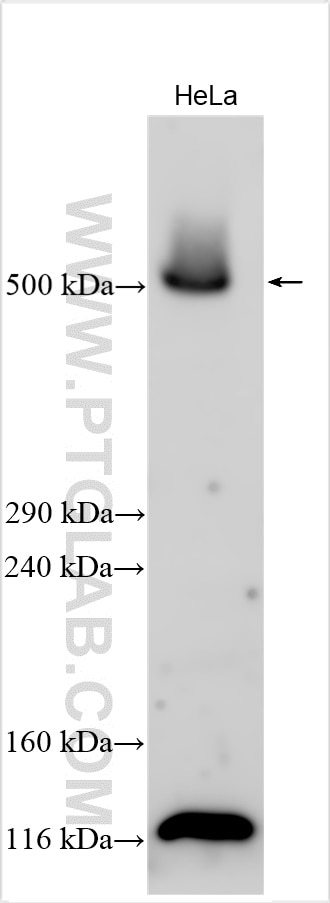
| Positive WB detected in | HeLa cells |
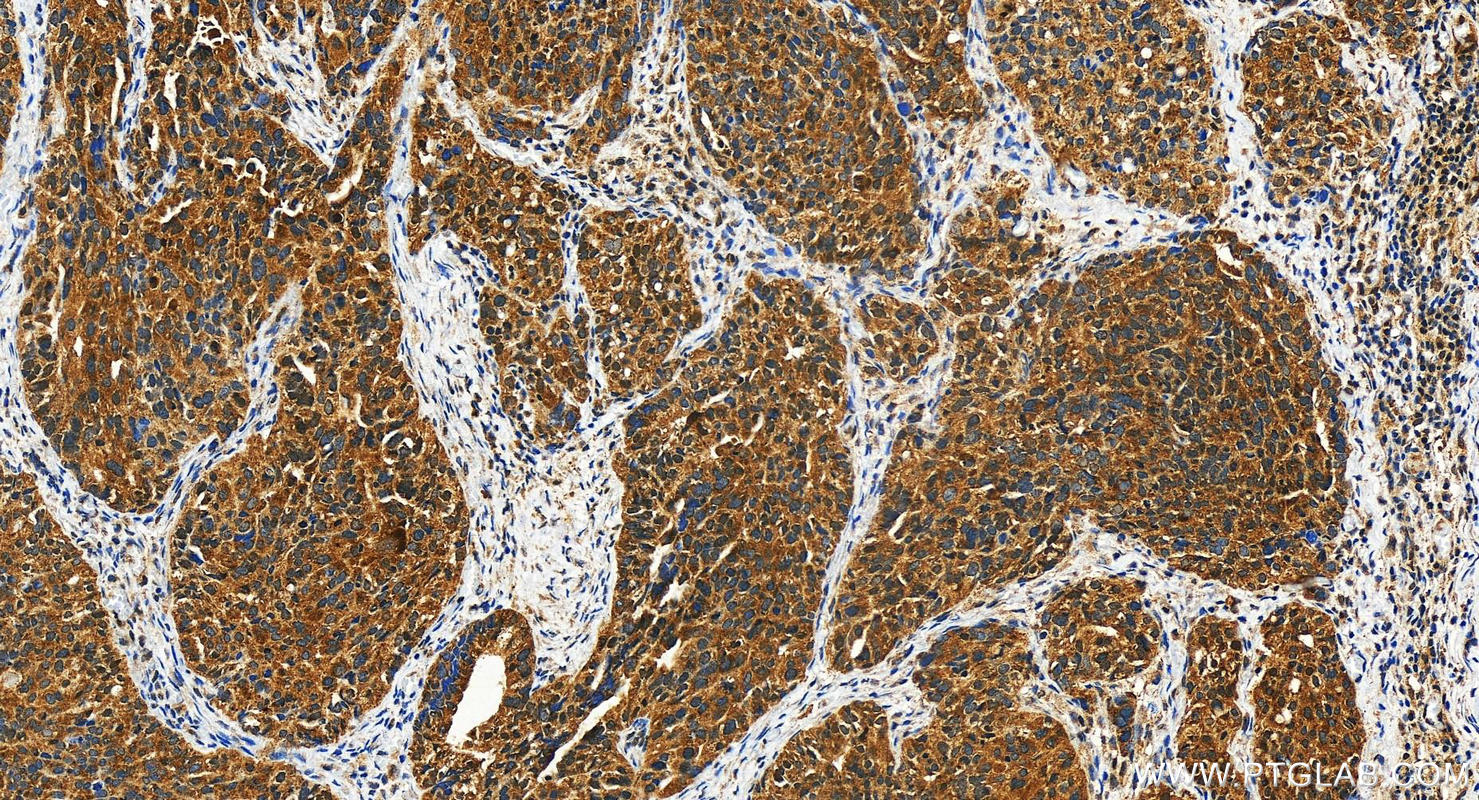
| Positive IHC detected in | human ovary cancer tissue Note: suggested antigen retrieval with TE buffer pH 9.0; (*) Alternatively, antigen retrieval may be performed with citrate buffer pH 6.0 |
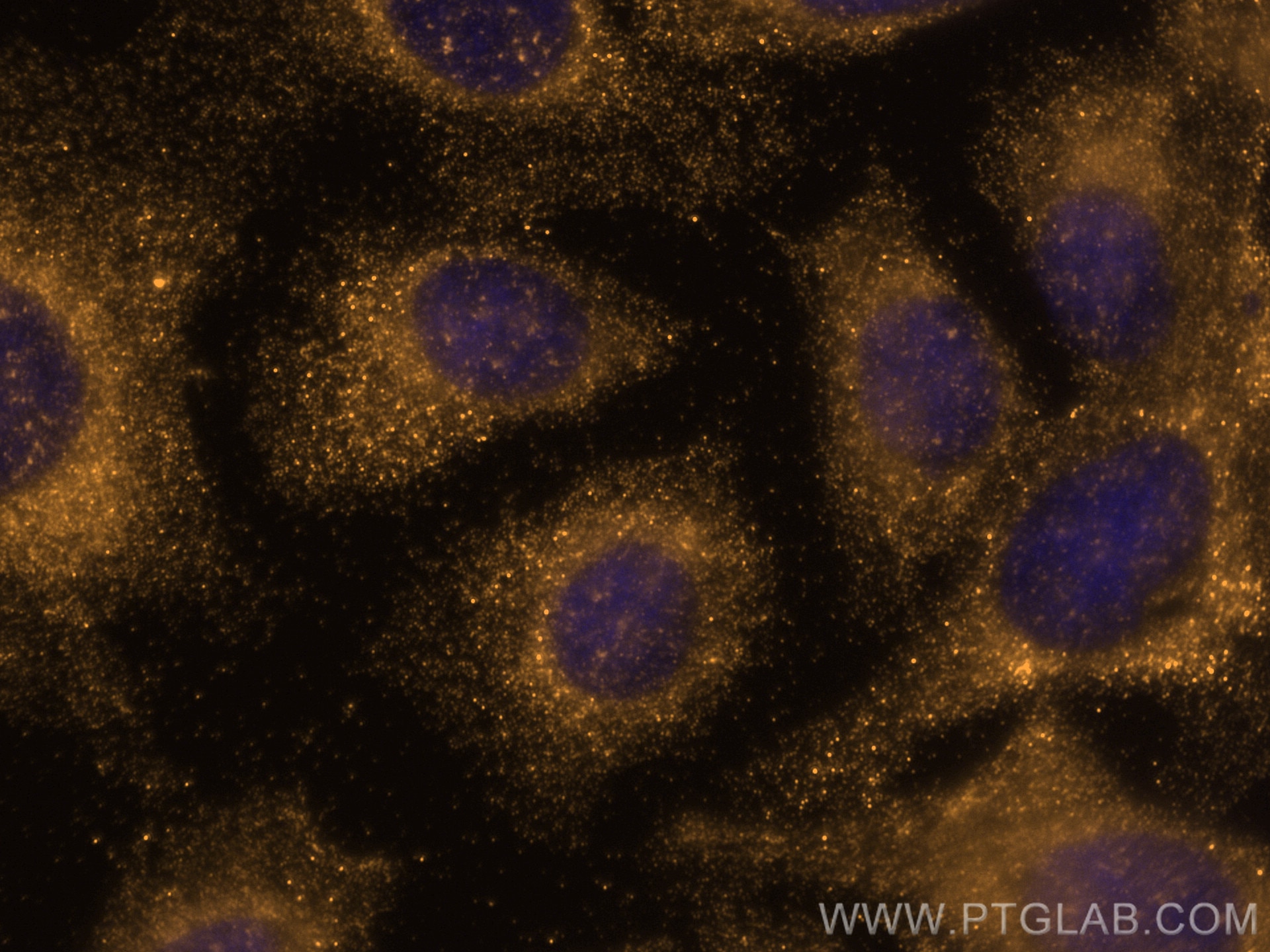
| Positive IF/ICC detected in | U2OS cells |
Recommended dilution
| Application | Dilution |
|---|---|
| Western Blot (WB) | WB : 1:500-1:1000 |
| Immunohistochemistry (IHC) | IHC : 1:50-1:500 |
| Immunofluorescence (IF)/ICC | IF/ICC : 1:50-1:500 |
| It is recommended that this reagent should be titrated in each testing system to obtain optimal results. | |
| Sample-dependent, Check data in validation data gallery. | |
Product Information
29387-1-AP targets VPS13D in WB, IHC, IF/ICC, ELISA applications and shows reactivity with human samples.
| Tested Reactivity | human |
| Cited Reactivity | human |
| Host / Isotype | Rabbit / IgG |
| Class | Polyclonal |
| Type | Antibody |
| Immunogen |
CatNo: Ag29933 Product name: Recombinant human VPS13D protein Source: e coli.-derived, PGEX-4T Tag: GST Domain: 4202-4388 aa of NM_015378 Sequence: DFASETAQAVRDTATLSGPRTQAQRVRKPRCCTGPQGLLPRYSESQAEGQEQLFKLTDNIQDEFFIAVENIDSYCVLISSKAVYFLKSGDYVDREAIFLEVKYDDLYHCLVSKDHGKVYVQVTKKAVSTSSGVSIPGPSHQKPMVHVKSEVLAVKLSQEINYAKSLYYEQQLMLRLSENREQLELDS Predict reactive species |
| Full Name | vacuolar protein sorting 13 homolog D (S. cerevisiae) |
| Calculated Molecular Weight | 492 kDa |
| Observed Molecular Weight | ~500 kDa |
| GenBank Accession Number | NM_015378 |
| Gene Symbol | VPS13D |
| Gene ID (NCBI) | 55187 |
| RRID | AB_3086126 |
| Conjugate | Unconjugated |
| Form | Liquid |
| Purification Method | Antigen affinity purification |
| UNIPROT ID | Q5THJ4 |
| Storage Buffer | PBS with 0.02% sodium azide and 50% glycerol, pH 7.3. |
| Storage Conditions | Store at -20°C. Stable for one year after shipment. Aliquoting is unnecessary for -20oC storage. 20ul sizes contain 0.1% BSA. |
Background Information
VPS13 (vacuolar protein sorting 13 ) acts at membrane contact sites between intracellular organelles to transport lipids. There are four VPS13 family members in human - VPS13A, VPS13B, VPS13C and VPS13D. Mutations in human VPS13 genes are linked to rare neurodegenerative disorders: chorea- acanthocytosis (VPS13A), Cohen syndrome (VPS13B), predispose to early onset into Parkinson disease (VPS13C) and lead to ataxia/spastic paraplegia (VPS13D) (PMID: 30656912).
Protocols
| Product Specific Protocols | |
|---|---|
| IF protocol for VPS13D antibody 29387-1-AP | Download protocol |
| IHC protocol for VPS13D antibody 29387-1-AP | Download protocol |
| WB protocol for VPS13D antibody 29387-1-AP | Download protocol |
| Standard Protocols | |
|---|---|
| Click here to view our Standard Protocols |
Publications
What published studies show
The VPS13D Polyclonal antibody (Cat# 29387-1-AP) has 2 citations. One appears in Nature Communications (2025), studying RHOA regulation of mitochondria-ER contact sites via the VAPB/PTPIP51 tether. The other is in PNAS (2026), investigating ATG9A-mediated plasma membrane repair linked to Vps13A and glycosylation. Both studies used the antibody for Western blot in human samples, spanning research fields of membrane contact site biology and autophagy/membrane repair.
| Species | Application | Title |
|---|---|---|
Nat Commun RHOA regulates mitochondria-ER contact sites through modulation of the VAPB/PTPIP51 tether. | ||
Proc Natl Acad Sci U S A ATG9A-mediated plasma membrane repair is linked to Vps13A and regulated by glycosylation. |
Reviews
What customers say
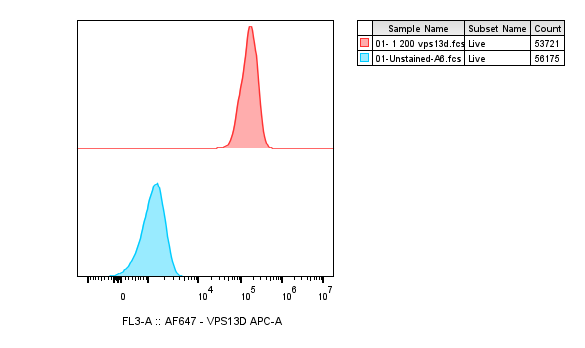
The single review for this product reports a 5-star rating from a flow cytometry application on KG1a cells. The user tested multiple dilutions to identify the optimal stain index and found that a 1:200 dilution performed best. Overall, the feedback is positive, highlighting the antibody's strong staining performance in flow cytometry when used at the recommended dilution.
The reviews below have been submitted by verified Proteintech customers who received an incentive for providing their feedback.
Lauren (Verified Customer) (11-12-2024) | Tested different dilutions of the antibody to determine which dilution resulted in the best stain index and this was the 1:200 dilution when using flow cytometry
 |




