

Tested Applications
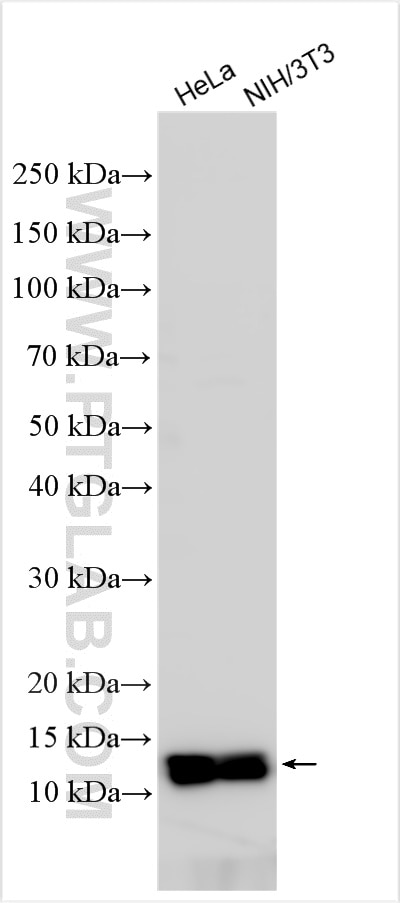
| Positive WB detected in | HeLa cells, NIH/3T3 cells |
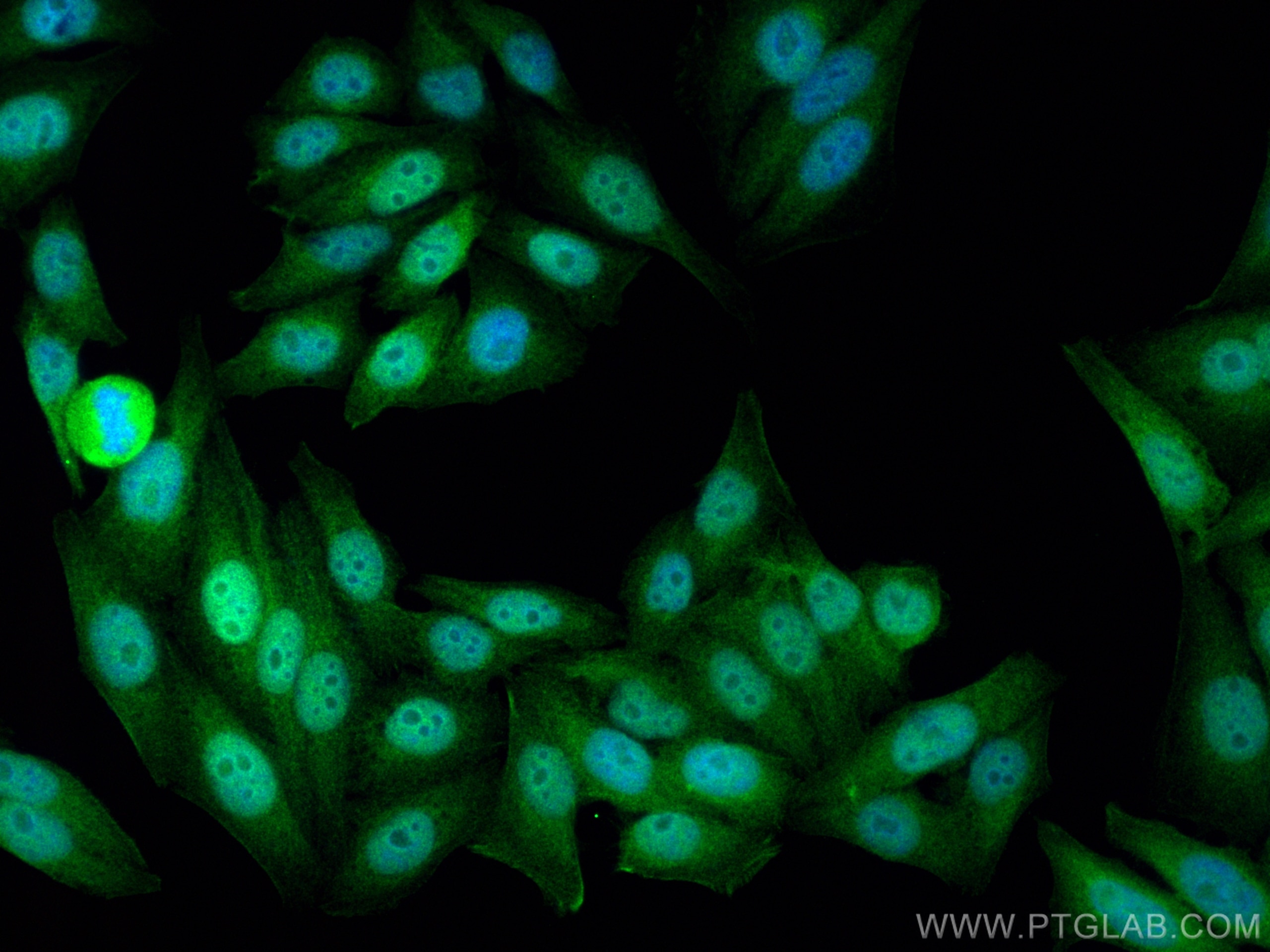
| Positive IF/ICC detected in | HepG2 cells |
Recommended dilution
| Application | Dilution |
|---|---|
| Western Blot (WB) | WB : 1:500-1:2000 |
| Immunofluorescence (IF)/ICC | IF/ICC : 1:50-1:500 |
| It is recommended that this reagent should be titrated in each testing system to obtain optimal results. | |
| Sample-dependent, Check data in validation data gallery. | |
Product Information
30525-1-AP targets BANF1 in WB, IF/ICC, ELISA applications and shows reactivity with human, mouse samples.
| Tested Reactivity | human, mouse |
| Cited Reactivity | human |
| Host / Isotype | Rabbit / IgG |
| Class | Polyclonal |
| Type | Antibody |
| Immunogen |
CatNo: Ag32042 Product name: Recombinant human BANF1 protein Source: e coli.-derived, PGEX-4T Tag: GST Domain: 50-89 aa of BC005942 Sequence: LVLKKDEDLFR EWLKDTCGAN AKQSRDCFGC LREWCDAFL Predict reactive species |
| Full Name | barrier to autointegration factor 1 |
| Calculated Molecular Weight | 10 kDa |
| Observed Molecular Weight | 14 kDa |
| GenBank Accession Number | BC005942 |
| Gene Symbol | BANF1 |
| Gene ID (NCBI) | 8815 |
| RRID | AB_3086349 |
| Conjugate | Unconjugated |
| Form | Liquid |
| Purification Method | Antigen affinity purification |
| UNIPROT ID | O75531 |
| Storage Buffer | PBS with 0.02% sodium azide and 50% glycerol, pH 7.3. |
| Storage Conditions | Store at -20°C. Stable for one year after shipment. Aliquoting is unnecessary for -20oC storage. 20ul sizes contain 0.1% BSA. |
Protocols
| Product Specific Protocols | |
|---|---|
| IF protocol for BANF1 antibody 30525-1-AP | Download protocol |
| WB protocol for BANF1 antibody 30525-1-AP | Download protocol |
| Standard Protocols | |
|---|---|
| Click here to view our Standard Protocols |
Publications
What published studies show
BANF1 Polyclonal Antibody (Catalog No. 30525-1-AP) has a total of 3 citations. It appears in Nature Communications (mitotic DNA repair by TMEJ and nuclear envelope reassembly, IF applied on human samples), Cell Death & Disease (CBX2 phase-separation in homologous recombination repair and drug resistance in ovarian cancer, WB applied on human samples), and Cancer Research (mechanosensors regulating DNA damage repair in hepatocellular carcinoma). Research fields span DNA repair mechanisms, nuclear envelope dynamics, and oncology, including ovarian cancer and hepatocellular carcinoma.
| Species | Application | Title |
|---|---|---|
Nat Commun Mitotic DNA repair by TMEJ suppresses replication stress-induced nuclear envelope reassembly defect. | ||
Cell Death Dis CBX2 phase-separation contributes to homologous recombination repair and drug resistance in ovarian cancer. | ||
Cancer Res Mechanosensors Collaborate to Regulate DNA Damage Repair in Hepatocellular Carcinoma. |



