
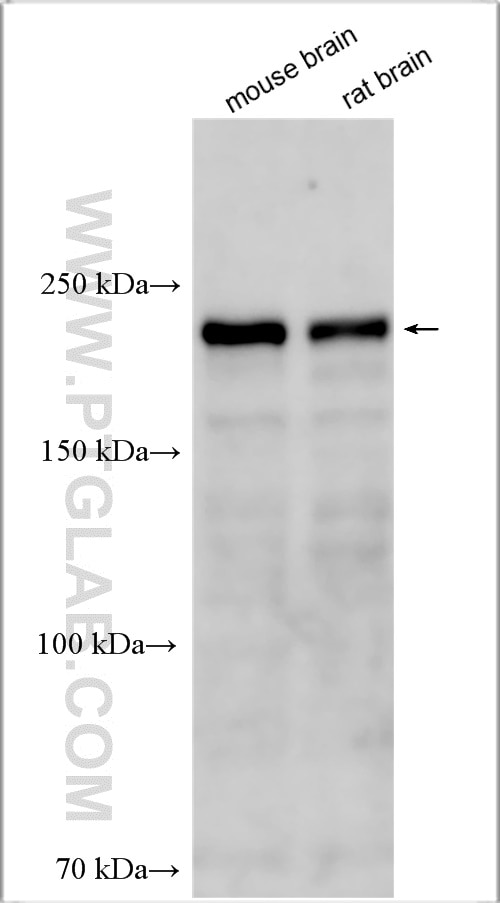
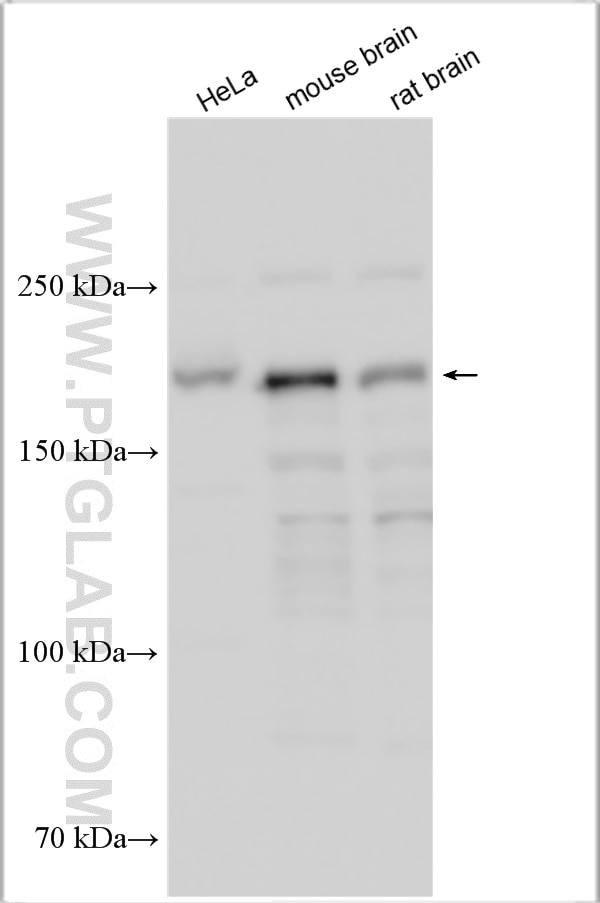
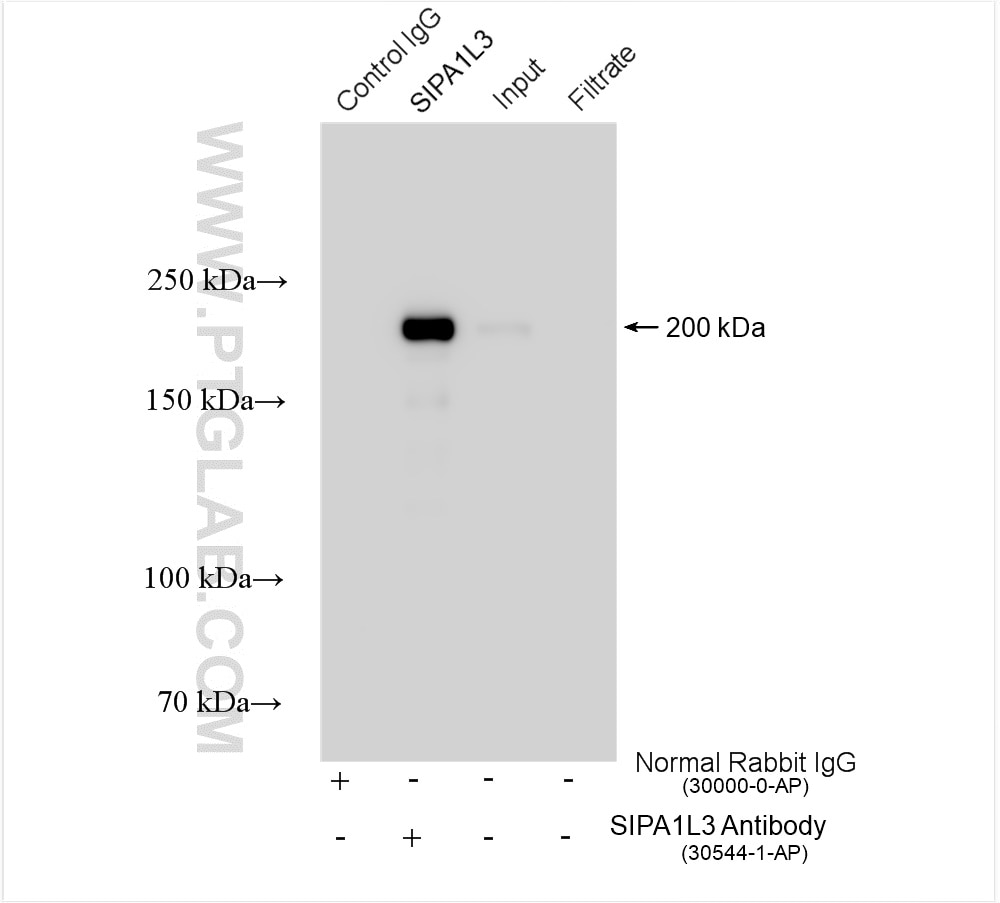
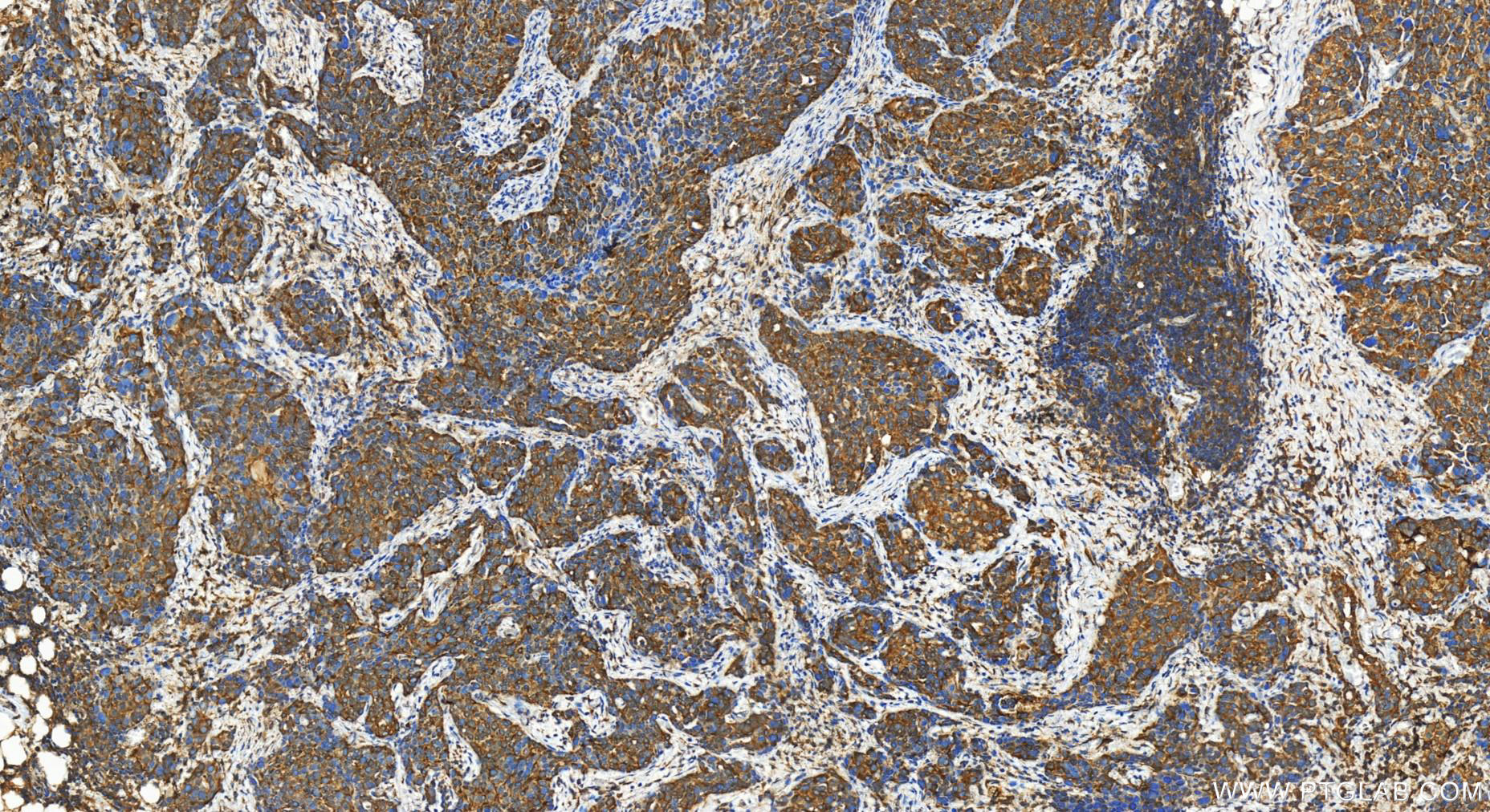
Tested Applications
| Positive WB detected in | mouse brain tissue, HeLa cells, rat brain tissue |
| Positive IP detected in | HeLa cells |
| Positive IHC detected in | human ovary cancer tissue Note: suggested antigen retrieval with TE buffer pH 9.0; (*) Alternatively, antigen retrieval may be performed with citrate buffer pH 6.0 |
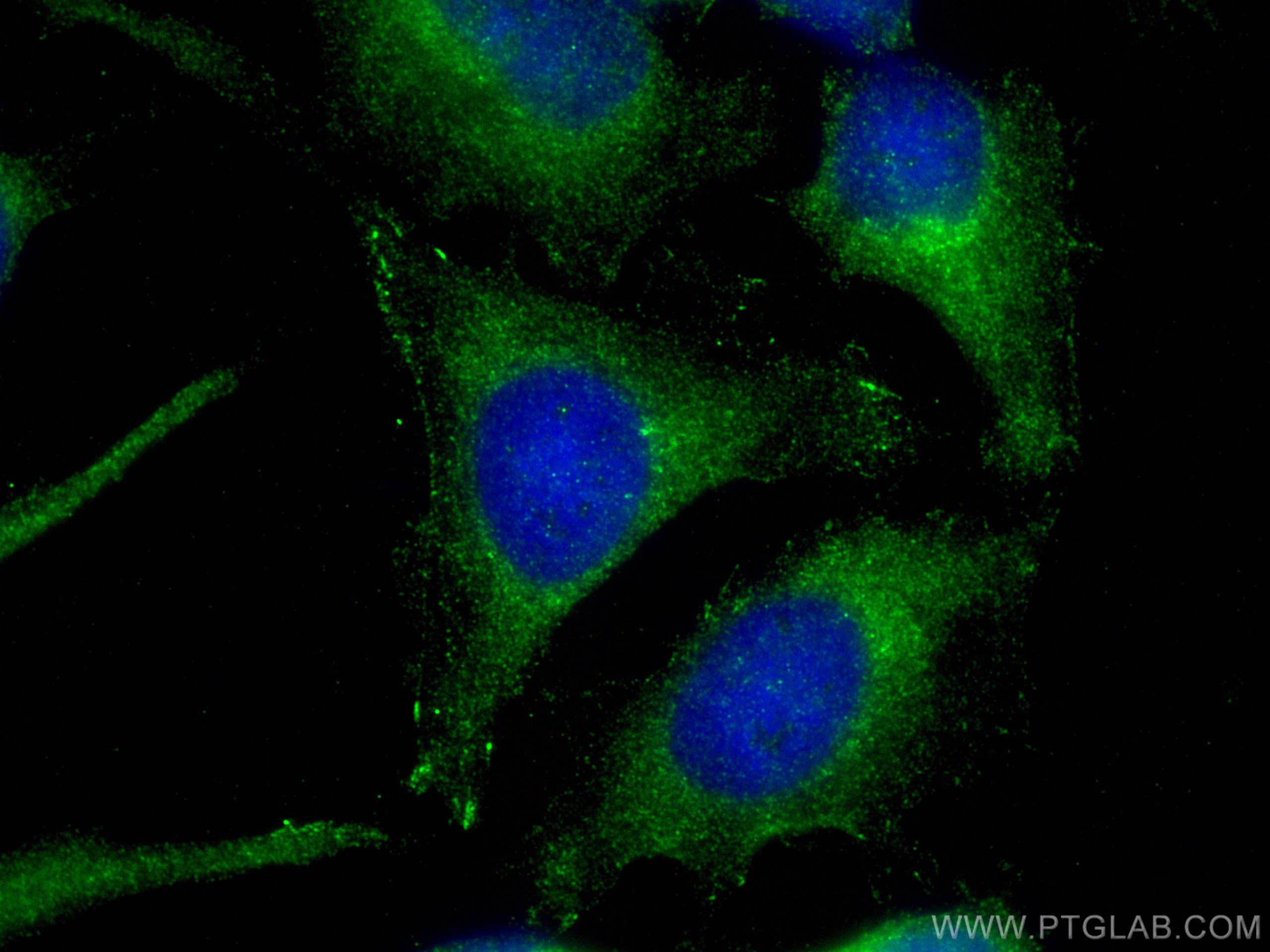
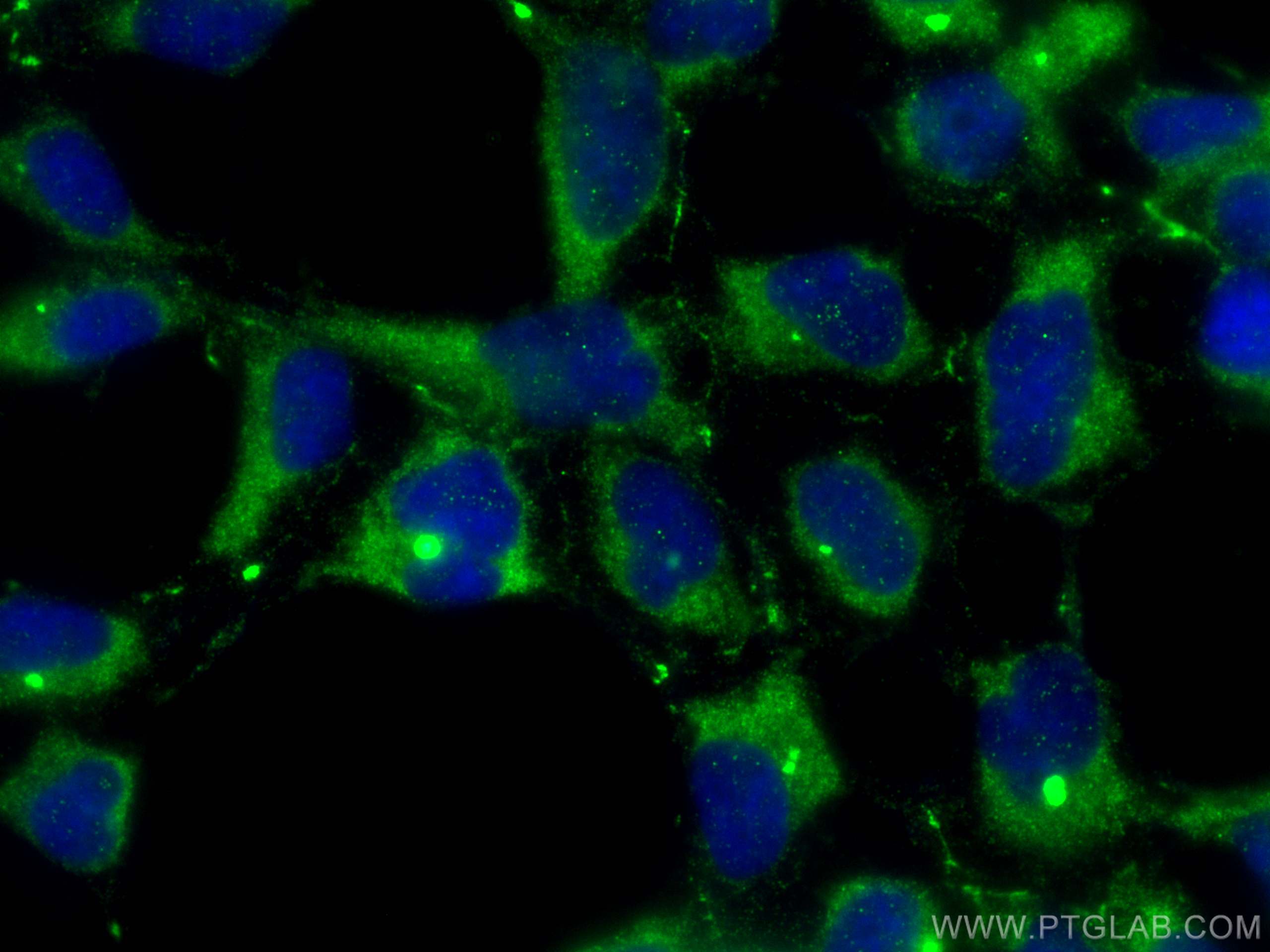
| Positive IF/ICC detected in | HeLa cells, HEK-293 cells |
Recommended dilution
| Application | Dilution |
|---|---|
| Western Blot (WB) | WB : 1:1000-1:6000 |
| Immunoprecipitation (IP) | IP : 0.5-4.0 ug for 1.0-3.0 mg of total protein lysate |
| Immunohistochemistry (IHC) | IHC : 1:50-1:500 |
| Immunofluorescence (IF)/ICC | IF/ICC : 1:50-1:500 |
| It is recommended that this reagent should be titrated in each testing system to obtain optimal results. | |
| Sample-dependent, Check data in validation data gallery. | |
Product Information
30544-1-AP targets SIPA1L3 in WB, IHC, IF/ICC, IP, ELISA applications and shows reactivity with human, mouse, rat samples.
| Tested Reactivity | human, mouse, rat |
| Cited Reactivity | human, mouse |
| Host / Isotype | Rabbit / IgG |
| Class | Polyclonal |
| Type | Antibody |
| Immunogen |
CatNo: Ag30750 Product name: Recombinant human SIPA1L3 protein Source: e coli.-derived, PGEX-4T Tag: GST Domain: 1-300 aa of BC150620 Sequence: MTTYRAIPSDGVDLAASCGARVGDVLPGPHTGDYAPLGFWAQNGSMSQPLGESPATATATATATTRPSPTTPAMPKMGVRARVADWPPKREALREHSNPSPSQDTDGTKATKMAHSMRSIQNGQPPTSTPASSGSKAFHRLSRRRSKDVEFQDGWPRSPGRAFLPLRHRSSSEITLSECDAEDAGEPRGARHTGALPLFREYGSTSSIDVQGMPEQSFFDILNEFRSEQPDARGCQALTELLRADPGPHLMGGGGGAKGDSHNGQPAKDSLLPLQPTKEKEKARKKPARGLGGGDTVDSS Predict reactive species |
| Full Name | signal-induced proliferation-associated 1 like 3 |
| Observed Molecular Weight | 195 kDa |
| GenBank Accession Number | BC150620 |
| Gene Symbol | SIPA1L3 |
| Gene ID (NCBI) | 23094 |
| RRID | AB_3086357 |
| Conjugate | Unconjugated |
| Form | Liquid |
| Purification Method | Antigen affinity purification |
| UNIPROT ID | O60292 |
| Storage Buffer | PBS with 0.02% sodium azide and 50% glycerol, pH 7.3. |
| Storage Conditions | Store at -20°C. Stable for one year after shipment. Aliquoting is unnecessary for -20oC storage. 20ul sizes contain 0.1% BSA. |
Background Information
STEAP3 (Signal-induced proliferation-associated 1-like protein 3) is also named as KIAA0545 and SPAL3. STEAP3 is a member of the STEAP family and is composed of a six-transmembrane domain at the COOH-terminal domain and a cytoplasmic N-terminal oxidoreductase domain, which is essential for iron and copper uptake (PMID:16227996). STEAP3 contains a functional p53-binding site in its promoter and can be upregulated following p53 activation to enhance cell death in myeloid leukemia cell line and breast cancer cells (PMID: 18617898). By interacting with Nix, a pro-apoptotic Bcl-2 family member, and Myt1 kinase, a negative regulator of the G2/M transition, STEAP3 overexpression promotes apoptosis and inhibits G2/M transition in cell cycle progression (PMID: 12606722, PMID: 10504341).
Protocols
| Product Specific Protocols | |
|---|---|
| IF protocol for SIPA1L3 antibody 30544-1-AP | Download protocol |
| IHC protocol for SIPA1L3 antibody 30544-1-AP | Download protocol |
| IP protocol for SIPA1L3 antibody 30544-1-AP | Download protocol |
| WB protocol for SIPA1L3 antibody 30544-1-AP | Download protocol |
| Standard Protocols | |
|---|---|
| Click here to view our Standard Protocols |
Publications
What published studies show
| Species | Application | Title |
|---|---|---|
Elife Uncovering the electrical synapse proteome in retinal neurons via in vivo proximity labeling. | ||
bioRxiv Uncovering the electrical synapse proteome in retinal neurons via in vivo proximity labeling |







