
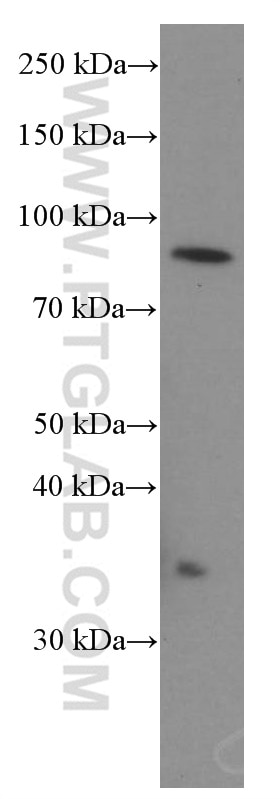
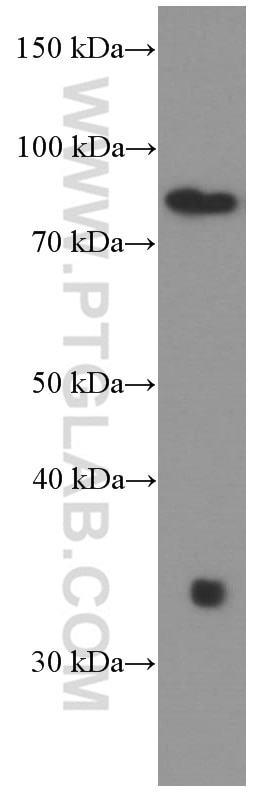
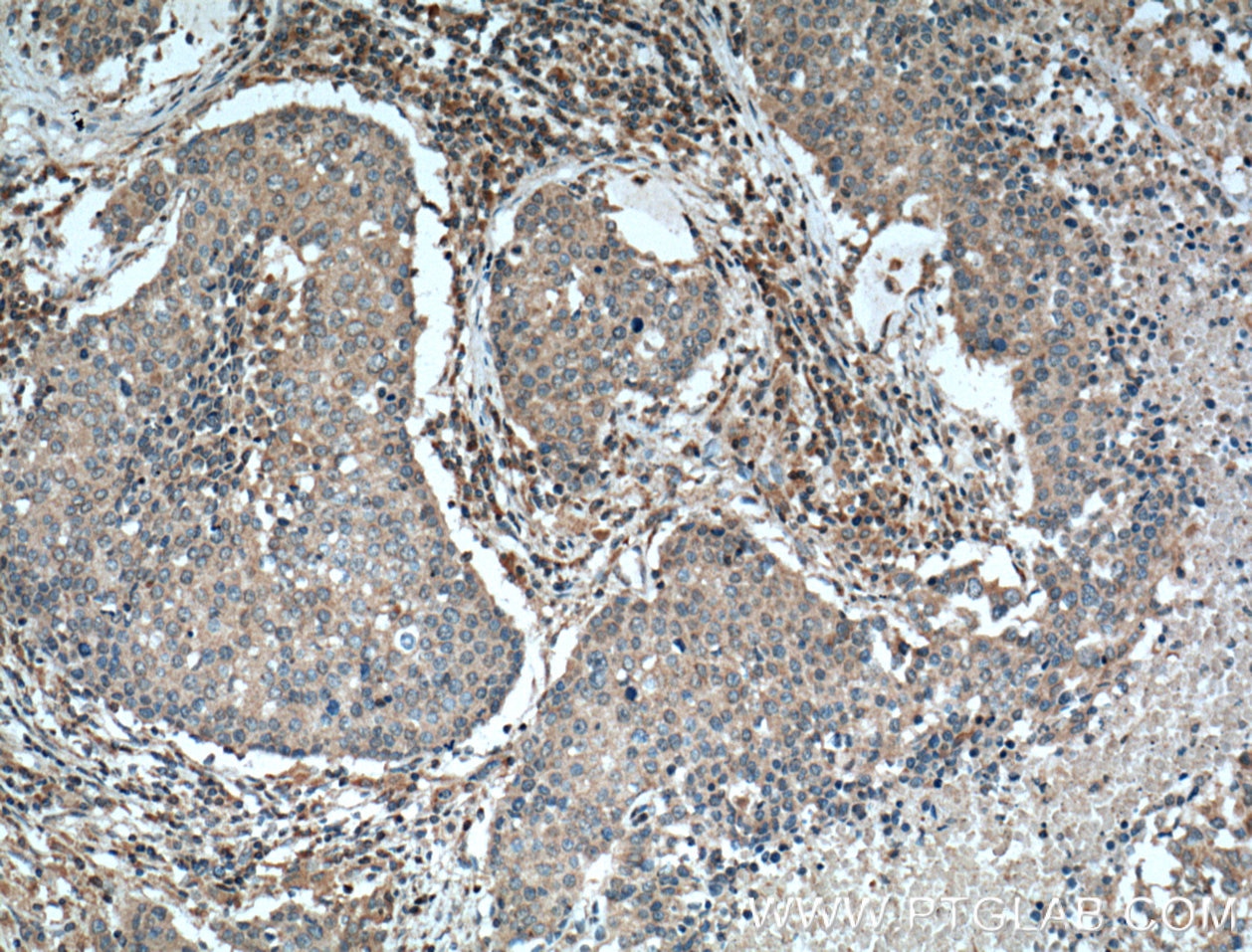
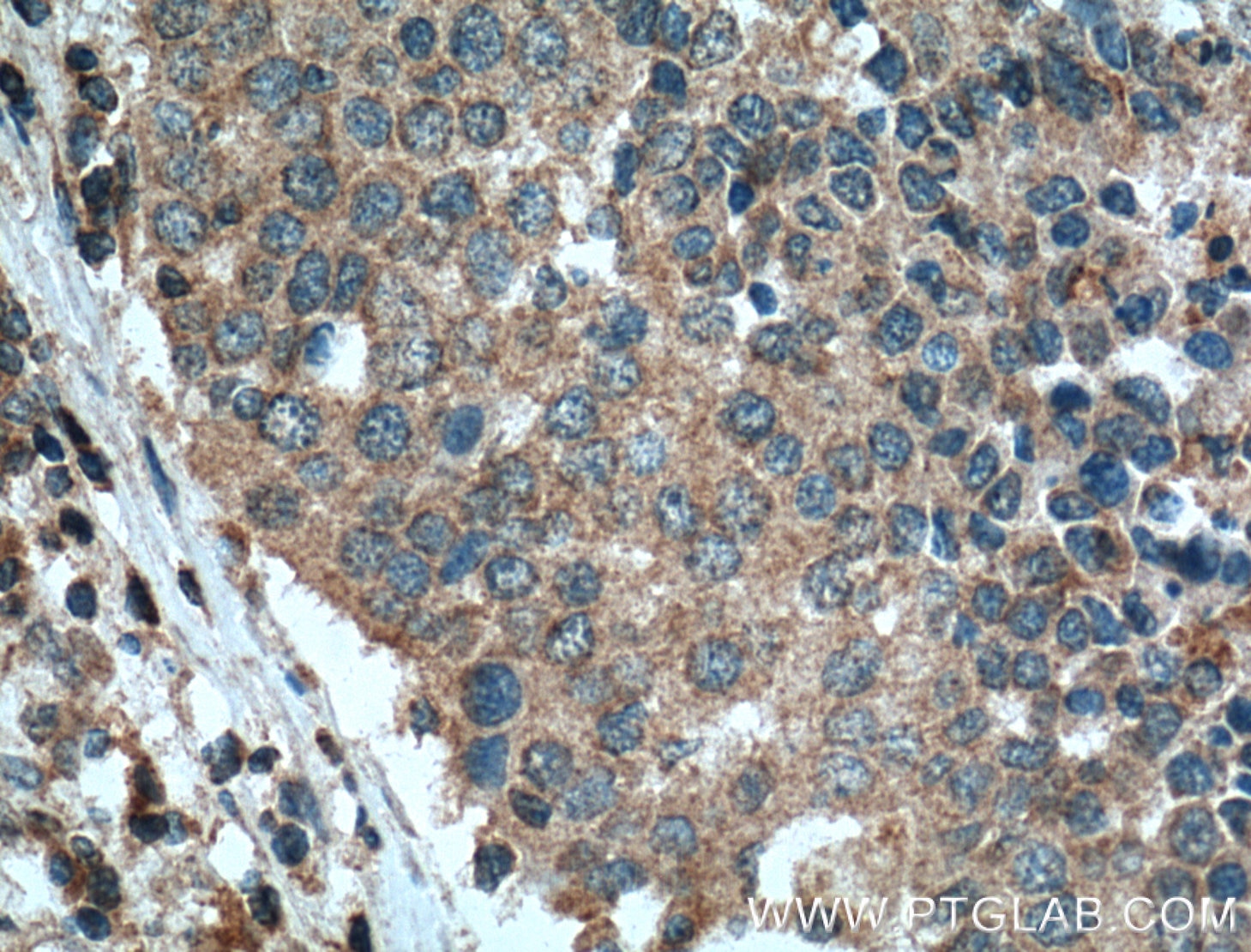

Tested Applications
| Positive WB detected in | K-562 cells, Jurkat cells |
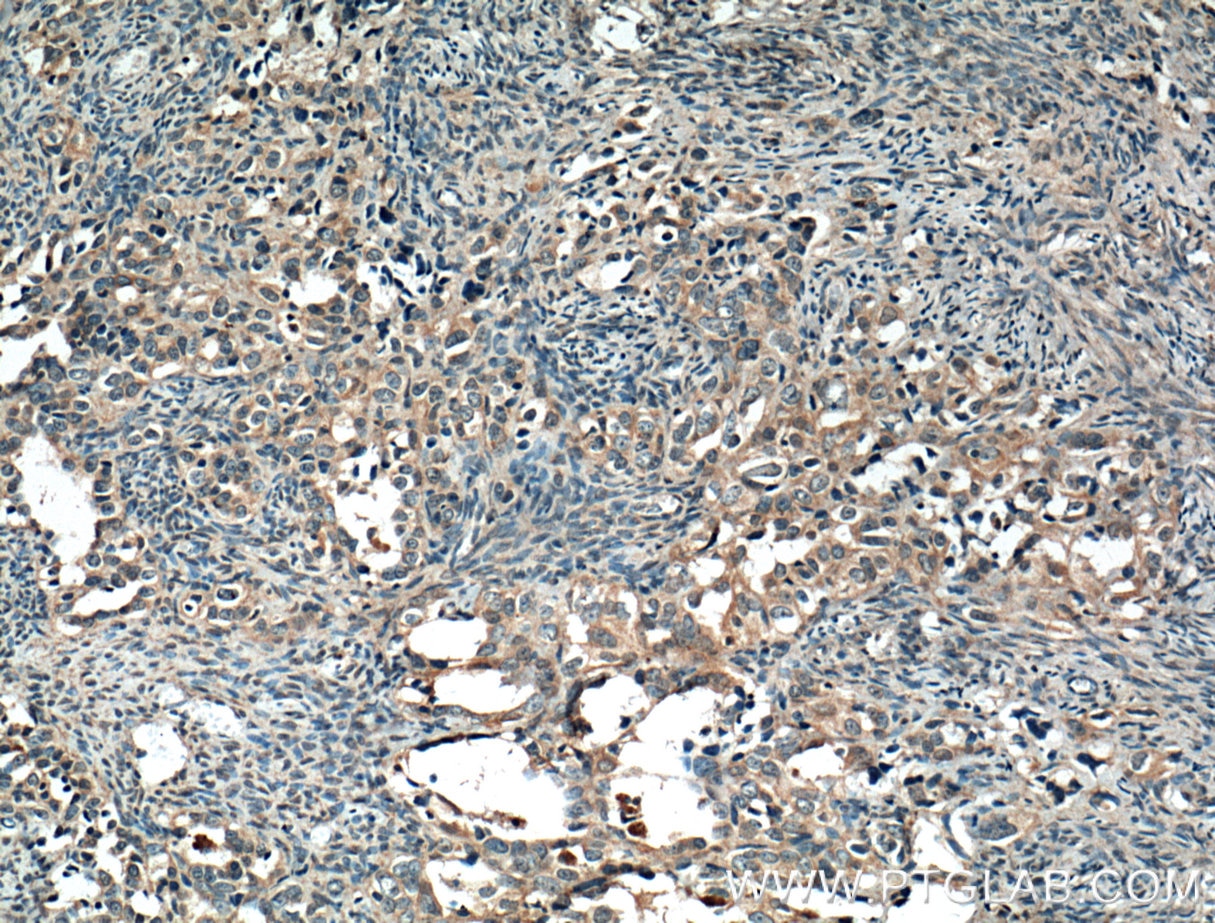
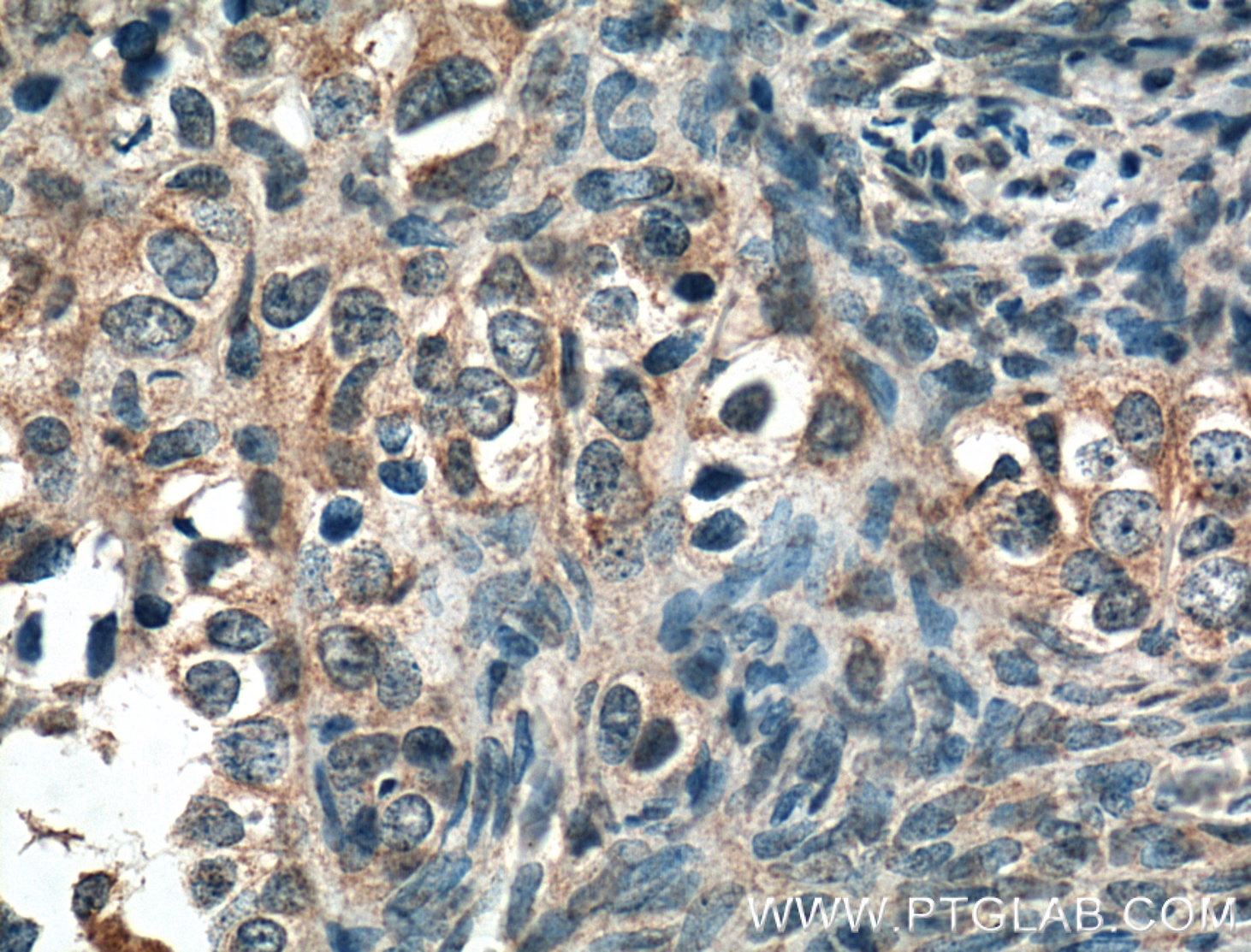
| Positive IHC detected in | human lung cancer tissue, human ovary tumor tissue Note: suggested antigen retrieval with TE buffer pH 9.0; (*) Alternatively, antigen retrieval may be performed with citrate buffer pH 6.0 |
Recommended dilution
| Application | Dilution |
|---|---|
| Western Blot (WB) | WB : 1:500-1:1000 |
| Immunohistochemistry (IHC) | IHC : 1:50-1:500 |
| It is recommended that this reagent should be titrated in each testing system to obtain optimal results. | |
| Sample-dependent, Check data in validation data gallery. | |
Product Information
66189-1-Ig targets STIM1 in WB, IHC, IF, ELISA applications and shows reactivity with human, mouse, rat samples.
| Tested Reactivity | human, mouse, rat |
| Cited Reactivity | human, mouse, rat |
| Host / Isotype | Mouse / IgG2a |
| Class | Monoclonal |
| Type | Antibody |
| Immunogen |
CatNo: Ag17914 Product name: Recombinant human STIM1 protein Source: e coli.-derived, PET28a Tag: 6*His Domain: 2-350 aa of BC021300 Sequence: DVCVRLALWLLWGLLLHQGQSLSHSHSEKATGTSSGANSEESTAAEFCRIDKPLCHSEDEKLSFEAVRNIHKLMDDDANGDVDVEESDEFLREDLNYHDPTVKHSTFHGEDKLISVEDLWKAWKSSEVYNWTVDEVVQWLITYVELPQYEETFRKLQLSGHAMPRLAVTNTTMTGTVLKMTDRSHRQKLQLKALDTVLFGPPLLTRHNHLKDFMLVVSIVIGVGGCWFAYIQNRYSKEHMKKMMKDLEGLHRAEQSLHDLQERLHKAQEEHRTVEVEKVHLEKKLRDEINLAKQEAQRLKELREGTENERSRQKYAEEELEQVREALRKAEKELESHSSWYAPEALQKW Predict reactive species |
| Full Name | stromal interaction molecule 1 |
| Calculated Molecular Weight | 685 aa, 77 kDa |
| Observed Molecular Weight | 77 kDa |
| GenBank Accession Number | BC021300 |
| Gene Symbol | STIM1 |
| Gene ID (NCBI) | 6786 |
| RRID | AB_2881584 |
| Conjugate | Unconjugated |
| Form | Liquid |
| Purification Method | Protein A purification |
| UNIPROT ID | Q13586 |
| Storage Buffer | PBS with 0.02% sodium azide and 50% glycerol, pH 7.3. |
| Storage Conditions | Store at -20°C. Stable for one year after shipment. Aliquoting is unnecessary for -20oC storage. 20ul sizes contain 0.1% BSA. |
Background Information
STIM1, also named as GOK, is an ER Ca2+ sensor. Upon Ca2+ store depletion, STIM1 clusters at ER-plasma membrane junctions where it interacts with and gates Ca2+-permeable Orai1 ion channels. STIM1 is implicated in tumor growth suppression and stromal-haematopoietic cell interactions. Defacts in STIM1 gene can cause immune dysfunction with impaired T-cell activation. STIM1 can inhibit L-type voltage-gated Ca(2+) channels in neurons. Temperature is an important regulator of STIM1 function.The MW of STIM1 is about 80-90 kDa which may be due to the phosphorylation or glycosylation forms.
Protocols
| Product Specific Protocols | |
|---|---|
| IHC protocol for STIM1 antibody 66189-1-Ig | Download protocol |
| WB protocol for STIM1 antibody 66189-1-Ig | Download protocol |
| Standard Protocols | |
|---|---|
| Click here to view our Standard Protocols |
Publications
What published studies show
The STIM1 Monoclonal antibody (Cat# 66189-1-Ig) has 11 citations across journals including Nature Cell Biology, Phytomedicine, Journal of Translational Medicine, International Journal of Molecular Sciences, Journal of Dairy Science, Journal of Molecular Biology, Biomedical Pharmacotherapy, Neurotoxicology, Journal of Bioenergetics and Biomembranes, Molecular Biology Reports, and Life Sciences. Research fields span calcium signaling, ER stress, store-operated calcium entry, apoptosis, autophagy, neuroprotection, cardiomyopathy, and vascular smooth muscle function.
| Species | Application | Title |
|---|---|---|
Nat Cell Biol Sphingosine-1-phosphate signalling activates E-Syt1 to facilitate HDL-derived cholesterol transport
| ||
Phytomedicine β-mangostin triggers ER stress-mediated mitochondrial dysfunction to induce apoptosis in colorectal cancer. | ||
J Transl Med Targeting unfolded protein response reverts ER stress and ER Ca2+ homeostasis in cardiomyocytes expressing the pathogenic variant of Lamin A/C R321X | ||
Int J Mol Sci Neuroprotective Effect of Antiapoptotic URG7 Protein on Human Neuroblastoma Cell Line SH-SY5Y | ||
J Dairy Sci Fatty acids promote migration of CD4+ T cells through calcium release-activated calcium modulator ORAI1 sensitive glycolysis in dairy cows | ||
J Mol Biol URG7-Driven Homeostatic Adaptation Protects SH-SY5Y Cells from 6-OHDA Neurotoxicity. |







