
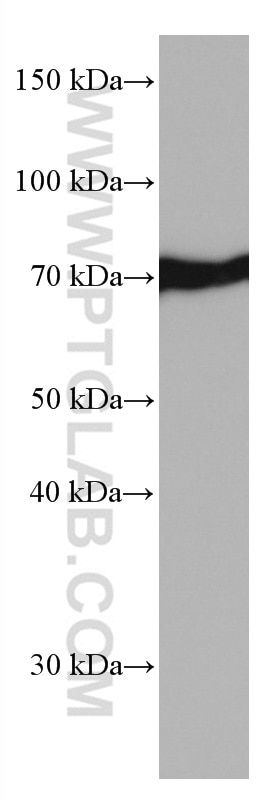
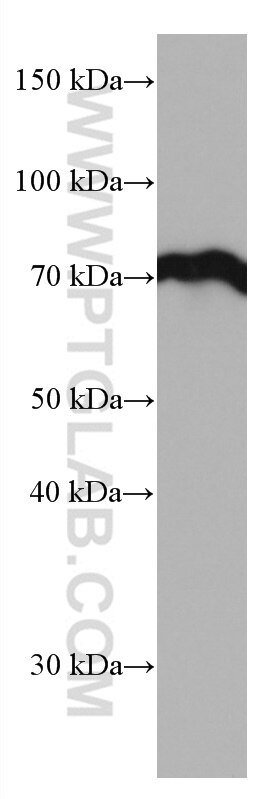
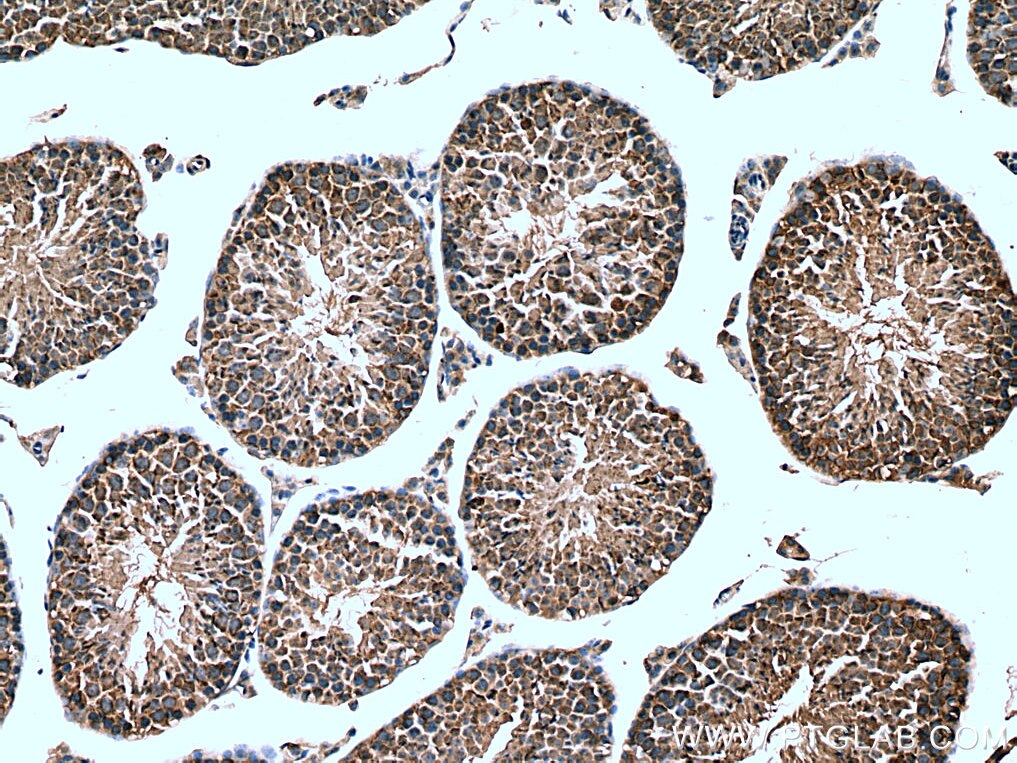
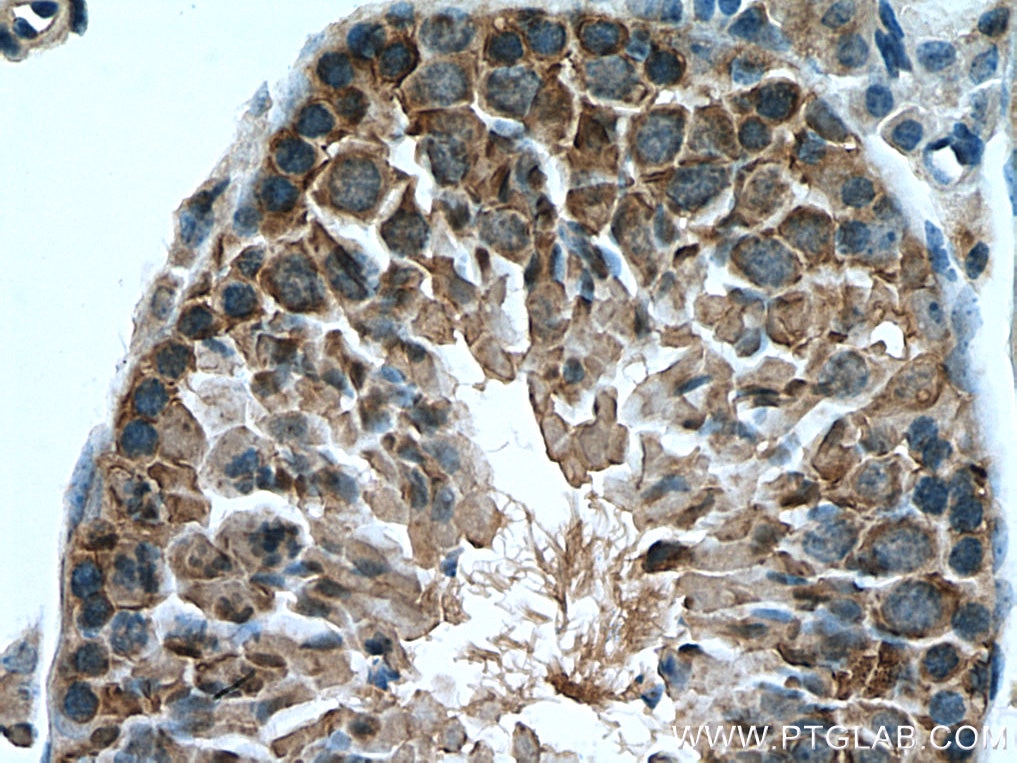
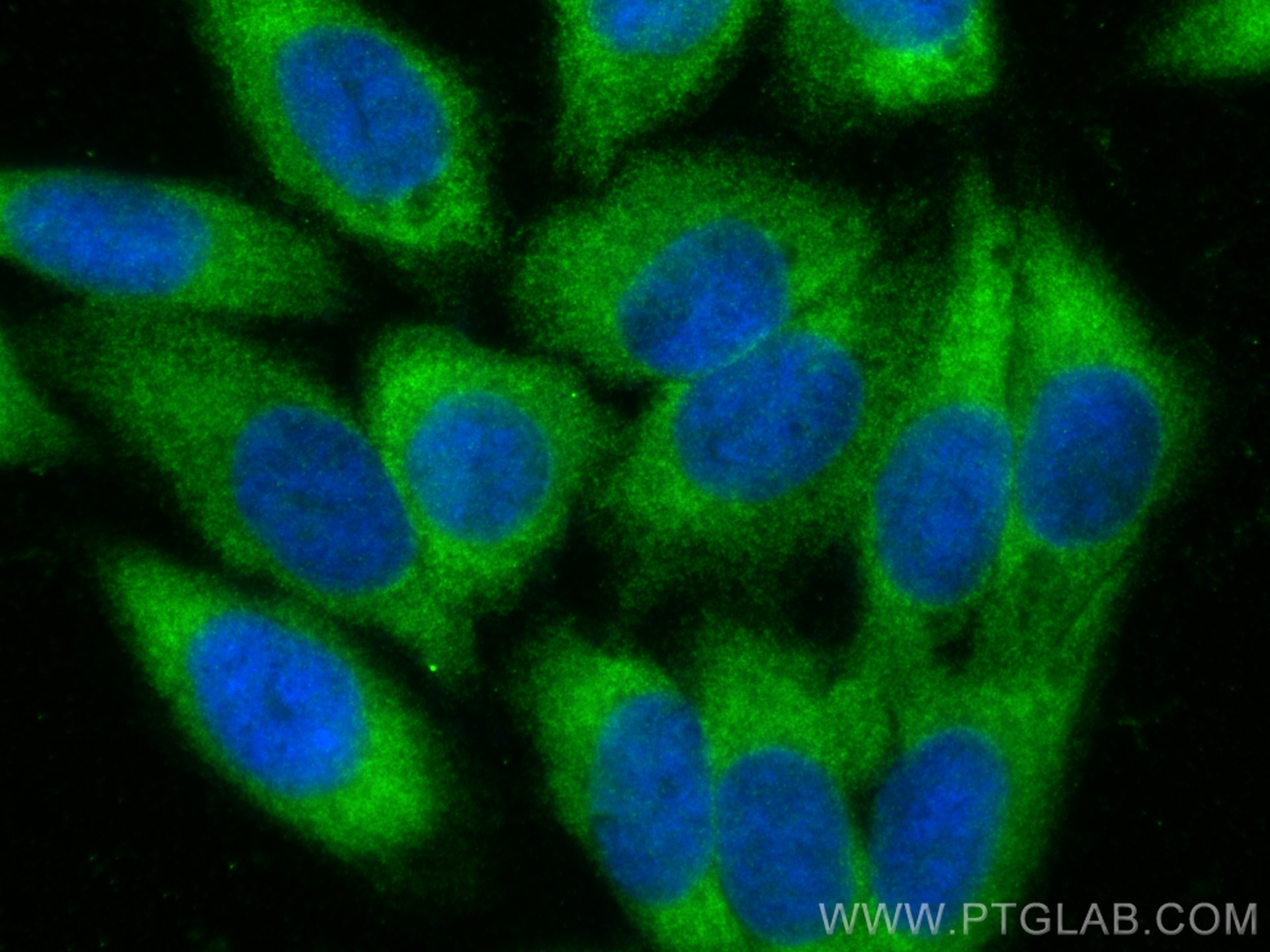

Tested Applications
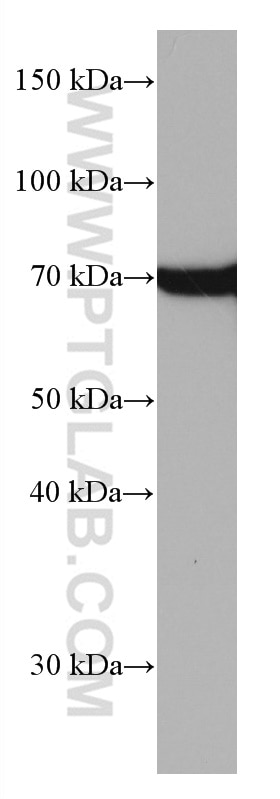
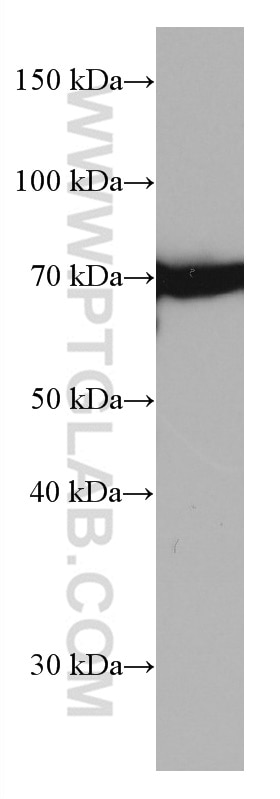
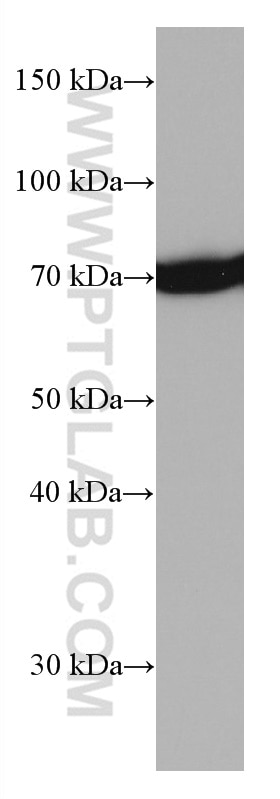
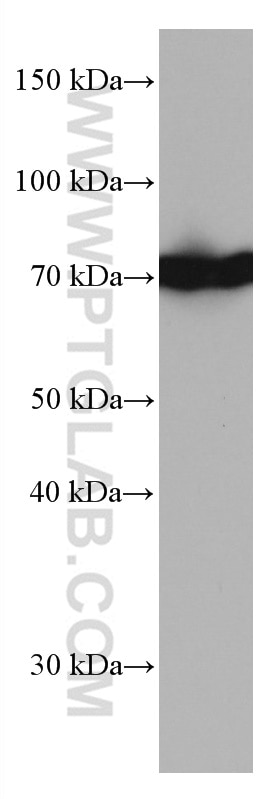
| Positive WB detected in | HeLa cells, HepG2 cells, L02 cells, Jurkat cells, HSC-T6 cells, NIH/3T3 cells |
| Positive IHC detected in | mouse testis tissue Note: suggested antigen retrieval with TE buffer pH 9.0; (*) Alternatively, antigen retrieval may be performed with citrate buffer pH 6.0 |
| Positive IF/ICC detected in | HepG2 cells |
Recommended dilution
| Application | Dilution |
|---|---|
| Western Blot (WB) | WB : 1:5000-1:50000 |
| Immunohistochemistry (IHC) | IHC : 1:500-1:2000 |
| Immunofluorescence (IF)/ICC | IF/ICC : 1:200-1:800 |
| It is recommended that this reagent should be titrated in each testing system to obtain optimal results. | |
| Sample-dependent, Check data in validation data gallery. | |
Product Information
66780-1-Ig targets HSPA1L in WB, IHC, IF/ICC, ELISA applications and shows reactivity with human, mouse, rat samples.
| Tested Reactivity | human, mouse, rat |
| Cited Reactivity | mouse |
| Host / Isotype | Mouse / IgG2b |
| Class | Monoclonal |
| Type | Antibody |
| Immunogen |
CatNo: Ag5182 Product name: Recombinant human HSPA1L protein Source: e coli.-derived, PET28a Tag: 6*His Domain: 342-641 aa of BC034483 Sequence: STRIPKVQRLLQDYFNGRDLNKSINPDEAVAYGAAVQAAILMGDKSEKVQDLLLLDVAPLSLGLETAGGVMTALMKRNSTIPTKQTQIFTTYSDNQPGVLIQVYEGERAMTKDNNLLGRFDLTGIPPAPRGVPQIEVTFDIDANGILNVTAMDKSTGKVNKITIANDKGRLSKEEIERMVLDAEKYKAEDEVQREKIAAKNALESYAFNMKSVVSDEGLKGKISESDKNKILDKCNELLSWLEVNQLAEKDEFDHKRKELEQMCNPIITKLYQGGCTGPACGTGYVPGRPATGPTIEEVD Predict reactive species |
| Full Name | heat shock 70kDa protein 1-like |
| Calculated Molecular Weight | 70 kDa |
| Observed Molecular Weight | 70 kDa |
| GenBank Accession Number | BC034483 |
| Gene Symbol | HSPA1L |
| Gene ID (NCBI) | 3305 |
| RRID | AB_2882125 |
| Conjugate | Unconjugated |
| Form | Liquid |
| Purification Method | Protein A purification |
| UNIPROT ID | P34931 |
| Storage Buffer | PBS with 0.02% sodium azide and 50% glycerol, pH 7.3. |
| Storage Conditions | Store at -20°C. Stable for one year after shipment. Aliquoting is unnecessary for -20oC storage. 20ul sizes contain 0.1% BSA. |
Background Information
HSPA1L (Hsp70-like protein 1, also known as HSP70-hom) is a member of Hsp70 family of heat shock proteins. Recently it has been reported that HSPA1L can interact with TLR4, activate dendritic cells and induce Th1 Response. This antibody well recognizes the endogenous HSPA1L protein in multiple cell lines. (21730052)
Protocols
| Product Specific Protocols | |
|---|---|
| IF protocol for HSPA1L antibody 66780-1-Ig | Download protocol |
| IHC protocol for HSPA1L antibody 66780-1-Ig | Download protocol |
| WB protocol for HSPA1L antibody 66780-1-Ig | Download protocol |
| Standard Protocols | |
|---|---|
| Click here to view our Standard Protocols |
Publications
What published studies show
The HSPA1L Monoclonal antibody (3E7H2), catalog number 66780-1-Ig, has a total of 2 citations. These publications appear in J Cachexia Sarcopenia Muscle and Alzheimers Research & Therapy. The cited research fields include diabetic sarcopenia involving mitophagy regulation via the HSPA1L-Parkin pathway, and Alzheimer's disease focusing on cognitive and affective impairments related to lysosomal membrane integrity restoration in model mice. Both studies utilized this antibody for immunofluorescence, with one also employing Western blot.
| Species | Application | Title |
|---|---|---|
J Cachexia Sarcopenia Muscle The regulation of MFG-E8 on the mitophagy in diabetic sarcopenia via the HSPA1L-Parkin pathway and the effect of D-pinitol | ||
Alzheimers Res Ther Physical exercise in combination with audiovisual stimulation alleviates cognitive and affective impairments in Alzheimer's disease model mice via restoring lysosomal membrane integrity.
|










