
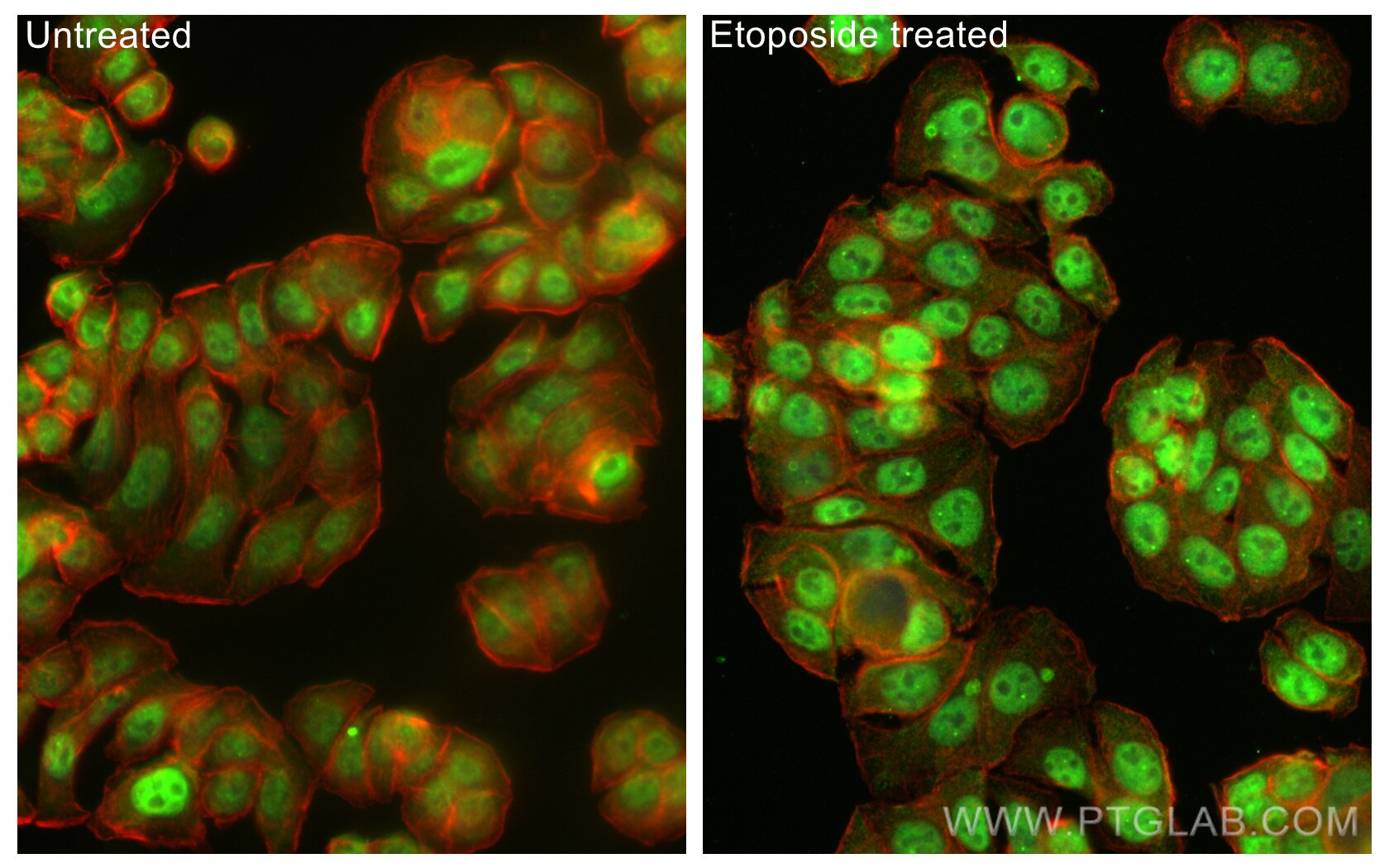
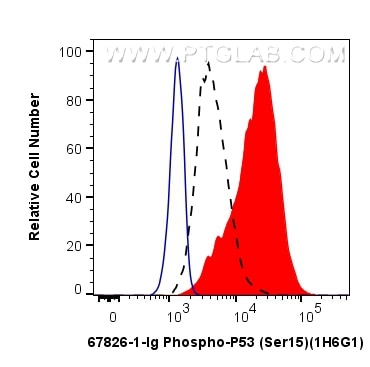

Tested Applications
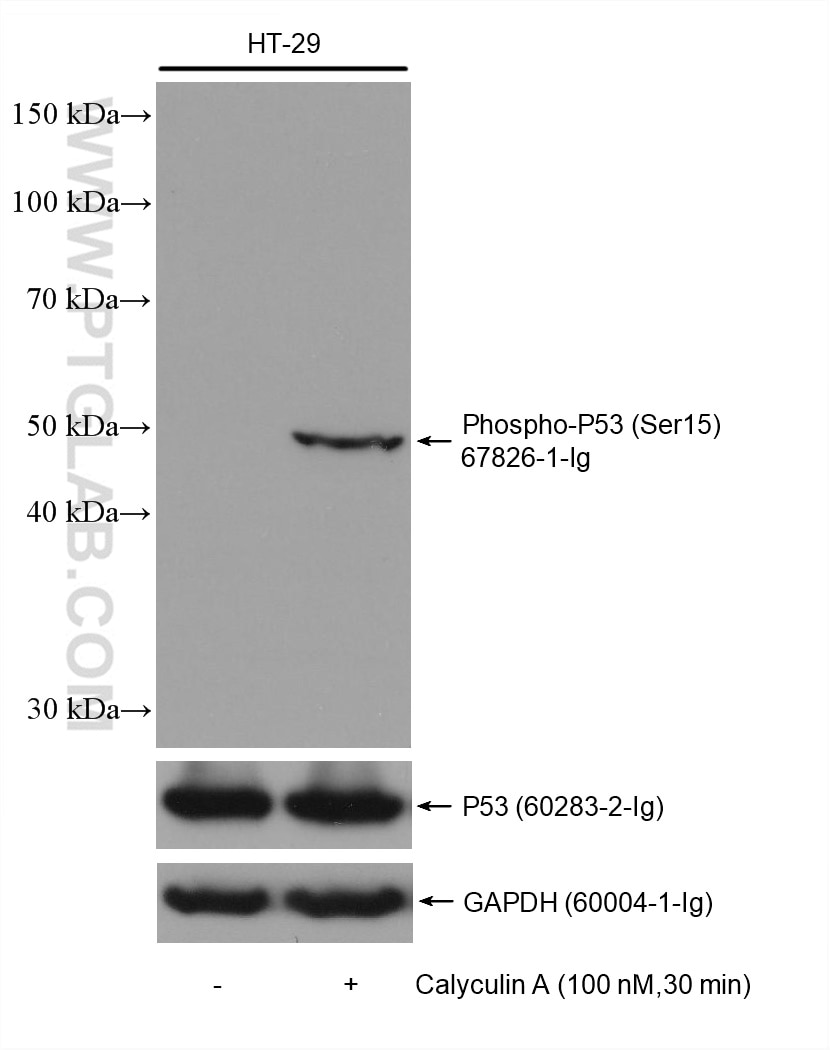
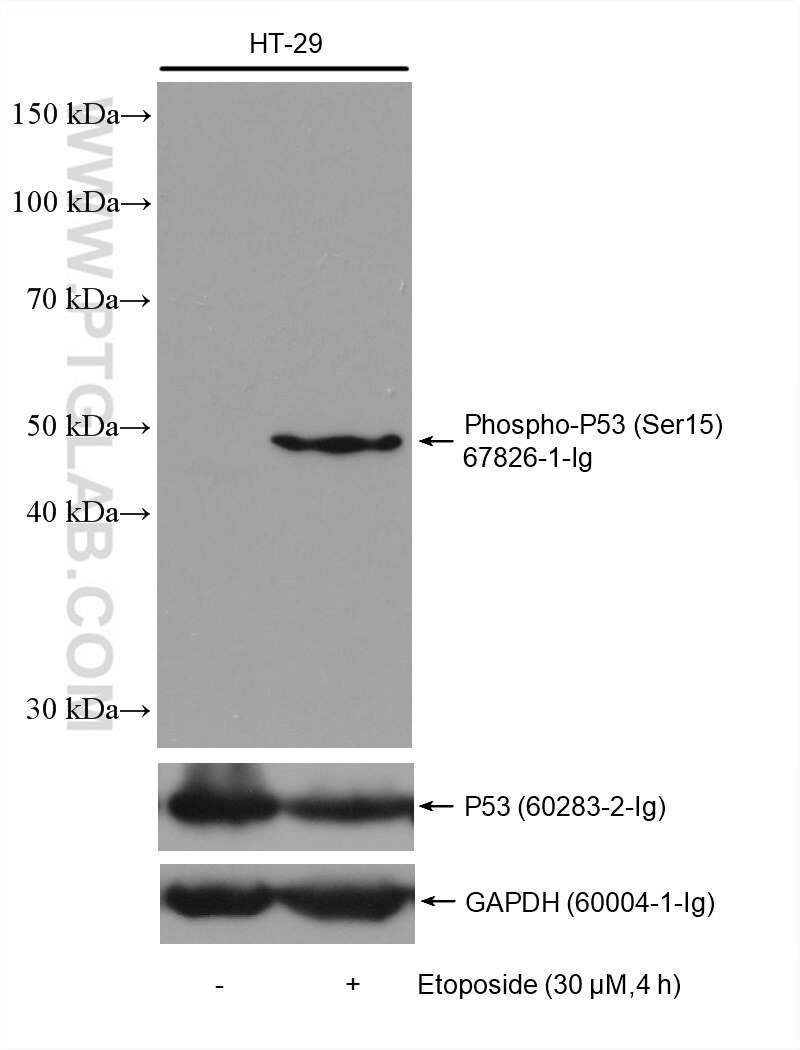
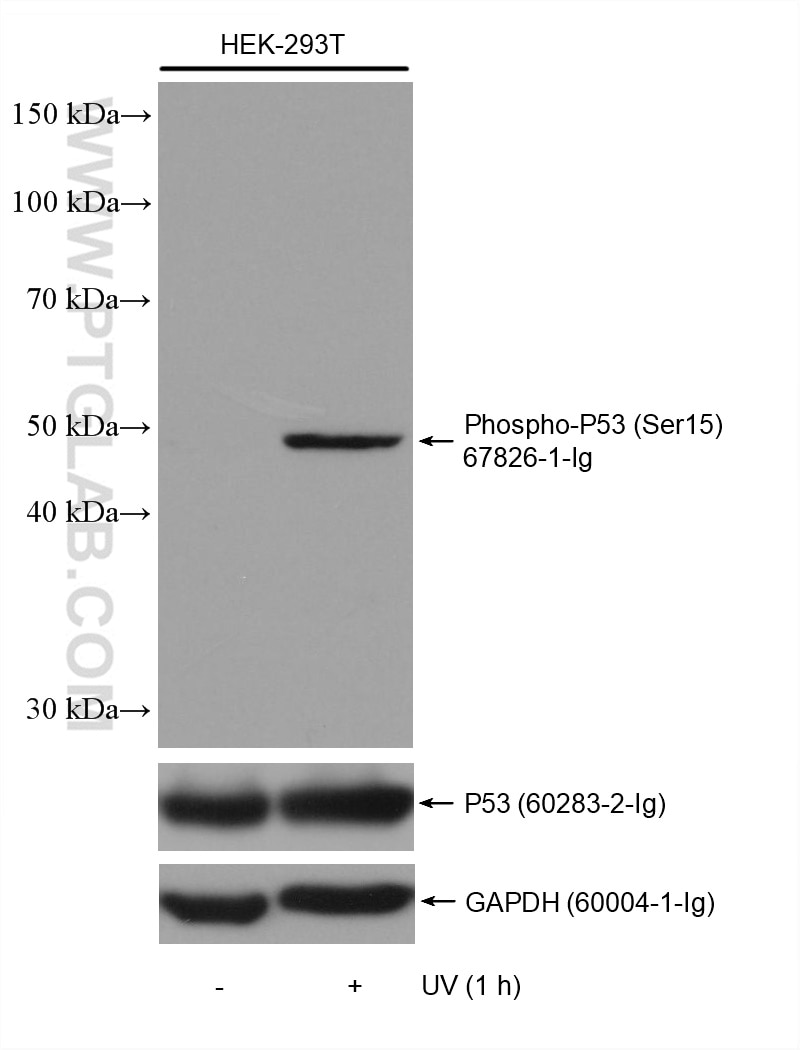
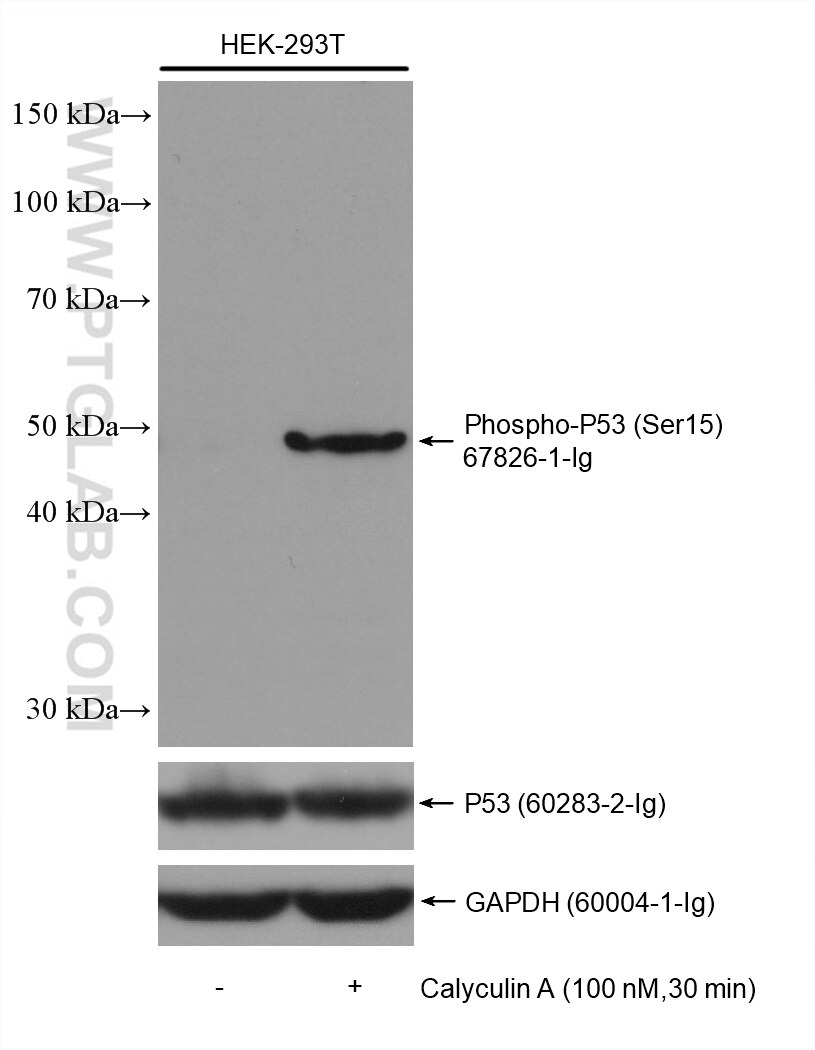
| Positive WB detected in | Calyculin A treated HT-29 cells, HT-29 cells, HEK-293 cells, HEK-293t cells, Etoposide treated HT-29 cells, Calyculin A treated HEK-293 cells, UV treated HEK-293T cells |
| Positive IF/ICC detected in | etoposide treated HT-29 cells |
| Positive FC (Intra) detected in | UV treated HT-29 cells |
Recommended dilution
| Application | Dilution |
|---|---|
| Western Blot (WB) | WB : 1:1000-1:6000 |
| Immunofluorescence (IF)/ICC | IF/ICC : 1:400-1:1600 |
| Flow Cytometry (FC) (INTRA) | FC (INTRA) : 0.13 ug per 10^6 cells in a 100 ul suspension |
| It is recommended that this reagent should be titrated in each testing system to obtain optimal results. | |
| Sample-dependent, Check data in validation data gallery. | |
Product Information
67826-1-Ig targets Phospho-P53 (Ser15) in WB, IHC, IF/ICC, FC (Intra), ELISA applications and shows reactivity with human samples.
| Tested Reactivity | human |
| Cited Reactivity | human, mouse, rat, pig |
| Host / Isotype | Mouse / IgG1 |
| Class | Monoclonal |
| Type | Antibody |
| Immunogen |
Peptide Predict reactive species |
| Full Name | tumor protein p53 |
| Calculated Molecular Weight | 44 kDa |
| Observed Molecular Weight | 53 kDa |
| GenBank Accession Number | BC003596 |
| Gene Symbol | P53 |
| Gene ID (NCBI) | 7157 |
| RRID | AB_2918588 |
| Conjugate | Unconjugated |
| Form | Liquid |
| Purification Method | Protein G purification |
| UNIPROT ID | P04637 |
| Storage Buffer | PBS with 0.02% sodium azide and 50% glycerol, pH 7.3. |
| Storage Conditions | Store at -20°C. Stable for one year after shipment. Aliquoting is unnecessary for -20oC storage. 20ul sizes contain 0.1% BSA. |
Background Information
TP53, also known as P53 and NY-CO-13, belongs to the p53 family and has 9 isoforms. In SDS-Page, the observed molecular weight is about 53 kDa. TP53 acts as a tumor suppressor in many tumor types, including growth arrest or apoptosis depending on the physiological circumstances and cell types. It is involved in cell cycle regulation as a trans-activator that acts to negatively regulate cell division by controlling a set of genes required for this process. TP53 Localizes in the nucleus in most cells but found in the cytoplasm in some cells. (PMID: 26166714; PMID: 25225161)
Protocols
| Product Specific Protocols | |
|---|---|
| IF protocol for Phospho-P53 (Ser15) antibody 67826-1-Ig | Download protocol |
| WB protocol for Phospho-P53 (Ser15) antibody 67826-1-Ig | Download protocol |
| Standard Protocols | |
|---|---|
| Click here to view our Standard Protocols |
Publications
What published studies show
The Phospho-p53 (Ser15) Monoclonal Antibody (Cat# 67826-1-Ig) has 26 citations. These appear in journals including Nature Biomedical Engineering, Cell & Molecular Immunology, Phytomedicine, Advanced Healthcare Materials, Journal of Translational Medicine, Antioxidants, British Journal of Cancer, British Journal of Pharmacology, Communications Biology, European Journal of Pharmacology, International Immunopharmacology, Frontiers in Pharmacology, ACS Omega, Acta Biochimica et Biophysica Sinica, BMC Cancer, Journal of Virology, Naunyn-Schmiedeberg's Archives of Pharmacology, Hepatobiliary & Pancreatic Diseases International, Cell Biology International, Cancer Medicine, Food & Chemical Toxicology, Toxicology Letters, Discovery Oncology, and World Neurosurgery. Research fields span oncology, ferroptosis, apoptosis, inflammation, oxidative stress, and p53 signaling.
| Species | Application | Title |
|---|---|---|
Cell Mol Immunol Cathepsin C orchestrates RSV-induced asthma exacerbation through the dual effect of monocyte-derived macrophages. | ||
Phytomedicine MaiJiTong granule attenuates atherosclerosis by reducing ferroptosis via activating STAT6-mediated inhibition of DMT1 and SOCS1/p53 pathways in LDLR-/- mice | ||
Phytomedicine Tripterygium glycosides reverse cisplatin resistance in epithelial ovarian cancer by activating ferroptosis via two different pathways. | ||
Adv Healthc Mater An H2 S-BMP6 Dual-Loading System with Regulating Yap/Taz and Jun Pathway for Synergistic Critical Limb Ischemia Salvaging Therapy | ||
J Transl Med miR-92b-3p protects retinal tissues against DNA damage and apoptosis by targeting BTG2 in experimental myopia. |







