

Tested Applications
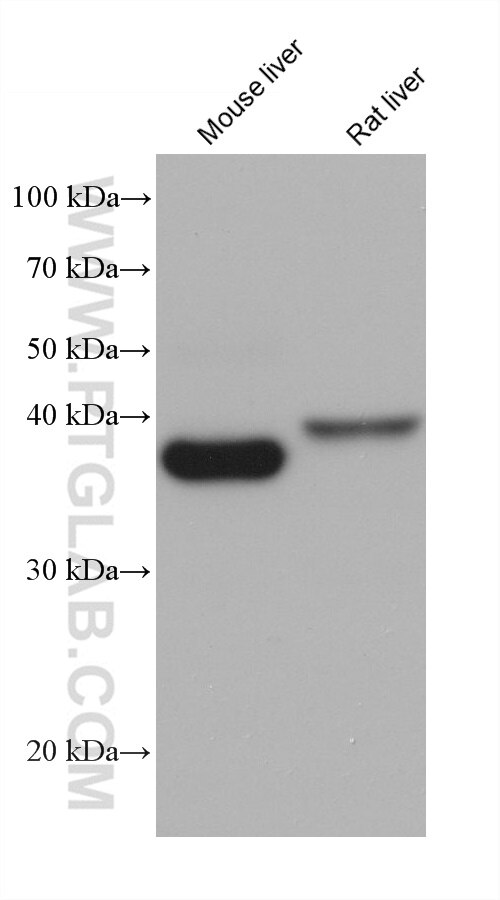
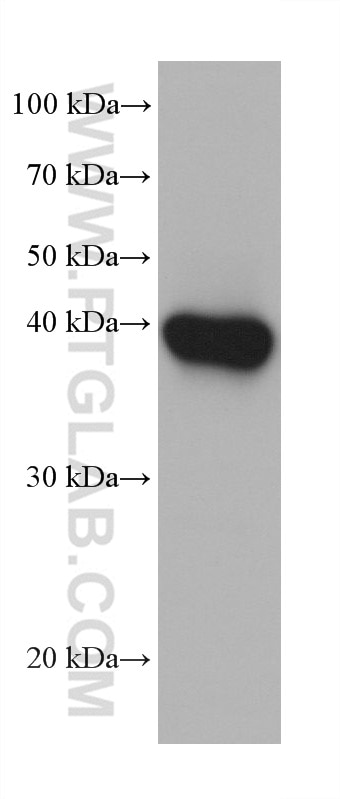
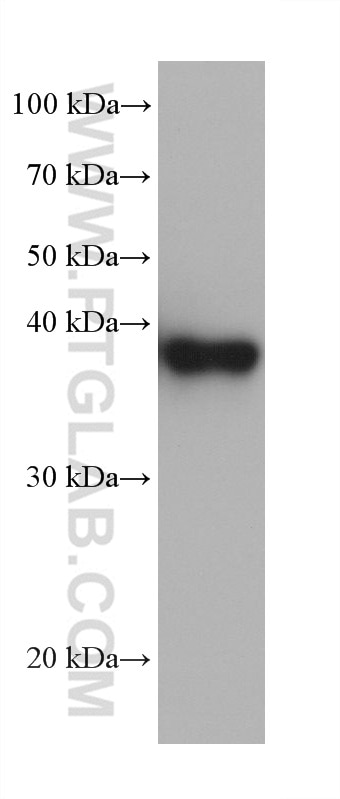
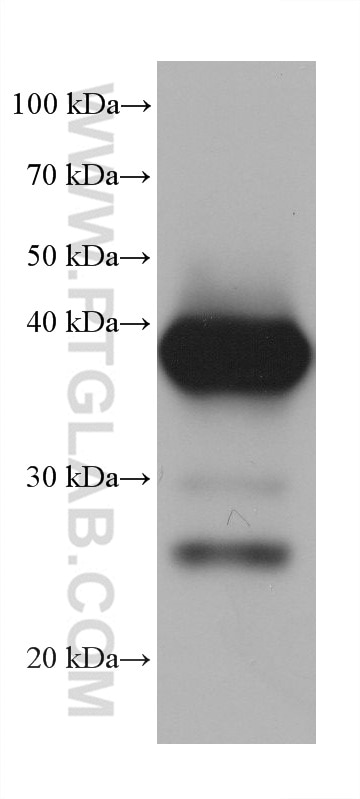
| Positive WB detected in | mouse liver tissue, MCF-7 cells, T-47D cells, pig liver tissue, rat liver tissue |
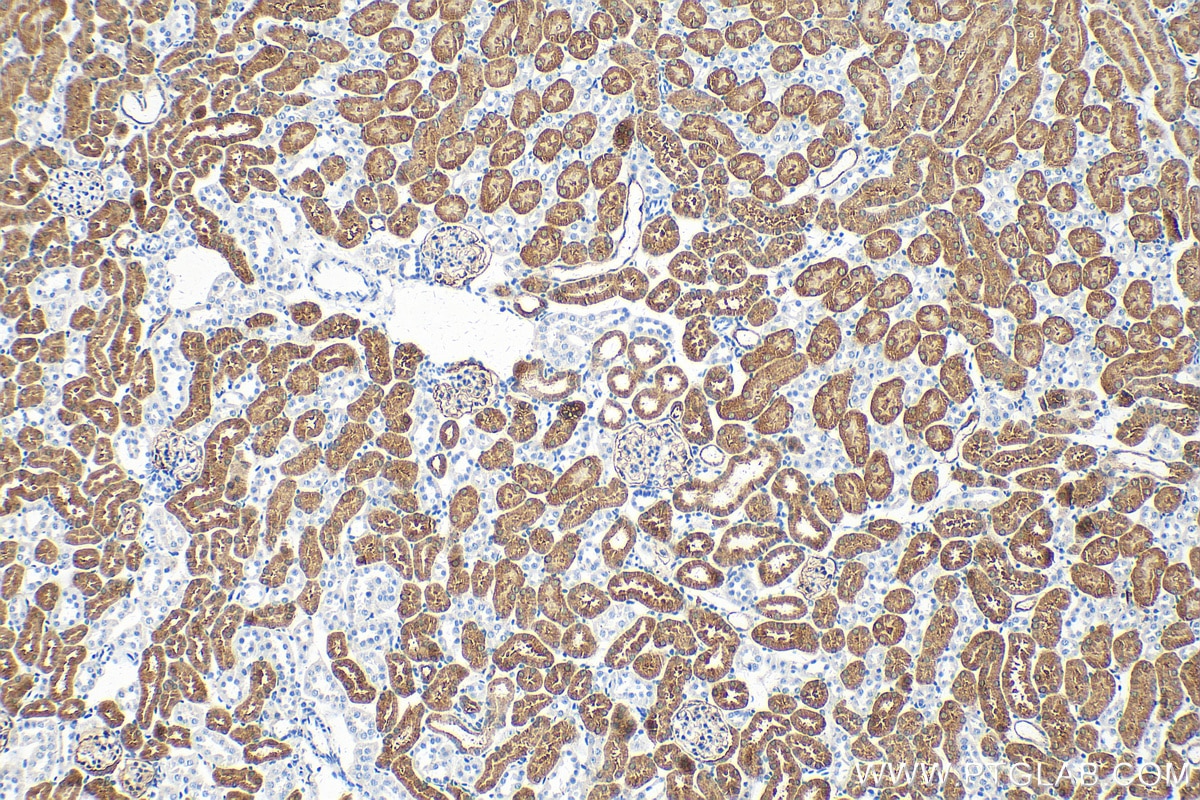
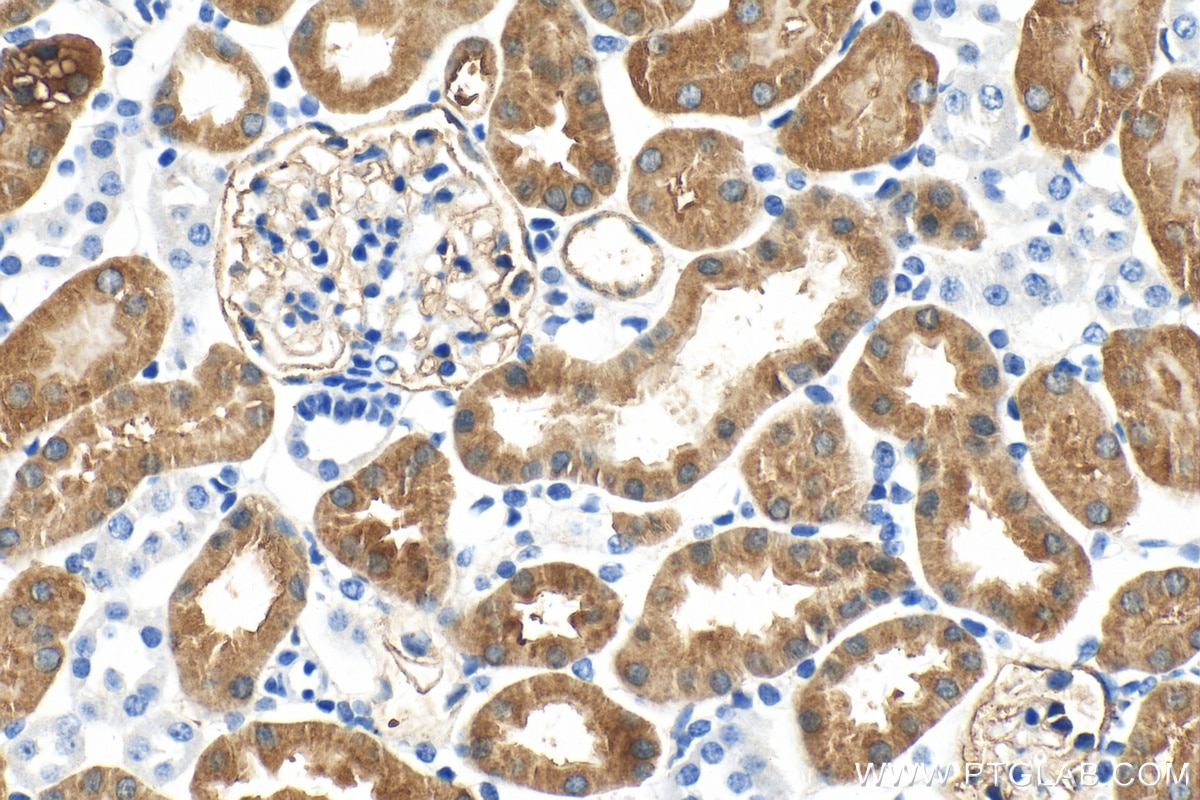
| Positive IHC detected in | mouse kidney tissue Note: suggested antigen retrieval with TE buffer pH 9.0; (*) Alternatively, antigen retrieval may be performed with citrate buffer pH 6.0 |
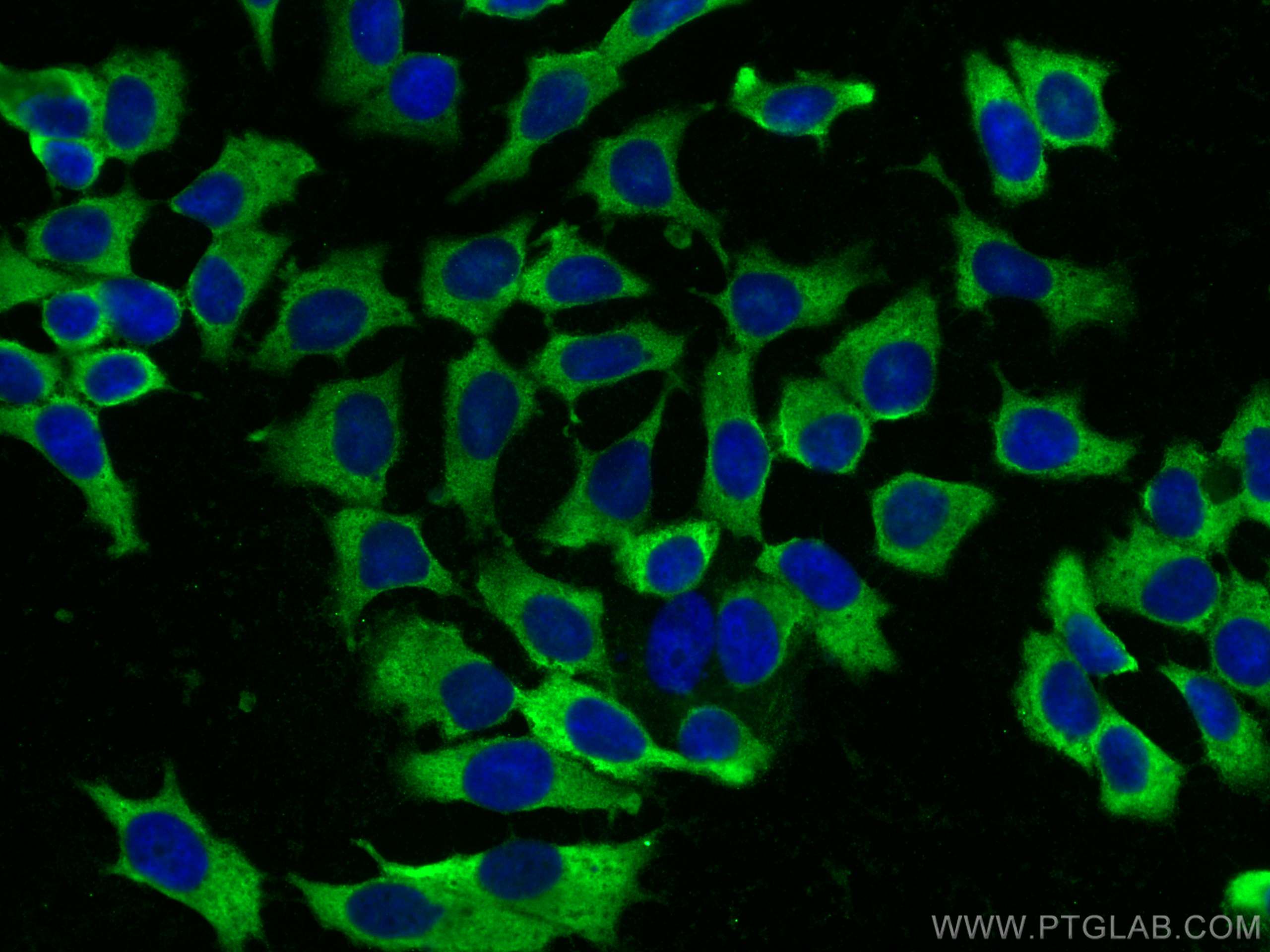
| Positive IF/ICC detected in | MCF-7 cells |
Recommended dilution
| Application | Dilution |
|---|---|
| Western Blot (WB) | WB : 1:5000-1:40000 |
| Immunohistochemistry (IHC) | IHC : 1:1000-1:4000 |
| Immunofluorescence (IF)/ICC | IF/ICC : 1:400-1:1600 |
| It is recommended that this reagent should be titrated in each testing system to obtain optimal results. | |
| Sample-dependent, Check data in validation data gallery. | |
Product Information
68446-1-Ig targets FBP1 in WB, IHC, IF/ICC, ELISA applications and shows reactivity with Human, Mouse, Rat, Pig samples.
| Tested Reactivity | Human, Mouse, Rat, Pig |
| Cited Reactivity | human, mouse, bovine |
| Host / Isotype | Mouse / IgG2a |
| Class | Monoclonal |
| Type | Antibody |
| Immunogen |
CatNo: Ag3837 Product name: Recombinant human FBP1 protein Source: e coli.-derived, T-HIS Tag: 6*His Domain: 1-338 aa of BC012927 Sequence: MADQAPFDTDVNTLTRFVMEEGRKARGTGELTQLLNSLCTAVKAISSAVRKAGIAHLYGIAGSTNVTGDQVKKLDVLSNDLVMNMLKSSFATCVLVSEEDKHAIIVEPEKRGKYVVCFDPLDGSSNIDCLVSVGTIFGIYRKKSTDEPSEKDALQPGRNLVAAGYALYGSATMLVLAMDCGVNCFMLDPAIGEFILVDKDVKIKKKGKIYSLNEGYARDFDPAVTEYIQRKKFPPDNSAPYGARYVGSMVADVHRTLVYGGIFLYPANKKSPNGKLRLLYECNPMAYVMEKAGGMATTGKEAVLDVIPTDIHQRAPVILGSPDDVLEFLKVYEKHSAQ Predict reactive species |
| Full Name | fructose-1,6-bisphosphatase 1 |
| Calculated Molecular Weight | 338 aa, 37 kDa |
| Observed Molecular Weight | 37-40 kDa |
| GenBank Accession Number | BC012927 |
| Gene Symbol | FBP1 |
| Gene ID (NCBI) | 2203 |
| RRID | AB_3085158 |
| Conjugate | Unconjugated |
| Form | Liquid |
| Purification Method | Protein A purification |
| UNIPROT ID | P09467 |
| Storage Buffer | PBS with 0.02% sodium azide and 50% glycerol, pH 7.3. |
| Storage Conditions | Store at -20°C. Stable for one year after shipment. Aliquoting is unnecessary for -20oC storage. 20ul sizes contain 0.1% BSA. |
Background Information
FBP1 (Fructose-1,6-bisphosphatase 1) is also named as FBP and belongs to the FBPase class 1 family. It catalyzes the hydrolysis of fructose-1,6 bisphosphate to fructose-6-phosphate and inorganic phosphate. This reaction is an important regulatory site of gluconeogenesis. Defects in FBP1 are the cause of fructose-1,6-bisphosphatase deficiency (FBPD) (PMID:12126934).
Protocols
| Product Specific Protocols | |
|---|---|
| IF protocol for FBP1 antibody 68446-1-Ig | Download protocol |
| IHC protocol for FBP1 antibody 68446-1-Ig | Download protocol |
| WB protocol for FBP1 antibody 68446-1-Ig | Download protocol |
| Standard Protocols | |
|---|---|
| Click here to view our Standard Protocols |
Publications
What published studies show
The TRIM47 recombinant Ig antibody (Cat# 68446-1-Ig) has 4 total citations published in Advanced Science, Journal of Cellular and Molecular Medicine, Reproductive Medicine and Biology, and Pathology Research and Practice. The associated research fields include hepatocellular carcinoma progression, osteosarcoma and Wnt/β-catenin signaling, glycolytic reprogramming, sperm energy metabolism and gluconeogenesis, and thyroid cancer involving lactylation-mediated FBP1 degradation. Applications span IF and WB in human, mouse, and bovine species.
| Species | Application | Title |
|---|---|---|
Adv Sci (Weinh) TRIM47 Regulates Energy Metabolism via Glycolytic Reprogramming to Drive Hepatocellular Carcinoma Progression and Represents an Efficient Therapeutic Target. | ||
J Cell Mol Med TRIM47 Facilitates Osteosarcoma Progression via Destabilising FBP1 and Thus Activation of Wnt/β-Catenin Pathway.
| ||
Reprod Med Biol The Three Pillars of ATP Production in Mammalian Sperm: Integrating Gluconeogenesis Into the Metabolic Framework. | ||
Pathol Res Pract Lactylation-induced TRIM47 exacerbates cell viability, cell cycle progression, and glycolysis in thyroid cancer by inducing ubiquitin-mediated degradation of FBP1. |








