

Tested Applications
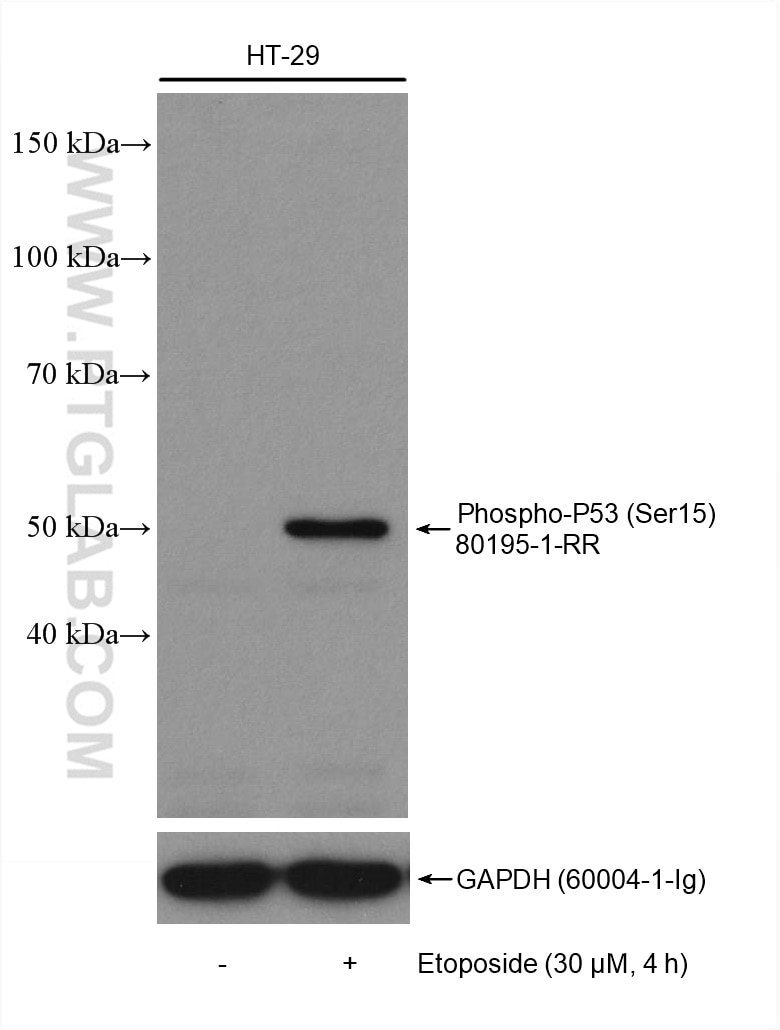
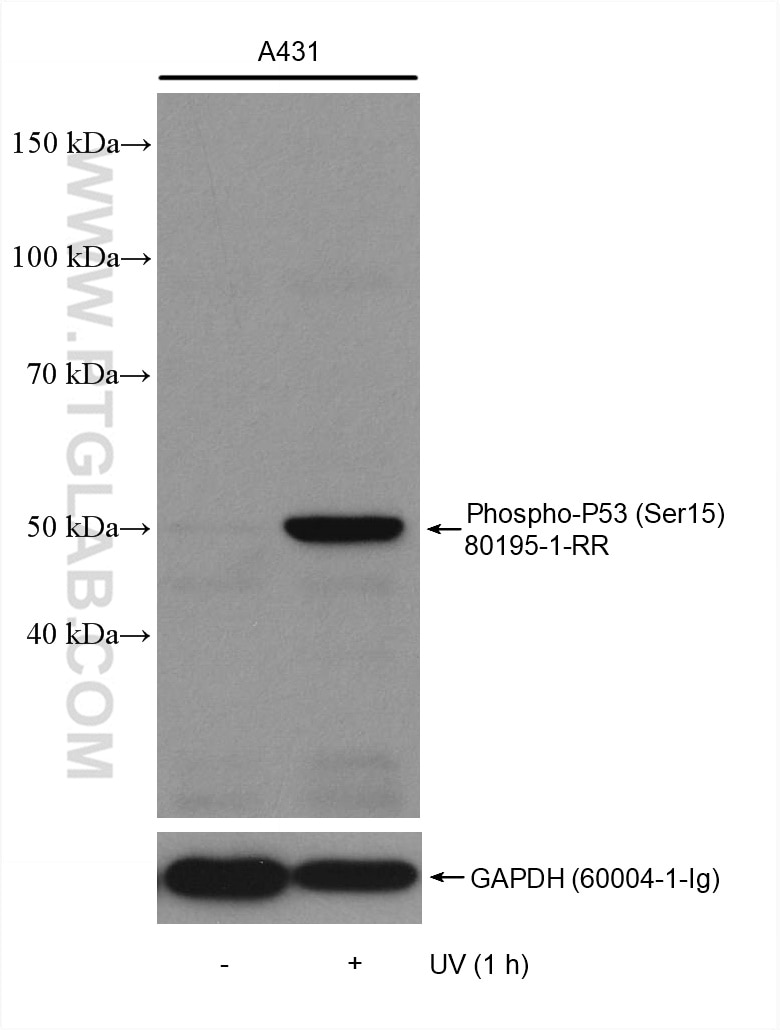
| Positive WB detected in | etoposide treated HT-29 cells, UV treated A431 cells |
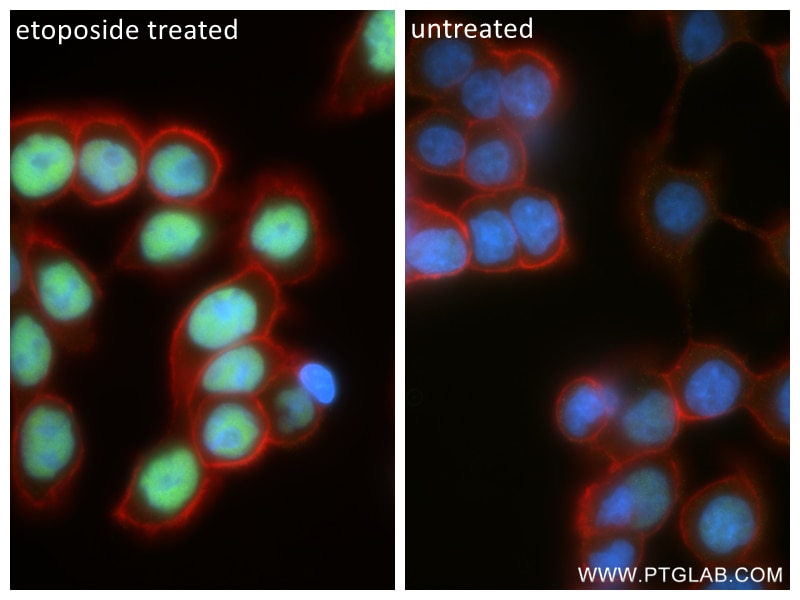
| Positive IF/ICC detected in | HT-29 cells |
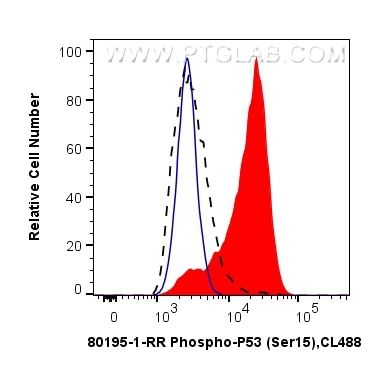
| Positive FC (Intra) detected in | UV treated A431 cells |
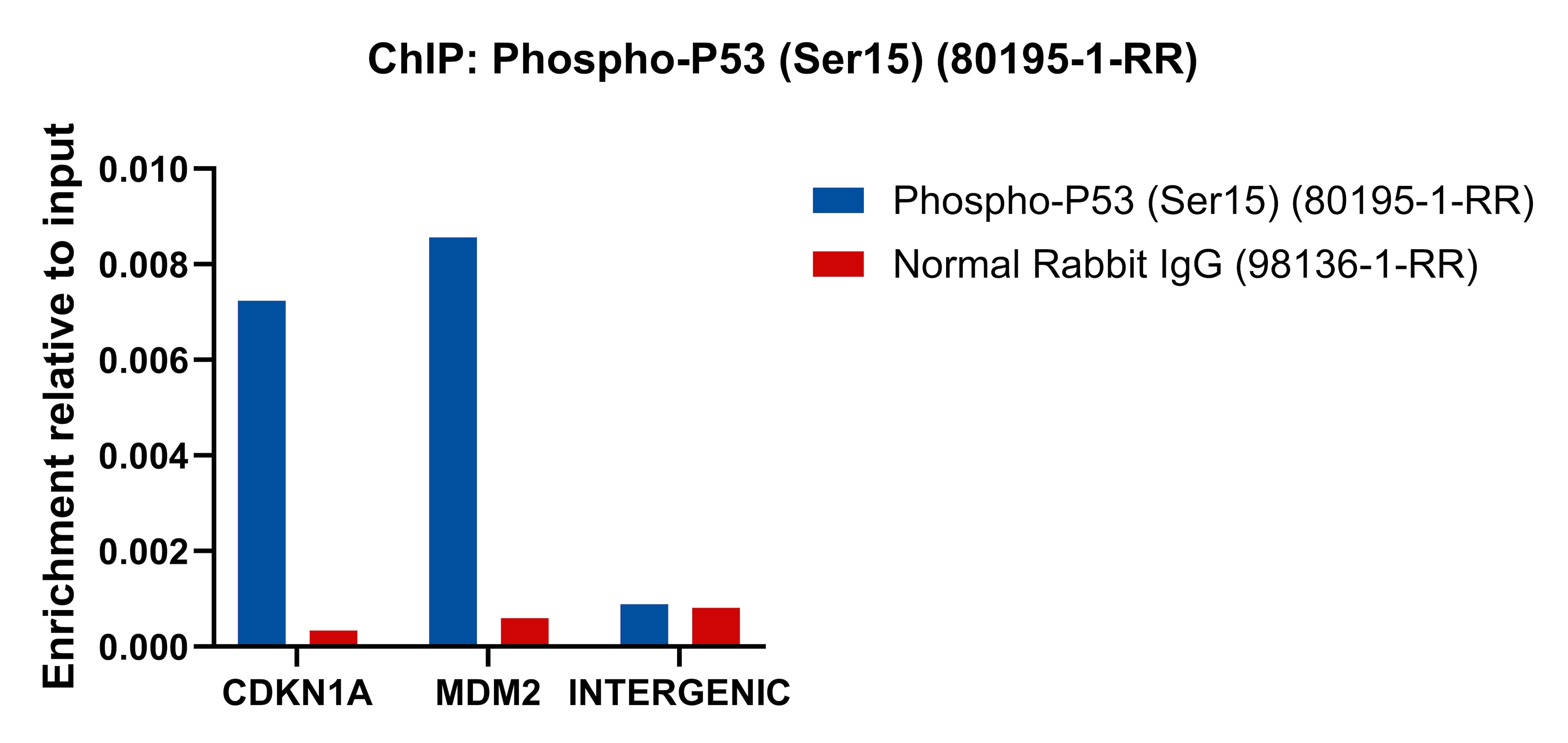
| Positive ChIP-qPCR detected in | Etoposide (50 µM, 6 h) HCT 116 cells |
Recommended dilution
| Application | Dilution |
|---|---|
| Western Blot (WB) | WB : 1:2000-1:10000 |
| Immunofluorescence (IF)/ICC | IF/ICC : 1:250-1:1000 |
| Flow Cytometry (FC) (INTRA) | FC (INTRA) : 0.13 ug per 10^6 cells in a 100 µl suspension |
| CHIP-QPCR | CHIP-QPCR : 1:10-1:100 |
| It is recommended that this reagent should be titrated in each testing system to obtain optimal results. | |
| Sample-dependent, Check data in validation data gallery. | |
Product Information
80195-1-RR targets Phospho-P53 (Ser15) in WB, IF/ICC, FC (Intra), ELISA, ChIP-qPCR applications and shows reactivity with human samples.
| Tested Reactivity | human |
| Cited Reactivity | human, mouse, rat |
| Host / Isotype | Rabbit / IgG |
| Class | Recombinant |
| Type | Antibody |
| Immunogen |
Peptide Predict reactive species |
| Full Name | tumor protein p53 |
| Calculated Molecular Weight | 44 kDa |
| Observed Molecular Weight | 53 kDa |
| GenBank Accession Number | BC003596 |
| Gene Symbol | P53 |
| Gene ID (NCBI) | 7157 |
| RRID | AB_2918873 |
| Conjugate | Unconjugated |
| Form | Liquid |
| Purification Method | Protein A purification |
| UNIPROT ID | P04637 |
| Storage Buffer | PBS with 0.02% sodium azide and 50% glycerol, pH 7.3. |
| Storage Conditions | Store at -20°C. Stable for one year after shipment. Aliquoting is unnecessary for -20oC storage. 20ul sizes contain 0.1% BSA. |
Background Information
P53 is a 53 kDa protein that is activated in response to alteration of normal cell homeostasis, including DNA damage, nutrient starvation, heat shock, virus infection, pH change, hypoxia, and oncogene activation. P53 maintains genetic stability by regulating different processes, such as cell-cycle arrest, DNA synthesis and repair, programmed cell death, and energy metabolism. In non-stressed conditions these proteins bind p53, ubiquitylate it and target it for degradation by the proteasome. In stressed conditions the function of the MdM2-MdM4 complex is blocked by phosphorylation, protein-binding events and/or enhanced degradation. (PMID: 19935675, PMID: 24379683)
Protocols
| Product Specific Protocols | |
|---|---|
| IF protocol for Phospho-P53 (Ser15) antibody 80195-1-RR | Download protocol |
| WB protocol for Phospho-P53 (Ser15) antibody 80195-1-RR | Download protocol |
| Standard Protocols | |
|---|---|
| Click here to view our Standard Protocols |
Publications
What published studies show
The Phospho-P53 (Ser15) Recombinant Monoclonal Antibody (2J21), catalog number 80195-1-RR, has 12 total citations. These appear in journals including Cell Death Discovery, Free Radical Biology and Medicine, European Journal of Medicinal Chemistry, Ecotoxicology and Environmental Safety, Cells, Frontiers in Pharmacology, Biochimica et Biophysica Acta, Scientific Reports, Toxics, Journal of Molecular Biology, Journal of Inflammation Research, and Microbial Pathogenesis. The research fields span oncology, ferroptosis, DNA damage and repair, osteoarthritis, neurotoxicity, inflammation, and apoptosis.
| Species | Application | Title |
|---|---|---|
Cell Death Discov VK-2019 enhances gemcitabine's antitumor activity in EBV-positive nasopharyngeal carcinoma by upregulating PRODH expression. | ||
Free Radic Biol Med Inhibiting Arachidonate-5-lipoxygenase expression ameliorates osteoarthritis progression by suppressing ferroptosis via the JAK2/STAT3 signaling pathway. | ||
Eur J Med Chem Design and synthesis of novel 1,2,4-triazolobenzene sulfonamide derivatives as selective CDK1 inhibitors with potent in vivo anticancer efficacy. | ||
Ecotoxicol Environ Saf PARP1 promoter hypermethylation promotes arsenic-induced skin damage by driving telomere dysfunction-mediated keratinocyte senescence. | ||
Cells Concurrent Activation of Both Survival-Promoting and Death-Inducing Signaling by Chloroquine in Glioblastoma Stem Cells: Implications for Potential Risks and Benefits of Using Chloroquine as Radiosensitizer | ||
Front Pharmacol Synergistic effects of retinol and retinyl palmitate in alleviating UVB-induced DNA damage and promoting the homologous recombination repair in keratinocytes |






