




Tested Applications
| Positive WB detected in | U-87 MG cells, U2OS cells, HFF cells |
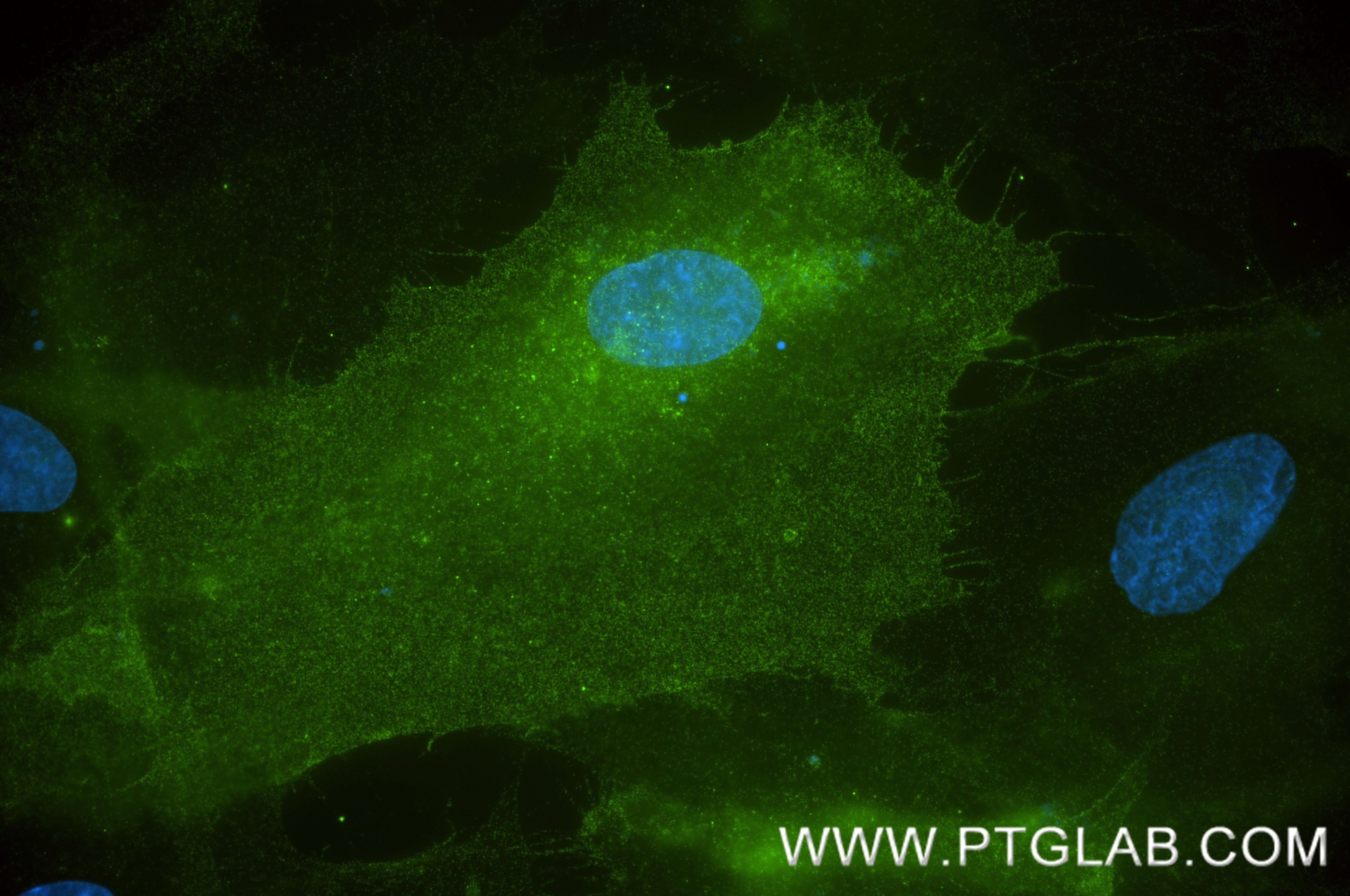
| Positive IF/ICC detected in | HFF cells |
Recommended dilution
| Application | Dilution |
|---|---|
| Western Blot (WB) | WB : 1:1000-1:8000 |
| Immunofluorescence (IF)/ICC | IF/ICC : 1:200-1:800 |
| It is recommended that this reagent should be titrated in each testing system to obtain optimal results. | |
| Sample-dependent, Check data in validation data gallery. | |
Product Information
84018-4-RR targets FAP in WB, IF/ICC, FC, ELISA applications and shows reactivity with human samples.
| Tested Reactivity | human |
| Cited Reactivity | human, mouse |
| Host / Isotype | Rabbit / IgG |
| Class | Recombinant |
| Type | Antibody |
| Immunogen |
CatNo: Eg0821 Product name: Recombinant Human FAP protein (His Tag) Source: mammalian cells-derived, pHZ-KIsec-C-6*HIS Tag: N-6*His Domain: 26-760 aa of NM_004460.4 Sequence: LRPSRVHNSEENTMRALTLKDILNGTFSYKTFFPNWISGQEYLHQSADNNIVLYNIETGQSYTILSNRTMKSVNASNYGLSPDRQFVYLESDYSKLWRYSYTATYYIYDLSNGEFVRGNELPRPIQYLCWSPVGSKLAYVYQNNIYLKQRPGDPPFQITFNGRENKIFNGIPDWVYEEEMLATKYALWWSPNGKFLAYAEFNDTDIPVIAYSYYGDEQYPRTINIPYPKAGAKNPVVRIFIIDTTYPAYVGPQEVPVPAMIASSDYYFSWLTWVTDERVCLQWLKRVQNVSVLSICDFREDWQTWDCPKTQEHIEESRTGWAGGFFVSTPVFSYDAISYYKIFSDKDGYKHIHYIKDTVENAIQITSGKWEAINIFRVTQDSLFYSSNEFEEYPGRRNIYRISIGSYPPSKKCVTCHLRKERCQYYTASFSDYAKYYALVCYGPGIPISTLHDGRTDQEIKILEENKELENALKNIQLPKEEIKKLEVDEITLWYKMILPPQFDRSKKYPLLIQVYGGPCSQSVRSVFAVNWISYLASKEGMVIALVDGRGTAFQGDKLLYAVYRKLGVYEVEDQITAVRKFIEMGFIDEKRIAIWGWSYGGYVSSLALASGTGLFKCGIAVAPVSSWEYYASVYTERFMGLPTKDDNLEHYKNSTVMARAEYFRNVDYLLIHGTADDNVHFQNSAQIAKALVNAQVDFQAMWYSDQNHGLSGLSTNHLYTHMTHFLKQCFSLSD Predict reactive species |
| Full Name | fibroblast activation protein, alpha |
| Calculated Molecular Weight | 88 kDa |
| Observed Molecular Weight | 88 kDa |
| GenBank Accession Number | NM_004460.4 |
| Gene Symbol | FAP |
| Gene ID (NCBI) | 2191 |
| RRID | AB_3671587 |
| Conjugate | Unconjugated |
| Form | Liquid |
| Purification Method | Protein A purification |
| UNIPROT ID | Q12884-1 |
| Storage Buffer | PBS with 0.02% sodium azide and 50% glycerol, pH 7.3. |
| Storage Conditions | Store at -20°C. Stable for one year after shipment. Aliquoting is unnecessary for -20oC storage. 20ul sizes contain 0.1% BSA. |
Background Information
Fibroblast activation protein-alpha (FAP-alpha) is a cell surface glycoprotein serine protease, which can participate in extracellular matrix degradation and is involved in many cellular processes including tissue remodeling, fibrosis, wound healing, inflammation and tumor growth (PMID: 14751930; 16223769). FAP-alpha is a single transmembrane protein that locates the cytoplasm and plasma membrane. Immunohistochemical studies have shown that FAP-alpha is transiently expressed in certain normal fetal mesenchymal tissues but that normal adult tissues as well as malignant epithelial, neural, and hematopoietic cells are generally FAP-alpha-negative. However, most of the common types of epithelial cancers contain abundant FAP-alpha-reactive stromal fibroblasts (PMID: 7911242).
Protocols
| Product Specific Protocols | |
|---|---|
| IF protocol for FAP antibody 84018-4-RR | Download protocol |
| WB protocol for FAP antibody 84018-4-RR | Download protocol |
| Standard Protocols | |
|---|---|
| Click here to view our Standard Protocols |
Publications
What published studies show
The FAP Recombinant monoclonal antibody (241129B4), catalog number 84018-4-RR, has 5 total citations. These appear in Signal Transduction and Targeted Therapy, Journal of Translational Medicine, FASEB Journal, Journal of Biochemical and Molecular Toxicology, and Hereditas. Research fields span photodynamic tumor therapy, gastric cancer progression and EMT, Crohn's disease-related fibrosis, pancreatic cancer stemness, and liver cancer immune escape, with applications including IF, WB, and FC.
| Species | Application | Title |
|---|---|---|
Signal Transduct Target Ther Photodynamic gel-bombs enhance tumor penetration and downstream synergistic therapies | ||
J Transl Med Exosome-derived Menin from cancer-associated fibroblasts promotes gastric cancer progression by activating the HSPA6/JNK/JunD pathway and inducing EMT. | ||
FASEB J The Exosomal miR-130b-5p Derived From Crohn's Disease-Associated Mesenteric Adipose Tissue Promotes Ileocolonic Anastomotic Fibrosis via the Smad Signaling Pathway. | ||
J Biochem Mol Toxicol Mechanism of Cancer-Associated Fibroblasts-Derived NEAT1 Promoting Pancreatic Cancer Cell Stemness via the miR-101-3p/KDM3A Axis. | ||
Hereditas CAFs-derived SPI1 in tumor fibroblasts promotes malignant behaviors of liver cancer cells and immune escape by regulating HRAS and PD-L1 transcription. |





