

Tested Applications
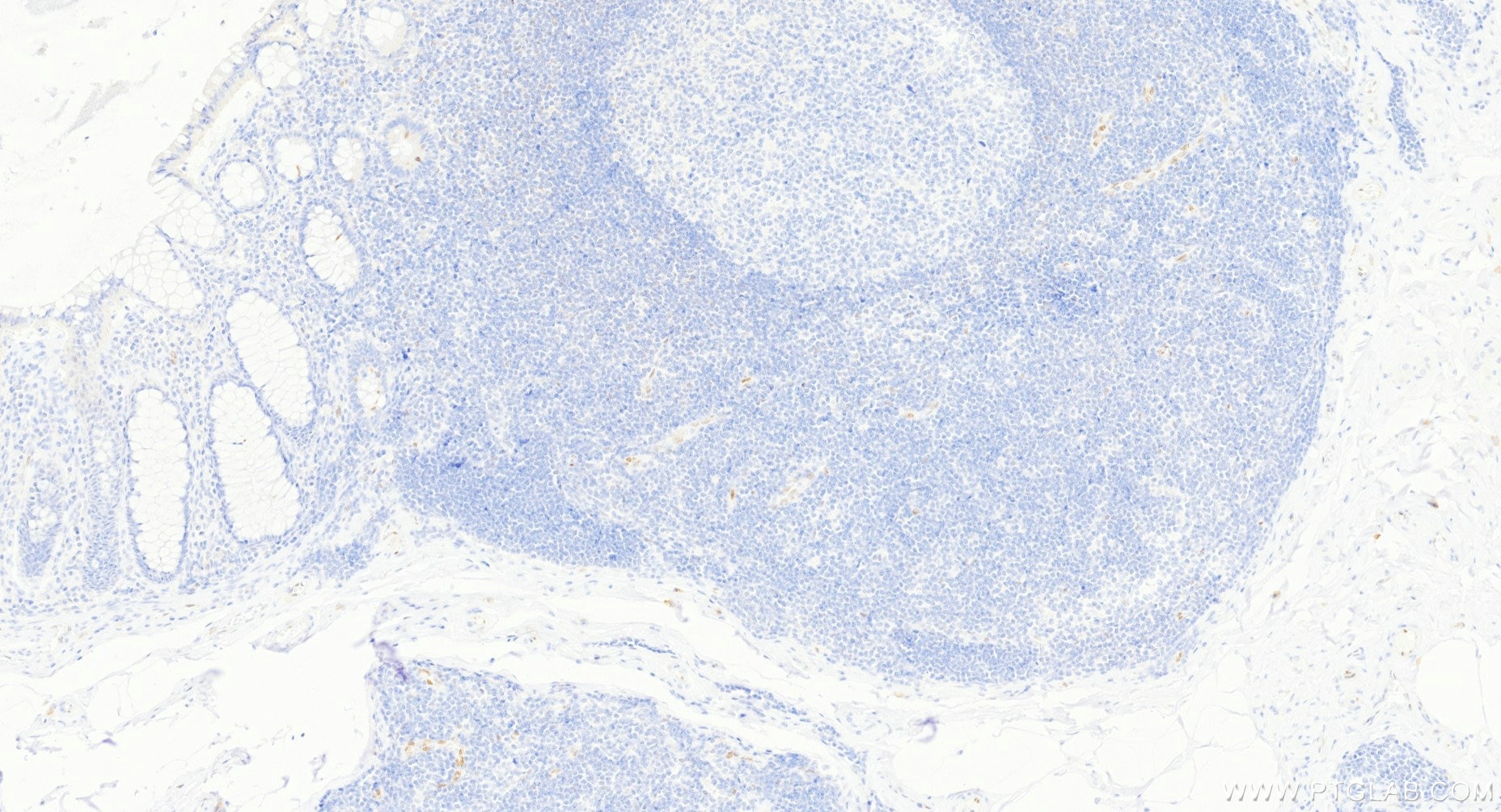
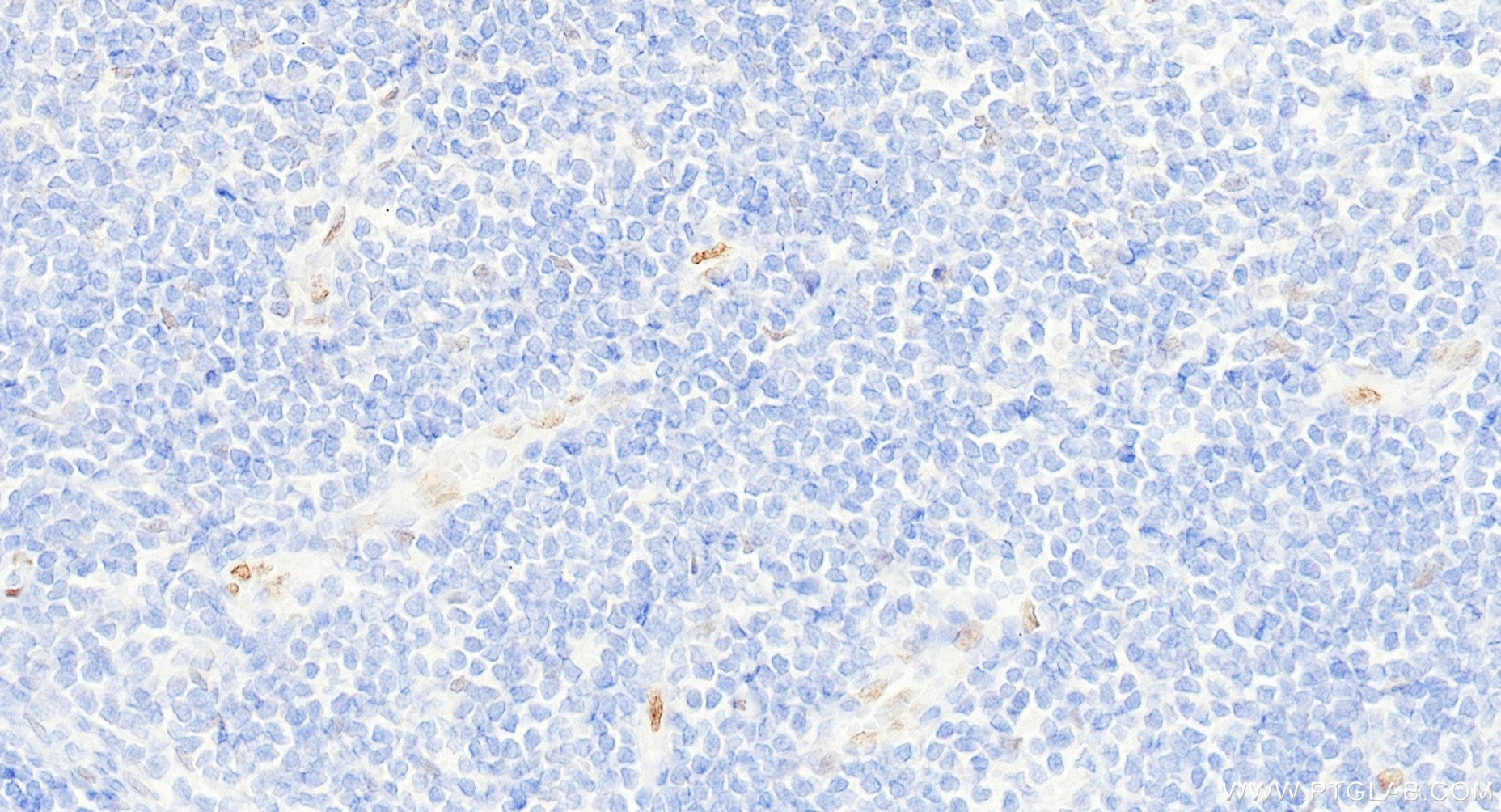
| Positive IHC detected in | human colon tissue Note: suggested antigen retrieval with TE buffer pH 9.0; (*) Alternatively, antigen retrieval may be performed with citrate buffer pH 6.0 |
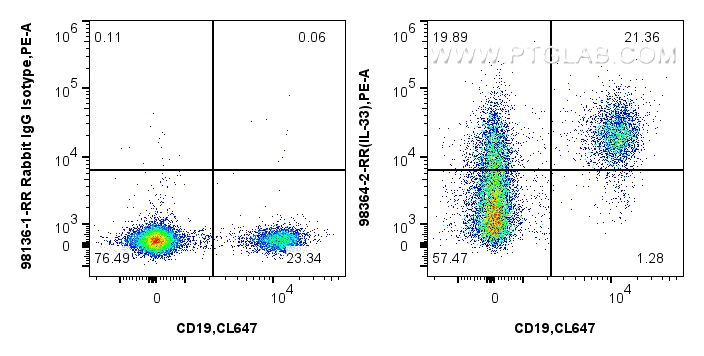
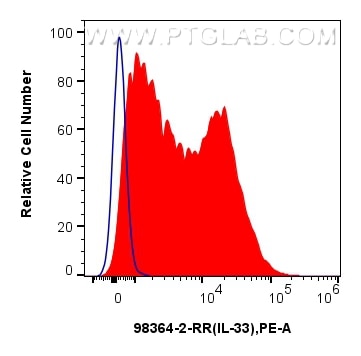
| Positive FC (Intra) detected in | human PBMCs |
Recommended dilution
| Application | Dilution |
|---|---|
| Immunohistochemistry (IHC) | IHC : 1:2500-1:10000 |
| Flow Cytometry (FC) (INTRA) | FC (INTRA) : 0.25 ug per 10^6 cells in a 100 µl suspension |
| This reagent has been tested for flow cytometric analysis. It is recommended that this reagent should be titrated in each testing system to obtain optimal results. | |
| Sample-dependent, Check data in validation data gallery. | |
Product Information
98364-2-RR targets IL-33 in IHC, FC (Intra) applications and shows reactivity with human samples.
| Tested Reactivity | human |
| Host / Isotype | Rabbit / IgG |
| Class | Recombinant |
| Type | Antibody |
| Immunogen |
CatNo: Eg7061 Product name: Recombinant human IL33 protein Source: mammalian cells-derived, pHZ-KIsec-N-rFc Tag: N-rFc Domain: 122-270 aa of BC047085 Sequence: YLASLSTYNDQSITFALEDESYEIYVEDLKKDEKKDKVLLSYYESQHPSNESGDGVDGKMLMVTLSPTKDFWLHANNKEHSVELHKCEKPLPDQAFFVLHNMHSNCVSFECKTDPGVFIGVKDNHLALIKVDSSENLCTENILFKLSET Predict reactive species |
| Full Name | interleukin 33 |
| Calculated Molecular Weight | 30 kDa |
| GenBank Accession Number | BC047085 |
| Gene Symbol | IL-33 |
| Gene ID (NCBI) | 90865 |
| RRID | AB_3746014 |
| Conjugate | Unconjugated |
| Form | Liquid |
| Purification Method | Protein A purification |
| UNIPROT ID | O95760 |
| Storage Buffer | PBS with 0.09% sodium azide, pH 7.3. |
| Storage Conditions | Store at 2 - 8°C. Stable for one year after shipment. |
Background Information
IL-33 is an IL-1 family cytokine and nuclear alarmin, is constitutively expressed in epithelial barrier tissues and human blood vessels. IL-33 is involved in the maturation of Th2 cells and the activation of mast cells, basophils, eosinophils and natural killer cells. It also acts as a chemoattractant for Th2 cells, and may function as an "alarmin", that amplifies immune responses during tissue injury.
Protocols
| Product Specific Protocols | |
|---|---|
| FC protocol for IL-33 antibody 98364-2-RR | Download protocol |
| IHC protocol for IL-33 antibody 98364-2-RR | Download protocol |
| Standard Protocols | |
|---|---|
| Click here to view our Standard Protocols |





