

Tested Applications
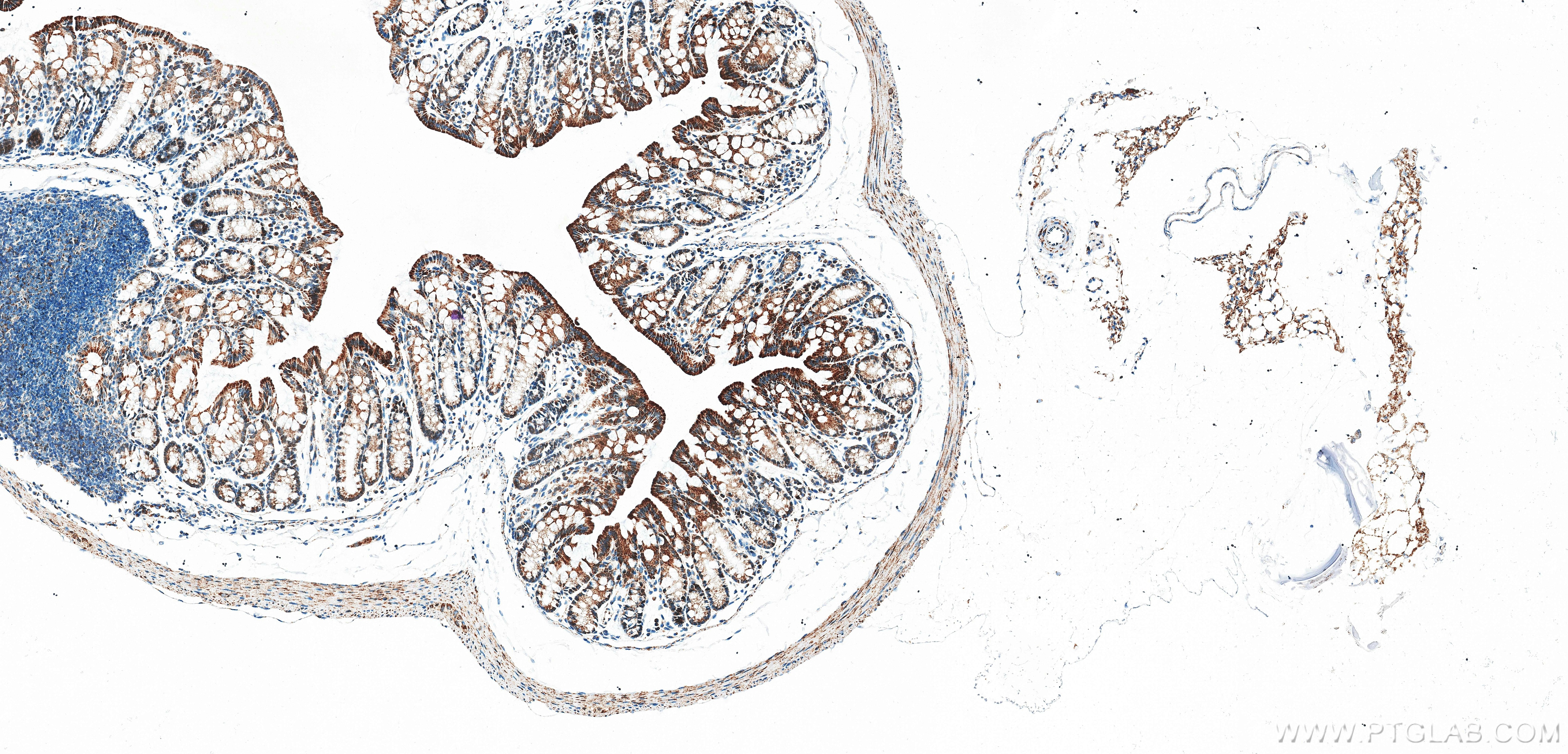
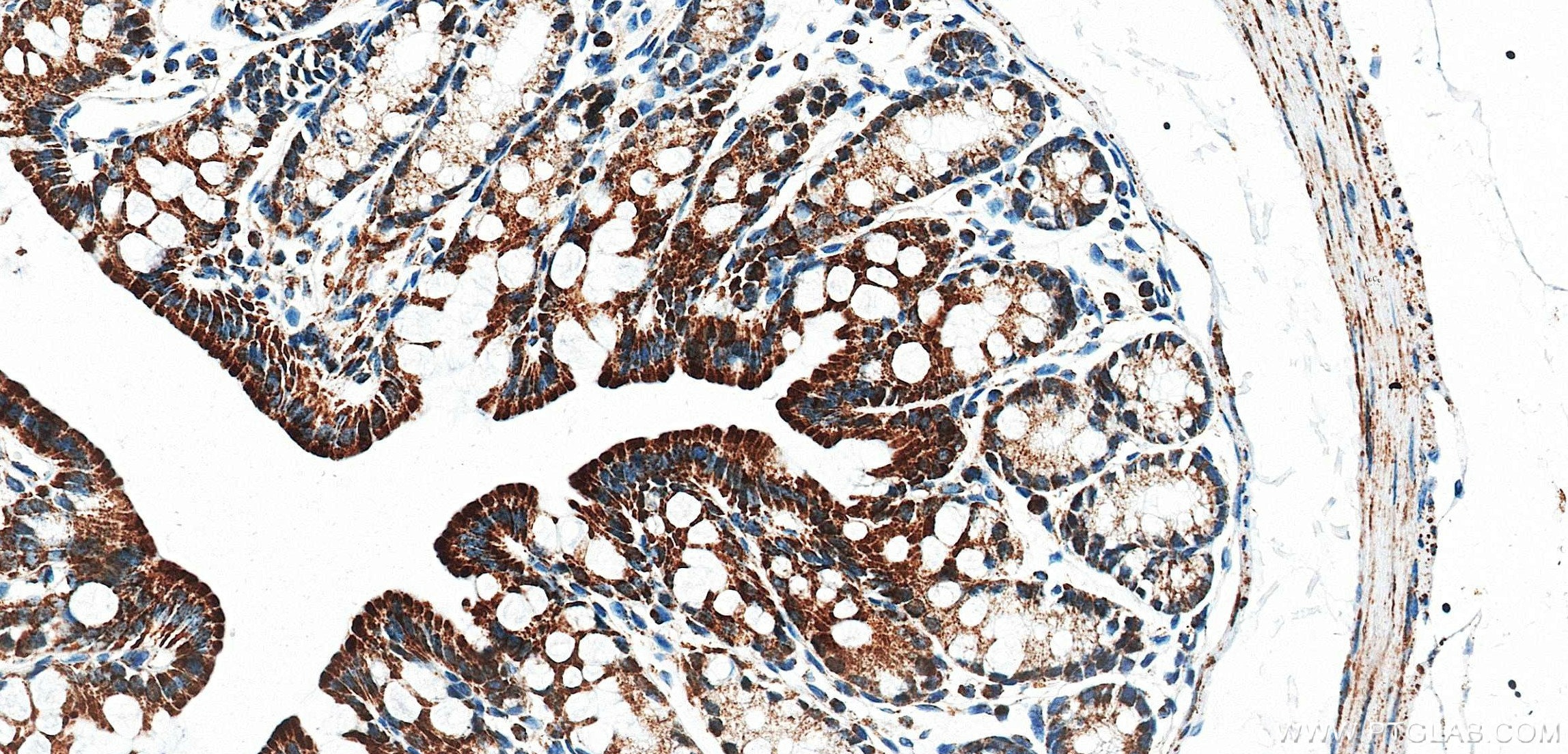
| Positive IHC detected in | mouse colon tissue Note: suggested antigen retrieval with TE buffer pH 9.0; (*) Alternatively, antigen retrieval may be performed with citrate buffer pH 6.0 |
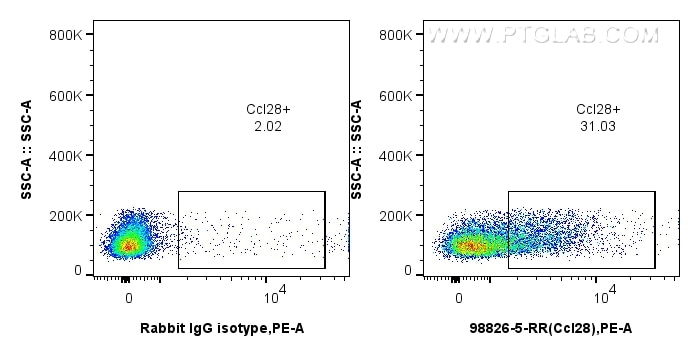
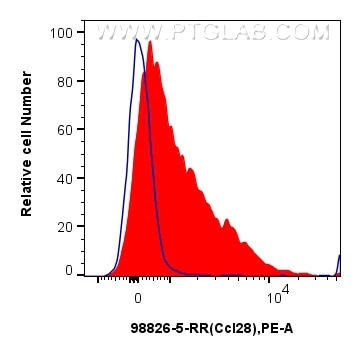
| Positive FC (Intra) detected in | mouse splenocytes |
Recommended dilution
| Application | Dilution |
|---|---|
| Immunohistochemistry (IHC) | IHC : 1:1500-1:6000 |
| Flow Cytometry (FC) (INTRA) | FC (INTRA) : 0.25 ug per 10^6 cells in a 100 ul suspension |
| This reagent has been tested for flow cytometric analysis. It is recommended that this reagent should be titrated in each testing system to obtain optimal results. | |
| Sample-dependent, Check data in validation data gallery. | |
Product Information
98826-5-RR targets CCL28 in IHC, FC (Intra) applications and shows reactivity with mouse samples.
| Tested Reactivity | mouse |
| Host / Isotype | Rabbit / IgG |
| Class | Recombinant |
| Type | Antibody |
| Immunogen |
CatNo: Eg5201 Product name: recombinant mouse Ccl28 protein Source: mammalian cells-derived, pHZ-KIsec-N-rFc Tag: N-rFc Domain: 23-130 aa of NM_020279.3 Sequence: ILPMASSCCTEVSHHVSGRLLERVSSCSIQRADGDCDLAAVILHVKRRRICISPHNRTLKQWMRASEVKKNGRENVCSGKKQPSRKDRKGHTTRKHRTRGTHRHEASR Predict reactive species |
| Full Name | chemokine (C-C motif) ligand 28 |
| Calculated Molecular Weight | 15 kDa |
| GenBank Accession Number | NM_020279.3 |
| Gene Symbol | Ccl28 |
| Gene ID (NCBI) | 56838 |
| Conjugate | Unconjugated |
| Form | Liquid |
| Purification Method | Protein A purification |
| UNIPROT ID | Q9JIL2 |
| Storage Buffer | PBS with 0.09% sodium azide, pH 7.3. |
| Storage Conditions | Store at 2 - 8°C. Stable for one year after shipment. |
Background Information
CCL28, also named as SCYA28, CCK1 and MEC, belongs to the intercrine beta (chemokine CC) family. It has chemotactic activity for resting CD4, CD8 T-cells and eosinophils. CCL28 binds to CCR3 and CCR10 and induces calcium mobilization in a dose-dependent manner. CCL28 is expressed in a variety of human and mouse tissues, and it appears to be predominantly produced by epithelial cells. It is produced by epithelial cells of these tissues suggesting that this chemokine can play an important role by linking homing mechanisms between the gut, nasal mucosa and mammary gland (MG).
Protocols
| Product Specific Protocols | |
|---|---|
| FC protocol for CCL28 antibody 98826-5-RR | Download protocol |
| IHC protocol for CCL28 antibody 98826-5-RR | Download protocol |
| Standard Protocols | |
|---|---|
| Click here to view our Standard Protocols |






