

Tested Applications
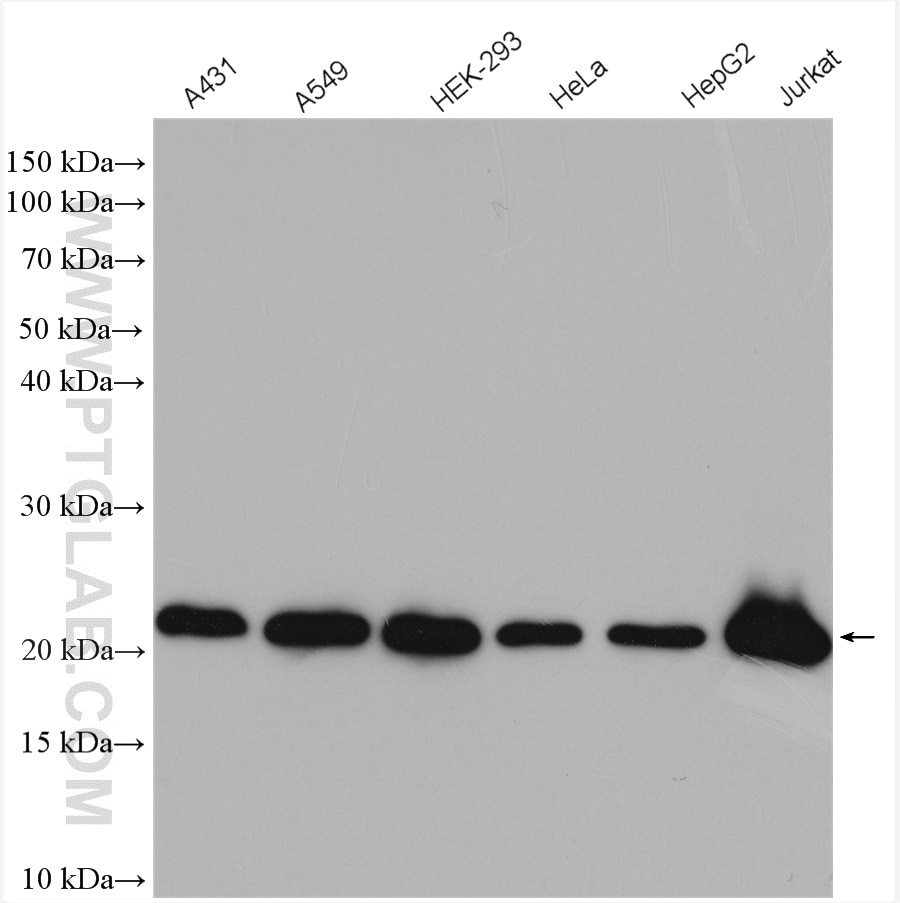
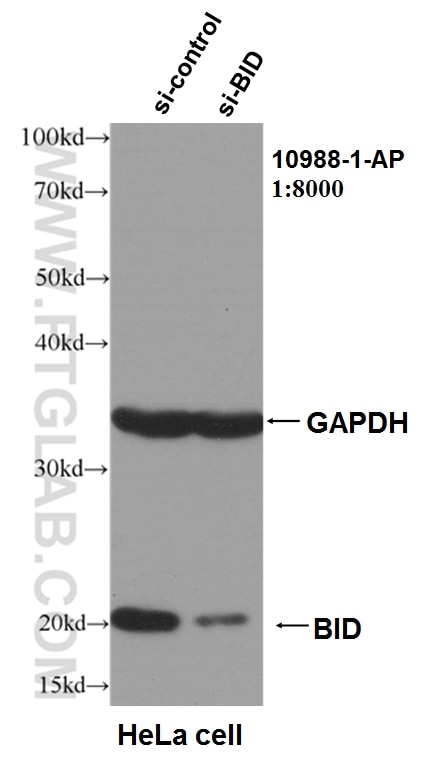
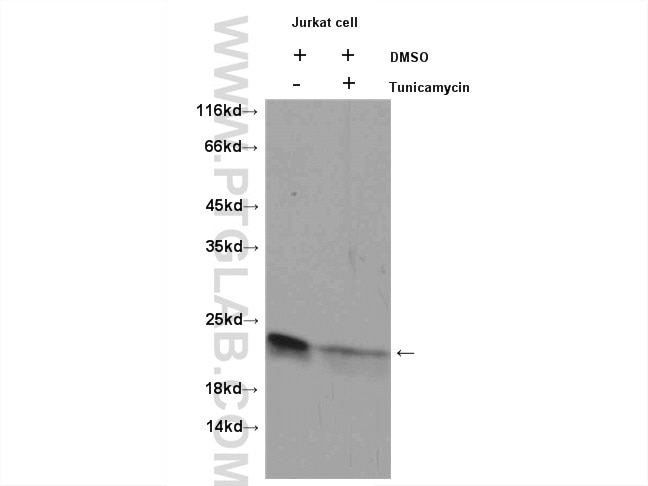
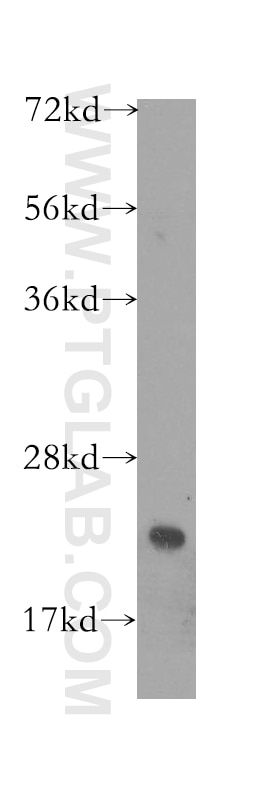
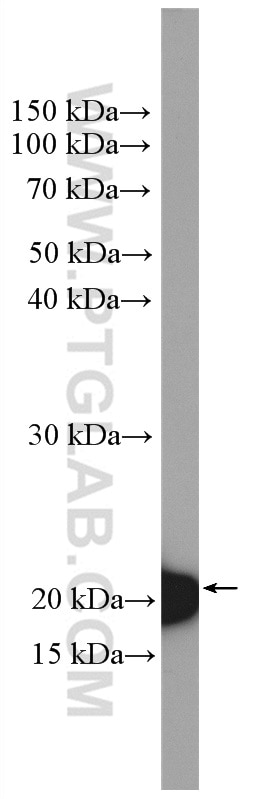
| Positive WB detected in | A431 cells, human brain tissue, Tunicamycin treated HeLa cells, A549 cells, HEK-293 cells, HepG2 cells, Jurkat cells |
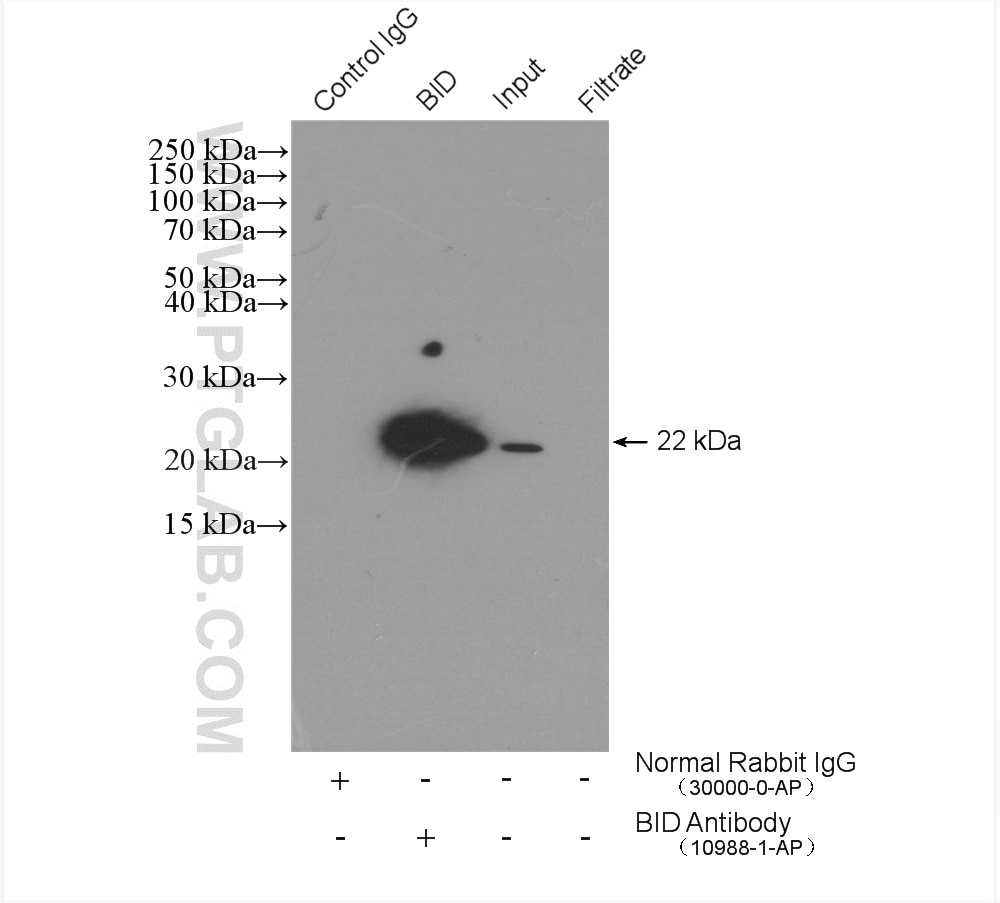
| Positive IP detected in | HeLa cells |
Recommended dilution
| Application | Dilution |
|---|---|
| Western Blot (WB) | WB : 1:1000-1:4000 |
| Immunoprecipitation (IP) | IP : 0.5-4.0 ug for 1.0-3.0 mg of total protein lysate |
| It is recommended that this reagent should be titrated in each testing system to obtain optimal results. | |
| Sample-dependent, Check data in validation data gallery. | |
Product Information
10988-1-AP targets BID in WB, IHC, IF, IP, ELISA applications and shows reactivity with human samples.
| Tested Reactivity | human |
| Cited Reactivity | human, mouse, rat, pig |
| Host / Isotype | Rabbit / IgG |
| Class | Polyclonal |
| Type | Antibody |
| Immunogen |
CatNo: Ag1445 Product name: Recombinant human BID protein Source: e coli.-derived, PGEX-4T Tag: GST Domain: 1-195 aa of BC009197 Sequence: MDCEVNNGSSLRDECITNLLVFGFLQSCSDNSFRRELDALGHELPVLAPQWEGYDELQTDGNRSSHSRLGRIEADSESQEDIIRNIARHLAQVGDSMDRSIPPGLVNGLALQLRNTSRSEEDRNRDLATALEQLLQAYPRDMEKEKTMLVLALLLAKKVASHTPSLLRDVFHTTVNFINQNLRTYVRSLARNGMD Predict reactive species |
| Full Name | BH3 interacting domain death agonist |
| Calculated Molecular Weight | 22 kDa |
| Observed Molecular Weight | 22 kDa |
| GenBank Accession Number | BC009197 |
| Gene Symbol | BID |
| Gene ID (NCBI) | 637 |
| RRID | AB_2065624 |
| Conjugate | Unconjugated |
| Form | Liquid |
| Purification Method | Antigen affinity purification |
| UNIPROT ID | P55957 |
| Storage Buffer | PBS with 0.02% sodium azide and 50% glycerol, pH 7.3. |
| Storage Conditions | Store at -20°C. Stable for one year after shipment. Aliquoting is unnecessary for -20oC storage. 20ul sizes contain 0.1% BSA. |
Background Information
BID, also named as p22 BID, can be cleaved into p11 BID, p13 BID and p15 BID. It is pro-apoptotic molecules. The major proteolytic product p15 BID allows the release of cytochrome c. BID-L, BID-EL and BID-ES induce ICE-like proteases and apoptosis. BID-S does not induce apoptosis. BID counters the protective effect of Bcl-2. (PMID:14583606)
Protocols
| Product Specific Protocols | |
|---|---|
| IP protocol for BID antibody 10988-1-AP | Download protocol |
| WB protocol for BID antibody 10988-1-AP | Download protocol |
| Standard Protocols | |
|---|---|
| Click here to view our Standard Protocols |
Publications
What published studies show
The BID polyclonal antibody (Cat# 10988-1-AP) has 78 citations published in journals including Cell Death & Disease, Biochemical Pharmacology, Apoptosis, British Journal of Pharmacology, Cancer Letters, FEBS Journal, Circulation Research, and PLoS ONE. Associated research fields encompass apoptosis mechanisms, ferroptosis, mitochondrial signaling, oxidative stress, and anticancer drug development across liver, breast, lung, gastric, and colorectal cancers, as well as neuroprotection and inflammatory diseases.
| Species | Application | Title |
|---|---|---|
Adv Mater Selective Organ-Targeting Hafnium Oxide Nanoparticles with Multienzyme-Mimetic Activities Attenuate Radiation-Induced Tissue Damage | ||
Cell Mol Immunol Mapping the holonomic signaling network that drives pathological changes in endotoxic shock. | ||
Bioact Mater A ROS-responsive, self-immolative and self-reporting hydrogen sulfide donor with multiple biological activities for the treatment of myocardial infarction. | ||
Circ Res Spatiotemporal ATF3 Expression Determines VSMC Fate in Abdominal Aortic Aneurysm | ||
J Nanobiotechnology Multifunctional Fe-based coordination polymer nano-bomb modified with β-lapachone and CaO2 for targeted tumor dual chemodynamic therapy with enhanced ferroptosis and H2O2 self-supply | ||
Carbohydr Polym A chemo/chemodynamic nanoparticle based on hyaluronic acid induces ferroptosis and apoptosis for triple-negative breast cancer therapy |







