
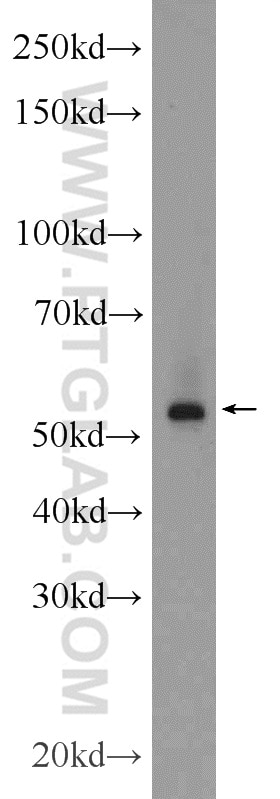
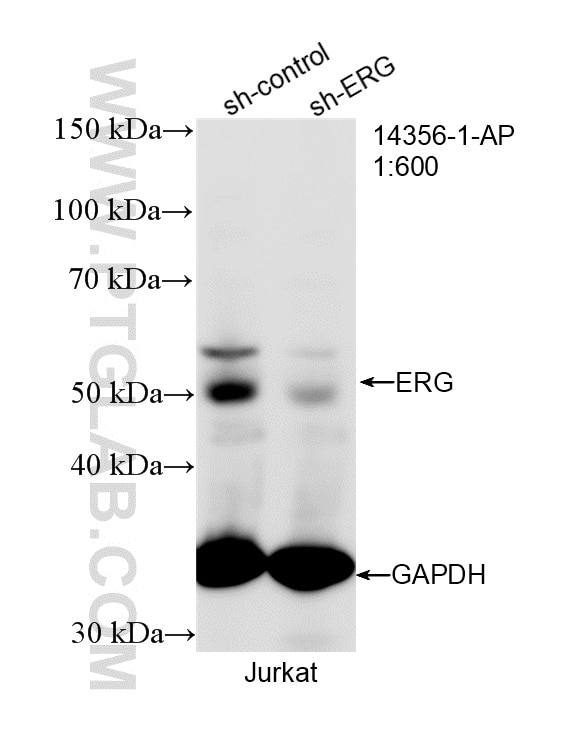
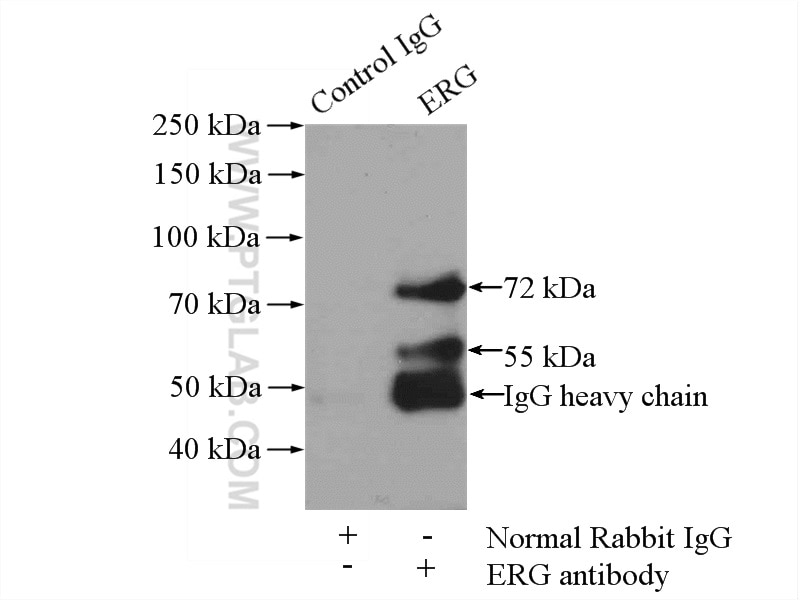
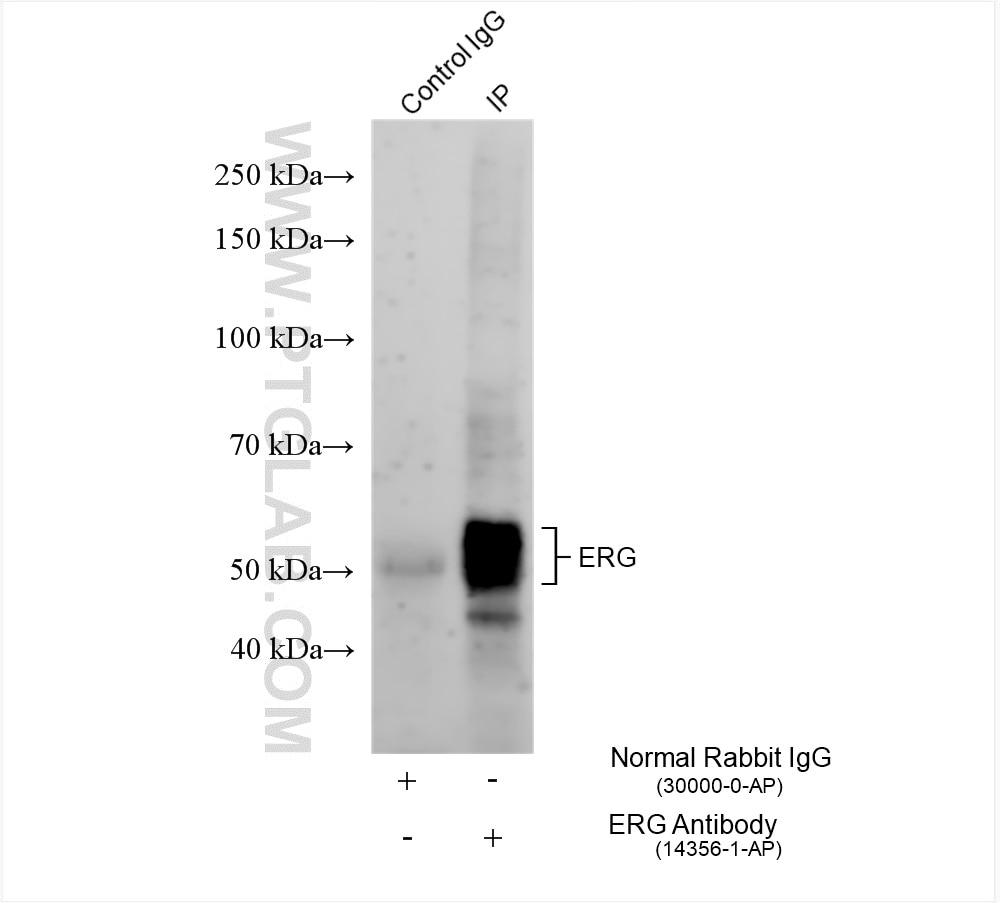

Tested Applications
| Positive WB detected in | MCF-7 cells, Jurkat cells |
| Positive IP detected in | MCF-7 cells, rat heart tissue |
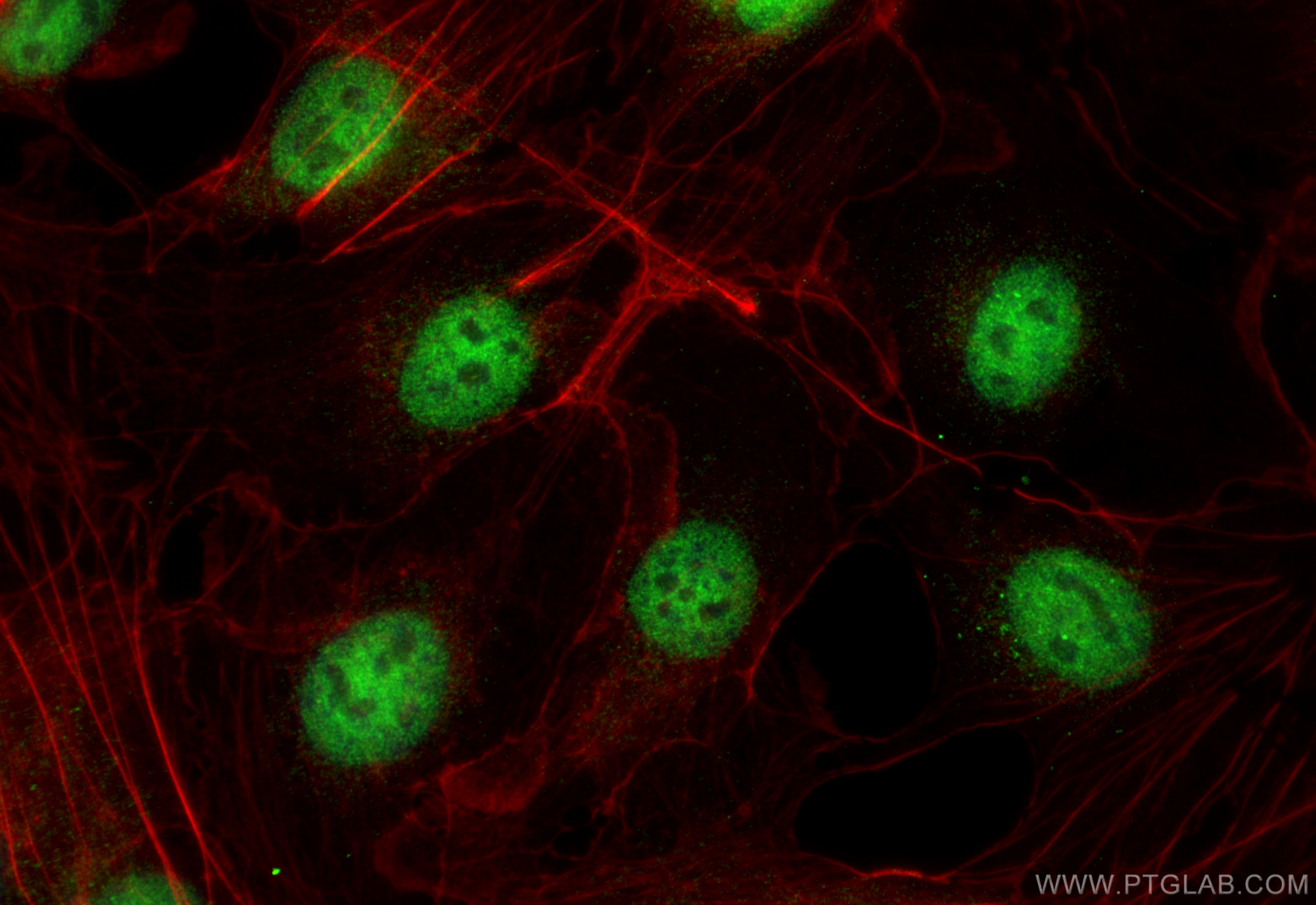
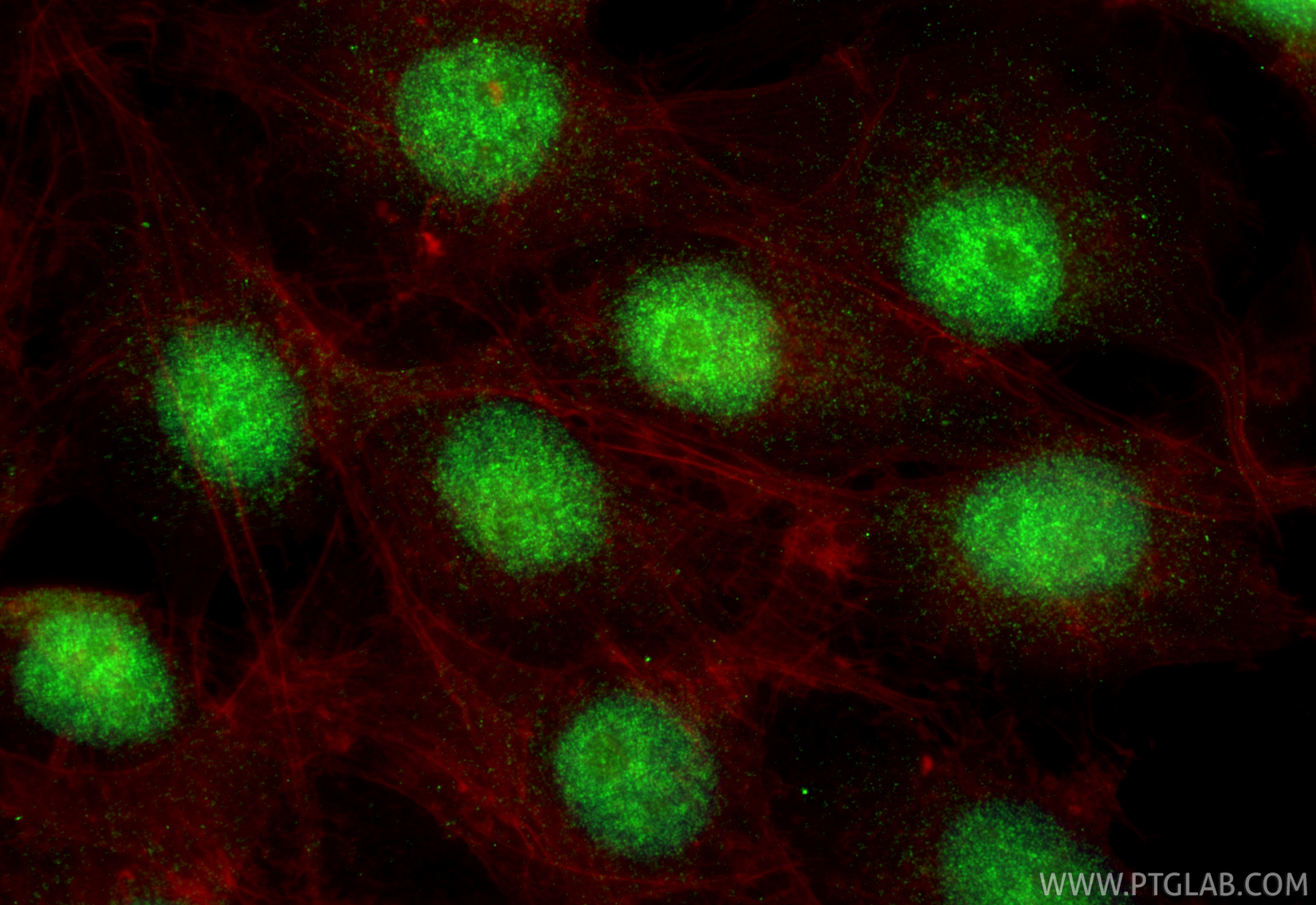
| Positive IF/ICC detected in | MG-63 cells, HUVEC cells |
Recommended dilution
| Application | Dilution |
|---|---|
| Western Blot (WB) | WB : 1:500-1:1000 |
| Immunoprecipitation (IP) | IP : 0.5-4.0 ug for 1.0-3.0 mg of total protein lysate |
| Immunofluorescence (IF)/ICC | IF/ICC : 1:50-1:500 |
| It is recommended that this reagent should be titrated in each testing system to obtain optimal results. | |
| Sample-dependent, Check data in validation data gallery. | |
Product Information
14356-1-AP targets ERG in WB, IHC, IF/ICC, IP, ELISA applications and shows reactivity with human, mouse, rat samples.
| Tested Reactivity | human, mouse, rat |
| Cited Reactivity | human, mouse |
| Host / Isotype | Rabbit / IgG |
| Class | Polyclonal |
| Type | Antibody |
| Immunogen |
CatNo: Ag5708 Product name: Recombinant human ERG protein Source: e coli.-derived, PET28a Tag: 6*His Domain: 141-479 aa of BC040168 Sequence: QWLEWAVKEYGLPDVNILLFQNIDGKELCKMTKDDFQRLTPSYNADILLSHLHYLRETPLPHLTSDDVDKALQNSPRLMHARNTGGAAFIFPNTSVYPEATQRITTRPDLPYEPPRRSAWTGHGHPTPQSKAAQPSPSTVPKTEDQRPQLDPYQILGPTSSRLANPGSGQIQLWQFLLELLSDSSNSSCITWEGTNGEFKMTDPDEVARRWGERKSKPNMNYDKLSRALRYYYDKNIMTKVHGKRYAYKFDFHGIAQALQPHPPESSLYKYPSDLPYMGSYHAHPQKMNFVAPHPPALPVTSSSFFAAPNPYWNSPTGGIYPNTRLPTSHMPSHLGTYY Predict reactive species |
| Full Name | v-ets erythroblastosis virus E26 oncogene homolog (avian) |
| Calculated Molecular Weight | 55 kDa |
| Observed Molecular Weight | 55 kDa |
| GenBank Accession Number | BC040168 |
| Gene Symbol | ERG |
| Gene ID (NCBI) | 2078 |
| RRID | AB_2098423 |
| Conjugate | Unconjugated |
| Form | Liquid |
| Purification Method | Antigen affinity purification |
| UNIPROT ID | P11308 |
| Storage Buffer | PBS with 0.02% sodium azide and 50% glycerol, pH 7.3. |
| Storage Conditions | Store at -20°C. Stable for one year after shipment. Aliquoting is unnecessary for -20oC storage. 20ul sizes contain 0.1% BSA. |
Background Information
ERG (ETS-related gene) is a member of the ETS family of transcription factors, which are downstream effectors of mitogenic signaling transduction pathway. ERG is a key regulator of cell proliferation, differentiation, angiogenesis, inflammation, and apoptosis. ERG is involved in chromosomal translocations, resulting in different fusion gene products, such as TMPSSR2-ERG and NDRG1-ERG in prostate cancer, EWS-ERG in Ewing's sarcoma and FUS-ERG in acute myeloid leukemia.
Protocols
| Product Specific Protocols | |
|---|---|
| IF protocol for ERG antibody 14356-1-AP | Download protocol |
| IP protocol for ERG antibody 14356-1-AP | Download protocol |
| WB protocol for ERG antibody 14356-1-AP | Download protocol |
| Standard Protocols | |
|---|---|
| Click here to view our Standard Protocols |
Publications
What published studies show
The ERG antibody (Cat# 14356-1-AP) has 11 total citations published in journals including Cell Stem Cell, Nature Communications, Cell Death Discovery, Journal of Translational Medicine, Cell Bioscience, iScience, International Journal of Medical Sciences, Journal of Cancer, International Journal of General Medicine, Experimental & Therapeutic Medicine, and eLife. Research fields span oncology (AML, prostate cancer), vascular biology, pyroptosis, multiple sclerosis, B cell development, and targeted protein degradation.
| Species | Application | Title |
|---|---|---|
Cell Stem Cell PSPC1 exerts an oncogenic role in AML by regulating a leukemic transcription program in cooperation with PU.1 | ||
Nat Commun DNA framework-engineered chimeras platform enables selectively targeted protein degradation | ||
Cell Death Discov HDAC11 promotes both NLRP3/caspase-1/GSDMD and caspase-3/GSDME pathways causing pyroptosis via ERG in vascular endothelial cells. | ||
J Transl Med Translational medicine research on the role of key gene network modulation mediated by procyanidin B2 in the precise diagnosis and treatment of multiple sclerosis | ||
Cell Biosci Profile of chimeric RNAs and TMPRSS2-ERG e2e4 isoform in neuroendocrine prostate cancer | ||
iScience Resident vascular Sca1+ progenitors differentiate into endothelial cells in vascular remodeling via miR-145-5p/ERG signaling pathway |







