

Tested Applications
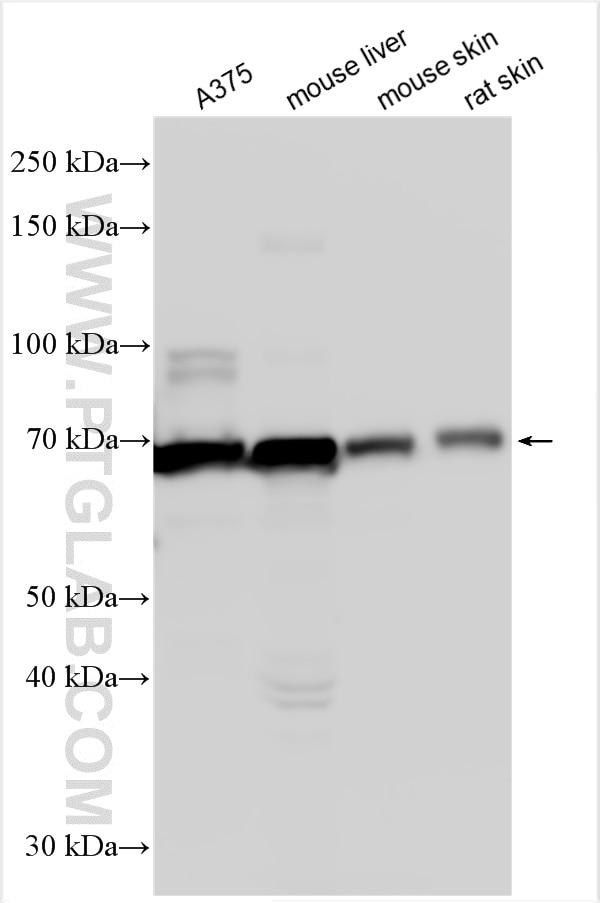
| Positive WB detected in | A375 cells, mouse liver tissue, mouse skin tissue, rat skin tissue |
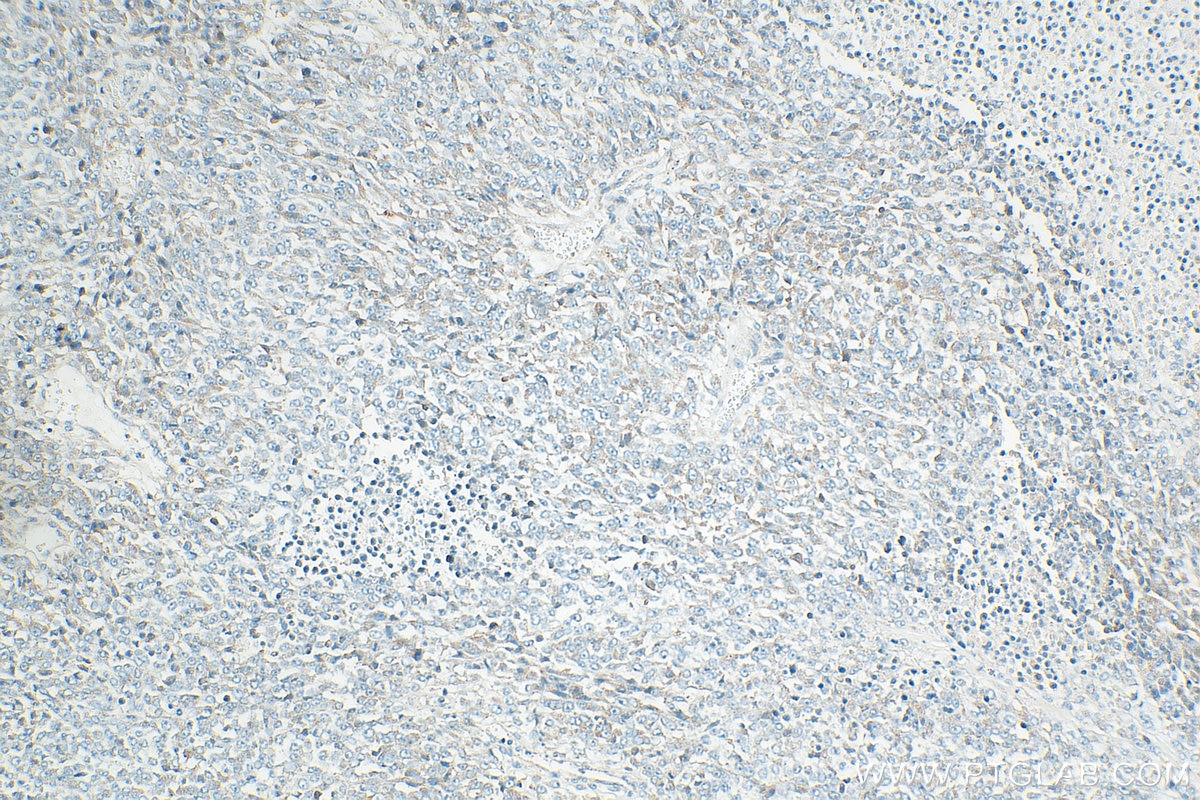
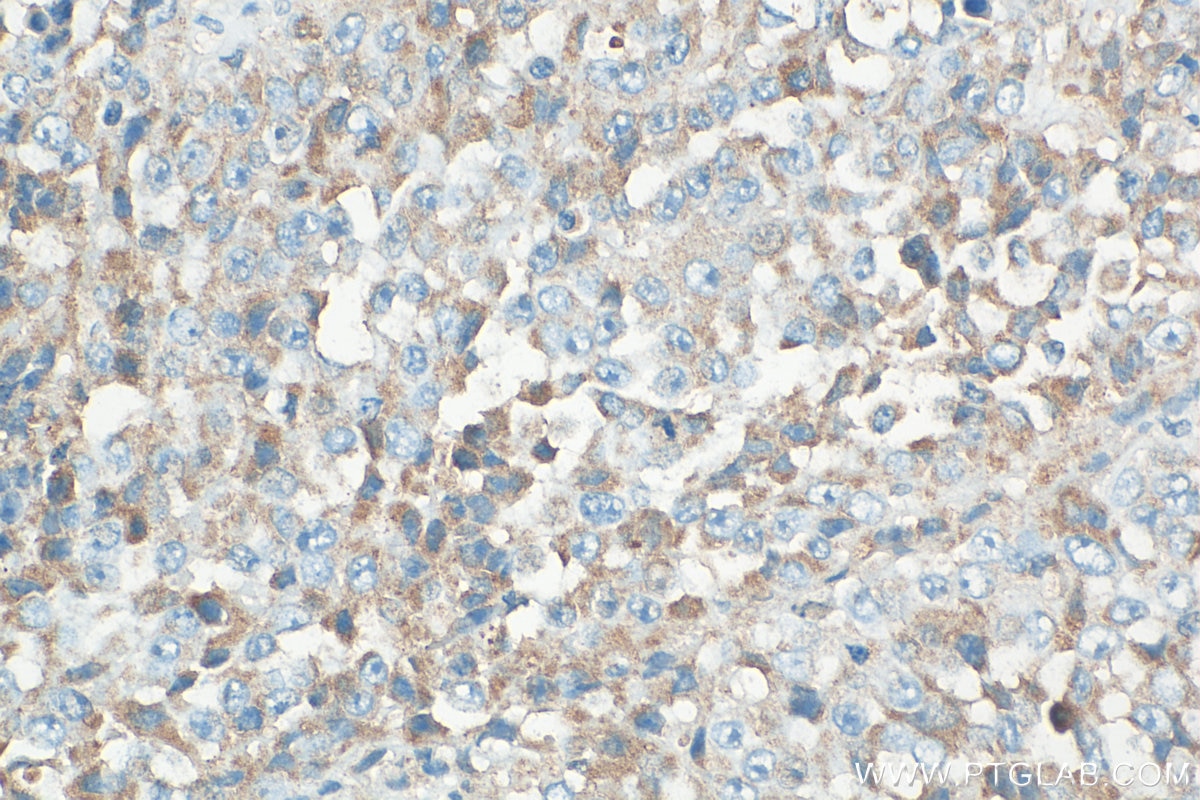
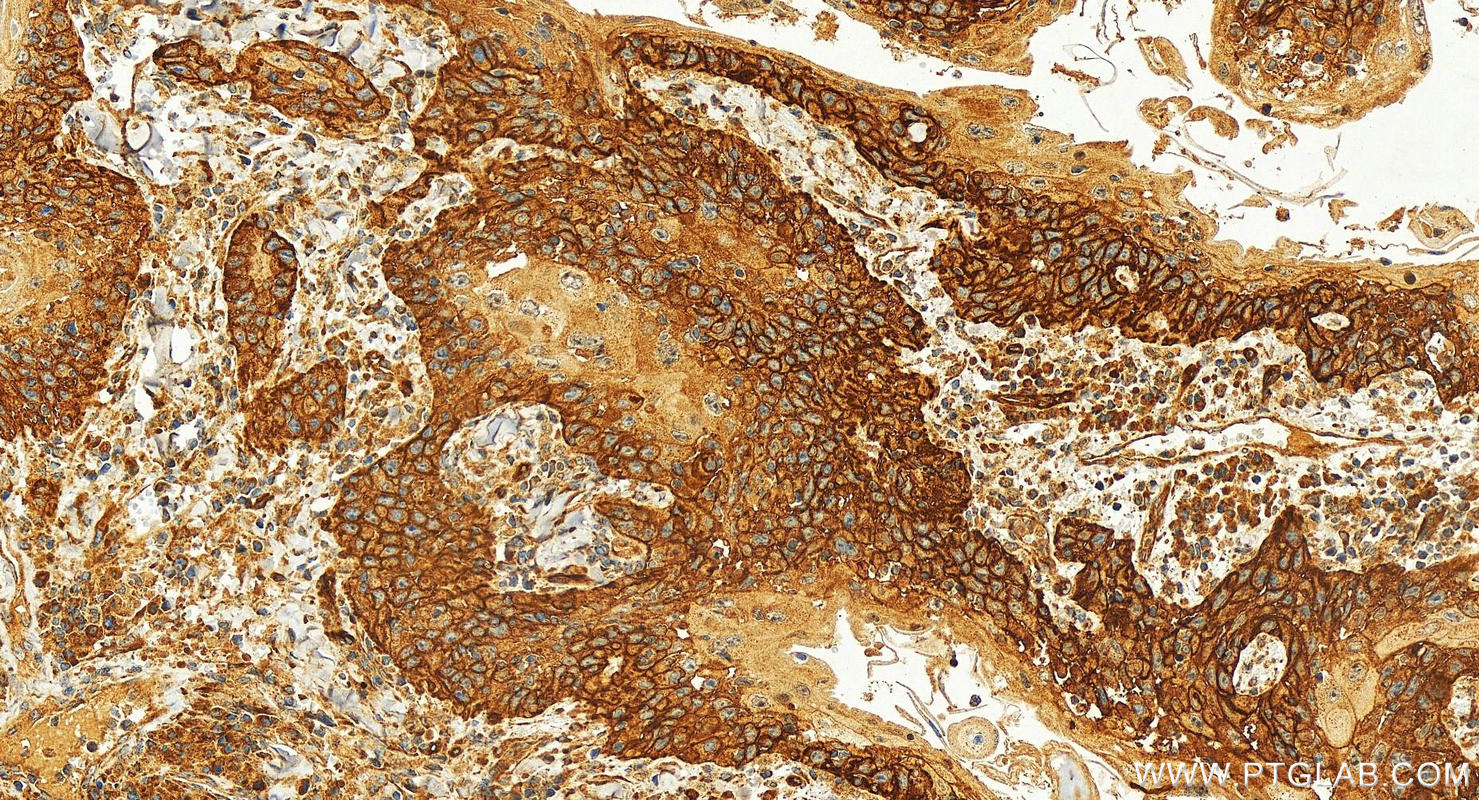
| Positive IHC detected in | human skin cancer tissue, human malignant melanoma tissue Note: suggested antigen retrieval with TE buffer pH 9.0; (*) Alternatively, antigen retrieval may be performed with citrate buffer pH 6.0 |
Recommended dilution
| Application | Dilution |
|---|---|
| Western Blot (WB) | WB : 1:500-1:2000 |
| Immunohistochemistry (IHC) | IHC : 1:200-1:800 |
| It is recommended that this reagent should be titrated in each testing system to obtain optimal results. | |
| Sample-dependent, Check data in validation data gallery. | |
Product Information
31291-1-AP targets Tyrosinase in WB, IHC, ELISA applications and shows reactivity with human, mouse, rat samples.
| Tested Reactivity | human, mouse, rat |
| Cited Reactivity | human, mouse, duck |
| Host / Isotype | Rabbit / IgG |
| Class | Polyclonal |
| Type | Antibody |
| Immunogen |
CatNo: Ag34940 Product name: Recombinant human Tyrosinase protein Source: e coli.-derived, PGEX-4T Tag: GST Domain: 19-200 aa of BC027179 Sequence: HFPRACVSSKNLMEKECCPPWSGDRSPCGQLSGRGSCQNILLSNAPLGPQFPFTGVDDRESWPSVFYNRTCQCSGNFMGFNCGNCKFGFWGPNCTERRLLVRRNIFDLSAPEKDKFFAYLTLAKHTISSDYVIPIGTYGQMKNGSTPMFNDINIYDLFVWMHYYVSMDALLGGSEIWRDIDF Predict reactive species |
| Full Name | tyrosinase (oculocutaneous albinism IA) |
| Calculated Molecular Weight | 529 aa, 60 kDa |
| Observed Molecular Weight | 70 kDa |
| GenBank Accession Number | BC027179 |
| Gene Symbol | TYR |
| Gene ID (NCBI) | 7299 |
| RRID | AB_3669932 |
| Conjugate | Unconjugated |
| Form | Liquid |
| Purification Method | Antigen affinity Purification |
| UNIPROT ID | P14679 |
| Storage Buffer | PBS with 0.02% sodium azide and 50% glycerol, pH 7.3. |
| Storage Conditions | Store at -20°C. Stable for one year after shipment. Aliquoting is unnecessary for -20oC storage. 20ul sizes contain 0.1% BSA. |
Background Information
Tyrosinase is a copper-containing oxidase that functions in the formation of pigments such as melanins and other polyphenolic compounds. It's a melanocyte-specific enzyme critical for the synthesis of melanin, a process normally restricted to a post-Golgi compartment termed the melanosome. Loss-of-function mutations in tyrosinase are the cause of oculocutaneous albinism. The 60-kDa tyrosinase core polypeptide is modified in the endoplasmic reticulum (ER) by cotranslational addition of multiple N-linked glycans, producing the 70-kDa species. Complex sugar modifications in the Golgi apparatus further increases tyrosinase's molecular mass to 80 kDa, the size of the mature wild-type (WT) isoform. (PMID:10823941)
Protocols
| Product Specific Protocols | |
|---|---|
| IHC protocol for Tyrosinase antibody 31291-1-AP | Download protocol |
| WB protocol for Tyrosinase antibody 31291-1-AP | Download protocol |
| Standard Protocols | |
|---|---|
| Click here to view our Standard Protocols |
Publications
What published studies show
The Tyrosinase Polyclonal antibody (Cat# 31291-1-AP) has 9 citations published in journals including J Control Release, Mater Today Bio, Pharmaceuticals, J Dermatol Sci, Poult Sci, J Photochem Photobiol B, Photochem Photobiol Sci, and Turk J Biol. The research fields span melanogenesis regulation, UV-induced skin pigmentation, melanoma-targeted drug delivery, and signaling pathways such as PI3K/AKT, Wnt/β-catenin, and TNF-α. Most studies applied this antibody for Western blot in human, mouse, and duck samples.
| Species | Application | Title |
|---|---|---|
J Control Release ATP-responsive tumor targeted lipid nanoparticle for enhanced siRNA delivery and improved treatment efficacy in melanoma | ||
Mater Today Bio Tetrahedral framework nucleic acids carrying tranexamic acid to alleviate ultraviolet B-induced skin pigmentation. | ||
Pharmaceuticals (Basel) Study on the Mechanism of Paeoniflorin, an Active Component of Paeonia lactiflora Pall., in Improving Skin Pigmentation by Inhibiting the TNF-α Signaling Pathway. | ||
J Dermatol Sci COMMD3 mediates melanin synthesis through both clusterin-PAX3 axis and copper-dependent tyrosinase activity in skin pigmentation. | ||
J Dermatol Sci Regulation of melanogenesis via ubiquitin-proteasome system and autophagy by 3,3,5-trimethylcyclohexyl succinate dimethylamide and tranexamic acid. | ||
Poult Sci Novel miR-290 regulates melanogenesis in Liancheng white ducks via the PI3K/AKT signaling pathway. |





