

Tested Applications
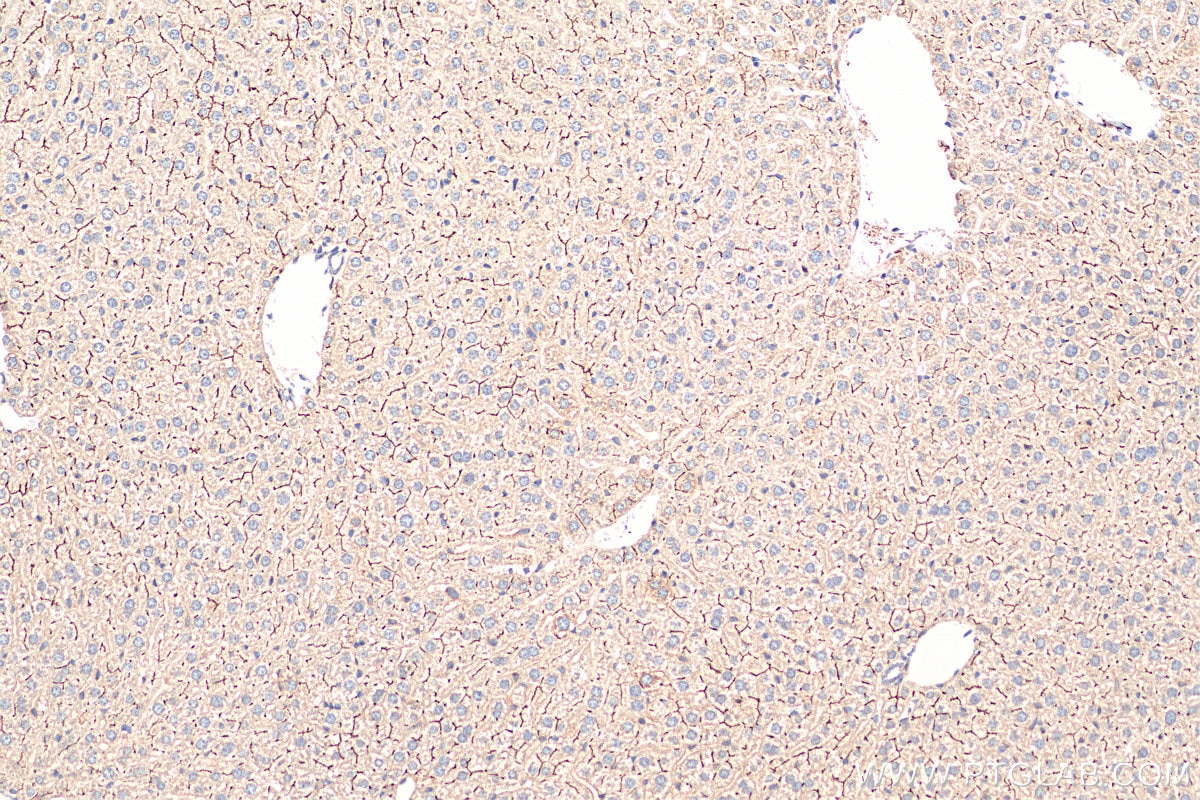
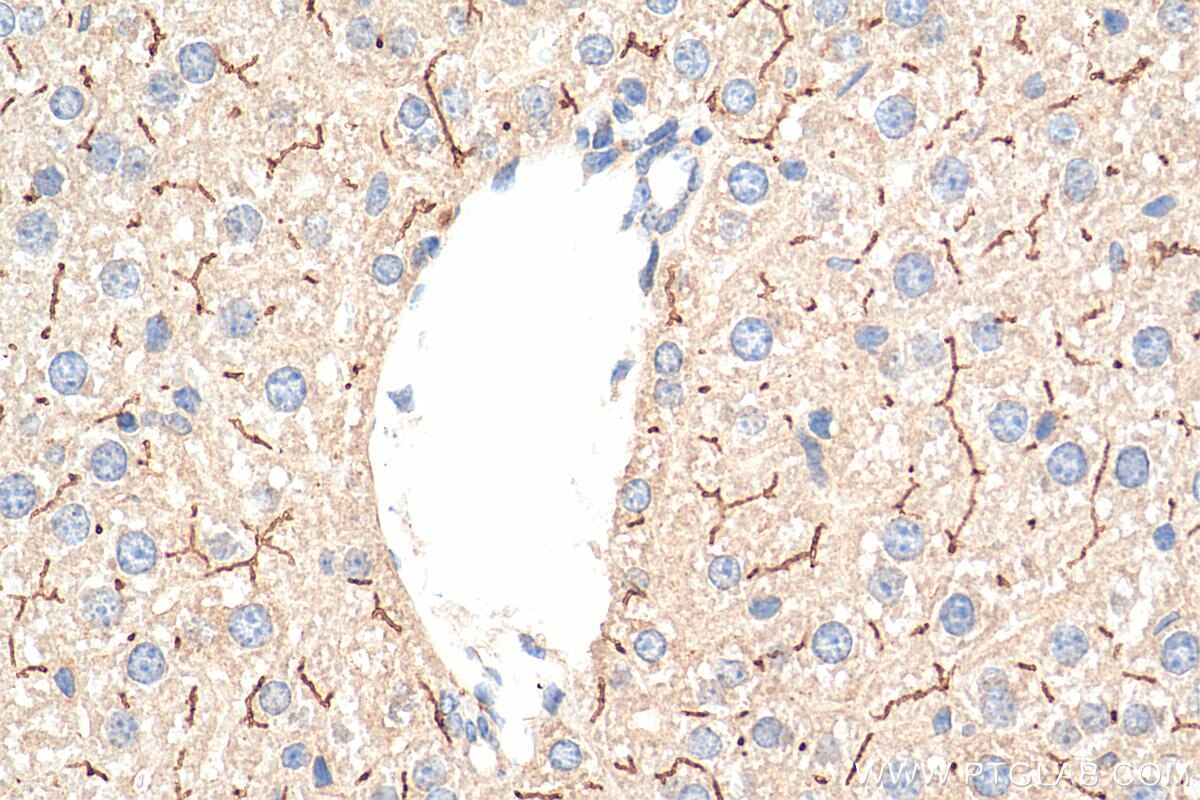
| Positive IHC detected in | mouse liver tissue Note: suggested antigen retrieval with TE buffer pH 9.0; (*) Alternatively, antigen retrieval may be performed with citrate buffer pH 6.0 |
Recommended dilution
| Application | Dilution |
|---|---|
| Immunohistochemistry (IHC) | IHC : 1:400-1:1600 |
| It is recommended that this reagent should be titrated in each testing system to obtain optimal results. | |
| Sample-dependent, Check data in validation data gallery. | |
Product Information
18990-1-AP targets BSEP in IHC, ELISA applications and shows reactivity with human, mouse samples.
| Tested Reactivity | human, mouse |
| Cited Reactivity | human, mouse |
| Host / Isotype | Rabbit / IgG |
| Class | Polyclonal |
| Type | Antibody |
| Immunogen |
Peptide Predict reactive species |
| Full Name | ATP-binding cassette, sub-family B (MDR/TAP), member 11 |
| Calculated Molecular Weight | 146 kDa |
| GenBank Accession Number | NM_003742 |
| Gene Symbol | BSEP |
| Gene ID (NCBI) | 8647 |
| RRID | AB_2878571 |
| Conjugate | Unconjugated |
| Form | Liquid |
| Purification Method | Antigen affinity purification |
| UNIPROT ID | O95342 |
| Storage Buffer | PBS with 0.02% sodium azide and 50% glycerol, pH 7.3. |
| Storage Conditions | Store at -20°C. Stable for one year after shipment. Aliquoting is unnecessary for -20oC storage. 20ul sizes contain 0.1% BSA. |
Background Information
ABCB11, also named as BSEP, belongs to the ABC transporter superfamily. ABCB11 involved in the ATP-dependent secretion of bile salts into the canaliculus of hepatocytes. Mutation of ABCB11 will cause the progressive familial intrahepatic cholestasis type 2 (PFIC2) and the benign recurrent intrahepatic cholestasis type 2 (BRIC2). Genetic variations in ABCB11 may play a role in drug-induced cholestasis causing liver damage.
Protocols
| Product Specific Protocols | |
|---|---|
| IHC protocol for BSEP antibody 18990-1-AP | Download protocol |
| Standard Protocols | |
|---|---|
| Click here to view our Standard Protocols |
Publications
What published studies show
Anti-FXR antibody (Cat# 18990-1-AP) has 6 total citations published in Cell Reports in Medicine, Phytomedicine, Food & Function, Frontiers in Endocrinology, Toxicological Sciences, and Toxicology and Applied Pharmacology. Research fields include biliary tract cancer organoids, autoimmune liver injury, cholestasis, insulin resistance, hepatotoxicity evaluation, and cholangiocyte injury biomarker identification.
| Species | Application | Title |
|---|---|---|
Cell Rep Med Personalized drug screening in patient-derived organoids of biliary tract cancer and its clinical application | ||
Phytomedicine 3-O-Acetyloleanolic acid alleviates autoimmune liver injury by targeting FXR. | ||
Food Funct Apigenin protects mice against 3,5-diethoxycarbonyl-1,4-dihydrocollidine-induced cholestasis. | ||
Front Endocrinol (Lausanne) DMRT2 Interacts With FXR and Improves Insulin Resistance in Adipocytes and a Mouse Model. | ||
Toxicol Sci Hepatic, metabolic and toxicity evaluation of repeated oral administration of SnS2 nanoflowers in mice. | ||
Toxicol Appl Pharmacol Identification of candidate microRNA biomarkers of mouse cholangiocyte injury by global miRNAome analysis. |



