

Tested Applications
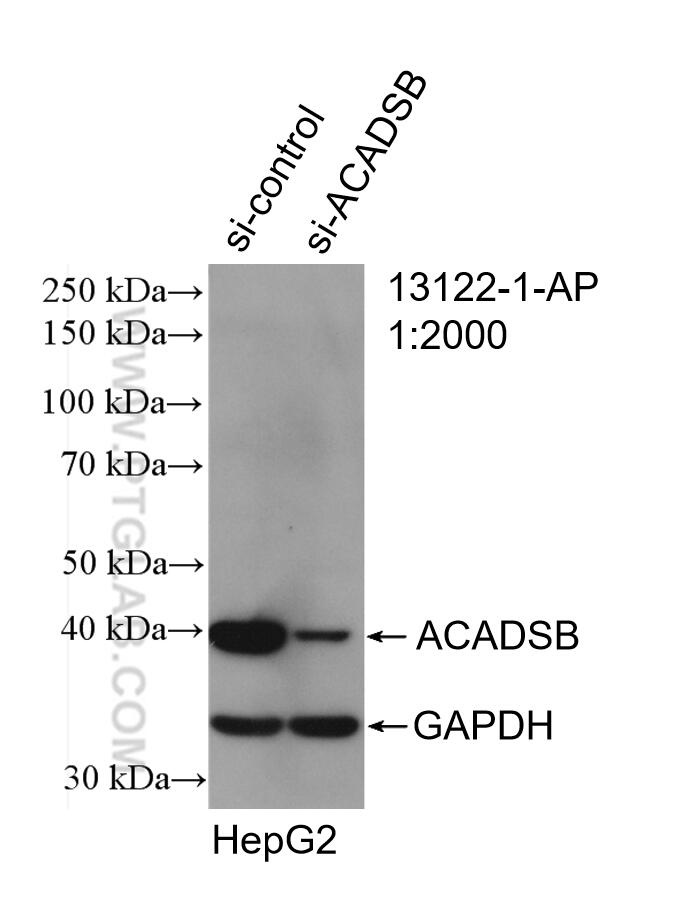
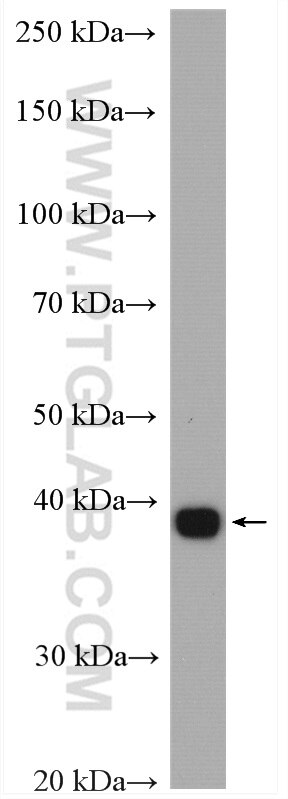
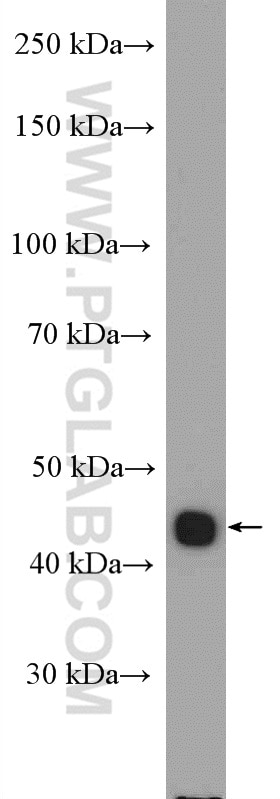
| Positive WB detected in | mouse kidney tissue, HepG2 cells, HEK-293 cells |
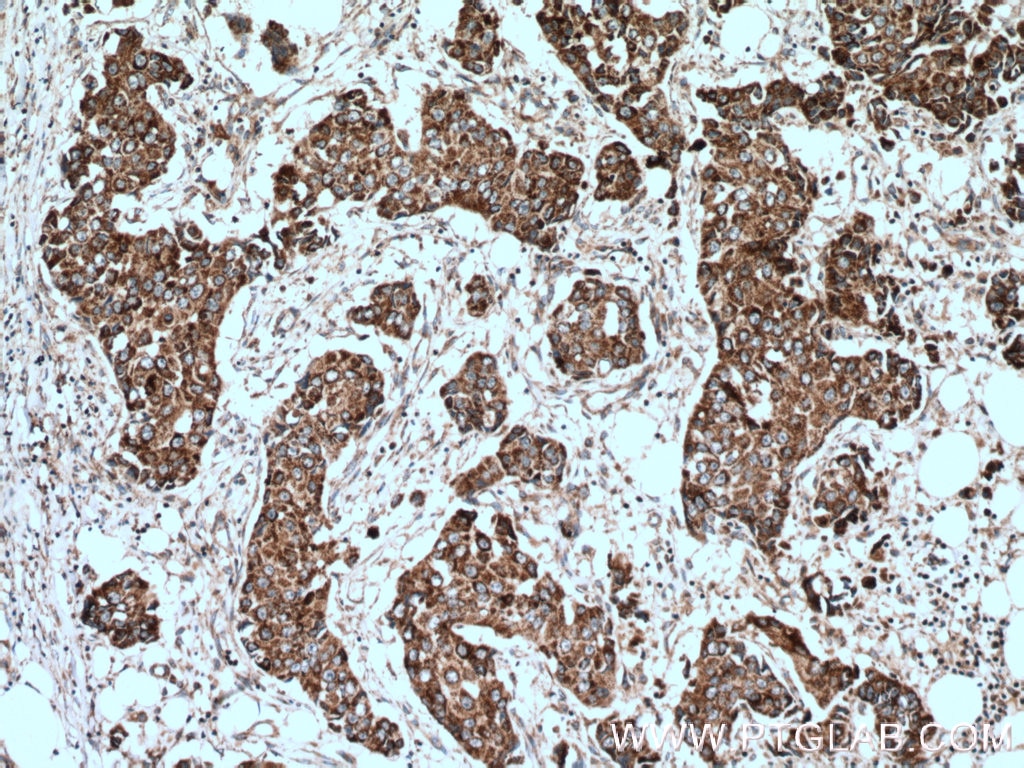
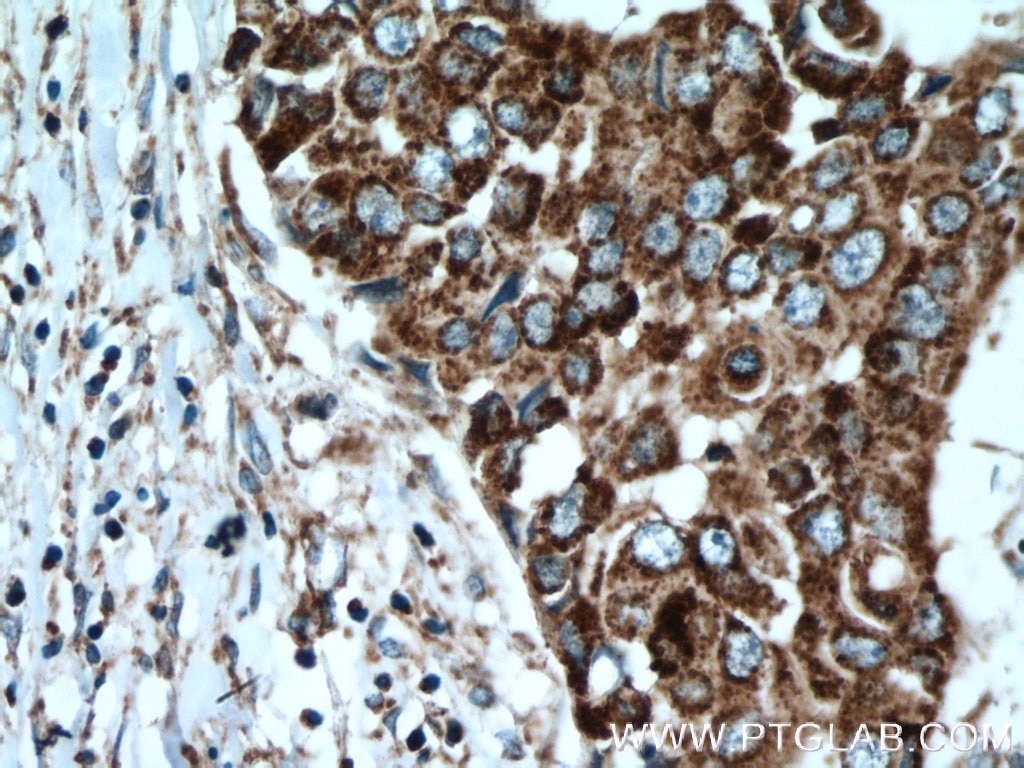
| Positive IHC detected in | human breast cancer tissue Note: suggested antigen retrieval with TE buffer pH 9.0; (*) Alternatively, antigen retrieval may be performed with citrate buffer pH 6.0 |
Recommended dilution
| Application | Dilution |
|---|---|
| Western Blot (WB) | WB : 1:200-1:1000 |
| Immunohistochemistry (IHC) | IHC : 1:50-1:500 |
| It is recommended that this reagent should be titrated in each testing system to obtain optimal results. | |
| Sample-dependent, Check data in validation data gallery. | |
Product Information
13122-1-AP targets ACADSB in WB, IHC, IF, ELISA applications and shows reactivity with human, mouse, rat samples.
| Tested Reactivity | human, mouse, rat |
| Cited Reactivity | human, mouse, rat |
| Host / Isotype | Rabbit / IgG |
| Class | Polyclonal |
| Type | Antibody |
| Immunogen |
CatNo: Ag3851 Product name: Recombinant human ACADSB protein Source: e coli.-derived, PGEX-4T Tag: GST Domain: 131-432 aa of BC013756 Sequence: VDASVAVFCEIQNTLINTLIRKHGTEEQKATYLPQLTTEKVGSFCLSEAGAGSDSFALKTRADKEGDYYVLNGSKMWISSAEHAGLFLVMANVDPTIGYKGITSFLVDRDTPGLHIGKPENKLGLRASSTCPLTFENVKVPEANILGQIGHGYKYAIGSLNEGRIGIAAQMLGLAQGCFDYTIPYIKERIQFGKRLFDFQGLQHQVAHVATQLEAARLLTYNAARLLEAGKPFIKEASMAKYYASEIAGQTTSKCIEWMGGVGYTKDYPVEKYFRDAKIGTIYEGASNIQLNTIAKHIDAEY Predict reactive species |
| Full Name | acyl-Coenzyme A dehydrogenase, short/branched chain |
| Calculated Molecular Weight | 432 aa, 47 kDa |
| Observed Molecular Weight | 45-47 kDa |
| GenBank Accession Number | BC013756 |
| Gene Symbol | ACADSB |
| Gene ID (NCBI) | 36 |
| RRID | AB_10638904 |
| Conjugate | Unconjugated |
| Form | Liquid |
| Purification Method | Antigen affinity purification |
| UNIPROT ID | P45954 |
| Storage Buffer | PBS with 0.02% sodium azide and 50% glycerol, pH 7.3. |
| Storage Conditions | Store at -20°C. Stable for one year after shipment. Aliquoting is unnecessary for -20oC storage. 20ul sizes contain 0.1% BSA. |
Protocols
| Product Specific Protocols | |
|---|---|
| IHC protocol for ACADSB antibody 13122-1-AP | Download protocol |
| WB protocol for ACADSB antibody 13122-1-AP | Download protocol |
| Standard Protocols | |
|---|---|
| Click here to view our Standard Protocols |
Publications
What published studies show
The ACADSB Polyclonal antibody (Cat# 13122-1-AP) has 11 citations spanning journals including Nature Communications, Molecular Cell, Cancer Letters, Phytomedicine, Basic Research in Cardiology, Phytotherapy Research, Cell & Molecular Life Sciences, Cell Biology International, Frontiers in Oncology, Animals, and PLoS One. Research fields encompass mitochondrial metabolism, fatty acid oxidation, ferroptosis, colorectal and renal cancers, liver cancer, cardiovascular disease, kidney fibrosis, traditional Chinese medicine pharmacology, sperm proteomics, and ulcerative colitis.
| Species | Application | Title |
|---|---|---|
Nat Commun AMPK induces degradation of the transcriptional repressor PROX1 impairing branched amino acid metabolism and tumourigenesis | ||
Mol Cell Global mitochondrial protein import proteomics reveal distinct regulation by translation and translocation machinery | ||
Cancer Lett CPT1A loss disrupts BCAA metabolism to confer therapeutic vulnerability in TP53-mutated liver cancer | ||
Phytomedicine Comparative analysis of lipid-lowering mechanisms in efficacy-divergent traditional Chinese medicines. | ||
Basic Res Cardiol Comparison of the stage-dependent mitochondrial changes in response to pressure overload between the diseased right and left ventricle in the rat | ||
Phytother Res Icariside II prevents kidney fibrosis development in chronic kidney disease by promoting fatty acid oxidation |
Reviews
What customers say
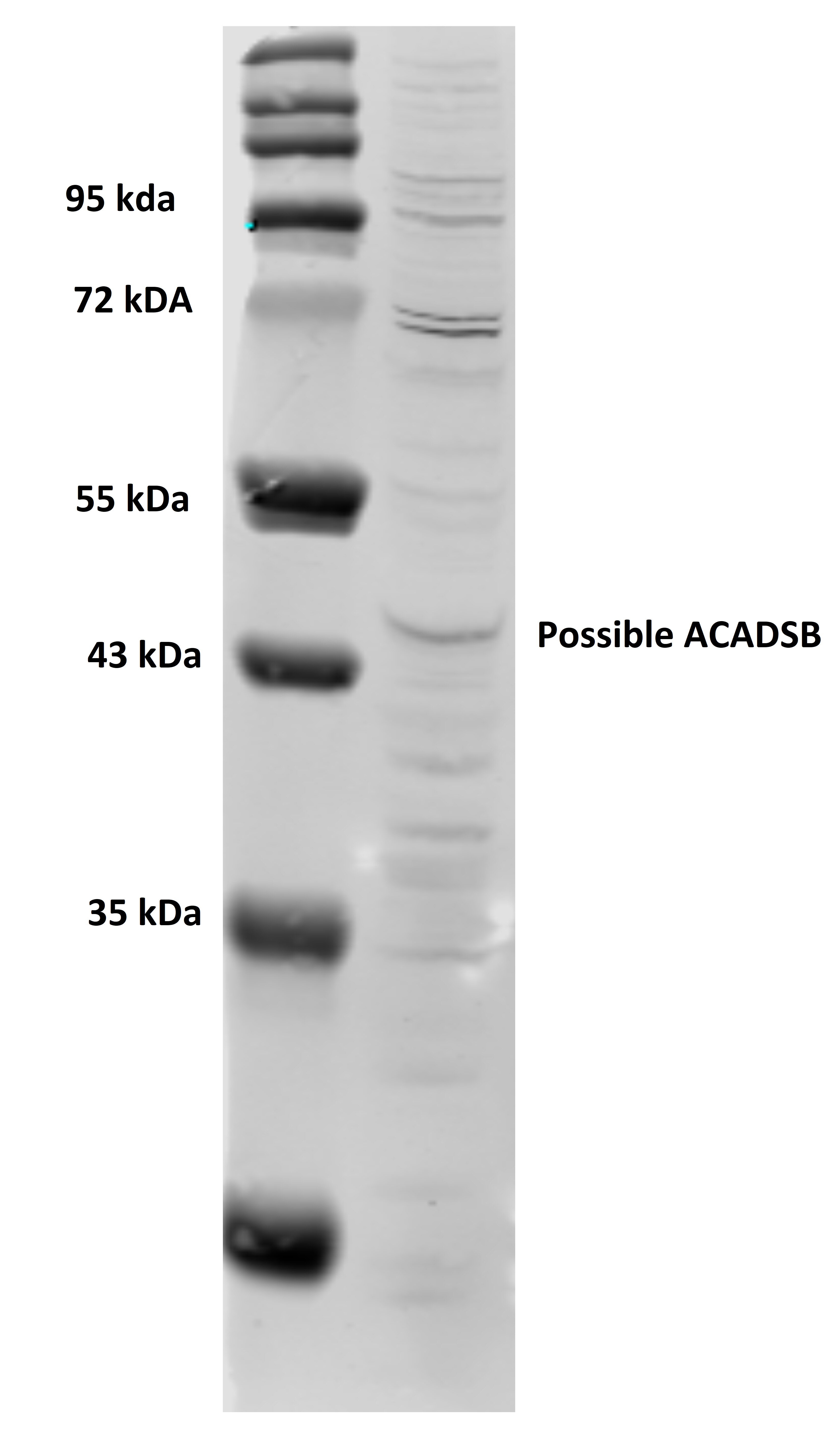
One reviewer (3/5 stars) used this antibody at 1:1000 dilution for Western Blot on HeLa whole cell lysate with a Li-COR secondary antibody. While it recognized a band consistent with ACADSB, they reported significant non-specific binding, particularly around 70 kDa, and found the specificity to be lower than expected. Overall, the review suggests the antibody works but may require optimization to reduce background.
The reviews below have been submitted by verified Proteintech customers who received an incentive for providing their feedback.
Süleyman (Verified Customer) (02-06-2022) | I used HeLa whole cell extract with Licor secondary antibody. It recognize possible ACADSB but I also get many unspecific bands especially around 70 kDa much specific binding.
 |






