

Tested Applications
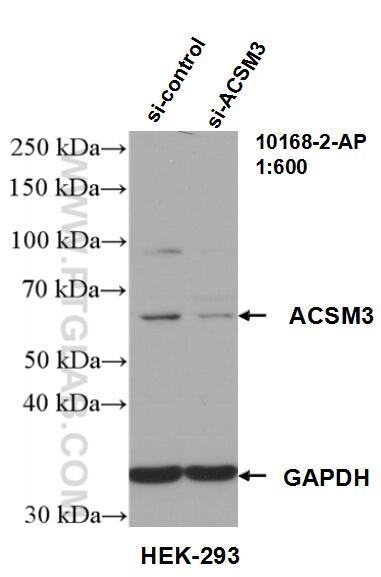
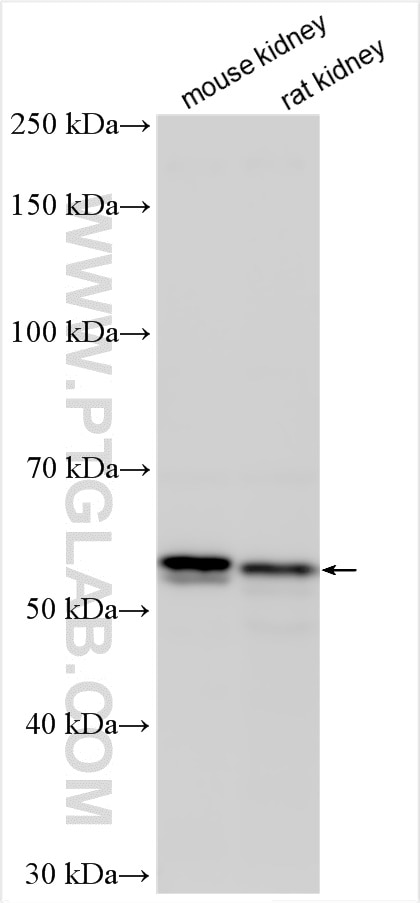
| Positive WB detected in | mouse kidney tissue, HEK-293 cells, rat kidney tissue |
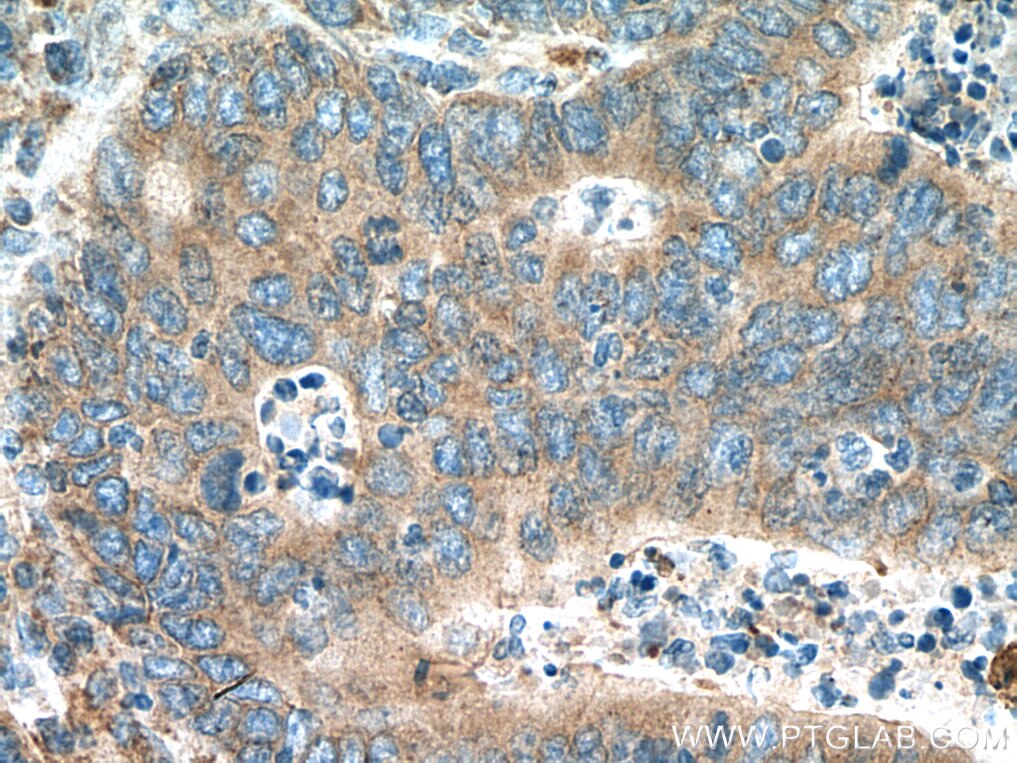
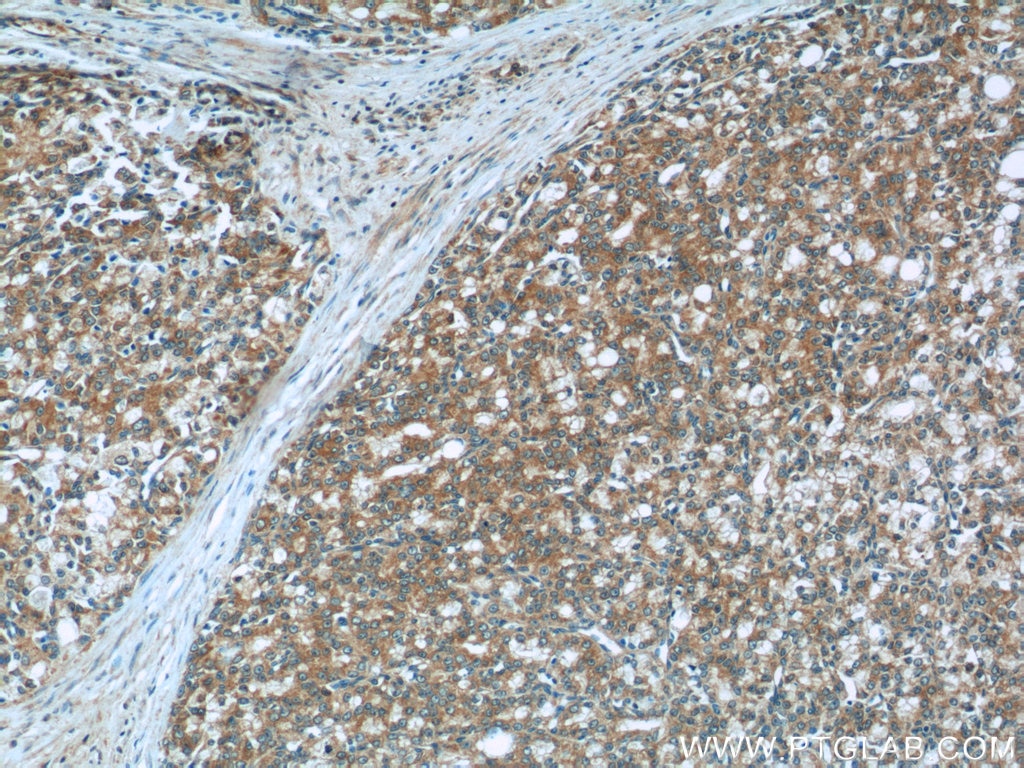
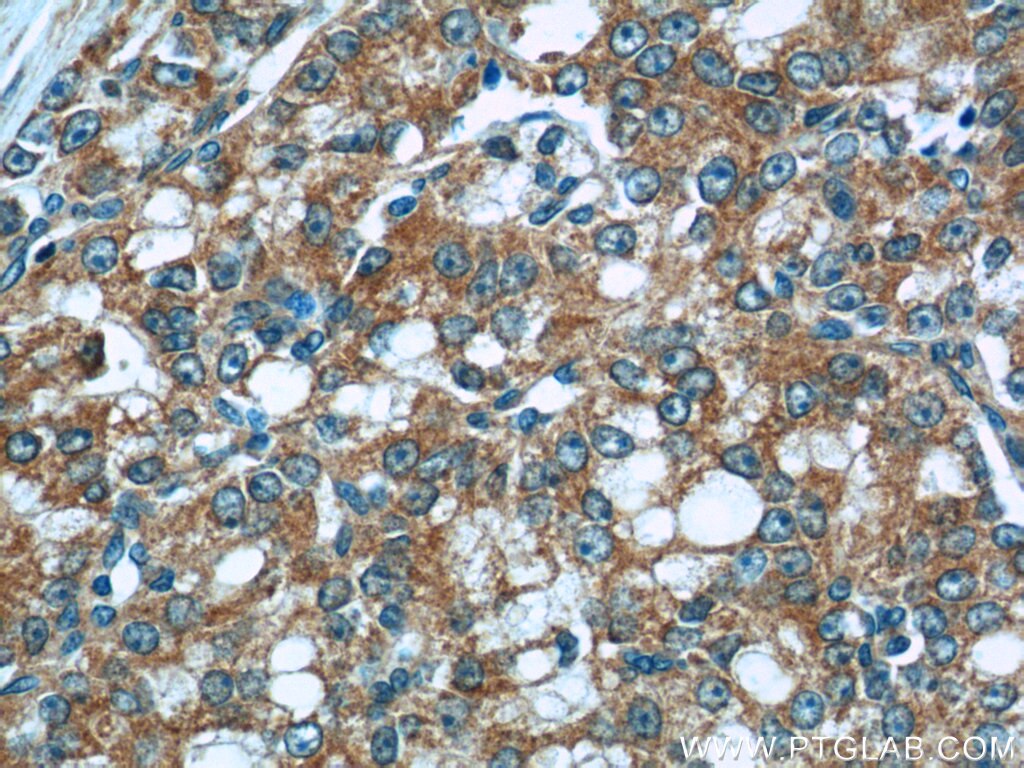
| Positive IHC detected in | human colon cancer tissue, human prostate cancer tissue Note: suggested antigen retrieval with TE buffer pH 9.0; (*) Alternatively, antigen retrieval may be performed with citrate buffer pH 6.0 |
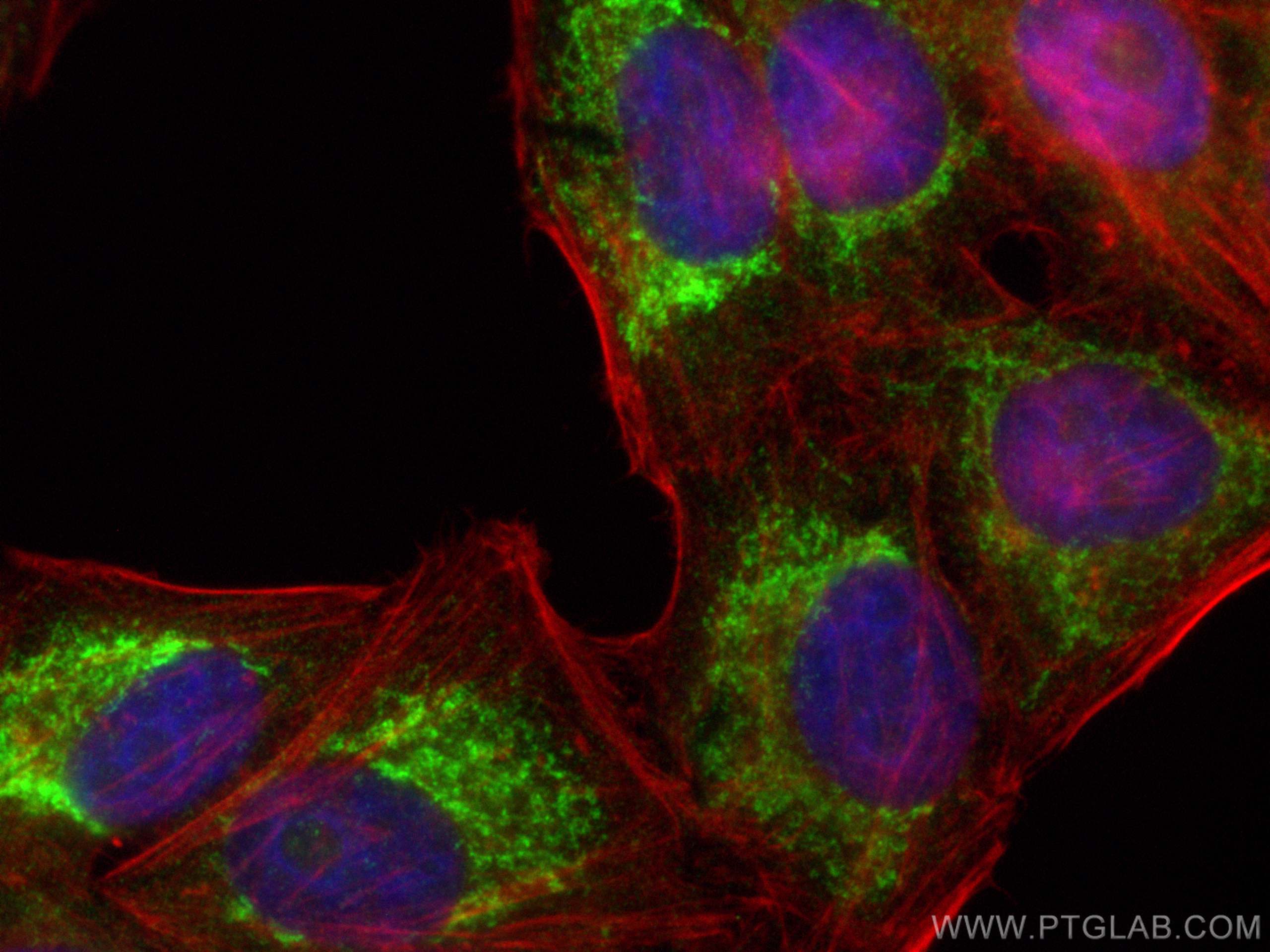
| Positive IF/ICC detected in | HepG2 cells |
Recommended dilution
| Application | Dilution |
|---|---|
| Western Blot (WB) | WB : 1:1000-1:4000 |
| Immunohistochemistry (IHC) | IHC : 1:50-1:500 |
| Immunofluorescence (IF)/ICC | IF/ICC : 1:50-1:500 |
| It is recommended that this reagent should be titrated in each testing system to obtain optimal results. | |
| Sample-dependent, Check data in validation data gallery. | |
Product Information
10168-2-AP targets ACSM3 in WB, IHC, IF/ICC, ELISA applications and shows reactivity with human, mouse samples.
| Tested Reactivity | human, mouse |
| Cited Reactivity | human, mouse |
| Host / Isotype | Rabbit / IgG |
| Class | Polyclonal |
| Type | Antibody |
| Immunogen |
CatNo: Ag0224 Product name: Recombinant human ACSM3 protein Source: e coli.-derived, PGEX-4T Tag: GST Domain: 1-320 aa of BC002790 Sequence: MLARVTRKMLRHAKCFQRLAIFGSVRALHKDNRTATPQNFSNYESMKQDFKLGIPEYFNFAKDVLDQWTDKEKAGKKPSNPAFWWINRNGEEMRWSFEELGSLSRKFANILSEACSLQRGDRVILILPRVPEWWLANVACLRTGTVLIPGTTQLTQKDILYRLQSSKANCIITNDVLAPAVDAVASKCENLHSKLIVSENSREGWGNLKELMKHASDSHTCVKTKHNEIMAIFFTSGTSGYPKMTAHTHSSFGLGLSVNGRFWLDLTPSDVMWNTSDTGWAKSAWSSVFSPWIQGACVFTHHLPRFEPTSILQTLSKYPI Predict reactive species |
| Full Name | acyl-CoA synthetase medium-chain family member 3 |
| Calculated Molecular Weight | 49 kDa, 66 kDa |
| Observed Molecular Weight | 60-70 kDa |
| GenBank Accession Number | BC002790 |
| Gene Symbol | ACSM3 |
| Gene ID (NCBI) | 6296 |
| RRID | AB_2222699 |
| Conjugate | Unconjugated |
| Form | Liquid |
| Purification Method | Antigen affinity purification |
| UNIPROT ID | Q53FZ2 |
| Storage Buffer | PBS with 0.02% sodium azide and 50% glycerol, pH 7.3. |
| Storage Conditions | Store at -20°C. Stable for one year after shipment. Aliquoting is unnecessary for -20oC storage. 20ul sizes contain 0.1% BSA. |
Background Information
SA hypertension-associated rat homolog (SAH, synonym: SA) is expressed at 10-fold greater levels in the kidney of the spontaneously hypertensive rat than in the corresponding wild-type strain. The gene is linked to blood pressure levels in a number of crosses involving the spontaneously hypertensive rat and other strains of genetically hypertensive rats. Human SAH gene polymorphism may be associated with the renal prognosis of immunoglobulin A nephropathy through its effect on blood pressure. Furthermore, variation in SAH has a role in predisposition.
Protocols
| Product Specific Protocols | |
|---|---|
| IF protocol for ACSM3 antibody 10168-2-AP | Download protocol |
| IHC protocol for ACSM3 antibody 10168-2-AP | Download protocol |
| WB protocol for ACSM3 antibody 10168-2-AP | Download protocol |
| Standard Protocols | |
|---|---|
| Click here to view our Standard Protocols |
Publications
What published studies show
Anti-ACSM3 (Cat# 10168-2-AP) has 9 citations published in journals including Cell, Nature Communications, Cells, Frontiers in Pharmacology, Frontiers in Cell and Developmental Biology, Scientific Reports, European Journal of Cell Biology, Frontiers in Oncology, and Experimental & Therapeutic Medicine. Research fields span pancreatic cancer organoids, kidney allograft rejection, lupus nephritis, nephrotoxicity, ovarian cancer, hepatic lipid metabolism, Duchenne muscular dystrophy, and acute myeloid leukemia.
| Species | Application | Title |
|---|---|---|
Nat Commun Injured epithelial cell states impact kidney allograft survival after T-cell-mediated rejection. | ||
Cells The CDO1-ACSM3 Axis Mediates Renal Tubule Lipid Deposition and Injury by Causing Mitochondrial Dysfunction in Lupus Nephritis. | ||
Front Pharmacol Delineation of renal protein profiles in aristolochic acid I-induced nephrotoxicity in mice by label-free quantitative proteomics | ||
Front Cell Dev Biol Predicting Panel of Metabolism and Immune-Related Genes for the Prognosis of Human Ovarian Cancer. | ||
Sci Rep Thioesterase induction by 2,3,7,8-tetrachlorodibenzo-p-dioxin results in a futile cycle that inhibits hepatic β-oxidation. |







