

Tested Applications
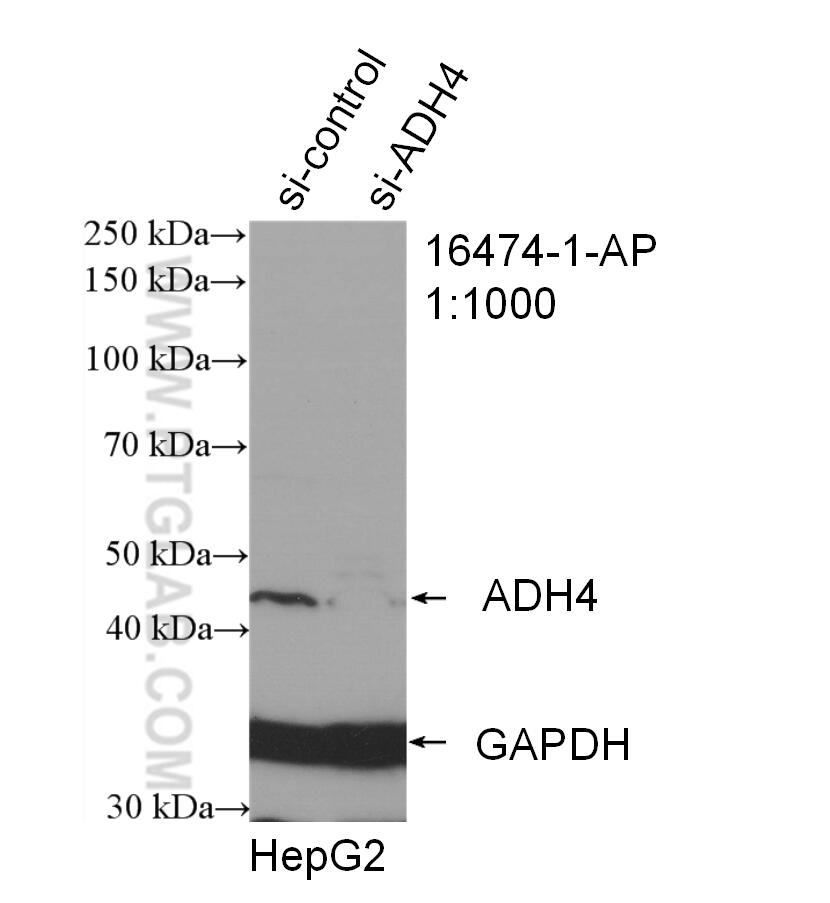
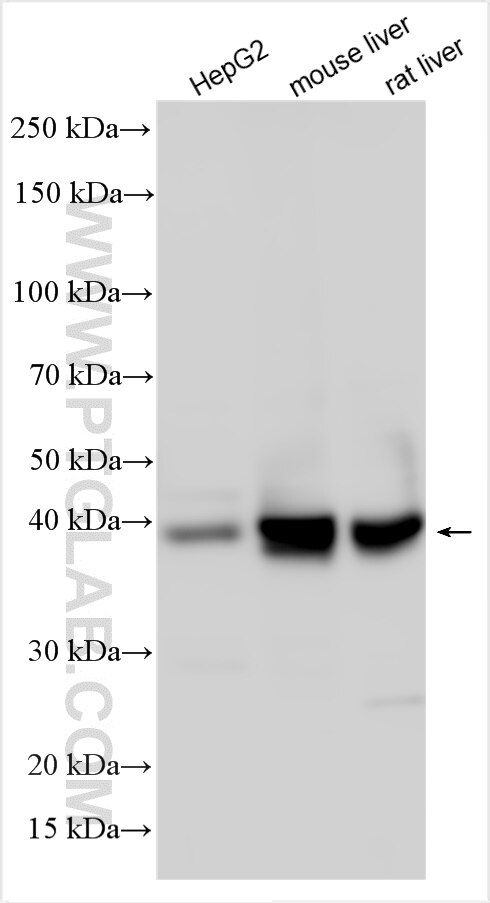
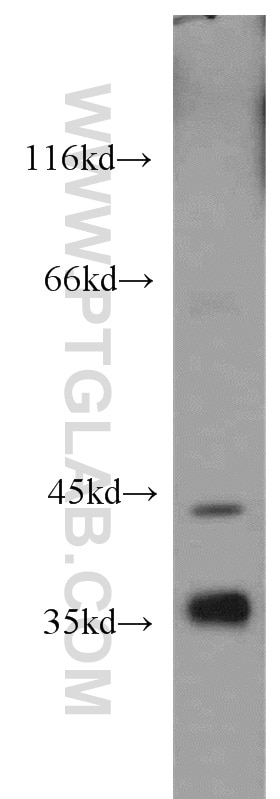
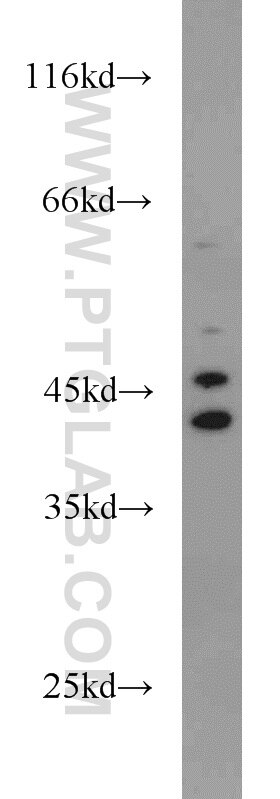
| Positive WB detected in | HepG2 cells, mouse brain tissue, HeLa cells, mouse liver tissue, rat liver tissue |
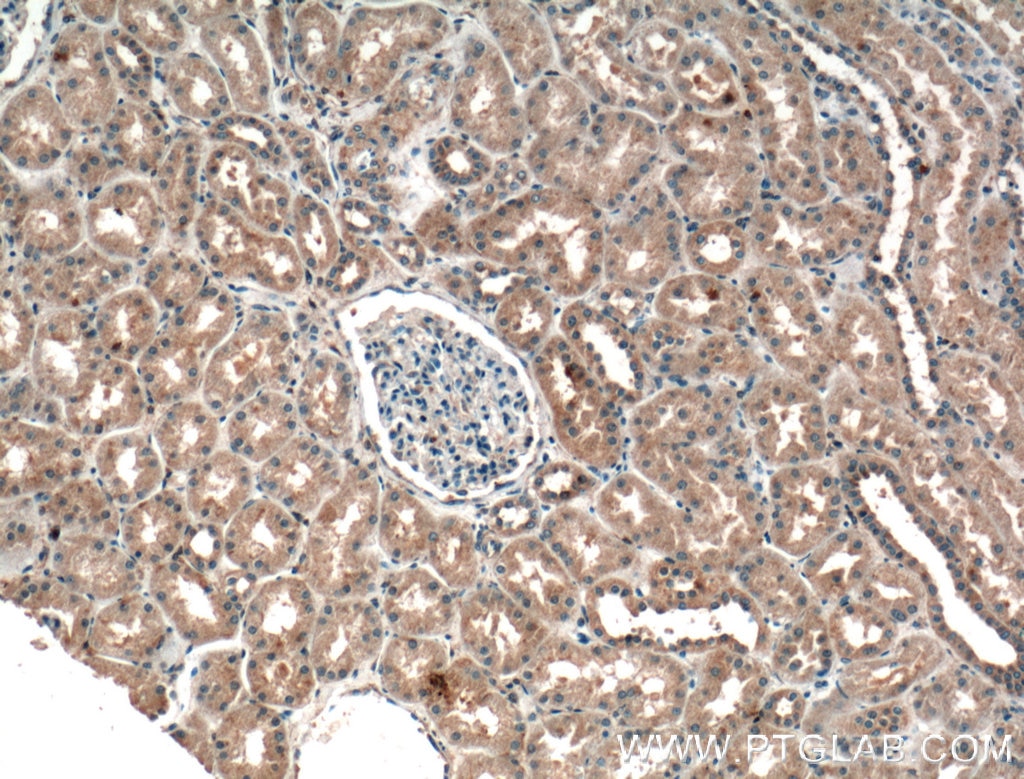
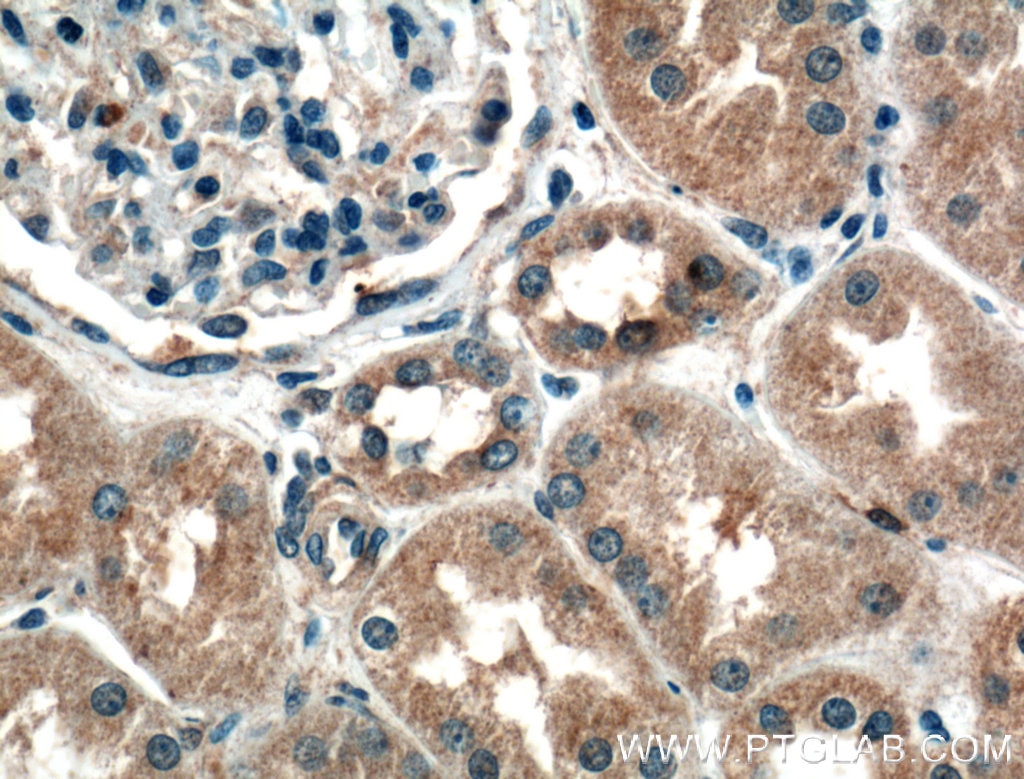
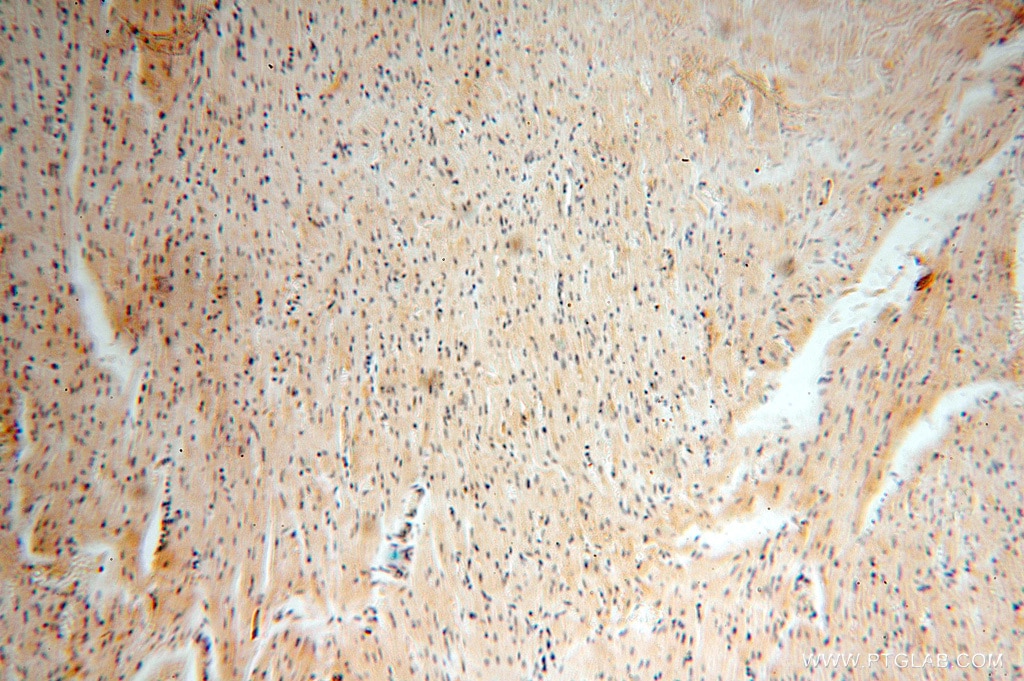
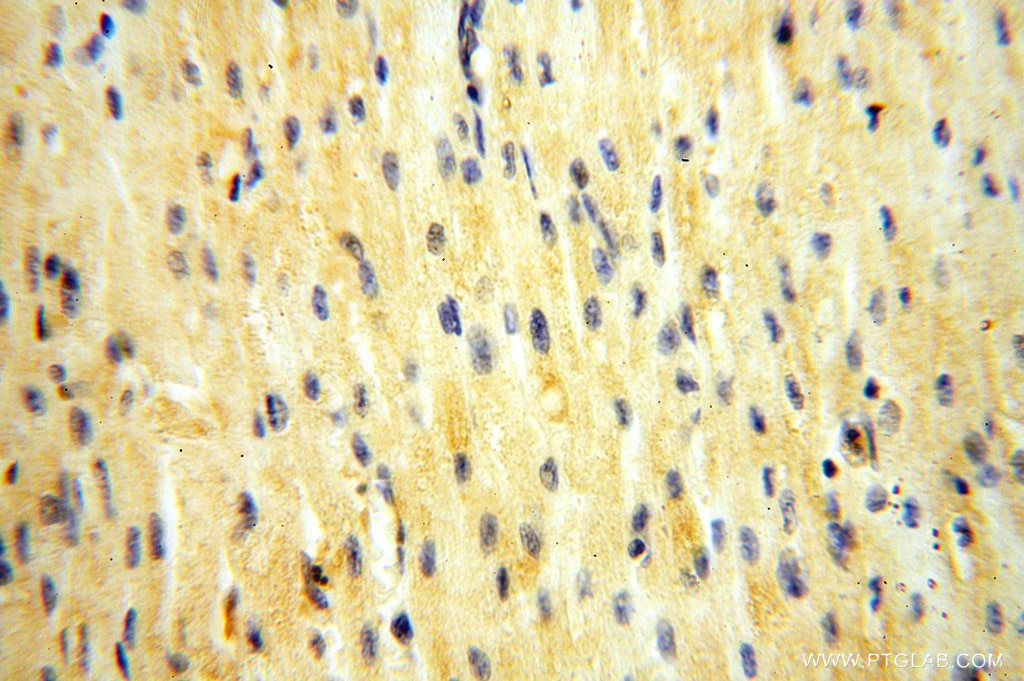
| Positive IHC detected in | human kidney tissue, human heart tissue Note: suggested antigen retrieval with TE buffer pH 9.0; (*) Alternatively, antigen retrieval may be performed with citrate buffer pH 6.0 |
Recommended dilution
| Application | Dilution |
|---|---|
| Western Blot (WB) | WB : 1:500-1:2000 |
| Immunohistochemistry (IHC) | IHC : 1:50-1:500 |
| It is recommended that this reagent should be titrated in each testing system to obtain optimal results. | |
| Sample-dependent, Check data in validation data gallery. | |
Product Information
16474-1-AP targets ADH4 in WB, IHC, ELISA applications and shows reactivity with human, mouse, rat samples.
| Tested Reactivity | human, mouse, rat |
| Cited Reactivity | human, mouse |
| Host / Isotype | Rabbit / IgG |
| Class | Polyclonal |
| Type | Antibody |
| Immunogen |
CatNo: Ag9568 Product name: Recombinant human ADH4 protein Source: e coli.-derived, PGEX-4T Tag: GST Domain: 1-380 aa of BC022319 Sequence: MGTKGKVIKCKAAIAWEAGKPLCIEEVEVAPPKAHEVRIQIIATSLCHTDATVIDSKFEGLAFPVIVGHEAAGIVESIGPGVTNVKPGDKVIPLYAPLCRKCKFCLSPLTNLCGKISNLKSPASDQQLMEDKTSRFTCKGKPVYHFFGTSTFSQYTVVSDINLAKIDDDANLERVCLLGCGFSTGYGAAINNAKVTPGSTCAVFGLGGVGLSAVMGCKAAGASRIIGIDINSEKFVKAKALGATDCLNPRDLHKPIQEVIIELTKGGVDFALDCAGGSETMKAALDCTTAGWGSCTFIGVAAGSKGLTVFPEELIIGRTINGTFFGGWKSVDSIPKLVTDYKNKKFNLDALVTHTLPFDKISEAFDLMNQGKSIRTILIF Predict reactive species |
| Full Name | alcohol dehydrogenase 4 (class II), pi polypeptide |
| Calculated Molecular Weight | 380 aa, 40 kDa |
| Observed Molecular Weight | 43 kDa |
| GenBank Accession Number | BC022319 |
| Gene Symbol | ADH4 |
| Gene ID (NCBI) | 127 |
| RRID | AB_2223855 |
| Conjugate | Unconjugated |
| Form | Liquid |
| Purification Method | Antigen affinity purification |
| UNIPROT ID | P08319 |
| Storage Buffer | PBS with 0.02% sodium azide and 50% glycerol, pH 7.3. |
| Storage Conditions | Store at -20°C. Stable for one year after shipment. Aliquoting is unnecessary for -20oC storage. 20ul sizes contain 0.1% BSA. |
Background Information
This gene encodes the class II alcohol dehydrogenase 4 pi subunit, which is a member of the alcohol dehydrogenase family. Members of this enzyme family metabolize a wide variety of substrates, including ethanol, retinol, other aliphatic alcohols, hydroxysteroids, and lipid peroxidation products. Class II alcohol dehydrogenase is a homodimer composed of 2 pi subunits. ADH4 plays a critical role in alcoholism development and alcohol toxicology and is also associated with the development of esophageal cancer(PMID:33556337, 26039424, 24051444, 22147505).
Protocols
| Product Specific Protocols | |
|---|---|
| IHC protocol for ADH4 antibody 16474-1-AP | Download protocol |
| WB protocol for ADH4 antibody 16474-1-AP | Download protocol |
| Standard Protocols | |
|---|---|
| Click here to view our Standard Protocols |
Publications
What published studies show
The anti-ADH4 antibody (Cat# 16474-1-AP) has 9 citations published in journals including Cell Communications & Signaling, Cancer Cell International, Frontiers in Immunology, iScience, BMC Cancer, Drug Metabolism and Disposition, Frontiers in Oncology, and BMC Gastroenterology. Research fields span hepatocellular carcinoma prognosis, ferroptosis regulation, tumor microenvironment characterization, non-apoptotic cell death crosstalk, and drug metabolism involving alcohol dehydrogenase 4.
| Species | Application | Title |
|---|---|---|
Cell Commun Signal In vivo CRISPR screening identifies POU3F3 as a novel regulator of ferroptosis resistance in hepatocellular carcinoma via retinoic acid signaling | ||
Front Immunol Identification and validation of a tyrosine metabolism-related prognostic prediction model and characterization of the tumor microenvironment infiltration in hepatocellular carcinoma | ||
Cancer Cell Int ADH4 deficiency activates the NRF2-CSF1 axis by increased lipid peroxidation in hepatocellular carcinoma. | ||
iScience Crosstalk of non-apoptotic RCD panel in hepatocellular carcinoma reveals the prognostic and therapeutic optimization | ||
BMC Cancer ADH4-a potential prognostic marker for hepatocellular carcinoma with possible immune-related implications | ||
Drug Metab Dispos Characterization of human alcohol dehydrogenase 4 and aldehyde dehydrogenase 2 as enzymes involved in the formation of 5-carboxylpirfenidone, a major metabolite of pirfenidone |









