
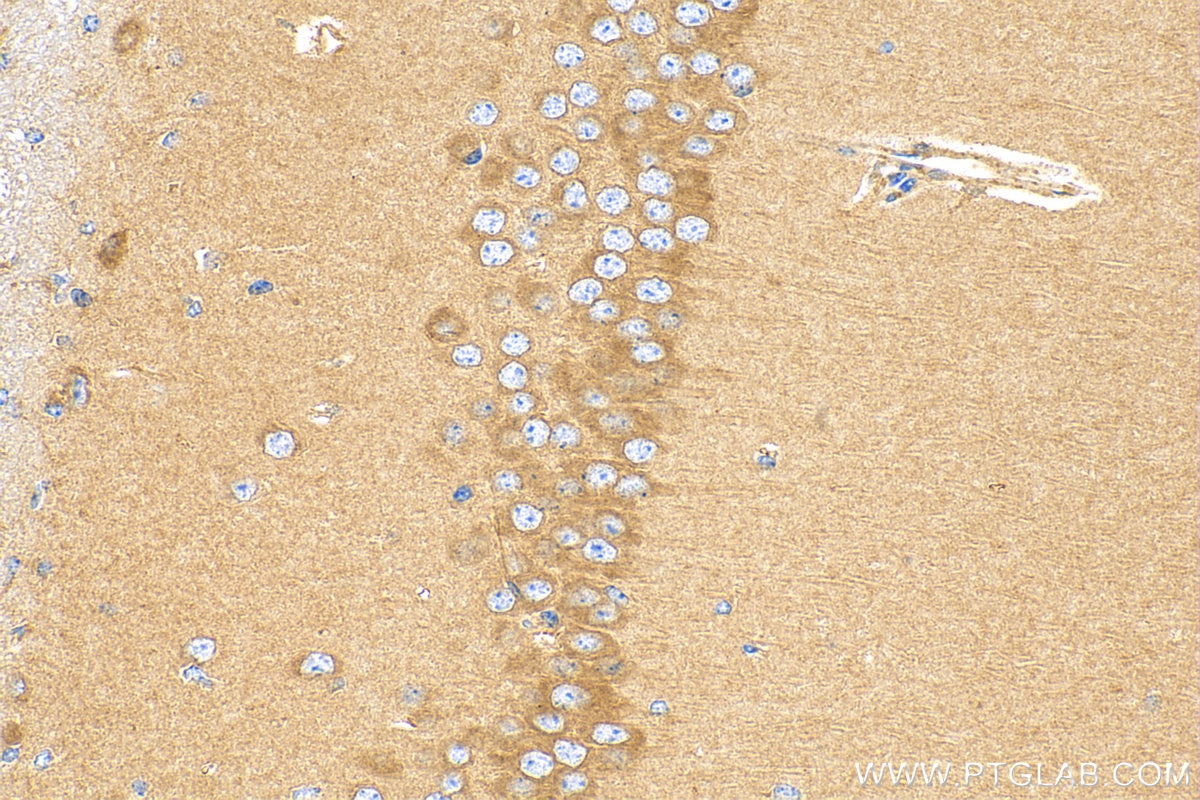

Tested Applications
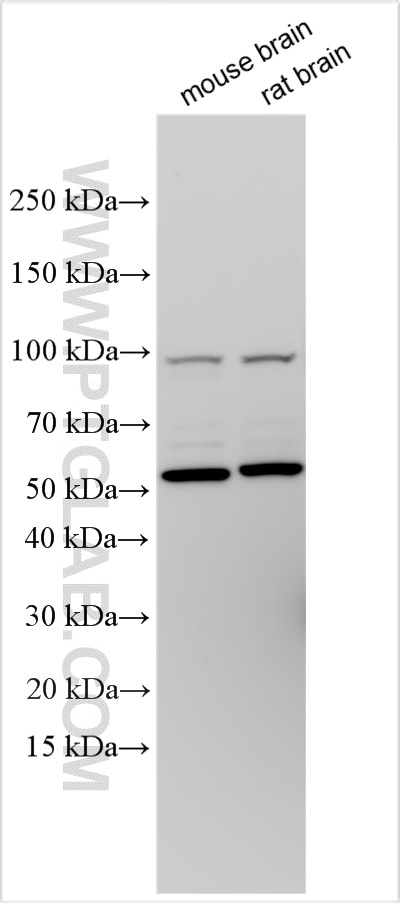
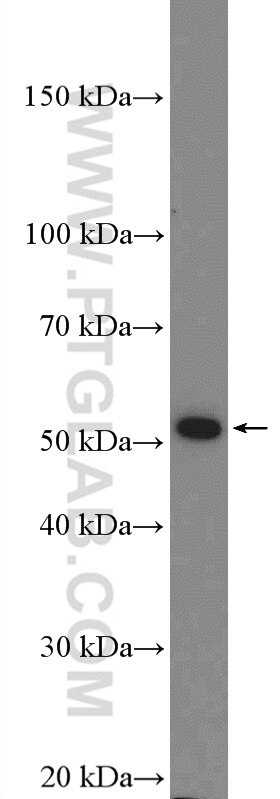
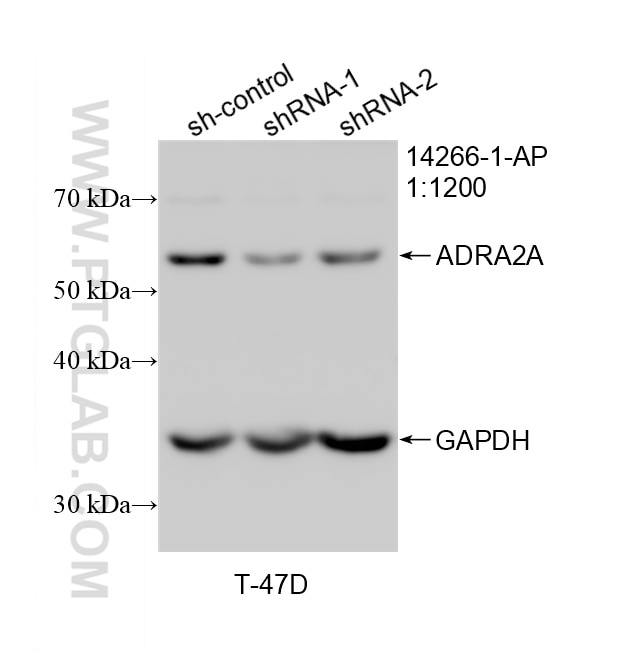
| Positive WB detected in | mouse brain tissue, PC-12 cells, T-47D cells, rat brain tissue |
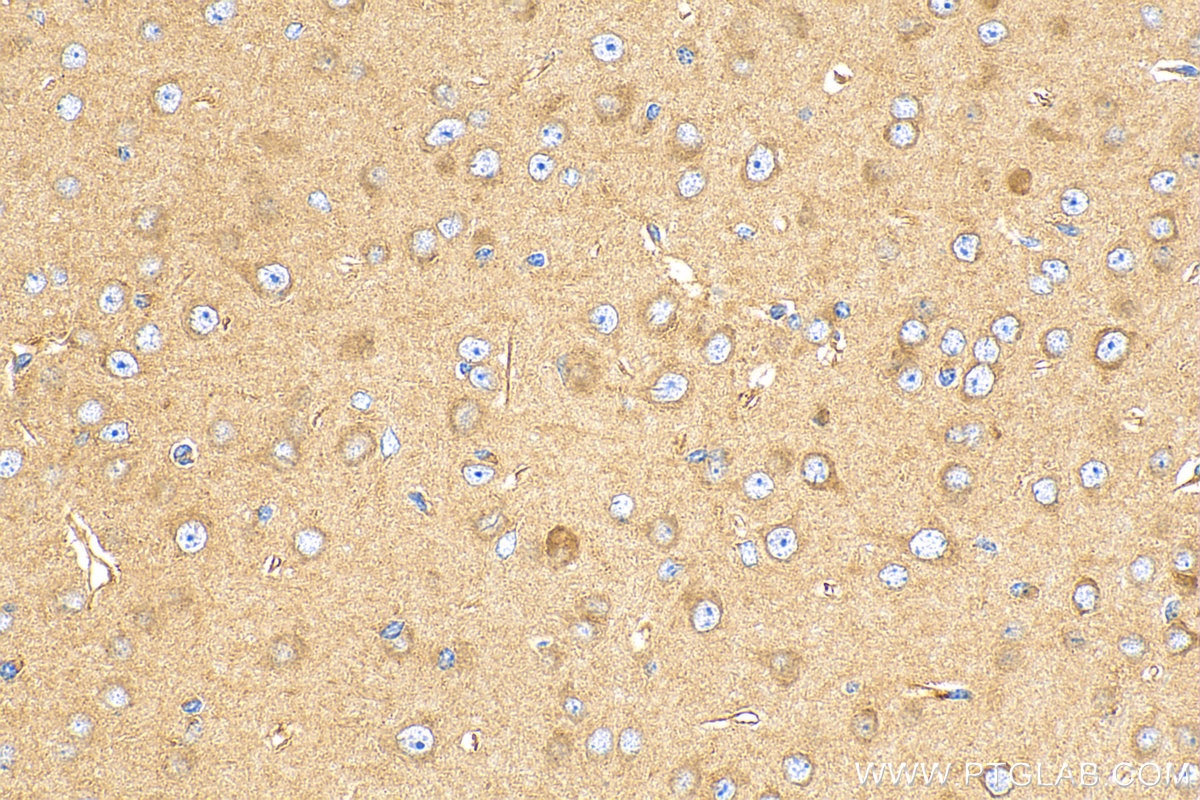
| Positive IHC detected in | mouse brain tissue Note: suggested antigen retrieval with TE buffer pH 9.0; (*) Alternatively, antigen retrieval may be performed with citrate buffer pH 6.0 |
Recommended dilution
| Application | Dilution |
|---|---|
| Western Blot (WB) | WB : 1:1000-1:8000 |
| Immunohistochemistry (IHC) | IHC : 1:200-1:800 |
| It is recommended that this reagent should be titrated in each testing system to obtain optimal results. | |
| Sample-dependent, Check data in validation data gallery. | |
Product Information
14266-1-AP targets ADRA2A in WB, IHC, IF, ELISA applications and shows reactivity with human, mouse, rat samples.
| Tested Reactivity | human, mouse, rat |
| Cited Reactivity | human, mouse, rat |
| Host / Isotype | Rabbit / IgG |
| Class | Polyclonal |
| Type | Antibody |
| Immunogen |
CatNo: Ag5562 Product name: Recombinant human ADRA2A protein Source: e coli.-derived, PGEX-4T Tag: GST Domain: 221-377 aa of BC050414 Sequence: QIAKRRTRVPPSRRGPDAVAAPPGGTERRPNGLGPERSAGPGGAEAEPLPTQLNGAPGEPAPAGPRDTDALDLEESSSSDHAERPPGPRRPERGPRGKGKARASQVKPGDSLPRRGPGATGIGTPAAGPGEERVGAAKASRWRGRQNREKRFTFVLA Predict reactive species |
| Full Name | adrenergic, alpha-2A-, receptor |
| Calculated Molecular Weight | 49 kDa |
| Observed Molecular Weight | 51 kDa |
| GenBank Accession Number | BC050414 |
| Gene Symbol | ADRA2A |
| Gene ID (NCBI) | 150 |
| RRID | AB_2636822 |
| Conjugate | Unconjugated |
| Form | Liquid |
| Purification Method | Antigen affinity purification |
| UNIPROT ID | P08913 |
| Storage Buffer | PBS with 0.02% sodium azide and 50% glycerol, pH 7.3. |
| Storage Conditions | Store at -20°C. Stable for one year after shipment. Aliquoting is unnecessary for -20oC storage. 20ul sizes contain 0.1% BSA. |
Background Information
ADRA2A (Adrenoceptor Alpha-2) belongs to the adrenoceptor alpha-2 family of GPCRs coupled to the inhibitory G-alpha subunit (Gi) that suppresses adenylyl cyclase activity, thereby suppressing the cyclization of AMP to cAMP (PMID: 38132444). ADRA2A inhibits the flow of sympathetic nerves in the central nervous system and plays a major role in sedation, anxiolysis, and antinociception (PMID: 33915198).
Protocols
| Product Specific Protocols | |
|---|---|
| IHC protocol for ADRA2A antibody 14266-1-AP | Download protocol |
| WB protocol for ADRA2A antibody 14266-1-AP | Download protocol |
| Standard Protocols | |
|---|---|
| Click here to view our Standard Protocols |
Publications
What published studies show
The ADRA2A Polyclonal antibody (Cat# 14266-1-AP) has 26 citations spanning journals including Nature Communications, Nature Chemical Biology, Science Advances, Frontiers in Immunology, Scientific Reports, Experimental Neurology, and others. Research fields covered include neuroscience (depression, anxiety, pain, hearing loss), immunology and autoimmune disease, oncology, cardiology, pharmacology, gastroenterology, and pulmonology.
| Species | Application | Title |
|---|---|---|
Nat Commun Bipolar and schizophrenia risk gene AKAP11 encodes an autophagy receptor coupling the regulation of PKA kinase network homeostasis to synaptic transmission. | ||
Nat Chem Biol Chemoproteomics reveals microbiota-derived aromatic monoamine agonists for GPRC5A | ||
Sci Adv Sympathetic nerve aggravates autoimmune skin disease via NE-adrenergic receptor axis: Neuroimmune cross-talk insights from vitiligo. | ||
Biomed Pharmacother Dexmedetomidine facilitates autophagic flux to promote liver regeneration by suppressing GSK3β activity in mouse partial hepatectomy | ||
Front Immunol β2-Adrenoceptor Deficiency Results in Increased Calcified Cartilage Thickness and Subchondral Bone Remodeling in Murine Experimental Osteoarthritis. | ||
Food Funct Folic acid enhances intestinal stem cell-mediated epithelial regeneration depending on β-adrenergic receptor signaling. |






