

Tested Applications
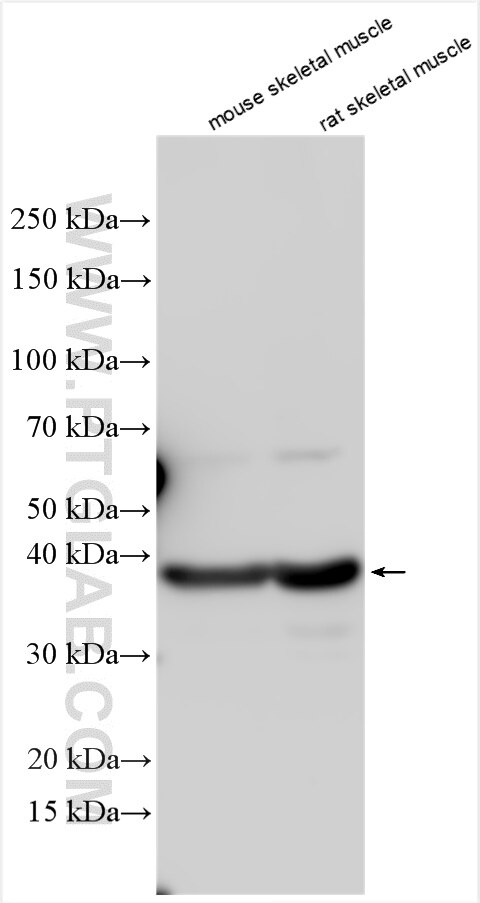
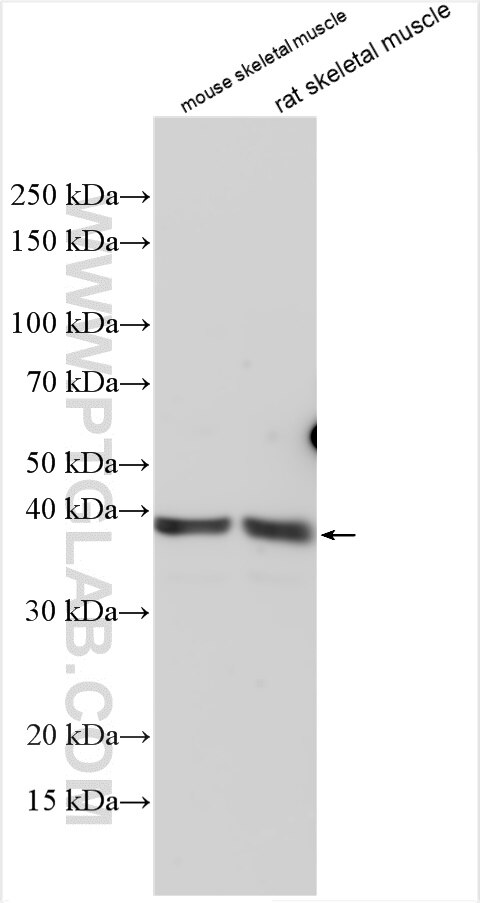
| Positive WB detected in | mouse skeletal muscle tissue, rat skeletal muscle tissue |
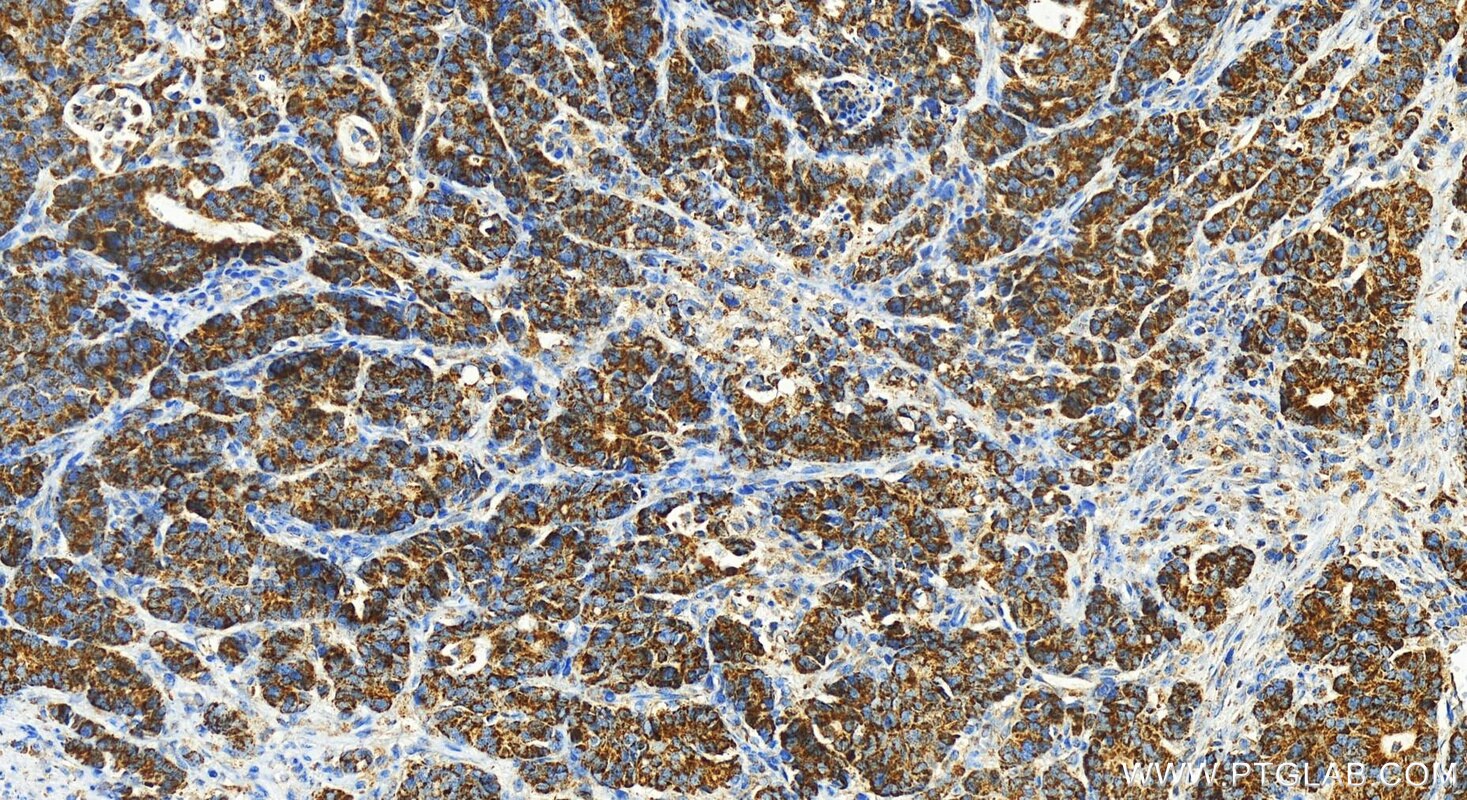
| Positive IHC detected in | human stomach cancer tissue Note: suggested antigen retrieval with TE buffer pH 9.0; (*) Alternatively, antigen retrieval may be performed with citrate buffer pH 6.0 |
Recommended dilution
| Application | Dilution |
|---|---|
| Western Blot (WB) | WB : 1:2000-1:16000 |
| Immunohistochemistry (IHC) | IHC : 1:800-1:3200 |
| It is recommended that this reagent should be titrated in each testing system to obtain optimal results. | |
| Sample-dependent, Check data in validation data gallery. | |
Product Information
21899-1-AP targets AGMAT in WB, IHC, ELISA applications and shows reactivity with human, mouse, rat samples.
| Tested Reactivity | human, mouse, rat |
| Host / Isotype | Rabbit / IgG |
| Class | Polyclonal |
| Type | Antibody |
| Immunogen |
CatNo: Ag13609 Product name: Recombinant human AGMAT protein Source: e coli.-derived, PKG Tag: GST Domain: 1-300 aa of BC005090 Sequence: MLRLLASGCARGPGPGVGARPAAGLFHPGRRQSRQASDAPRNQPPSPEFVARPVGVCSMMRLPVQTSPEGLDAAFIGVPLDTGTSNRPGARFGPRRIREESVMLRTVNPSTGALPFQSLMVADLGDVNVNLYNLQDSCRRIQEAYEKIVAAGCIPLTLGGDHTITYPILQAMAKKHGPVGLLHVDAHTDTTDKALGEKLYHGAPFRRCVDEGLLDCKRVVQIGIRGSSTTLDPYRYNRSQGFRVVLAEDCWMKSLVPLMGEVRQQMGGKPIYISFDIDALDPAYAPGTGTPEIAGLTPSQ Predict reactive species |
| Full Name | agmatine ureohydrolase (agmatinase) |
| Calculated Molecular Weight | 38 kDa |
| Observed Molecular Weight | 38 kDa |
| GenBank Accession Number | BC005090 |
| Gene Symbol | AGMAT |
| Gene ID (NCBI) | 79814 |
| RRID | AB_3085677 |
| Conjugate | Unconjugated |
| Form | Liquid |
| Purification Method | Antigen affinity purification |
| UNIPROT ID | Q9BSE5 |
| Storage Buffer | PBS with 0.02% sodium azide and 50% glycerol, pH 7.3. |
| Storage Conditions | Store at -20°C. Stable for one year after shipment. Aliquoting is unnecessary for -20oC storage. 20ul sizes contain 0.1% BSA. |
Background Information
AGMAT is a metallohydrolase and belongs to the arginase family. AGMAT plays an important role in amino acid metabolism and can hydrolyze agmatine into urea and putrescine. AGMAT has been shown to play an important role in the development of tumors, including colorectal cancer, lung adenocarcinoma, and pancreatic adenocarcinoma(PMID: 36680755; PMID: 31699997; PMID: 35837051 ).
Protocols
| Product Specific Protocols | |
|---|---|
| IHC protocol for AGMAT antibody 21899-1-AP | Download protocol |
| WB protocol for AGMAT antibody 21899-1-AP | Download protocol |
| Standard Protocols | |
|---|---|
| Click here to view our Standard Protocols |




