
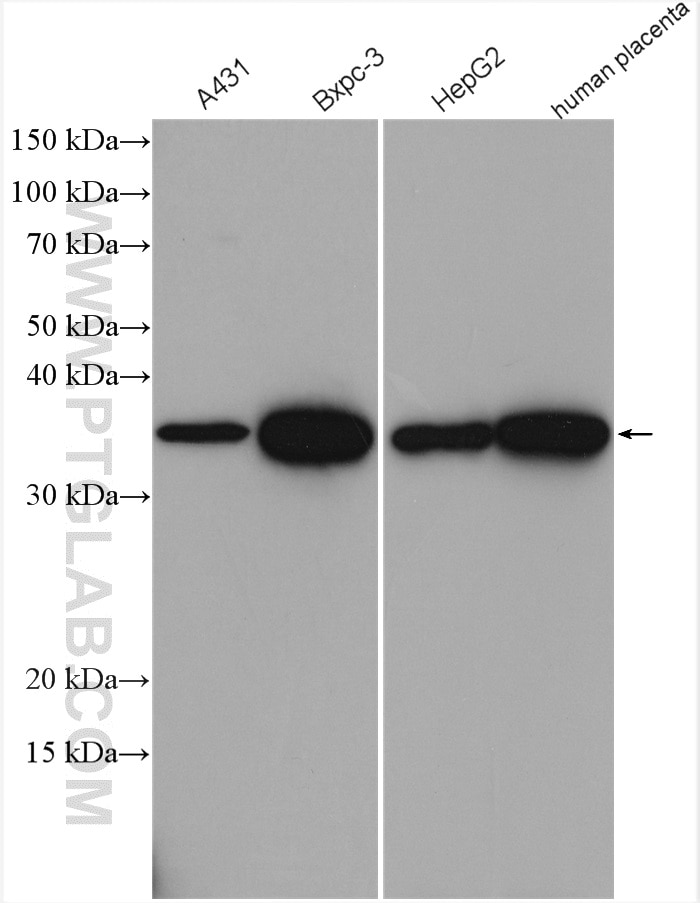
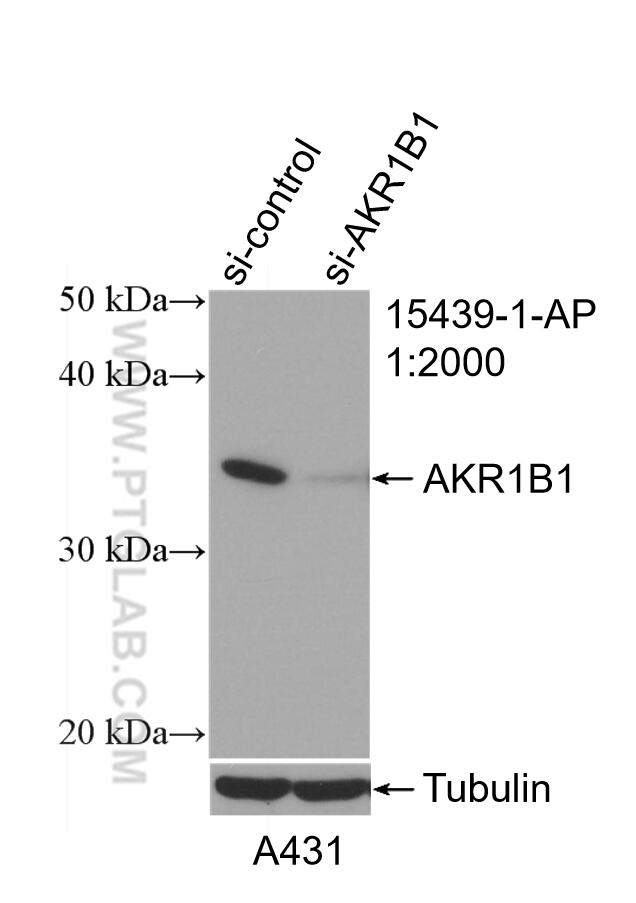
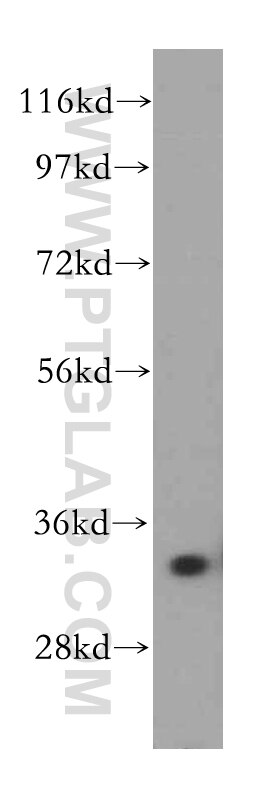
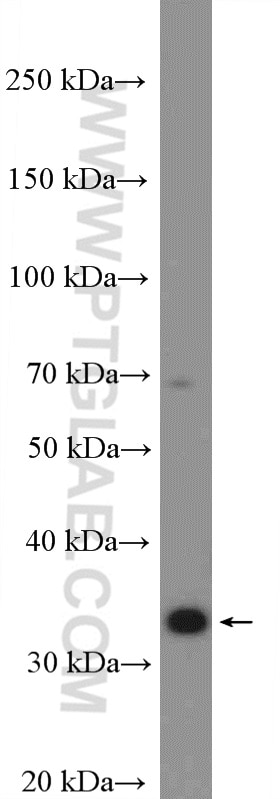

Tested Applications
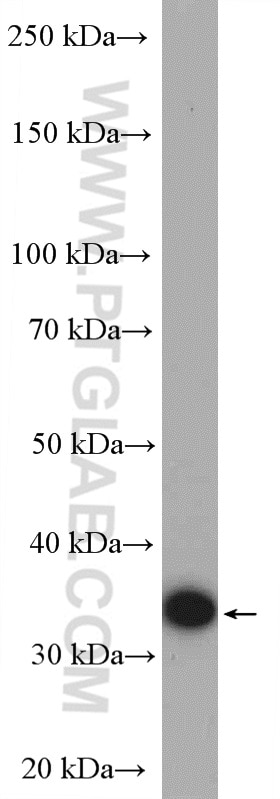
| Positive WB detected in | A431 cells, L02 cells, human liver tissue, BxPC-3 cells, HepG2 cells, human placenta tissue |
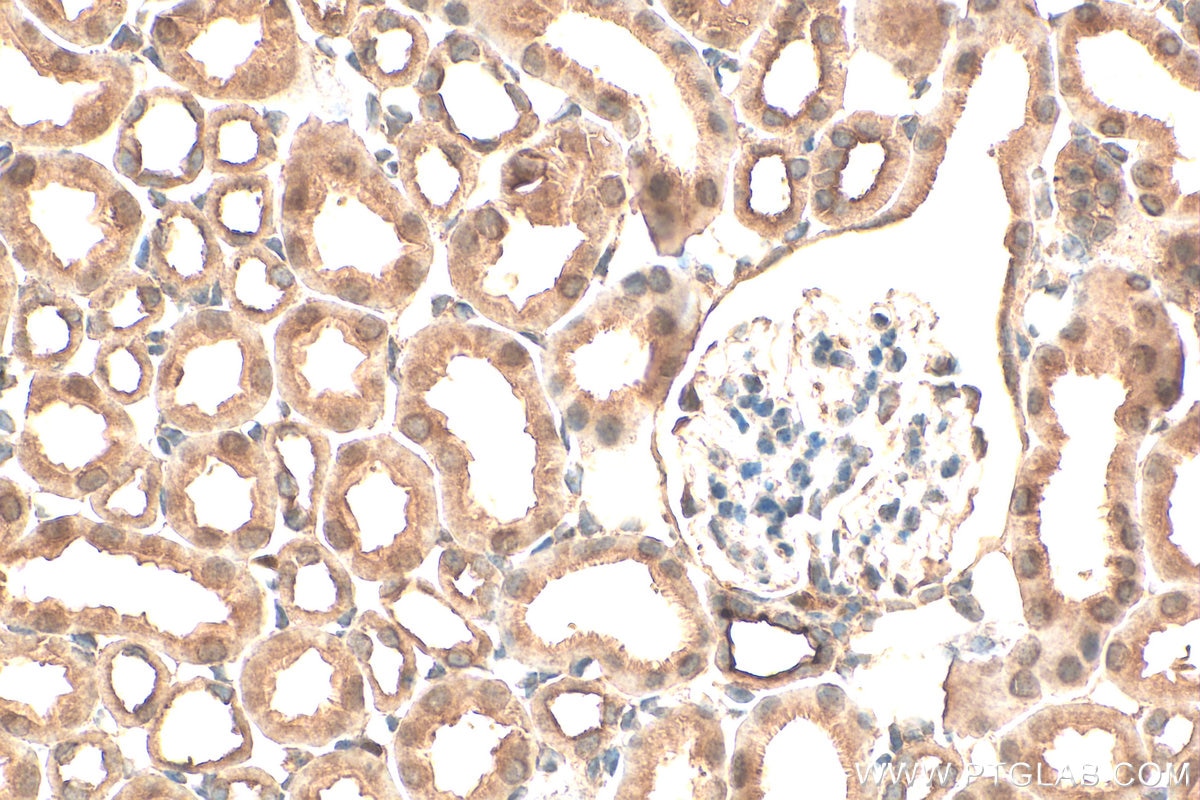
| Positive IHC detected in | mouse kidney tissue Note: suggested antigen retrieval with TE buffer pH 9.0; (*) Alternatively, antigen retrieval may be performed with citrate buffer pH 6.0 |
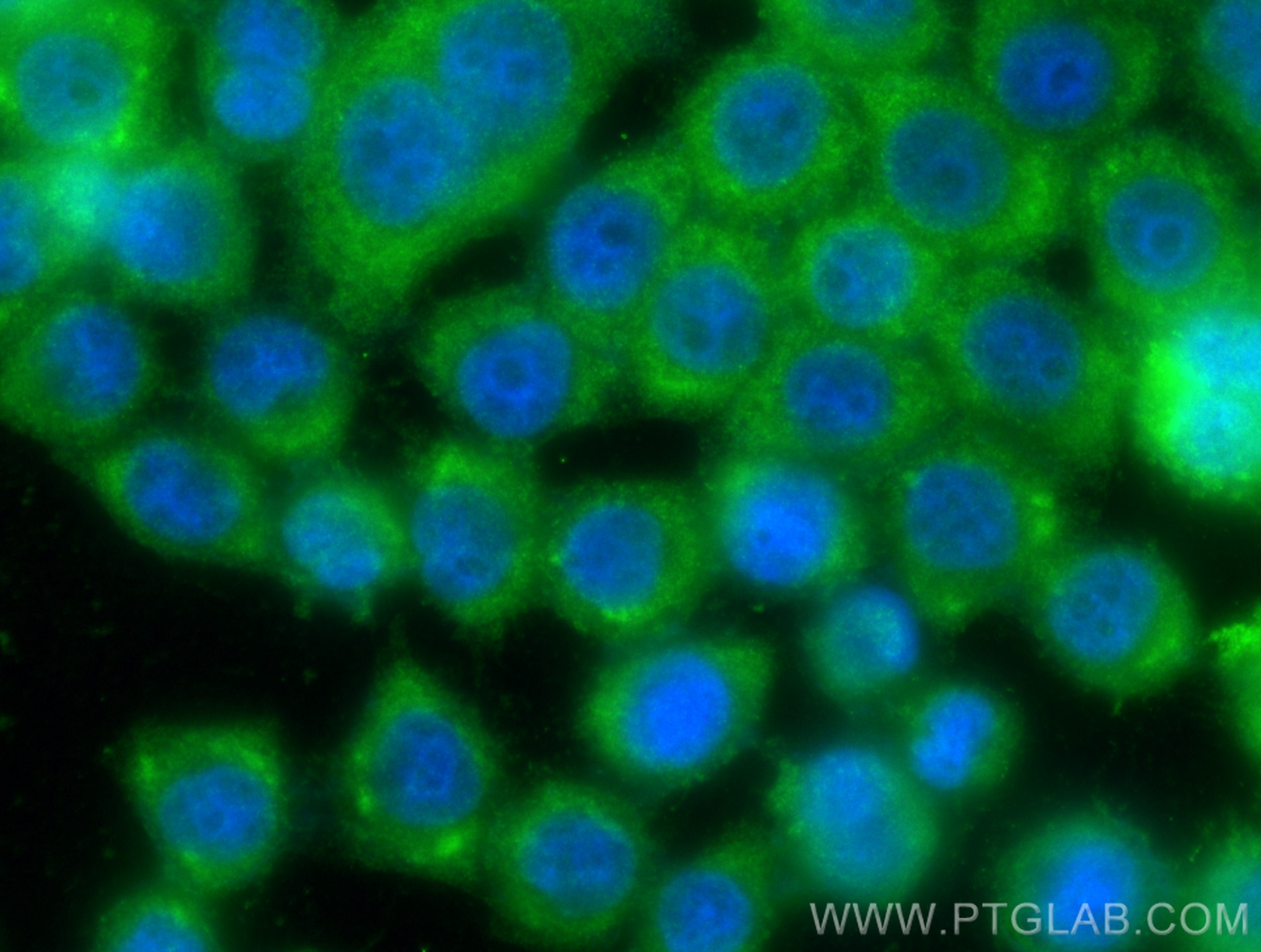
| Positive IF/ICC detected in | BxPC-3 cells |
Recommended dilution
| Application | Dilution |
|---|---|
| Western Blot (WB) | WB : 1:500-1:3000 |
| Immunohistochemistry (IHC) | IHC : 1:50-1:500 |
| Immunofluorescence (IF)/ICC | IF/ICC : 1:200-1:800 |
| It is recommended that this reagent should be titrated in each testing system to obtain optimal results. | |
| Sample-dependent, Check data in validation data gallery. | |
Product Information
15439-1-AP targets AKR1B1 in WB, IHC, IF/ICC, ELISA applications and shows reactivity with human samples.
| Tested Reactivity | human |
| Cited Reactivity | human, rat |
| Host / Isotype | Rabbit / IgG |
| Class | Polyclonal |
| Type | Antibody |
| Immunogen |
CatNo: Ag7142 Product name: Recombinant human AKR1B1 protein Source: e coli.-derived, PGEX-4T Tag: GST Domain: 1-316 aa of BC000260 Sequence: MASRLLLNNGAKMPILGLGTWKSPPGQVTEAVKVAIDVGYRHIDCAHVYQNENEVGVAIQEKLREQVVKREELFIVSKLWCTYHEKGLVKGACQKTLSDLKLDYLDLYLIHWPTGFKPGKEFFPLDESGNVVPSDTNILDTWAAMEELVDEGLVKAIGISNFNHLQVEMILNKPGLKYKPAVNQIECHPYLTQEKLIQYCQSKGIVVTAYSPLGSPDRPWAKPEDPSLLEDPRIKAIAAKHNKTTAQVLIRFPMQRNLVVIPKSVTPERIAENFKVFDFELSSQDMTTLLSYNRNWRVCALLSCTSHKDYPFHEEF Predict reactive species |
| Full Name | aldo-keto reductase family 1, member B1 (aldose reductase) |
| Calculated Molecular Weight | 36 kDa |
| Observed Molecular Weight | 34 kDa |
| GenBank Accession Number | BC000260 |
| Gene Symbol | AKR1B1 |
| Gene ID (NCBI) | 231 |
| RRID | AB_2224154 |
| Conjugate | Unconjugated |
| Form | Liquid |
| Purification Method | Antigen affinity purification |
| UNIPROT ID | P15121 |
| Storage Buffer | PBS with 0.02% sodium azide and 50% glycerol, pH 7.3. |
| Storage Conditions | Store at -20°C. Stable for one year after shipment. Aliquoting is unnecessary for -20oC storage. 20ul sizes contain 0.1% BSA. |
Protocols
| Product Specific Protocols | |
|---|---|
| IF protocol for AKR1B1 antibody 15439-1-AP | Download protocol |
| IHC protocol for AKR1B1 antibody 15439-1-AP | Download protocol |
| WB protocol for AKR1B1 antibody 15439-1-AP | Download protocol |
| Standard Protocols | |
|---|---|
| Click here to view our Standard Protocols |
Publications
What published studies show
The AKR1B1 (Aldose Reductase) antibody, catalog #15439-1-AP, has 16 citations across journals including Nature Metabolism, Cell Reports, Acta Pharmacologica Sinica, Fertility and Sterility, Environmental Pollution, Frontiers in Immunology, Biochemical Pharmacology, Oxidative Medicine and Cellular Longevity, and BMC Nephrology. Research fields span oncology (colorectal, lung, bladder, glioma), diabetic nephropathy, ischemic stroke, reproductive biology, neuroprotection, and metabolic regulation.
| Species | Application | Title |
|---|---|---|
Nat Metab Fructose and glucose from sugary drinks enhance colorectal cancer metastasis via SORD | ||
Acta Pharmacol Sin Aldose reductase inhibition suppresses microglial endoplasmic reticulum stress and ferritinophagy in ischemic stroke. | ||
Fertil Steril Seminal plasma of men with severe asthenozoospermia contain exosomes that affect spermatozoa motility and capacitation. | ||
Cell Rep A pro-metastatic tRNA fragment drives aldolase A oligomerization to enhance aerobic glycolysis in lung adenocarcinoma | ||
Oxid Med Cell Longev WJ-39, an Aldose Reductase Inhibitor, Ameliorates Renal Lesions in Diabetic Nephropathy by Activating Nrf2 Signaling. | ||
Environ Pollut Multi-omics analysis and preliminary experimental validation of acetyl tributyl citrate (ATBC) promoting bladder cancer progression via the AKR1B1/EMT axis.
|
Reviews
What customers say
The single review for 15439-1-AP is a 5-star rating from January 2024. The reviewer used the antibody for flow cytometry on IMCD3 cells at a 1:200 dilution (lot 00051366) and described it as a good antibody for studying hypertonic stress response. Overall, the feedback is positive, with no reported issues regarding specificity or performance.
The reviews below have been submitted by verified Proteintech customers who received an incentive for providing their feedback.
Parijat (Verified Customer) (01-12-2024) | Good antibody for studying hypertonic stress response.
|








