

Tested Applications
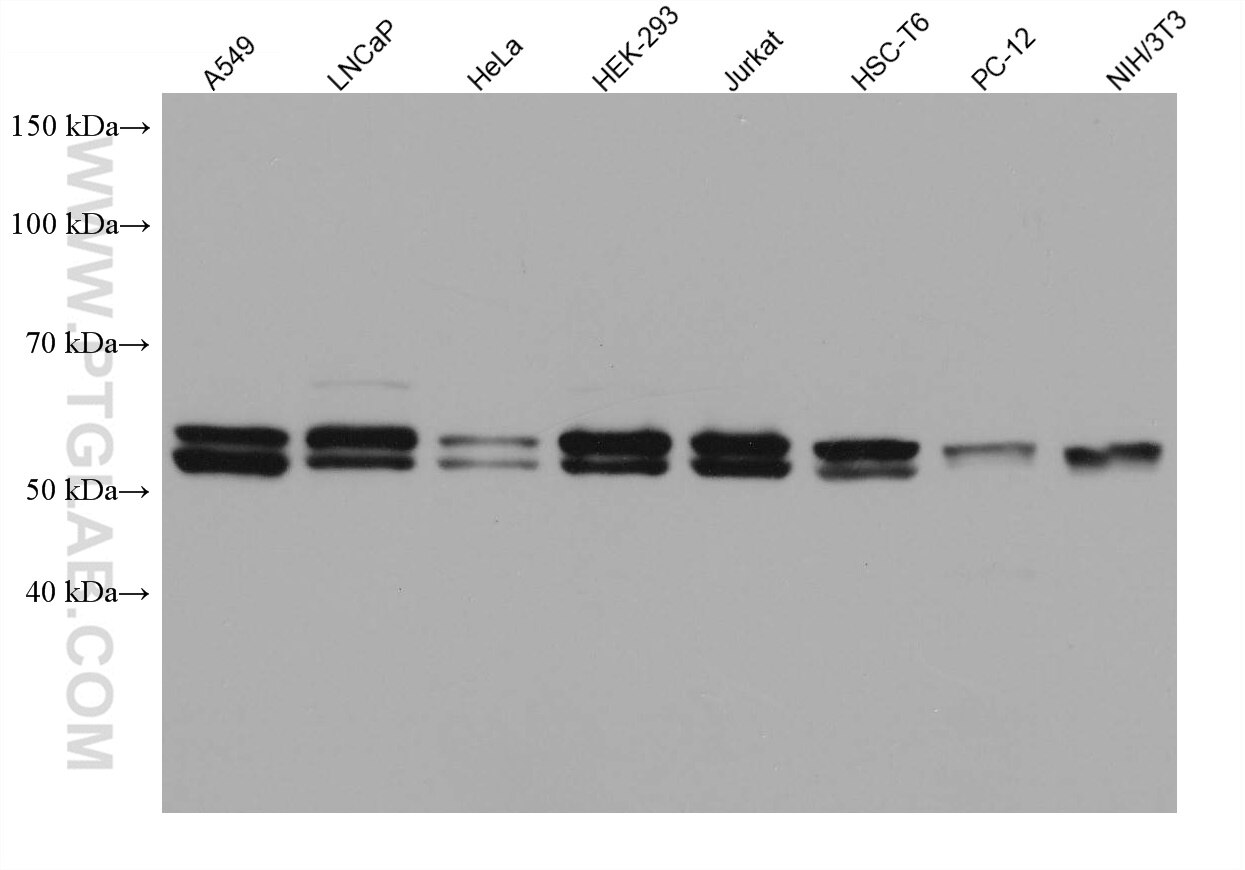
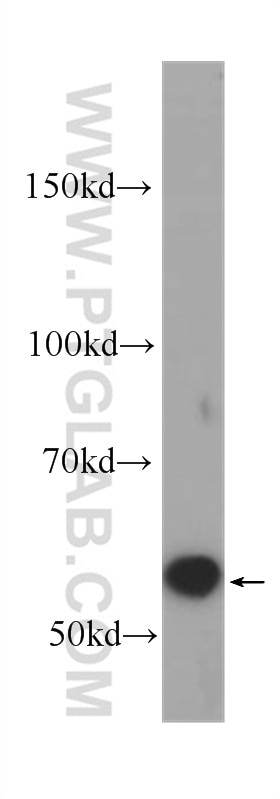
| Positive WB detected in | A549 cells, HEK-293 cells, mouse brain tissue, ROS1728 cells, LNCaP cells, Hela cells, Jurkat cells, HSC-T6 cells, PC-12 cells, NIH/3T3 cells |
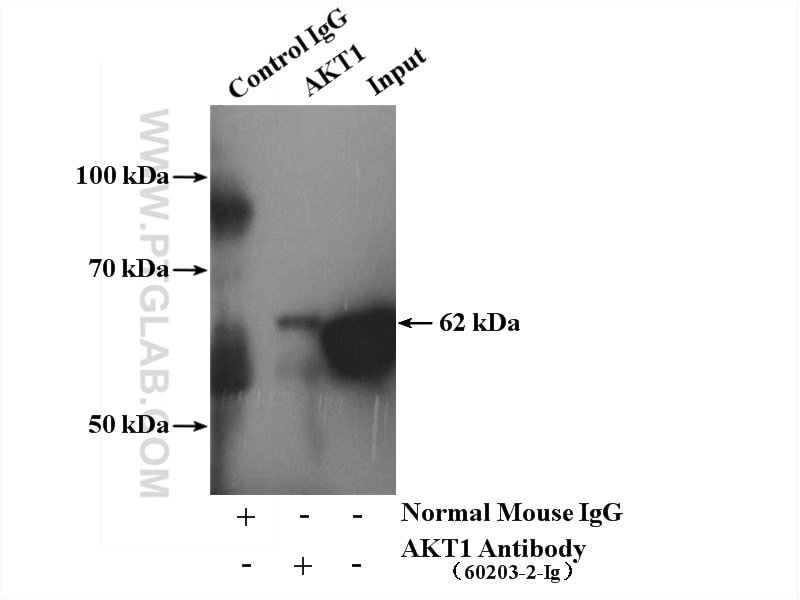
| Positive IP detected in | mouse brain tissue |
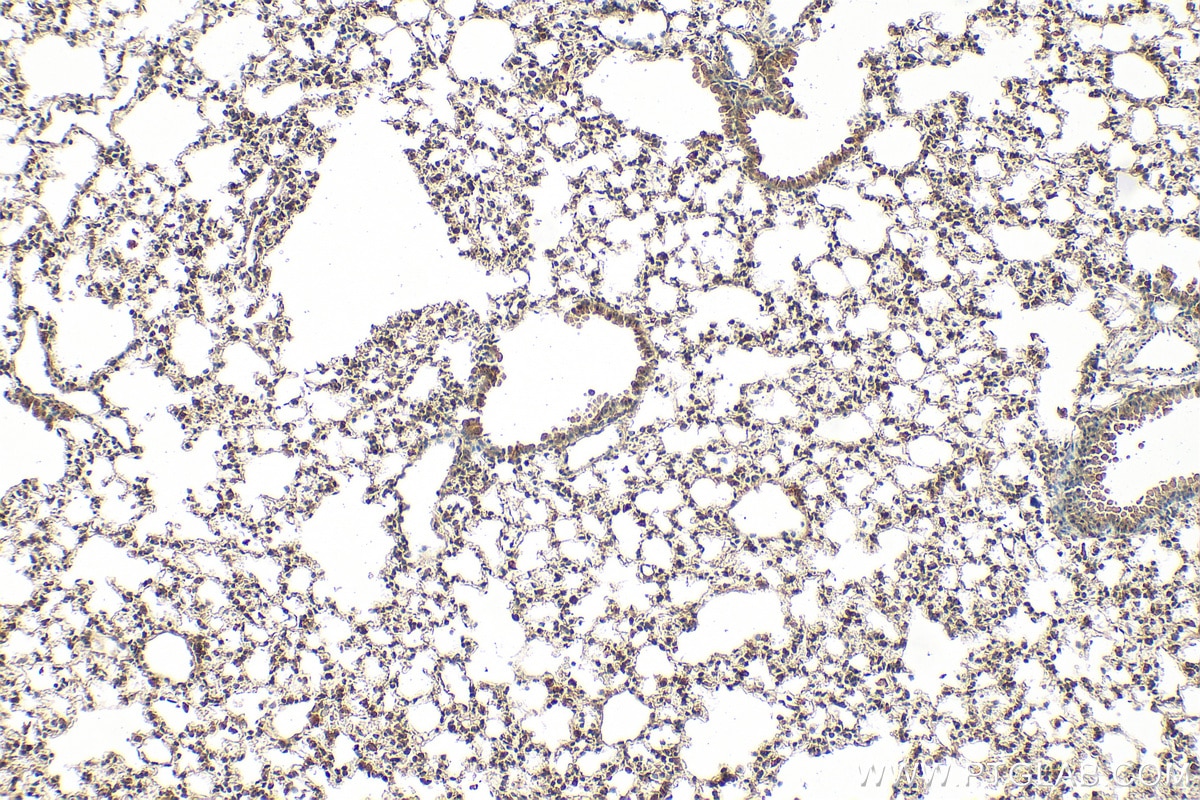
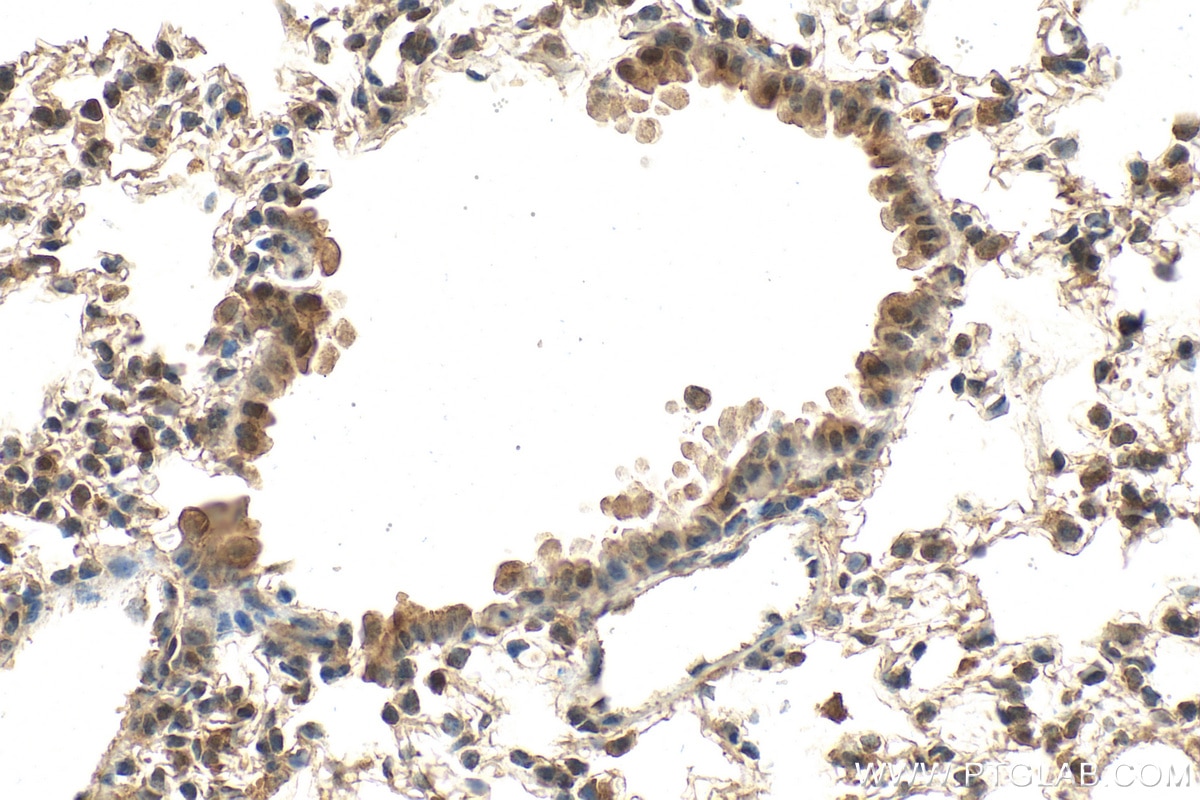
| Positive IHC detected in | mouse lung tissue Note: suggested antigen retrieval with TE buffer pH 9.0; (*) Alternatively, antigen retrieval may be performed with citrate buffer pH 6.0 |
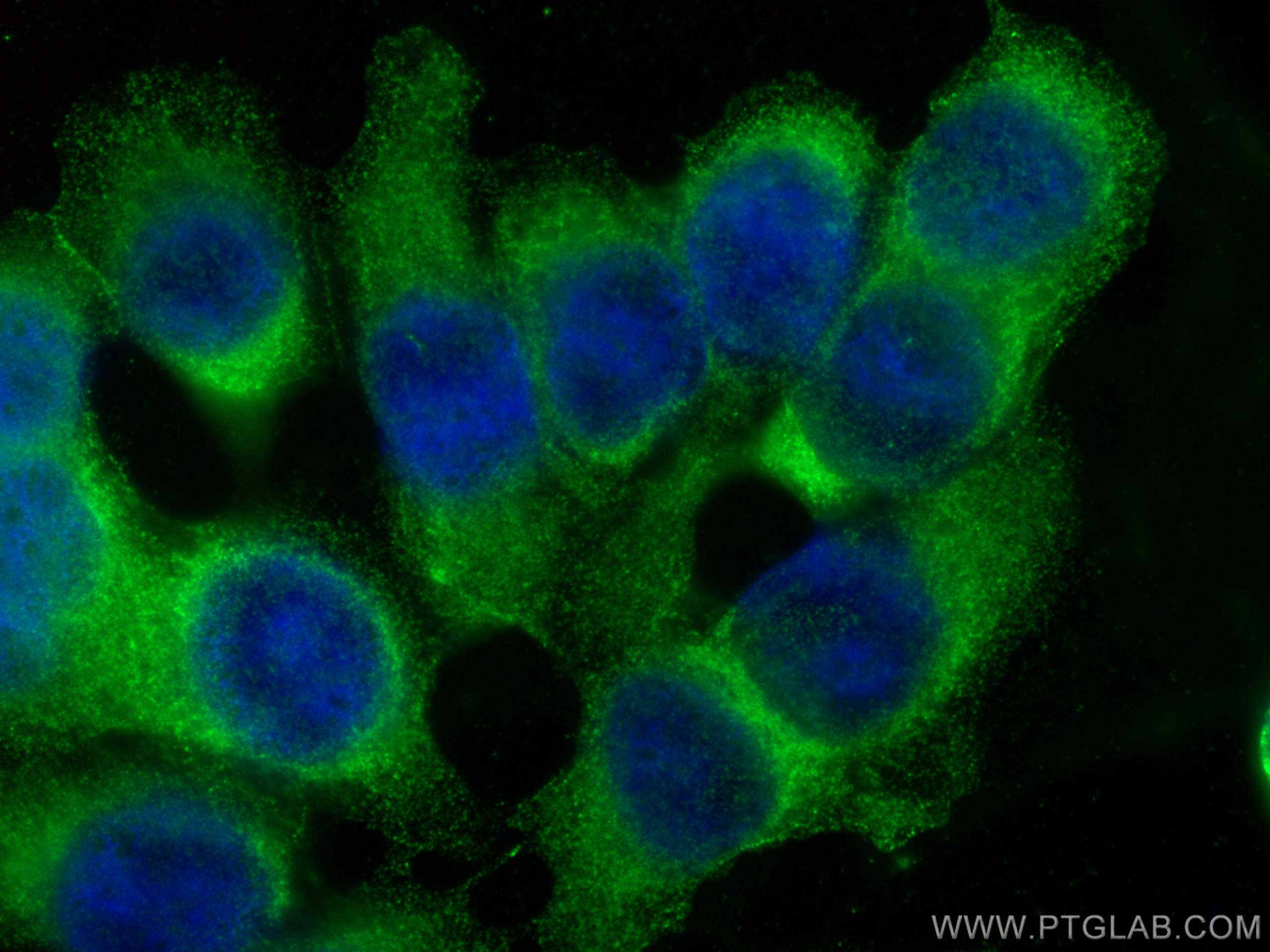
| Positive IF/ICC detected in | MCF-7 cells |
Recommended dilution
| Application | Dilution |
|---|---|
| Western Blot (WB) | WB : 1:5000-1:50000 |
| Immunoprecipitation (IP) | IP : 0.5-4.0 ug for 1.0-3.0 mg of total protein lysate |
| Immunohistochemistry (IHC) | IHC : 1:250-1:1000 |
| Immunofluorescence (IF)/ICC | IF/ICC : 1:200-1:800 |
| It is recommended that this reagent should be titrated in each testing system to obtain optimal results. | |
| Sample-dependent, Check data in validation data gallery. | |
Product Information
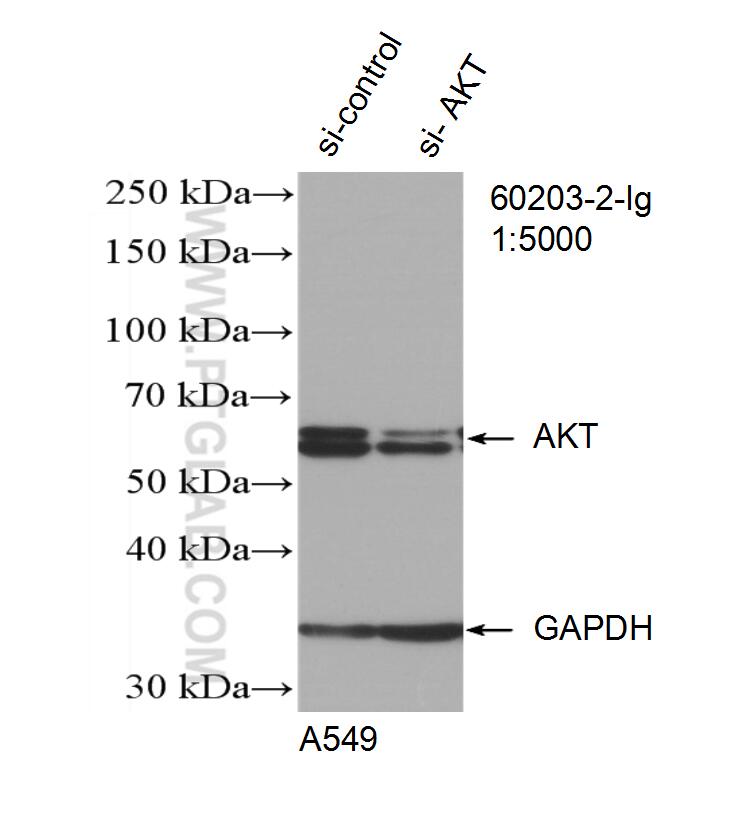
60203-2-Ig targets AKT in WB, IHC, IF/ICC, IP, CoIP, ELISA applications and shows reactivity with human, mouse, rat samples.
| Tested Reactivity | human, mouse, rat |
| Cited Reactivity | human, mouse, rat, pig, rabbit, chicken, hamster, sheep, goat |
| Host / Isotype | Mouse / IgG1 |
| Class | Monoclonal |
| Type | Antibody |
| Immunogen |
CatNo: Ag16695 Product name: Recombinant human AKT protein Source: e coli.-derived, PET28a Tag: 6*His Domain: 1-224 aa of BC000479 Sequence: MSDVAIVKEGWLHKRGEYIKTWRPRYFLLKNDGTFIGYKERPQDVDQREAPLNNFSVAQCQLMKTERPRPNTFIIRCLQWTTVIERTFHVETPEEREEWTTAIQTVADGLKKQEEEEMDFRSGSPSDNSGAEEMEVSLAKPKHRVTMNEFEYLKLLGKGTFGKVILVKEKATGRYYAMKILKKEVIVAKDEVAHTLTENRVLQNSRHPFLTALKYSFQTHDRLC Predict reactive species |
| Full Name | v-akt murine thymoma viral oncogene homolog 1 |
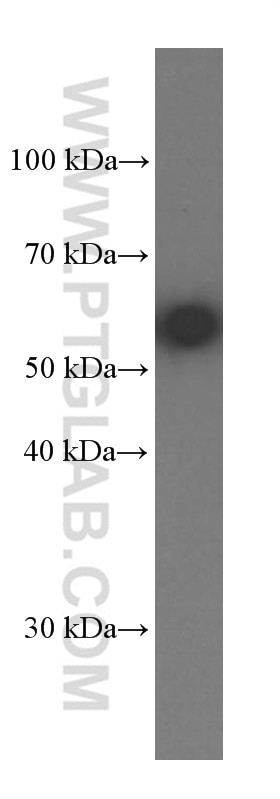
| Calculated Molecular Weight | 56 kDa |
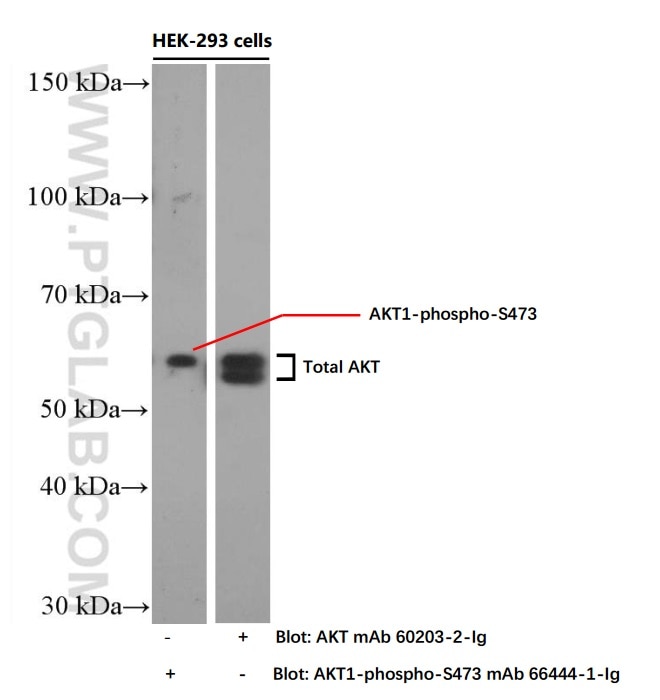
| Observed Molecular Weight | 56-62 kDa |
| GenBank Accession Number | BC000479 |
| Gene Symbol | AKT1 |
| Gene ID (NCBI) | 207 |
| RRID | AB_10912803 |
| Conjugate | Unconjugated |
| Form | Liquid |
| Purification Method | Protein G purification |
| UNIPROT ID | P31749 |
| Storage Buffer | PBS with 0.02% sodium azide and 50% glycerol, pH 7.3. |
| Storage Conditions | Store at -20°C. Stable for one year after shipment. Aliquoting is unnecessary for -20oC storage. 20ul sizes contain 0.1% BSA. |
Background Information
The serine-threonine protein kinase AKT1 is catalytically inactive in serum-starved primary and immortalized fibroblasts. Survival factors can suppress apoptosis in a transcription-independent manner by activating the serine/threonine kinase AKT1, which then phosphorylates and inactivates components of the apoptotic machinery. This antibody detects all the members of AKT with/without phospho- modification.
Protocols
| Product Specific Protocols | |
|---|---|
| IF protocol for AKT antibody 60203-2-Ig | Download protocol |
| IHC protocol for AKT antibody 60203-2-Ig | Download protocol |
| IP protocol for AKT antibody 60203-2-Ig | Download protocol |
| WB protocol for AKT antibody 60203-2-Ig | Download protocol |
| Standard Protocols | |
|---|---|
| Click here to view our Standard Protocols |
Publications
What published studies show
The AKT Monoclonal antibody (2C5D1), catalog number 60203-2-Ig, has accumulated 897 citations. Citations appear in high-impact journals including Signal Transduction and Targeted Therapy, Nature Metabolism, Nature Aging, Nature Communications, Cell Metabolism, Neuron, Cell Reports, Advanced Science, Cancer Letters, and Oncogene. Research fields span oncology, immunology, metabolism, neuroscience, inflammation, diabetes, cardiovascular disease, fibrosis, stem cell biology, and cell death mechanisms including ferroptosis and autophagy.
| Species | Application | Title |
|---|---|---|
Signal Transduct Target Ther Chimeric antigen receptor with novel intracellular modules improves antitumor performance of T cells | ||
Signal Transduct Target Ther Circulating tumor cells shielded with extracellular vesicle-derived CD45 evade T cell attack to enable metastasis | ||
Signal Transduct Target Ther Targeting cancer cell plasticity by HDAC inhibition to reverse EBV-induced dedifferentiation in nasopharyngeal carcinoma. | ||
J Hematol Oncol Exosomes released by hepatocarcinoma cells endow adipocytes with tumor-promoting properties. | ||
Cell Metab Acetate enables metabolic fitness and cognitive performance during sleep disruption | ||
Adv Mater Silk fibroin and sericin differentially potentiate the paracrine and regenerative functions of stem cells through multiomics analysis |
Reviews
What customers say
All 6 reviewers rate this AKT antibody highly (average ~4.7/5). It consistently produces clear, distinguishable bands at the expected ~60 kDa size by Western blot across diverse samples including RPE-1 lysates, mouse brain, Caco2 cells, and animal colon tissue. Multiple users confirm strong performance in IHC and IF as well. Recommended dilutions range from 1:500 to 1:5000 depending on application. Reviewers describe it as reliable for detecting endogenous Akt and overall express strong satisfaction with its specificity and signal quality.
The reviews below have been submitted by verified Proteintech customers who received an incentive for providing their feedback.
Mounika (Verified Customer) (01-08-2026) | Antibodies are very wonderful, works very amazingly!
|
Sai Sindhura (Verified Customer) (01-08-2026) | AKT works very good for IHC
|
Areen (Verified Customer) (12-15-2025) | VERY GOOD ANTIBODY
|
A (Verified Customer) (07-15-2025) | Used for caco2 cells and animal colon tissue
|
C (Verified Customer) (06-25-2025) | A reliable Ab to detect endo Akt.
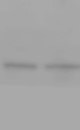 |
Janine (Verified Customer) (02-18-2019) | Yielded clear and distinguishable bands at the expected size of ~60kDa after 10 sec exposure using enhanced chemiluminescence.
|










