
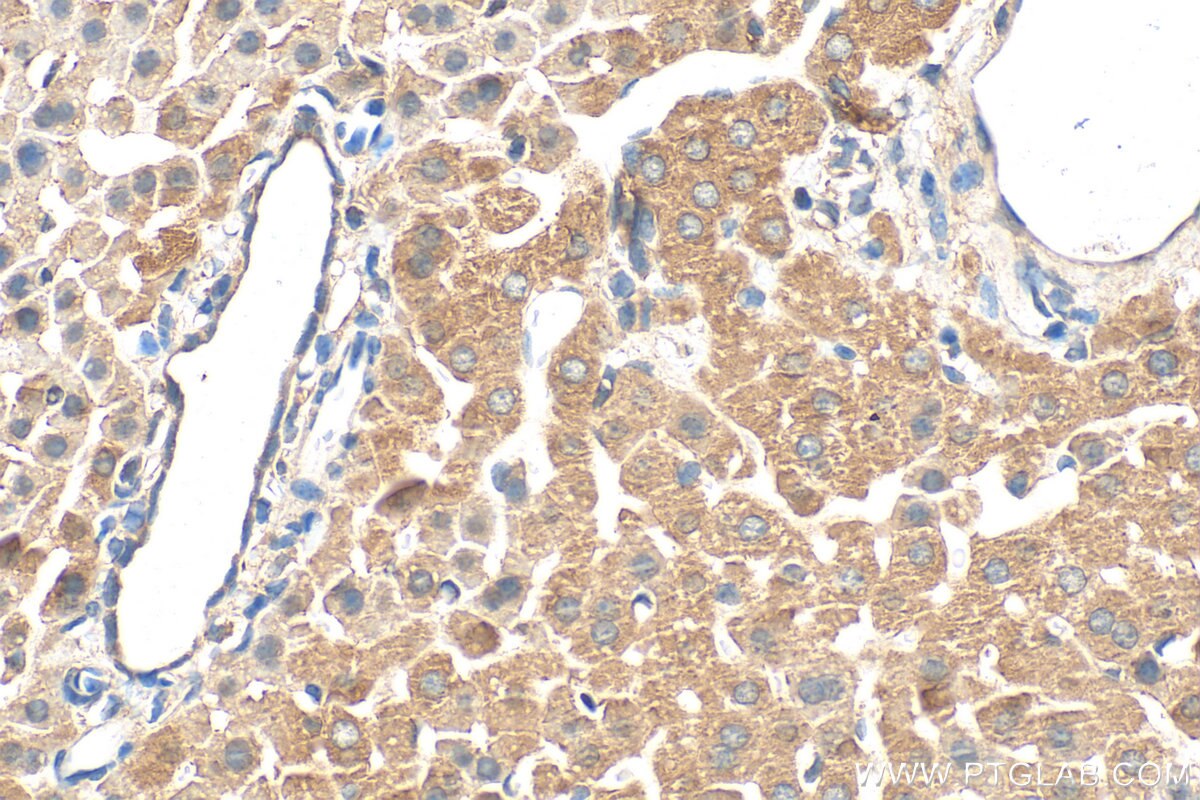
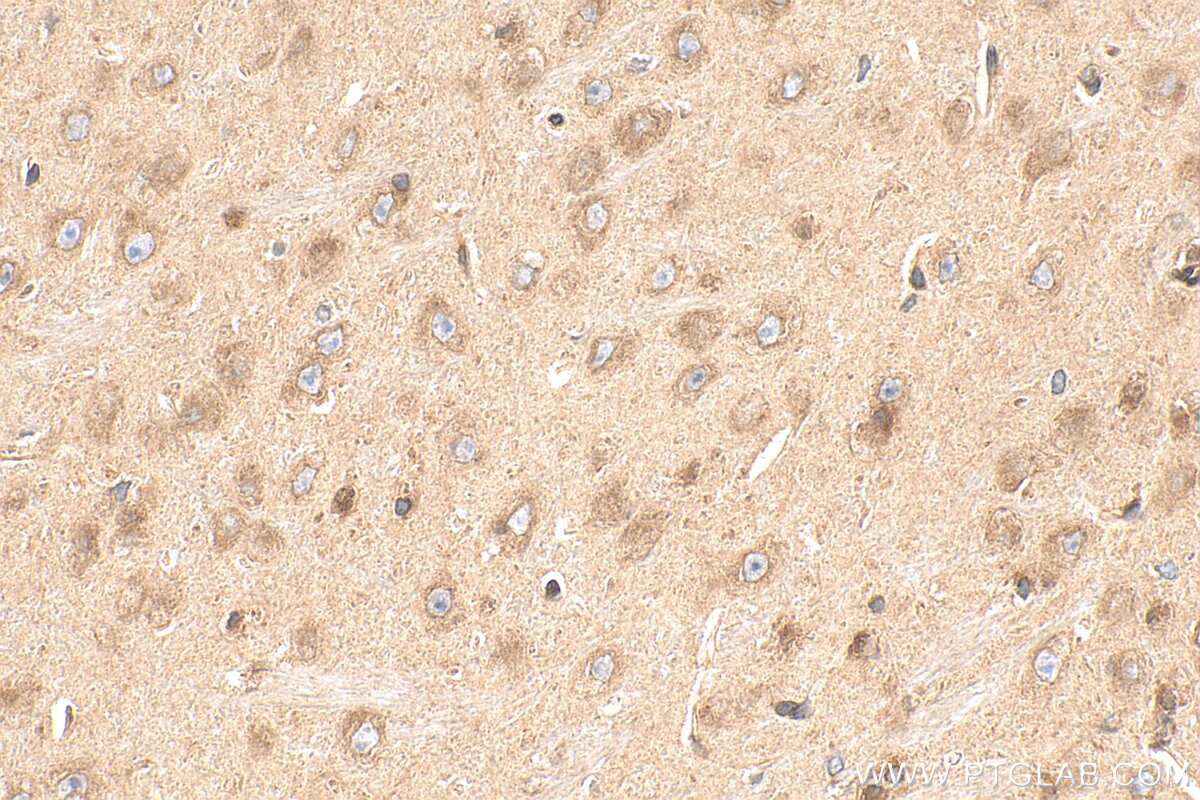
Tested Applications
| Positive IHC detected in | mouse liver tissue, mouse brain tissue Note: suggested antigen retrieval with TE buffer pH 9.0; (*) Alternatively, antigen retrieval may be performed with citrate buffer pH 6.0 |
Recommended dilution
| Application | Dilution |
|---|---|
| Immunohistochemistry (IHC) | IHC : 1:300-1:1200 |
| It is recommended that this reagent should be titrated in each testing system to obtain optimal results. | |
| Sample-dependent, Check data in validation data gallery. | |
Product Information
24087-1-AP targets ANKRD18A in IHC, ELISA applications and shows reactivity with human, mouse samples.
| Tested Reactivity | human, mouse |
| Host / Isotype | Rabbit / IgG |
| Class | Polyclonal |
| Type | Antibody |
| Immunogen |
CatNo: Ag21335 Product name: Recombinant human ANKRD18A protein Source: e coli.-derived, PET28a Tag: 6*His Domain: 262-390 aa of BC152434 Sequence: NHLRNDNQETAAMKPANLKKRKERAKAEHNLKVASEEKQERLQRSENKQPQDSQSYGKKKDAMYGNFMLKKDIAMLKEELYAIKNDSLRKEKKYIQEIKSITEINANFEKSVRLNEKMITKTVARYSQQ Predict reactive species |
| Full Name | ankyrin repeat domain 18A |
| Calculated Molecular Weight | 992 aa, 116 kDa |
| GenBank Accession Number | BC152434 |
| Gene Symbol | ANKRD18A |
| Gene ID (NCBI) | 253650 |
| Conjugate | Unconjugated |
| Form | Liquid |
| Purification Method | Antigen Affinity purified |
| UNIPROT ID | Q8IVF6 |
| Storage Buffer | PBS with 0.02% sodium azide and 50% glycerol, pH 7.3. |
| Storage Conditions | Store at -20°C. Stable for one year after shipment. Aliquoting is unnecessary for -20oC storage. 20ul sizes contain 0.1% BSA. |
Background Information
ANKRD18A is an ankyrin repeat-containing protein that likely operates in the realm of epigenetic regulation, potentially influencing gene expression via DNA methylation mechanisms. Although its exact biochemical roles remain unclear, its frequent promoter hypermethylation in lung cancer, along with germline variation in vulvar skin disorders, underscores a compelling link to disease pathogenesis. Located on chromosome 9p13.1, ANKRD18A remains a compelling subject for further functional and clinical exploration.



