

Tested Applications
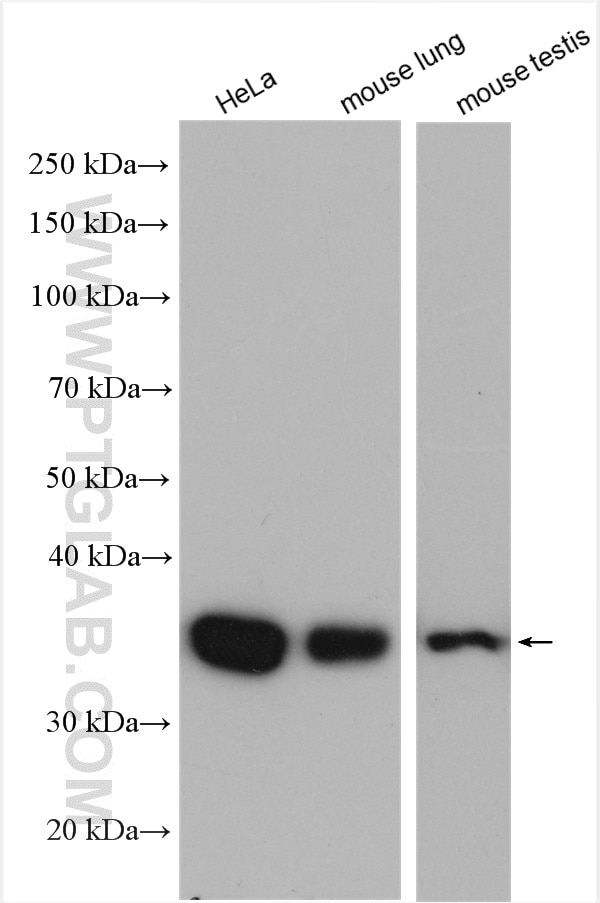
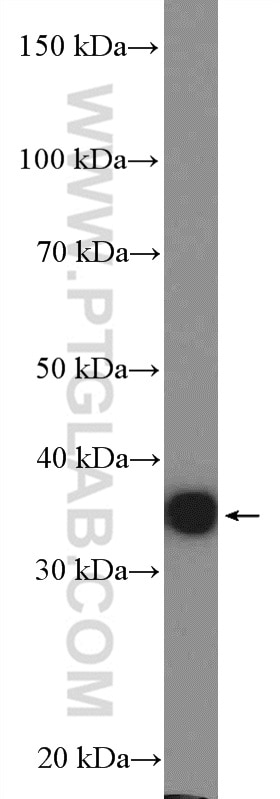
| Positive WB detected in | HeLa cells, HepG2 cells, mouse lung tissue, mouse testis tissue |
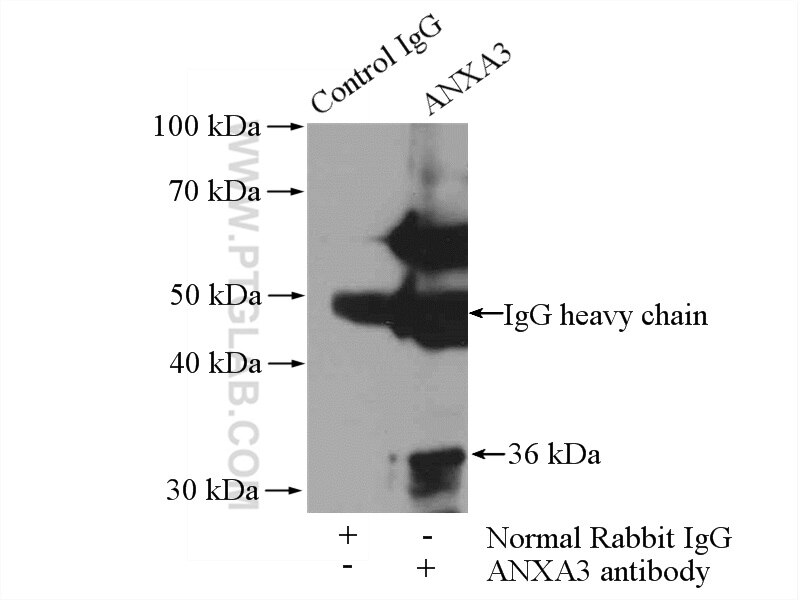
| Positive IP detected in | mouse liver tissue |
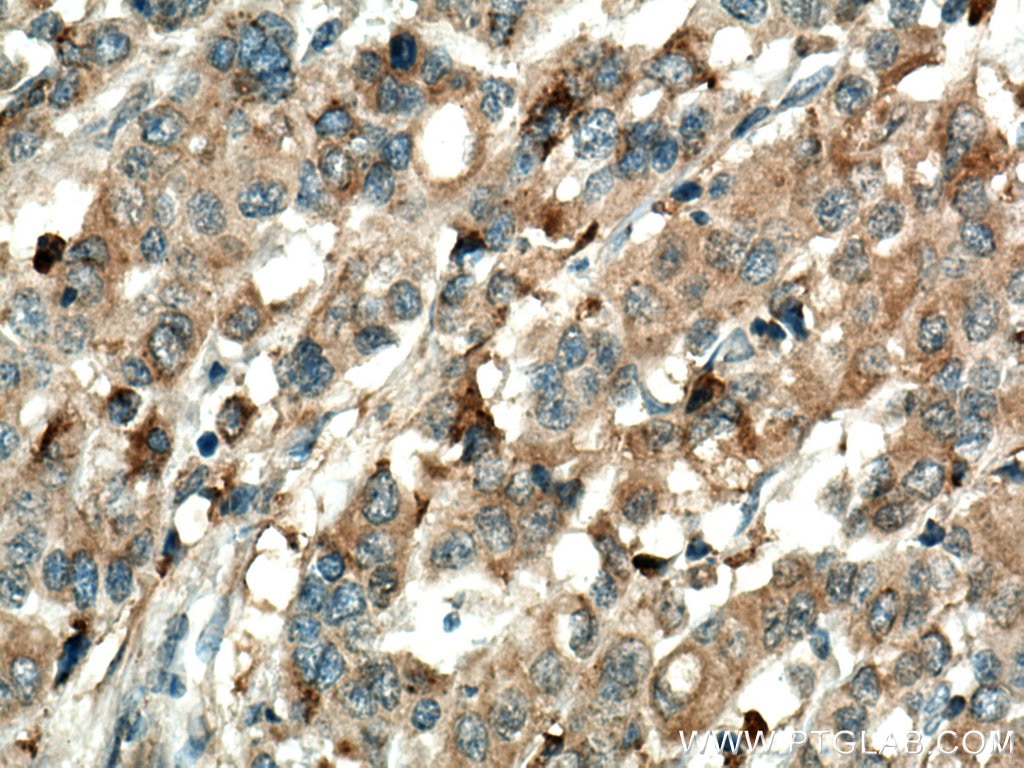
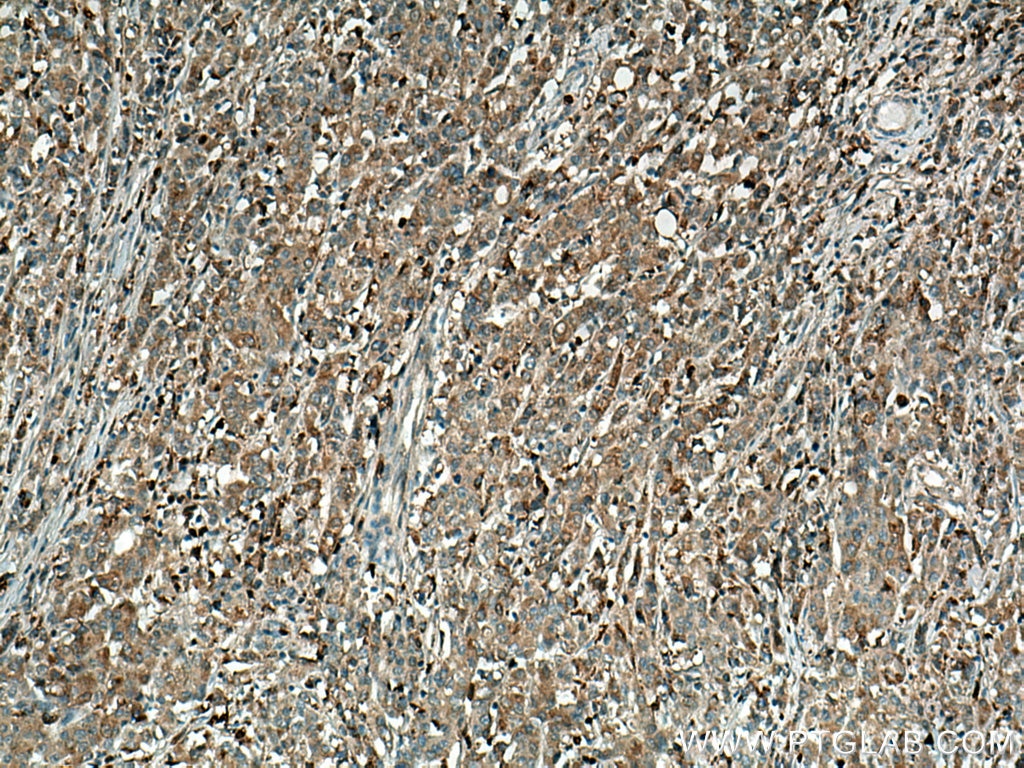
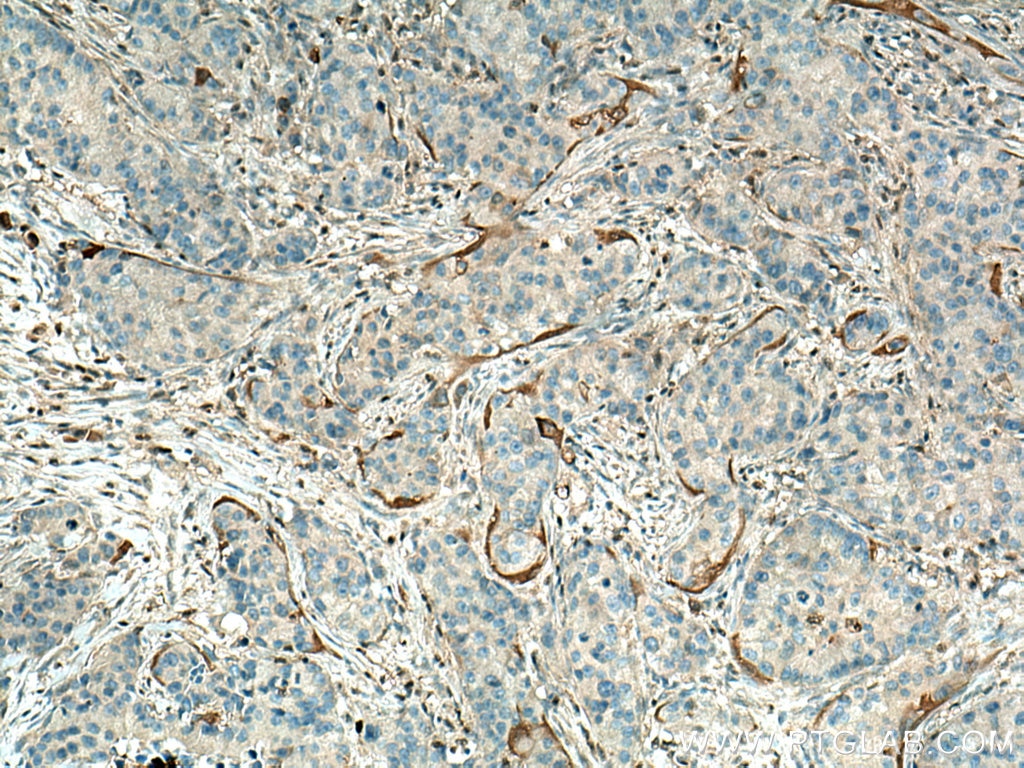
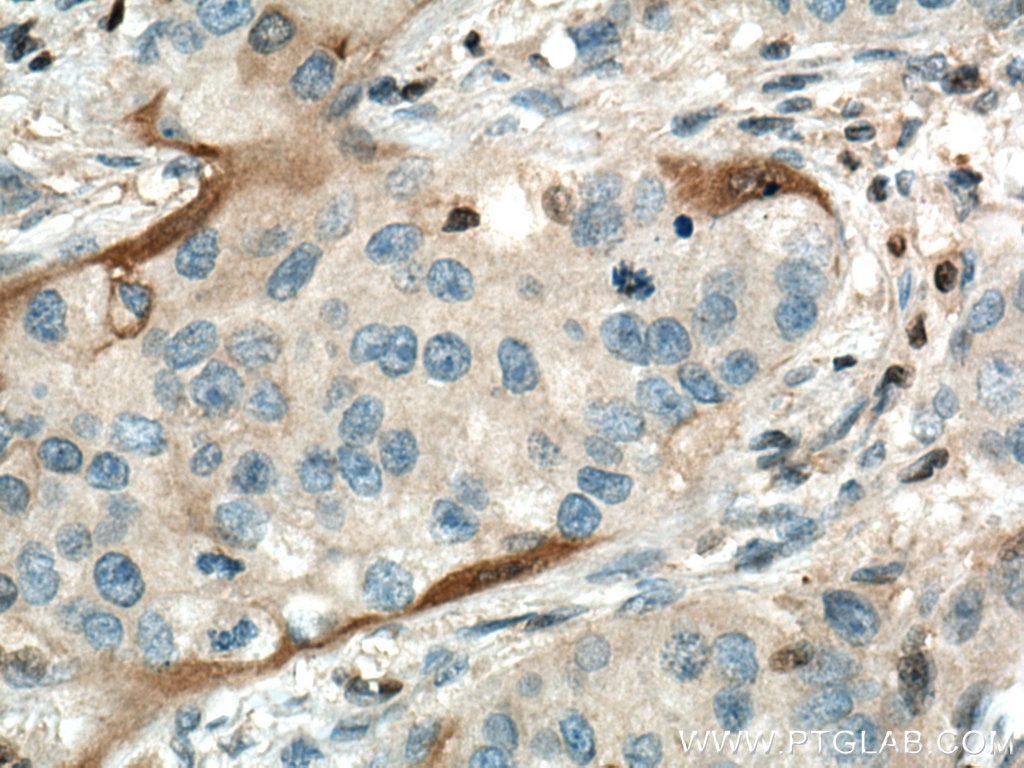
| Positive IHC detected in | human stomach cancer tissue, human breast cancer tissue Note: suggested antigen retrieval with TE buffer pH 9.0; (*) Alternatively, antigen retrieval may be performed with citrate buffer pH 6.0 |
Recommended dilution
| Application | Dilution |
|---|---|
| Western Blot (WB) | WB : 1:1000-1:6000 |
| Immunoprecipitation (IP) | IP : 0.5-4.0 ug for 1.0-3.0 mg of total protein lysate |
| Immunohistochemistry (IHC) | IHC : 1:50-1:500 |
| It is recommended that this reagent should be titrated in each testing system to obtain optimal results. | |
| Sample-dependent, Check data in validation data gallery. | |
Product Information
11804-1-AP targets Annexin A3 in WB, IHC, IF, IP, CoIP, ELISA applications and shows reactivity with human, mouse, rat samples.
| Tested Reactivity | human, mouse, rat |
| Cited Reactivity | human, mouse, rat |
| Host / Isotype | Rabbit / IgG |
| Class | Polyclonal |
| Type | Antibody |
| Immunogen |
CatNo: Ag2381 Product name: Recombinant human ANXA3 protein Source: e coli.-derived, PGEX-4T Tag: GST Domain: 1-322 aa of BC000871 Sequence: MASIWVGHRGTVRDYPDFSPSVDAEAIQKAIRGIGTDEKMLISILTERSNAQRQLIVKEYQAAYGKELKDDLKGDLSGHFEHLMVALVTPPAVFDAKQLKKSMKGAGTNEDALIEILTTRTSRQMKDISQAYYTVYKKSLGDDISSETSGDFRKALLTLADGRRDESLKVDEHLAKQDAQILYKAGENRWGTDEDKFTEILCLRSFPQLKLTFDEYRNISQKDIVDSIKGELSGHFEDLLLAIVNCVRNTPAFLAERLHRALKGIGTDEFTLNRIMVSRSEIDLLDIRTEFKKHYGYSLYSAIKSDTSGDYEITLLKICGGD Predict reactive species |
| Full Name | annexin A3 |
| Calculated Molecular Weight | 322 aa, 36 kDa |
| Observed Molecular Weight | 36 kDa |
| GenBank Accession Number | BC000871 |
| Gene Symbol | Annexin A3 |
| Gene ID (NCBI) | 306 |
| RRID | AB_2057455 |
| Conjugate | Unconjugated |
| Form | Liquid |
| Purification Method | Antigen affinity purification |
| UNIPROT ID | P12429 |
| Storage Buffer | PBS with 0.02% sodium azide and 50% glycerol, pH 7.3. |
| Storage Conditions | Store at -20°C. Stable for one year after shipment. Aliquoting is unnecessary for -20oC storage. 20ul sizes contain 0.1% BSA. |
Background Information
Annexin A3 (Anxa3), also named as lipocortin3, placental anticoagulant protein3 (PAP-III), belongs to annexin family. Annexins are calcium-dependent phospholipids-binding high-abundant intracellular proteins. ANXA3 has been reported to play crucial roles in a diverse range of molecular and cellular processes, including ion channel regulation, anticoagulation, anti-inflammation, vesicle traffick-ing, signal transduction, cell migration, and cell proliferation. It also exhibits important roles in cancer progression, metastasis, and drug resistance.
Protocols
| Product Specific Protocols | |
|---|---|
| IHC protocol for Annexin A3 antibody 11804-1-AP | Download protocol |
| IP protocol for Annexin A3 antibody 11804-1-AP | Download protocol |
| WB protocol for Annexin A3 antibody 11804-1-AP | Download protocol |
| Standard Protocols | |
|---|---|
| Click here to view our Standard Protocols |
Publications
What published studies show
The Annexin A3 Polyclonal antibody (Cat# 11804-1-AP) has 18 citations published in journals including J Adv Res, Redox Biology, Cancer Immunol Res, Frontiers in Immunology, iScience, Scientific Reports, and Journal of Proteomics. Research fields span hepatocarcinogenesis, cardiomyocyte lipotoxicity, ferroptosis, ankylosing spondylitis, prostate and lung cancer, ischemic stroke, peripheral nerve injury, calcium signaling, kidney injury, sepsis, cervical cancer, and neutrophil biology.
| Species | Application | Title |
|---|---|---|
J Adv Res 33-kDa ANXA3 isoform contributes to hepatocarcinogenesis via modulating ERK, PI3K/Akt-HIF and intrinsic apoptosis pathways. | ||
Redox Biol YY1 nitration participates in DbCM cardiomyocyte lipotoxicity by inhibiting ANXA3-induced microlipophagy. | ||
Cancer Immunol Res ANXA3-rich exosomes derived from tumor-associated macrophages regulate ferroptosis and lymphatic metastasis of laryngeal squamous cell carcinoma | ||
Front Immunol Upregulated of ANXA3, SORL1, and Neutrophils May Be Key Factors in the Progressionof Ankylosing Spondylitis. | ||
Int Immunopharmacol Identification of neutrophil extracellular traps (NETs)-related molecular clusters in prostate cancer: Implications for predicting biochemical recurrence
|








