

Tested Applications
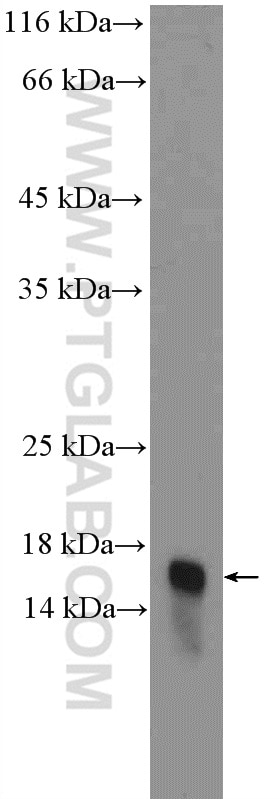
| Positive WB detected in | mouse pancreas tissue |
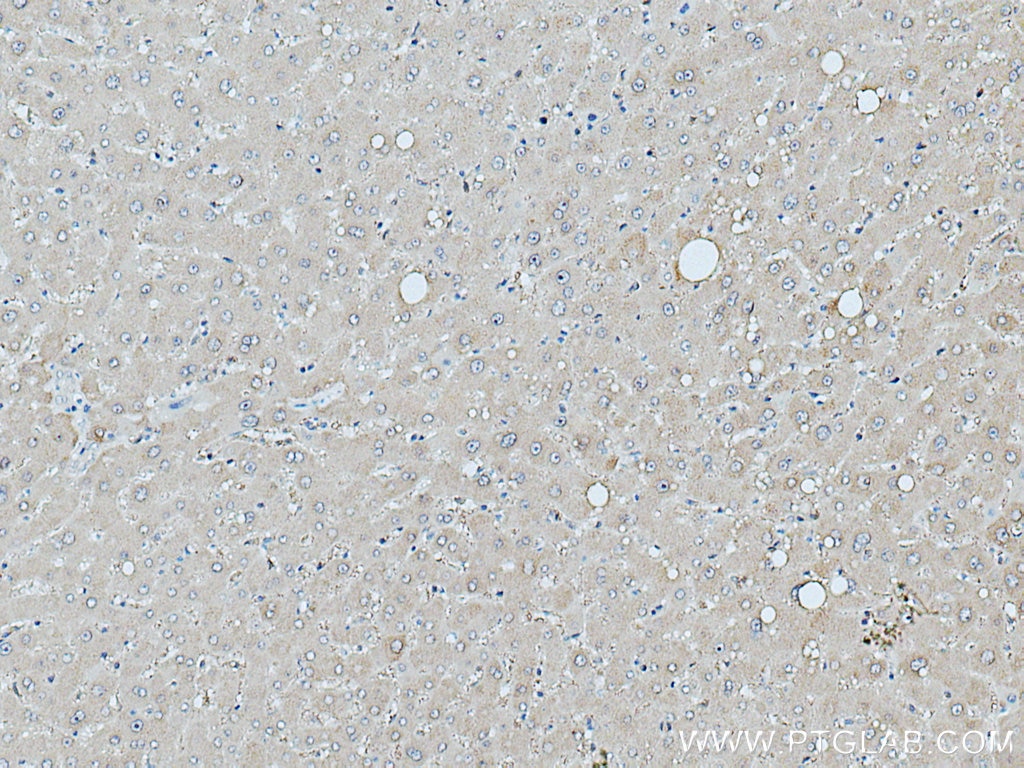
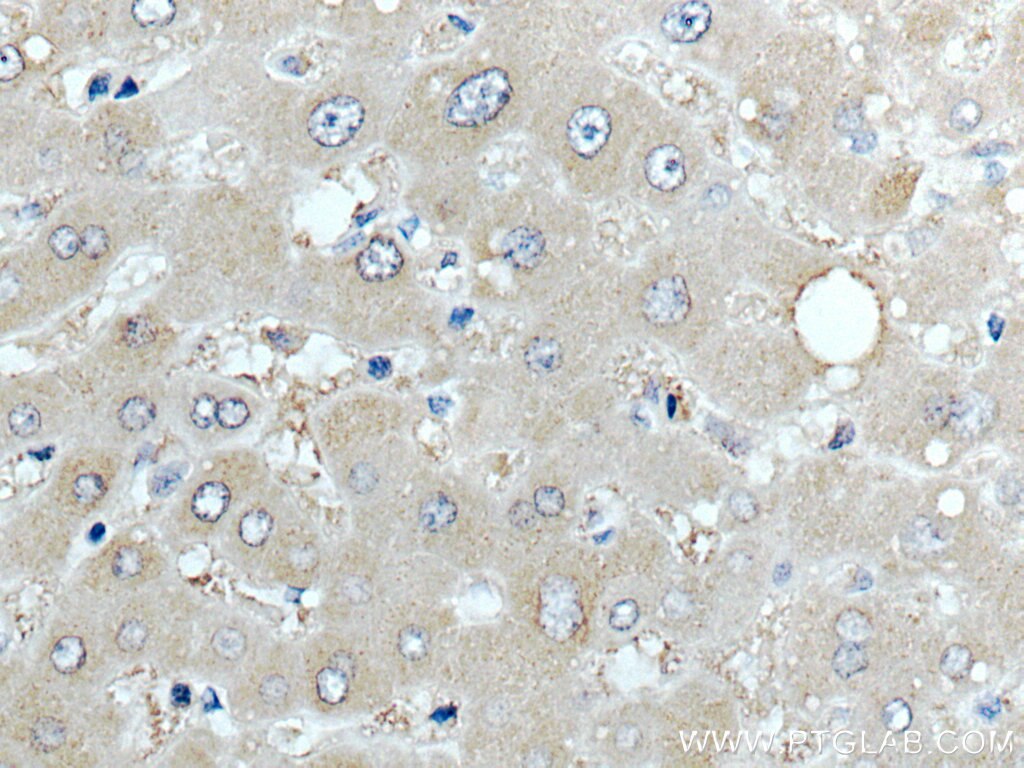
| Positive IHC detected in | human liver tissue Note: suggested antigen retrieval with TE buffer pH 9.0; (*) Alternatively, antigen retrieval may be performed with citrate buffer pH 6.0 |
Recommended dilution
| Application | Dilution |
|---|---|
| Western Blot (WB) | WB : 1:500-1:1000 |
| Immunohistochemistry (IHC) | IHC : 1:50-1:500 |
| It is recommended that this reagent should be titrated in each testing system to obtain optimal results. | |
| Sample-dependent, Check data in validation data gallery. | |
Product Information
10869-1-AP targets ARMET in WB, IHC, IF, ELISA applications and shows reactivity with human, mouse, rat samples.
| Tested Reactivity | human, mouse, rat |
| Cited Reactivity | human, mouse, rat |
| Host / Isotype | Rabbit / IgG |
| Class | Polyclonal |
| Type | Antibody |
| Immunogen |
CatNo: Ag1115 Product name: Recombinant human ARMET protein Source: e coli.-derived, PGEX-4T Tag: GST Domain: 1-182 aa of BC007282 Sequence: MRRMWATQGLAVALALSVLPGSRALRPGDCEVCISYLGRFYQDLKDRDVTFSPATIENELIKFCREARGKENRLCYYIGATDDAATKIINEVSKPLAHHIPVEKICEKLKKKDSQICELKYDKQIDLSTVDLKKLRVKELKKILDDWGETCKGCAEKSDYIRKINELMPKYAPKAASARTDL Predict reactive species |
| Full Name | arginine-rich, mutated in early stage tumors |
| Calculated Molecular Weight | 22 kDa |
| Observed Molecular Weight | 16 kDa |
| GenBank Accession Number | BC007282 |
| Gene Symbol | ARMET |
| Gene ID (NCBI) | 7873 |
| RRID | AB_2059300 |
| Conjugate | Unconjugated |
| Form | Liquid |
| Purification Method | Antigen affinity purification |
| UNIPROT ID | P55145 |
| Storage Buffer | PBS with 0.02% sodium azide and 50% glycerol, pH 7.3. |
| Storage Conditions | Store at -20°C. Stable for one year after shipment. Aliquoting is unnecessary for -20oC storage. 20ul sizes contain 0.1% BSA. |
Protocols
| Product Specific Protocols | |
|---|---|
| IHC protocol for ARMET antibody 10869-1-AP | Download protocol |
| WB protocol for ARMET antibody 10869-1-AP | Download protocol |
| Standard Protocols | |
|---|---|
| Click here to view our Standard Protocols |
Publications
What published studies show
The ARMET Polyclonal antibody (catalog number 10869-1-AP) has 10 total citations. These appear in journals including Signal Transduction and Targeted Therapy, Nature Communications, Cell Death & Disease, Journal of the American Society of Nephrology, International Immunopharmacology, Journal of Hepatocellular Carcinoma, Frontiers in Oncology, Behavioural Brain Research, Pharmacology Biochemistry and Behavior, and European Journal of Oral Sciences. Research fields span hepatocellular carcinoma, ER stress and kidney disease, neuroprotection, cancer biomarkers, cognitive impairment, and inflammatory responses.
| Species | Application | Title |
|---|---|---|
Signal Transduct Target Ther Activation of Nerve Growth Factor signaling limits the response to lenvatinib in hepatocellular carcinoma | ||
Nat Commun Imbalanced unfolded protein response signaling contributes to 1-deoxysphingolipid retinal toxicity | ||
Cell Death Dis N6-methyladenosine-mediated upregulation of MANF promotes ER stress resistance in renal cell carcinoma | ||
J Am Soc Nephrol Mesencephalic Astrocyte-Derived Neurotrophic Factor as a Urine Biomarker for Endoplasmic Reticulum Stress-Related Kidney Diseases. | ||
Int Immunopharmacol Mesencephalic astrocyte-derived neurotrophic factor (MANF) alleviates cerebral ischemia/reperfusion injury in mice by regulating microglia polarization via A20/NF-κB pathway | ||
J Hepatocell Carcinoma Identification and Validation of Novel Biomarkers for Hepatocellular Carcinoma, Liver Fibrosis/Cirrhosis and Chronic Hepatitis B via Transcriptome Sequencing Technology. |




