

Tested Applications
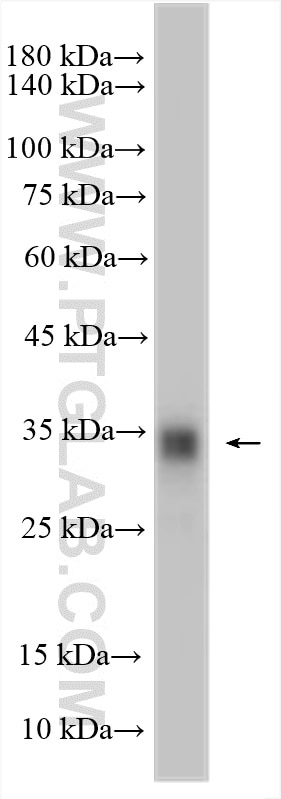
| Positive WB detected in | mouse brain tissue |
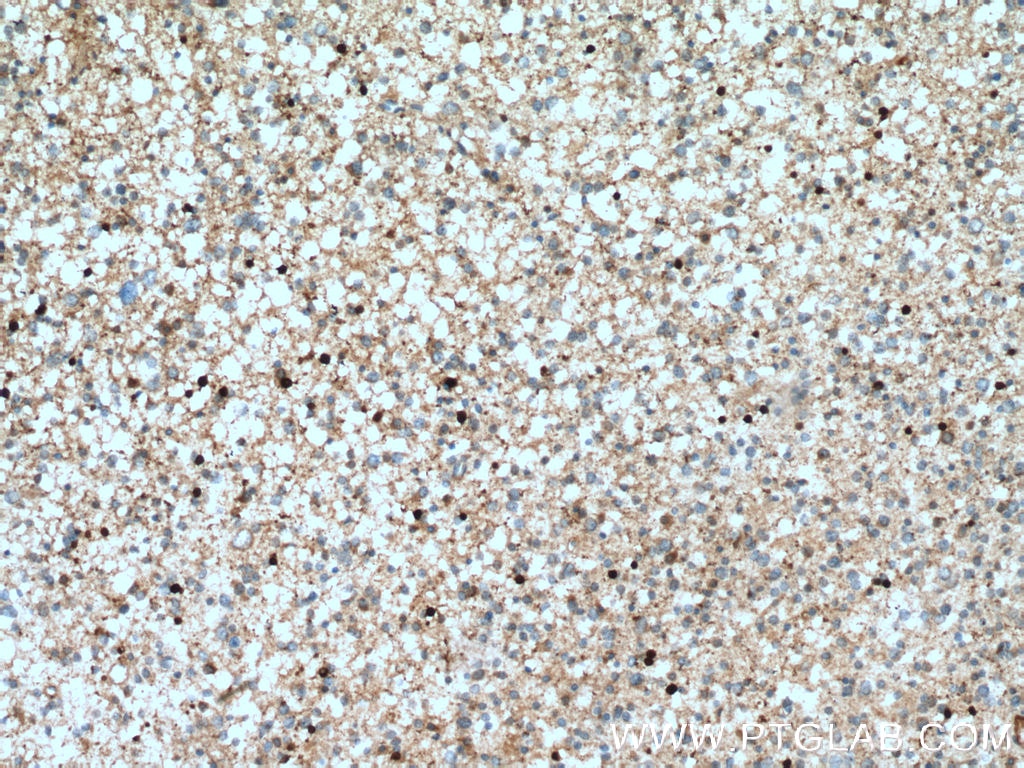
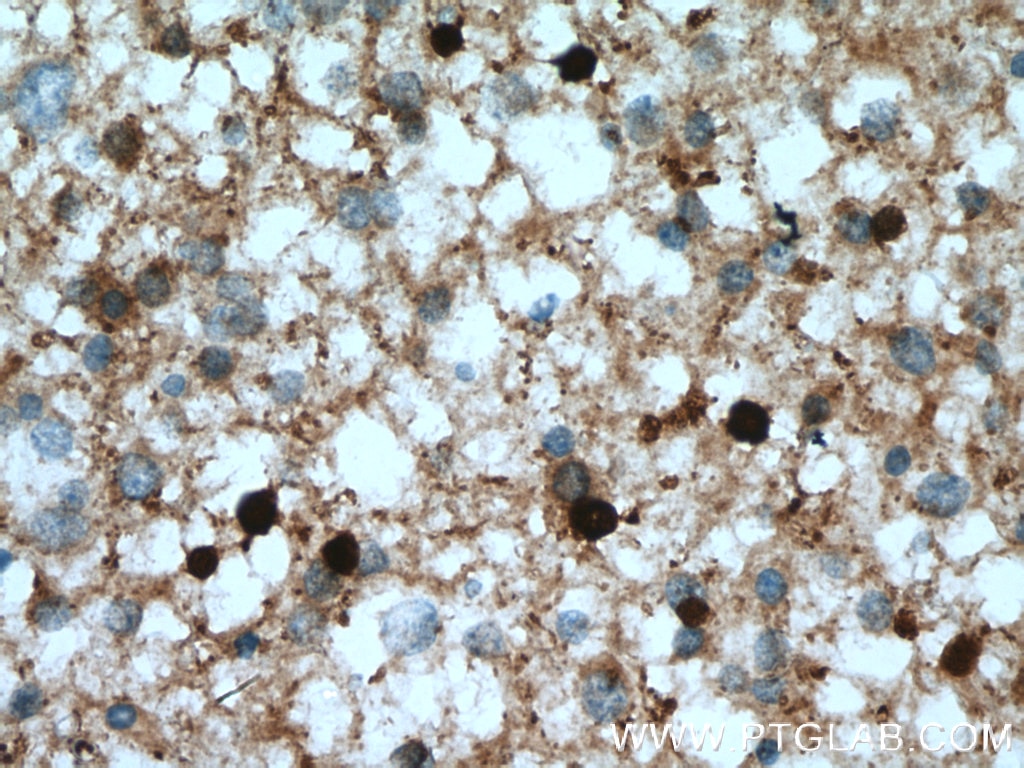
| Positive IHC detected in | human gliomas tissue Note: suggested antigen retrieval with TE buffer pH 9.0; (*) Alternatively, antigen retrieval may be performed with citrate buffer pH 6.0 |
Recommended dilution
| Application | Dilution |
|---|---|
| Western Blot (WB) | WB : 1:1000-1:6000 |
| Immunohistochemistry (IHC) | IHC : 1:50-1:500 |
| It is recommended that this reagent should be titrated in each testing system to obtain optimal results. | |
| Sample-dependent, Check data in validation data gallery. | |
Product Information
13244-1-AP targets ASPA in WB, IHC, IF, ELISA applications and shows reactivity with human, mouse, rat samples.
| Tested Reactivity | human, mouse, rat |
| Cited Reactivity | human, mouse, rat |
| Host / Isotype | Rabbit / IgG |
| Class | Polyclonal |
| Type | Antibody |
| Immunogen |
CatNo: Ag4029 Product name: Recombinant human ASPA protein Source: e coli.-derived, PGEX-4T Tag: GST Domain: 1-313 aa of BC029128 Sequence: MTSCHIAEEHIQKVAIFGGTHGNELTGVFLVKHWLENGAEIQRTGLEVKPFITNPRAVKKCTRYIDCDLNRIFDLENLGKKMSEDLPYEVRRAQEINHLFGPKDSEDSYDIIFDLHNTTSNMGCTLILEDSRNNFLIQMFHYIKTSLAPLPCYVYLIEHPSLKYATTRSIAKYPVGIEVGPQPQGVLRADILDQMRKMIKHALDFIHHFNEGKEFPPCAIEVYKIIEKVDYPRDENGEIAAIIHPNLQDQDWKPLHPGDPMFLTLDGKTIPLGGDCTVYPVFVNEAAYYEKKEAFAKTTKLTLNAKSIRCCLH Predict reactive species |
| Full Name | aspartoacylase (Canavan disease) |
| Calculated Molecular Weight | 313 aa, 36 kDa |
| Observed Molecular Weight | 36 kDa |
| GenBank Accession Number | BC029128 |
| Gene Symbol | ASPA |
| Gene ID (NCBI) | 443 |
| RRID | AB_2274358 |
| Conjugate | Unconjugated |
| Form | Liquid |
| Purification Method | Antigen affinity purification |
| UNIPROT ID | P45381 |
| Storage Buffer | PBS with 0.02% sodium azide and 50% glycerol, pH 7.3. |
| Storage Conditions | Store at -20°C. Stable for one year after shipment. Aliquoting is unnecessary for -20oC storage. 20ul sizes contain 0.1% BSA. |
Background Information
ASPA(Aspartoacylase) also called aminoacylase-2, is an enzyme that hydrolyzes N-acetyl-L-aspartic acid (NAA) to aspartate and acetate.Human ASPA encodes a deduced 313-amino acid protein with a molecular mass of 36 KDa. It shares 92% sequence identity with the bovine protein and contains 1 potential N-glycosylation site and 5 phosphorylation sites.Defects in ASPA are the cause of Canavan disease (CAND).This protein can exsit as a homodimer(18293939).
Protocols
| Product Specific Protocols | |
|---|---|
| IHC protocol for ASPA antibody 13244-1-AP | Download protocol |
| WB protocol for ASPA antibody 13244-1-AP | Download protocol |
| Standard Protocols | |
|---|---|
| Click here to view our Standard Protocols |
Publications
What published studies show
The ASPA Polyclonal antibody (Cat# 13244-1-AP) has 7 citations across journals including Mil Med Res, Nucleic Acids Res, Glia, Front Pharmacol, J Neurosci, J Med Virol, and Elife. Research fields span prostate cancer, CNS myelin proteome and oligodendrocyte development, gastroprotective effects of antidepressants, Canavan leukodystrophy, cervical cancer, and cross-species myelin/oligodendrocyte comparisons. Applications cited include WB, IHC, and IF in human, mouse, and rat samples.
| Species | Application | Title |
|---|---|---|
Mil Med Res Aspartoacylase suppresses prostate cancer progression by blocking LYN activation | ||
Nucleic Acids Res SRSF10 regulates oligodendrocyte differentiation during mouse central nervous system development by modulating pre-mRNA splicing | ||
Glia Developmental maturation and regional heterogeneity but no sexual dimorphism of the murine CNS myelin proteome | ||
Front Pharmacol Increasing Aspartoacylase in the Central Amygdala: The Common Mechanism of Gastroprotective Effects of Monoamine-Based Antidepressants Against Stress. | ||
J Neurosci Suppressing N-Acetyl-l-Aspartate Synthesis Prevents Loss of Neurons in a Murine Model of Canavan Leukodystrophy.
| ||
J Med Virol HPV-CCDC106 integration promotes cervical cancer progression by facilitating the high expression of CCDC106 after HPV E6 splicing. |
Reviews
What customers say
The single review (rated 4/5) reports using this ASPA antibody at a 1:500 dilution on postmortem human brain tissue for immunofluorescence/immunohistochemistry. The researcher validated single-nucleus RNA-seq findings and found the antibody delivered strong, consistent, and reproducible staining that matched the expected cellular distribution of ASPA expression across samples. Overall, the feedback highlights reliable performance and good alignment with transcriptomic data in human brain applications.
The reviews below have been submitted by verified Proteintech customers who received an incentive for providing their feedback.
SUDESHNA (Verified Customer) (03-19-2026) | We evaluated the Proteintech ASPA antibody for immunohistochemistry (IHC) on postmortem human brain tissue as part of an effort to validate findings from our single-nucleus RNA sequencing (snRNA-seq) dataset. The antibody demonstrated strong and consistent performance across samples, yielding clear, reproducible staining patterns that aligned well with the expected cellular distribution of ASPA expression.
|




