


Tested Applications
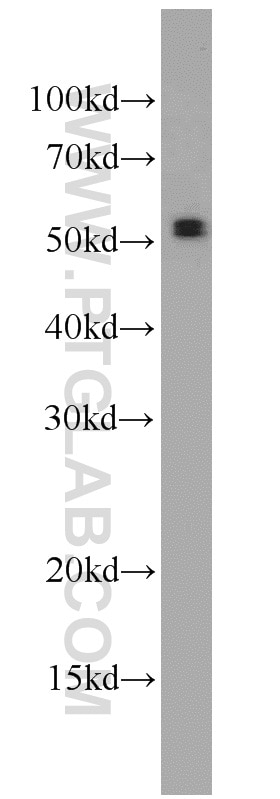
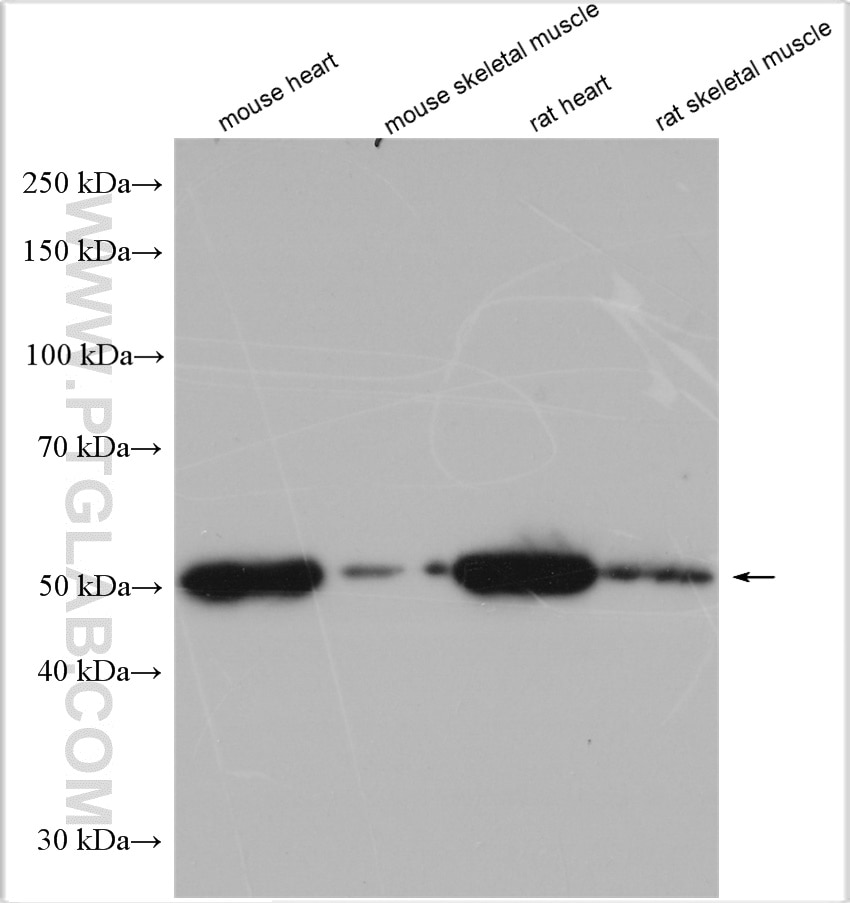
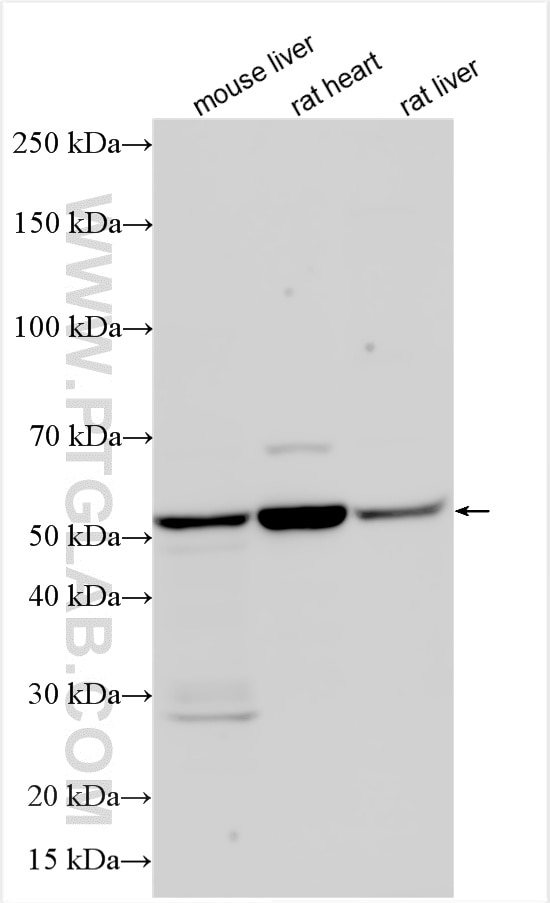
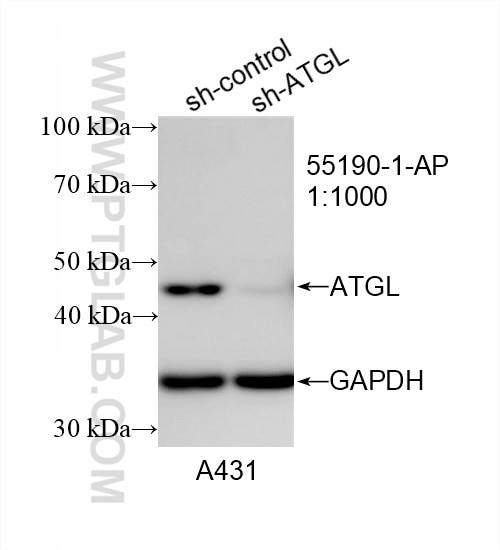
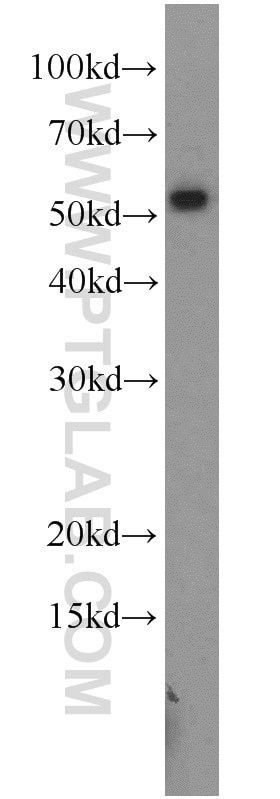
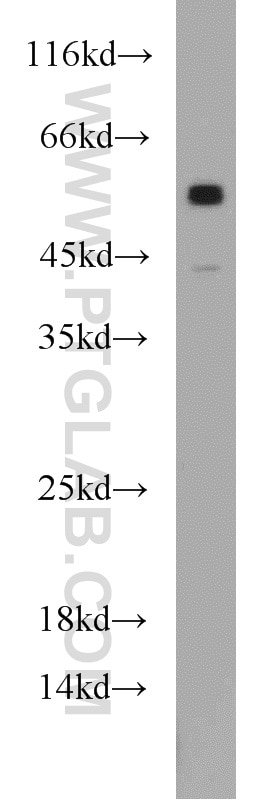
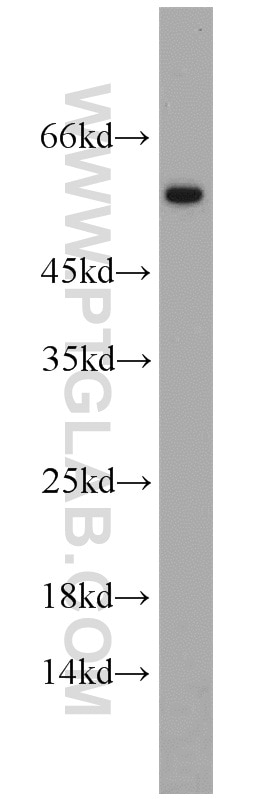
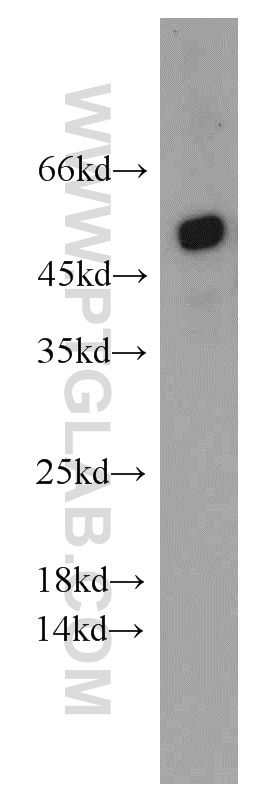
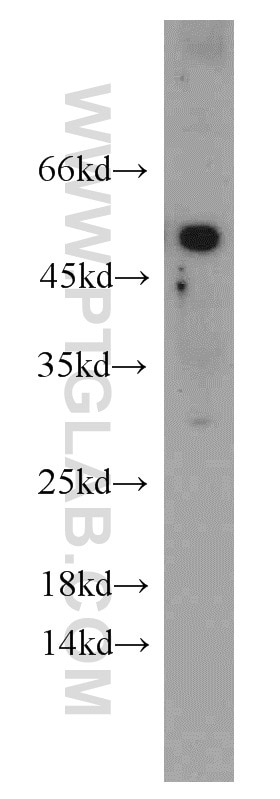
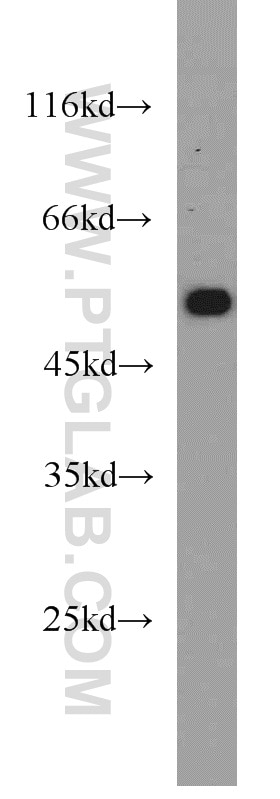
| Positive WB detected in | mouse heart tissue, 3T3-L1 cells, A431 cells, HeLa cells, human heart tissue, mouse liver tissue, mouse testis tissue, rat heart tissue, mouse skeletal muscle tissue, rat skeletal muscle tissue, rat liver tissue |
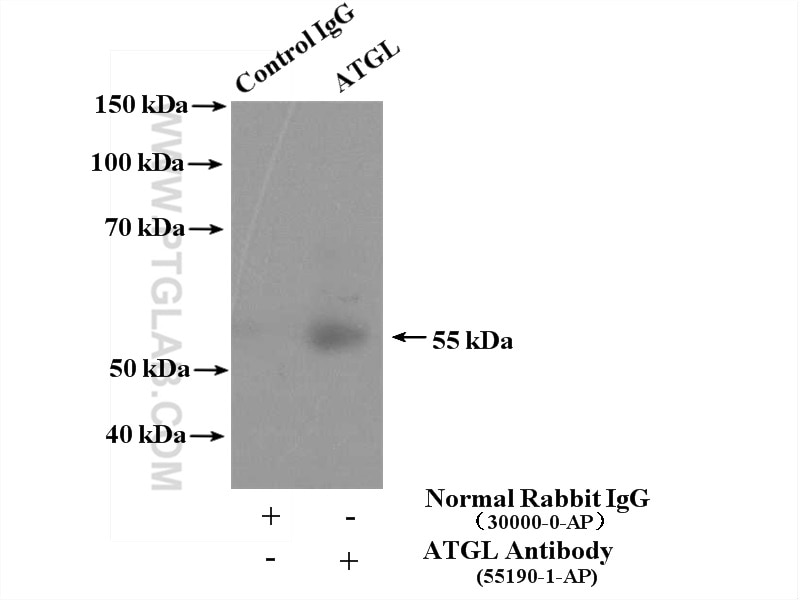
| Positive IP detected in | mouse testis tissue |
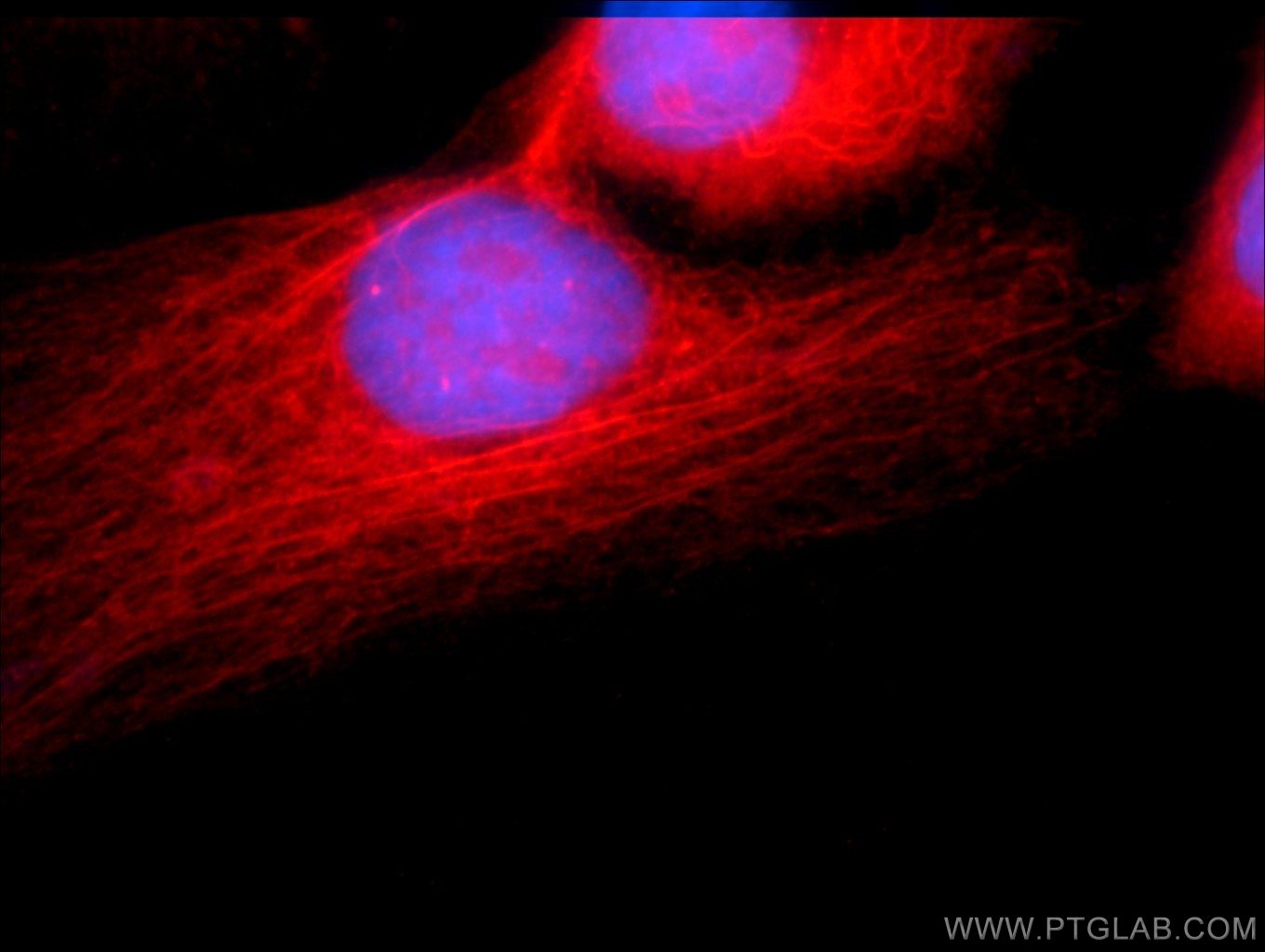
| Positive IF/ICC detected in | A431 cells |
Recommended dilution
| Application | Dilution |
|---|---|
| Western Blot (WB) | WB : 1:5000-1:50000 |
| Immunoprecipitation (IP) | IP : 0.5-4.0 ug for 1.0-3.0 mg of total protein lysate |
| Immunofluorescence (IF)/ICC | IF/ICC : 1:10-1:100 |
| It is recommended that this reagent should be titrated in each testing system to obtain optimal results. | |
| Sample-dependent, Check data in validation data gallery. | |
Product Information
55190-1-AP targets ATGL in WB, IHC, IF, IP, CoIP, ELISA applications and shows reactivity with human, mouse, rat samples.
| Tested Reactivity | human, mouse, rat |
| Cited Reactivity | human, mouse, rat, pig, monkey, chicken, zebrafish, bovine, sheep |
| Host / Isotype | Rabbit / IgG |
| Class | Polyclonal |
| Type | Antibody |
| Immunogen |
Peptide Predict reactive species |
| Full Name | patatin-like phospholipase domain containing 2 |
| Calculated Molecular Weight | 55 kDa |
| Observed Molecular Weight | 45-55 kDa |
| GenBank Accession Number | NM_020376 |
| Gene Symbol | ATGL |
| Gene ID (NCBI) | 57104 |
| RRID | AB_11182818 |
| Conjugate | Unconjugated |
| Form | Liquid |
| Purification Method | Antigen affinity purification |
| UNIPROT ID | Q96AD5 |
| Storage Buffer | PBS with 0.02% sodium azide and 50% glycerol, pH 7.3. |
| Storage Conditions | Store at -20°C. Stable for one year after shipment. Aliquoting is unnecessary for -20oC storage. 20ul sizes contain 0.1% BSA. |
Background Information
ATGL, also named as PNPLA2, TTS2 and Desnutrin, catalyzes the initial step in triglyceride hydrolysis in adipocyte and non-adipocyte lipid droplets. It also has acylglycerol transacylase activity. ATGL may act coordinately with LIPE/HLS within the lipolytic cascade. It regulates adiposome size and may be involved in the degradation of adiposomes. May play an important role in energy homeostasis. Defects in ATGL are the cause of neutral lipid storage disease with myopathy (NLSDM). This antibody is specific to ATGL.
Protocols
| Product Specific Protocols | |
|---|---|
| IP protocol for ATGL antibody 55190-1-AP | Download protocol |
| WB protocol for ATGL antibody 55190-1-AP | Download protocol |
| Standard Protocols | |
|---|---|
| Click here to view our Standard Protocols |
Publications
What published studies show
The ATGL Polyclonal antibody (catalog number 55190-1-AP) has 154 citations. These appear across journals including Science, Cell, Nature Communications, Autophagy, Hepatology, Cell Reports, FASEB Journal, and Journal of Lipid Research. The associated research fields center on lipid metabolism and lipophagy, with strong emphasis on obesity, non-alcoholic fatty liver disease/steatohepatosis, adipogenesis and adipose browning, cardiovascular disease, viral replication, and cancer. Applications are predominantly Western blot, with some IHC, IF, and Co-IP.
| Species | Application | Title |
|---|---|---|
Signal Transduct Target Ther A two-strata energy flux system driven by a stress hormone prioritizes cardiac energetics | ||
Science Liver ALKBH5 regulates glucose and lipid homeostasis independently through GCGR and mTORC1 signaling | ||
Cell Intermittent fasting triggers interorgan communication to suppress hair follicle regeneration | ||
J Hepatol Circadian Control of Hepatic Ischemia/Reperfusion Injury via HSD17B13-Mediated Autophagy in Hepatocytes | ||
Autophagy Lipophagy fuels phosphatidylcholine synthesis for Newcastle disease virus replication. | ||
Autophagy PRRSV NSP2 hijacks host lipophagy via a LIPE-PNPLA2-AMPK-MTOR axis to promote viral replication.
|
Reviews
What customers say
Both reviews highlight strong Western Blot performance. One user, frustrated with other vendors' ATGL antibodies, found this one worked great at a 1:1000 dilution in mouse muscle tissue. Another reported reliable results in mouse liver at 1:1000 dilution, using 40 µg/µl protein per lane. Overall, customers rate the antibody favorably (4–5 stars), praising its consistent, high-quality WB results across different mouse tissues.
The reviews below have been submitted by verified Proteintech customers who received an incentive for providing their feedback.
Li (Verified Customer) (07-12-2019) | We have tried a couple different ATGL antibodies from other vendors, but no one is working as good as we want. So we tried this one, it works great.
|
Shantel (Verified Customer) (05-02-2019) | Works well in Western Blot. I used mouse liver tissue, 40ug/ul protein per lane at 1:1000 dilution.
 |














