

Tested Applications
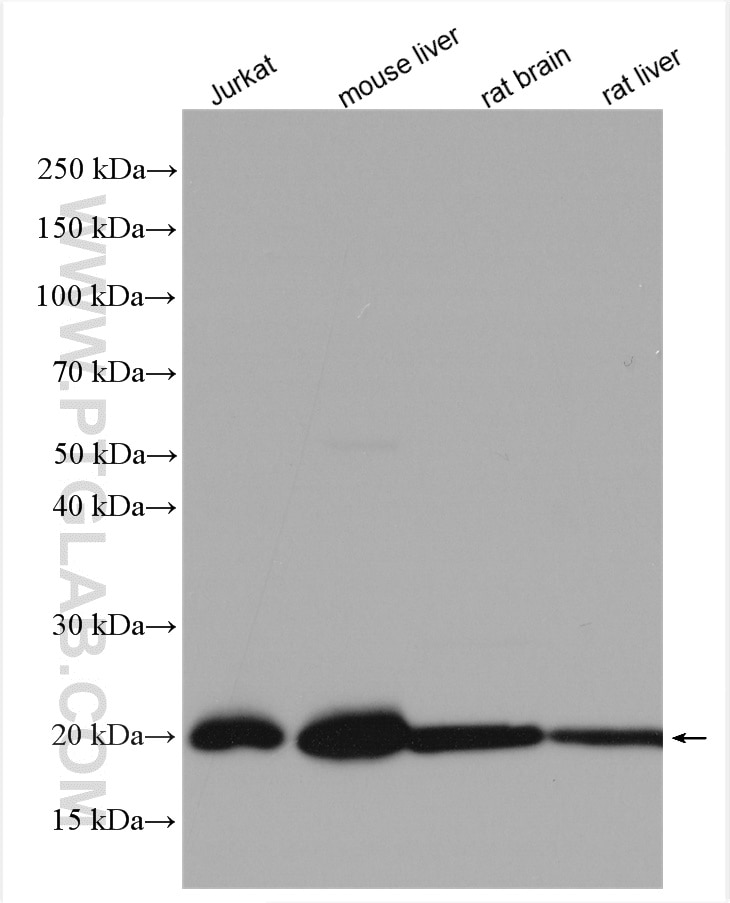
| Positive WB detected in | Jurkat cells, mouse liver tissue, rat brain tissue, rat liver tissue |
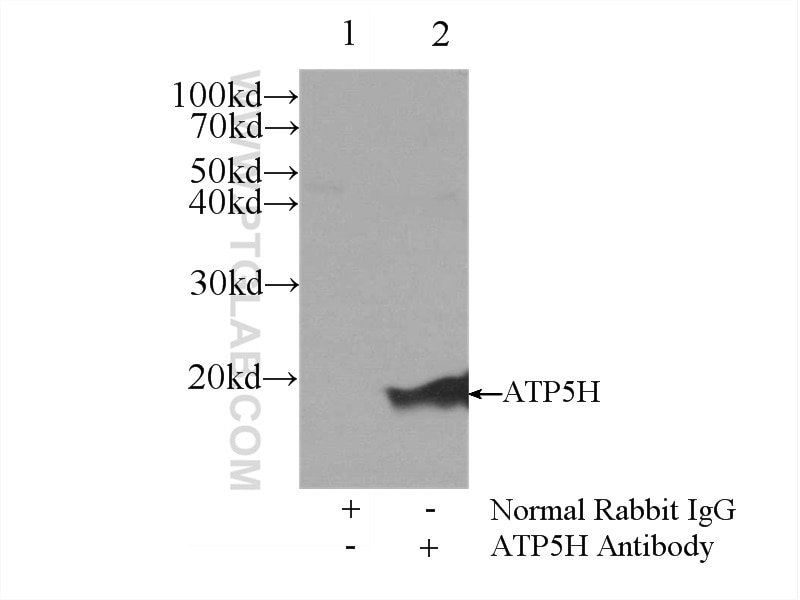
| Positive IP detected in | mouse liver tissue |
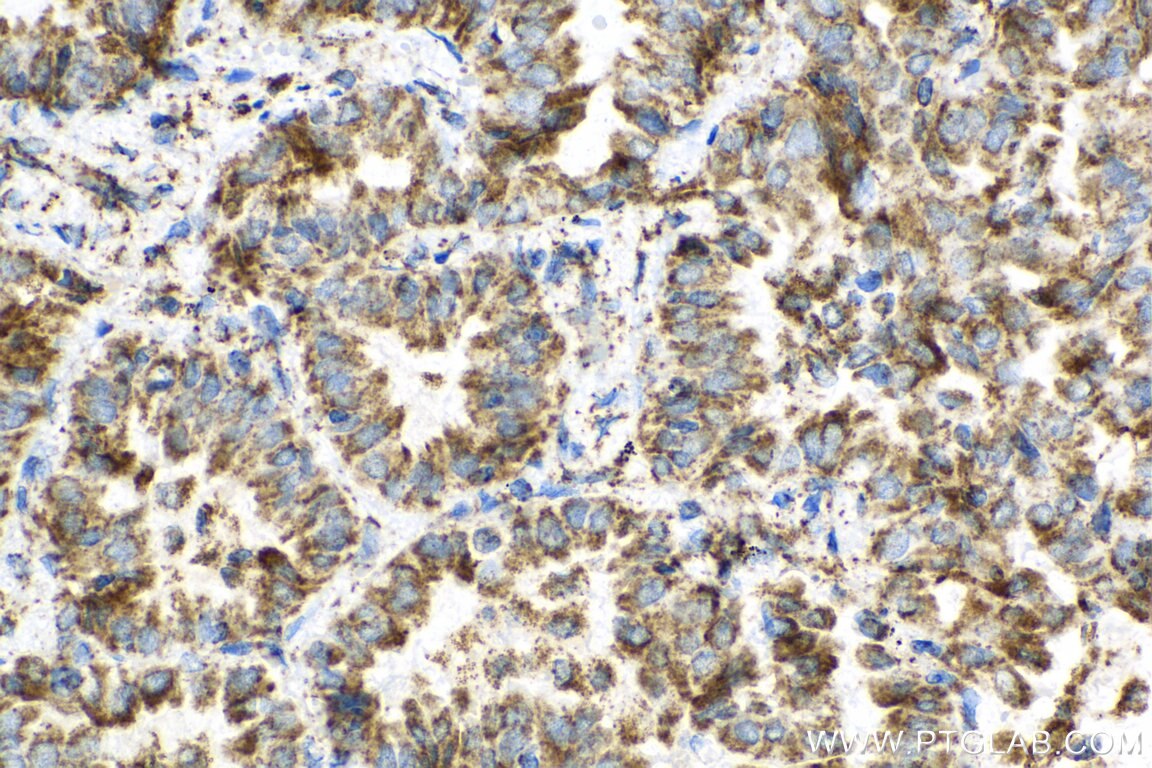
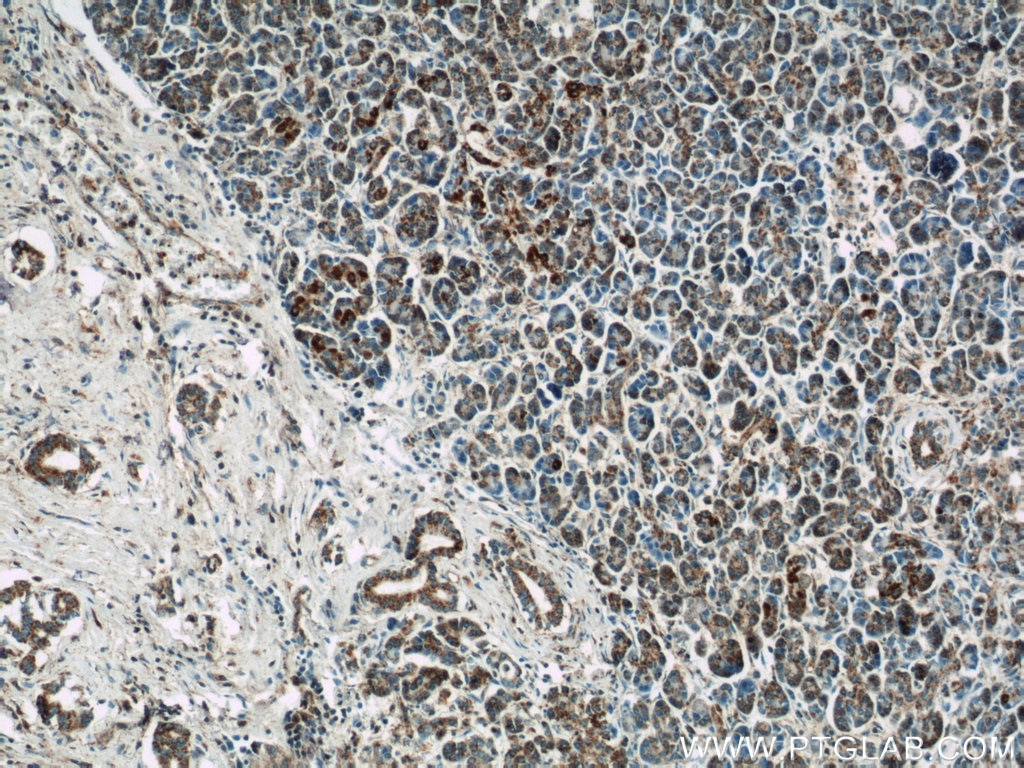
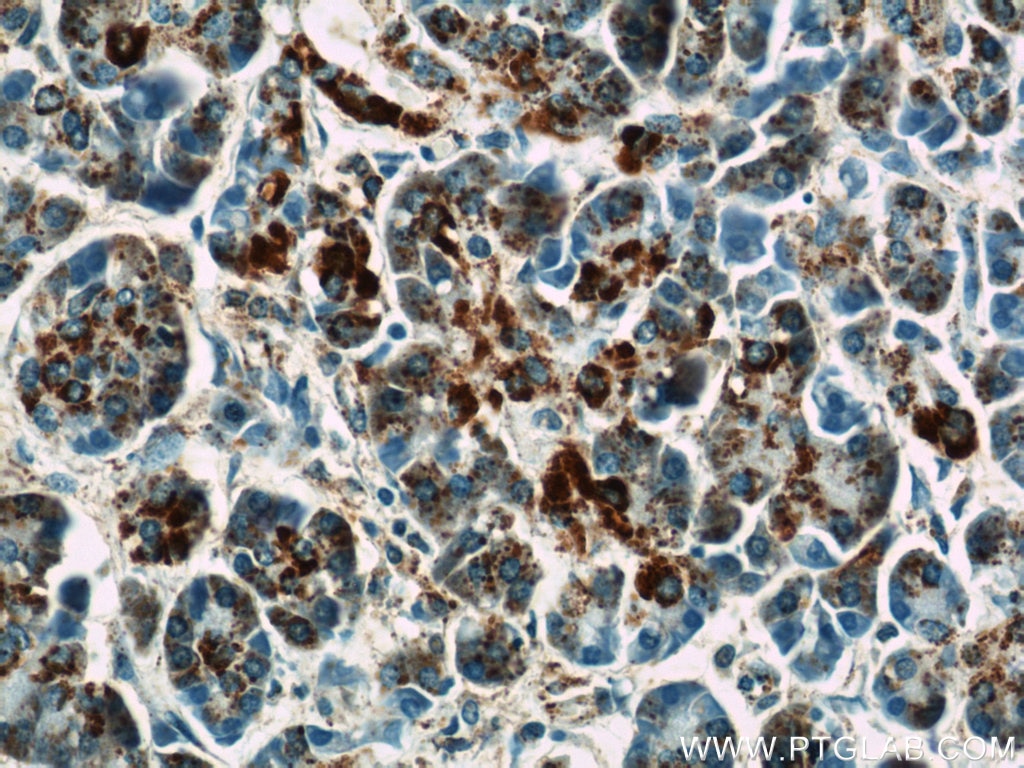
| Positive IHC detected in | human lung cancer tissue, human pancreas tissue Note: suggested antigen retrieval with TE buffer pH 9.0; (*) Alternatively, antigen retrieval may be performed with citrate buffer pH 6.0 |
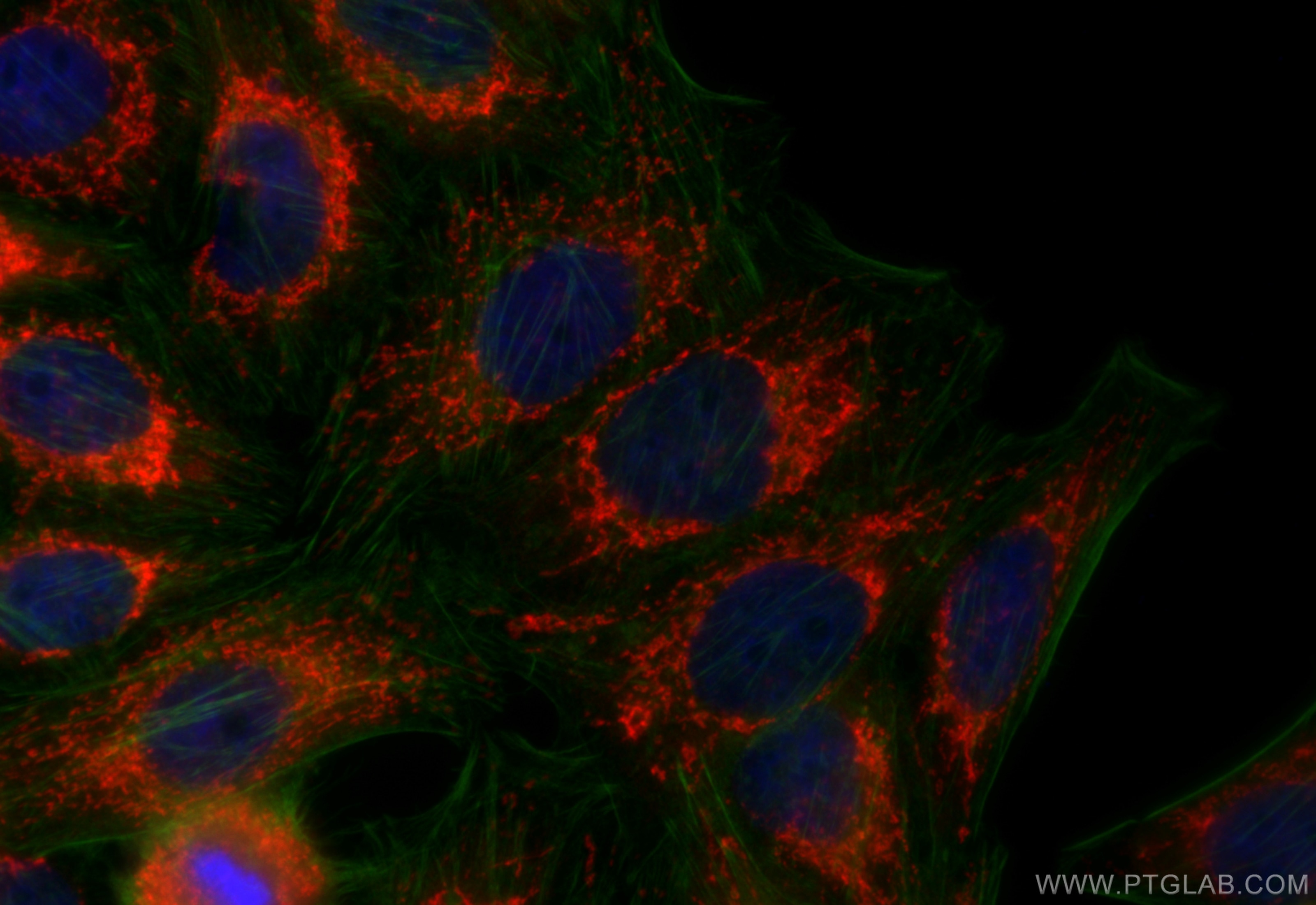
| Positive IF/ICC detected in | HepG2 cells |
Recommended dilution
| Application | Dilution |
|---|---|
| Western Blot (WB) | WB : 1:2000-1:12000 |
| Immunoprecipitation (IP) | IP : 0.5-4.0 ug for 1.0-3.0 mg of total protein lysate |
| Immunohistochemistry (IHC) | IHC : 1:50-1:500 |
| Immunofluorescence (IF)/ICC | IF/ICC : 1:50-1:500 |
| It is recommended that this reagent should be titrated in each testing system to obtain optimal results. | |
| Sample-dependent, Check data in validation data gallery. | |
Product Information
17589-1-AP targets ATP5H in WB, IHC, IF/ICC, IP, ELISA applications and shows reactivity with human, mouse, rat samples.
| Tested Reactivity | human, mouse, rat |
| Cited Reactivity | human, mouse |
| Host / Isotype | Rabbit / IgG |
| Class | Polyclonal |
| Type | Antibody |
| Immunogen |
CatNo: Ag11429 Product name: Recombinant human ATP5H protein Source: e coli.-derived, PGEX-4T Tag: GST Domain: 1-137 aa of BC032245 Sequence: MAGRKLALKTIDWVAFAEIIPQNQKAIASSLKSWNETLTSRLAALPENPPAIDWAYYKANVAKAGLVDDFEKKVKSCAEWVSLSKARIVEYEKEMEKMKNLIPFDQMTIEDLNEAFPETKLDKKKYPYWPHQPIENL Predict reactive species |
| Full Name | ATP synthase, H+ transporting, mitochondrial F0 complex, subunit d |
| Calculated Molecular Weight | 137 aa, 16 kDa |
| Observed Molecular Weight | 19-22 kDa |
| GenBank Accession Number | BC032245 |
| Gene Symbol | ATP5H |
| Gene ID (NCBI) | 10476 |
| RRID | AB_2062046 |
| Conjugate | Unconjugated |
| Form | Liquid |
| Purification Method | Antigen affinity purification |
| UNIPROT ID | O75947 |
| Storage Buffer | PBS with 0.02% sodium azide and 50% glycerol, pH 7.3. |
| Storage Conditions | Store at -20°C. Stable for one year after shipment. Aliquoting is unnecessary for -20oC storage. 20ul sizes contain 0.1% BSA. |
Background Information
Mitochondrial membrane ATP synthase (F1-Fo ATP synthase or Complex V) produces ATP from ADP in the presence of a proton gradient across the membrane which is generated by electron transport complexes of the respiratory chain. It is composed of the soluble catalytic core, F1, and the membrane-spanning component and Fo, which comprises the proton channel. The Fo seems to have nine subunits (a, b, c, d, e, f, g, F6 and 8). ATP5H gene encodes ATP synthase subunit d of the Fo complex.
Protocols
| Product Specific Protocols | |
|---|---|
| IF protocol for ATP5H antibody 17589-1-AP | Download protocol |
| IHC protocol for ATP5H antibody 17589-1-AP | Download protocol |
| IP protocol for ATP5H antibody 17589-1-AP | Download protocol |
| WB protocol for ATP5H antibody 17589-1-AP | Download protocol |
| Standard Protocols | |
|---|---|
| Click here to view our Standard Protocols |
Publications
What published studies show
ATP5H Polyclonal antibody (Cat# 17589-1-AP) has 10 citations published in journals including Science, J Nanobiotechnology, Theranostics, Advanced Science, Brain, Cell Death & Disease, Brain Pathology, Oncology Letters, and bioRxiv. Research fields span mitochondrial biology, acute lung injury, skin photoaging, exosome-mediated therapy, non-small cell lung cancer, liver cancer, spinal bulbar muscular atrophy, fatal familial insomnia, ferroptosis, and mitochondrial biogenesis in cancer.
| Species | Application | Title |
|---|---|---|
Science Mitochondrial remodeling and ischemic protection by G protein-coupled receptor 35 agonists | ||
J Nanobiotechnology Modulation of alveolar macrophage and mitochondrial fitness by medicinal plant-derived nanovesicles to mitigate acute lung injury and viral pneumonia | ||
J Nanobiotechnology A self-powered chloroplast-driven nanophotosystem for treating skin photoaging through rejuvenating mitochondria and revitalizing senescent fibroblasts. | ||
Theranostics AdMSC-derived exosomes alleviate acute lung injury via transferring mitochondrial component to improve homeostasis of alveolar macrophages. | ||
Adv Sci (Weinh) Phosphorylation of POU3F3 Mediated Nuclear Translocation Promotes Proliferation in Non-Small Cell Lung Cancer through Accelerating ATP5PF Transcription and ATP Production | ||
Brain Ligand-free mitochondria-localized mutant AR-induced cytotoxicity in spinal bulbar muscular atrophy. |
Reviews
What customers say
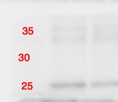
Both reviewers rated this product 5 stars for Western Blot applications. One user tested it on embryo heart tissue at a 1:500 dilution and reported it performed well. The other used it on mouse heart tissue extract at 1:1000 dilution, confirming it worked effectively for Western Blot. Overall, customers found the antibody reliable and easy to use for detecting the target in heart tissue samples.
The reviews below have been submitted by verified Proteintech customers who received an incentive for providing their feedback.
SITING (Verified Customer) (05-25-2021) | good
 |
Zee (Verified Customer) (01-28-2020) | It worked well with western blot.
|







