
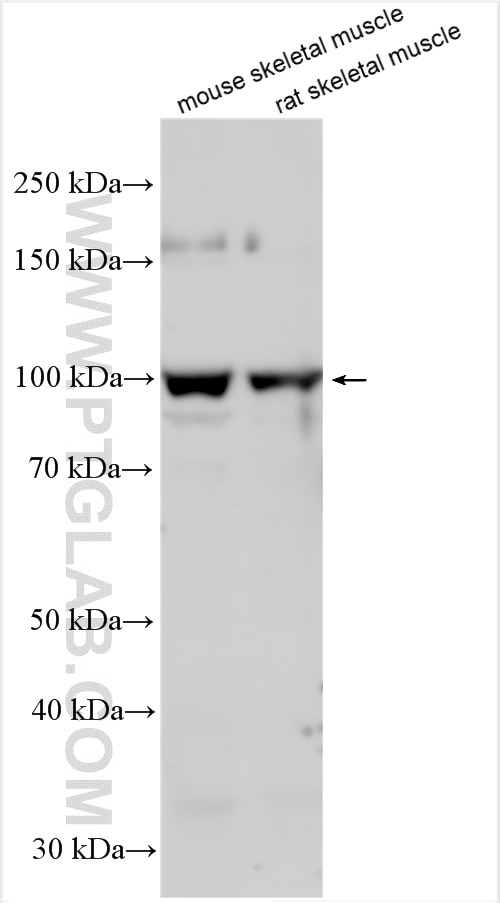
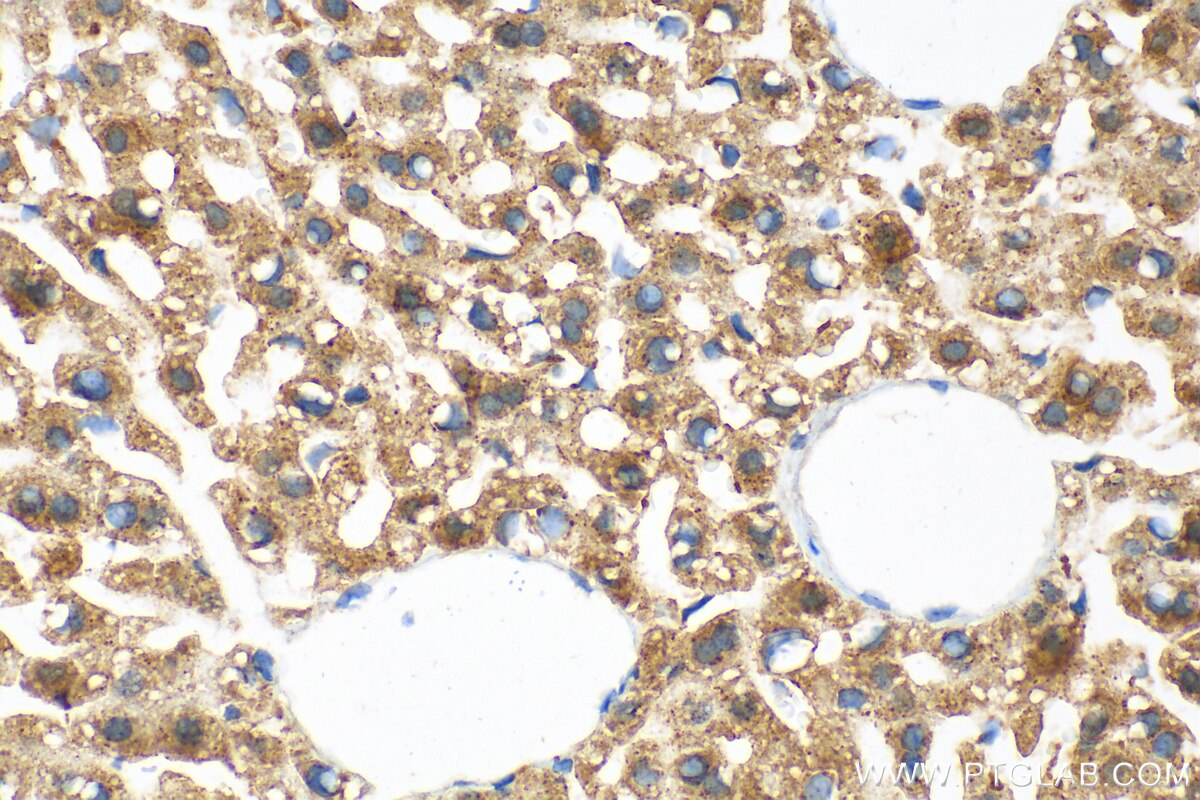
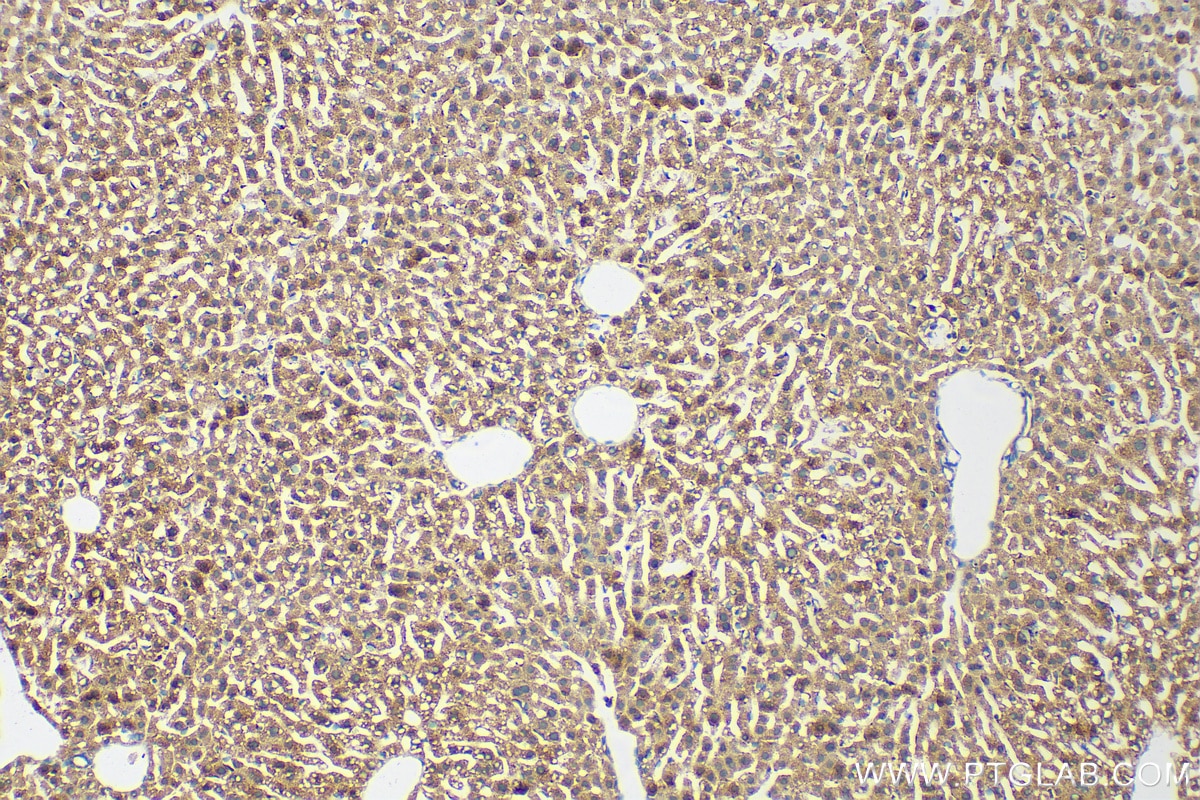

Tested Applications
| Positive WB detected in | mouse skeletal muscle tissue, rat skeletal muscle tissue |
| Positive IHC detected in | mouse liver tissue Note: suggested antigen retrieval with TE buffer pH 9.0; (*) Alternatively, antigen retrieval may be performed with citrate buffer pH 6.0 |
Recommended dilution
| Application | Dilution |
|---|---|
| Western Blot (WB) | WB : 1:1000-1:5000 |
| Immunohistochemistry (IHC) | IHC : 1:400-1:1600 |
| It is recommended that this reagent should be titrated in each testing system to obtain optimal results. | |
| Sample-dependent, Check data in validation data gallery. | |
Product Information
25725-1-AP targets CARNS1 in WB, IHC, ELISA applications and shows reactivity with human, mouse, rat samples.
| Tested Reactivity | human, mouse, rat |
| Cited Reactivity | mouse, rat |
| Host / Isotype | Rabbit / IgG |
| Class | Polyclonal |
| Type | Antibody |
| Immunogen |
CatNo: Ag22812 Product name: Recombinant human ATPGD1 protein Source: e coli.-derived, PET28a Tag: 6*His Domain: 443-827 aa of BC036557 Sequence: MTEHRRDEENARLLAELVRARGLKLDGCFSYWDDCLVLTALLCQELGLPCSSPAALRLAKQKSLTQLHLLHHHGPPWPAPSLHAVPCCPLESEADVERAVHQVPLPGVMKLEFGAGAVGVRLVEDAPQCHEHFSRITRDLQGEADHPGIGLGWGNAMLLMEFVEGTEHDVDLVLFGGRLLAAFVSDNGPTRLPGFTETAACMPTGLAPEQEAQMVQAAFRCCLGCGLLDGVFNVELKLTGAGPRLIEINPRMGGFYLRDWILELYGVDLLLAAVMVACGLRPALPTRPRARGHLVGVMCLVSQHLQALSSTASRETLQALHDRGLLRLNLLEEALVPGEYEEPYCSVACAGPSPTEARLRLLGLCQGLGIDGPSYPVAHFLSHFK Predict reactive species |
| Full Name | ATP-grasp domain containing 1 |
| Calculated Molecular Weight | 827 aa, 88 kDa |
| Observed Molecular Weight | 88-103 kDa |
| GenBank Accession Number | BC036557 |
| Gene Symbol | CARNS1 |
| Gene ID (NCBI) | 57571 |
| RRID | AB_2880211 |
| Conjugate | Unconjugated |
| Form | Liquid |
| Purification Method | Antigen affinity purification |
| UNIPROT ID | A5YM72 |
| Storage Buffer | PBS with 0.02% sodium azide and 50% glycerol, pH 7.3. |
| Storage Conditions | Store at -20°C. Stable for one year after shipment. Aliquoting is unnecessary for -20oC storage. 20ul sizes contain 0.1% BSA. |
Background Information
CARNS1, located at human chromosome 11q13.2, encodes carnosine synthase 1 belonging to the ATP-grasp ATPase family (EC 6.3.2.11). It mediates ATP-dependent synthesis of carnosine in skeletal muscle and homocarnosine in the central nervous system, two vital histidine-containing dipeptides with antioxidant and pH-buffering effects. This gene is highly conserved across vertebrates and preferentially expressed in brain and muscle tissues. Aberrant CARNS1 expression disturbs dipeptide homeostasis, linking to aging-related sensory decline and tumor progression via impaired carnosine-mediated tumor suppression. (PMID: 20097752)
Protocols
| Product Specific Protocols | |
|---|---|
| IHC protocol for CARNS1 antibody 25725-1-AP | Download protocol |
| WB protocol for CARNS1 antibody 25725-1-AP | Download protocol |
| Standard Protocols | |
|---|---|
| Click here to view our Standard Protocols |
Publications
What published studies show
The CARNS1 Polyclonal antibody (Cat# 25725-1-AP) has 5 total citations. These appear in Autophagy, Redox Biology, Particulate and Fibre Toxicology, Neurochemistry Research, and Translational Stroke Research. The associated research fields include mitophagy and axon regeneration, oxidative stress and necroptosis in asthma, vascular toxicity from particulate matter, liver failure, and post-cerebral ischemic hypoperfusion.
| Species | Application | Title |
|---|---|---|
Redox Biol Histidine metabolic reprogramming drives oxidative stress induced mtDNA release to promote necroptosis and airway inflammation in severe asthma. | ||
Part Fibre Toxicol Aryl hydrocarbon receptor activation-mediated vascular toxicity of ambient fine particulate matter: contribution of polycyclic aromatic hydrocarbons and osteopontin as a biomarker. | ||
Neurochem Res Carnosine Reduces Oxidative Stress and Reverses Attenuation of Righting and Postural Reflexes in Rats with Thioacetamide-Induced Liver Failure. | ||
Transl Stroke Res Nicotine Exposure Along with Oral Contraceptive Treatment in Female Rats Exacerbates Post-cerebral Ischemic Hypoperfusion Potentially via Altered Histamine Metabolism. |




