

Tested Applications
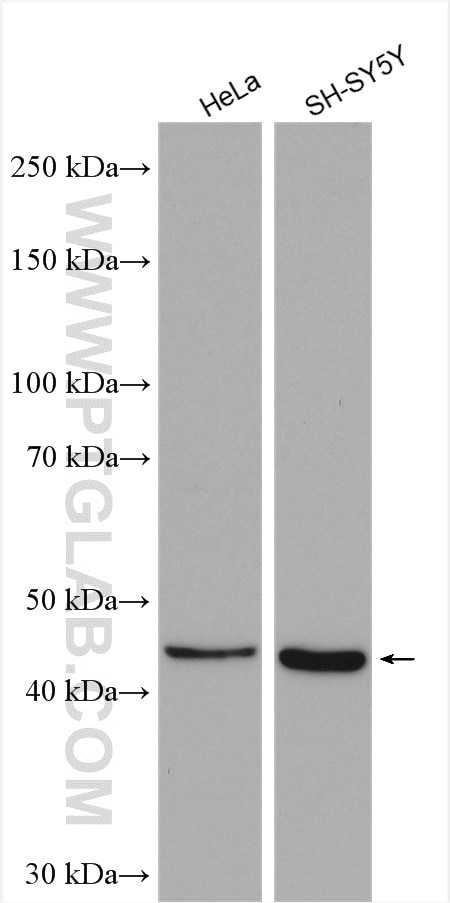
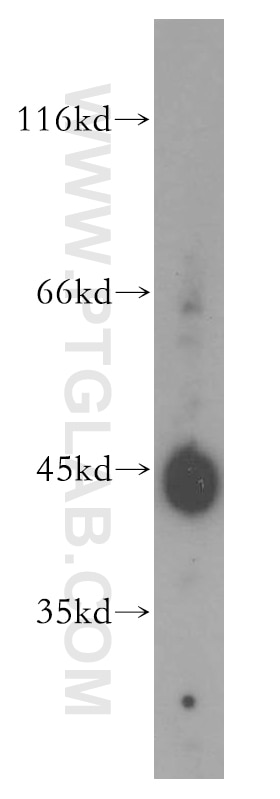
| Positive WB detected in | HeLa cells, mouse lung tissue, SH-SY5Y cells |
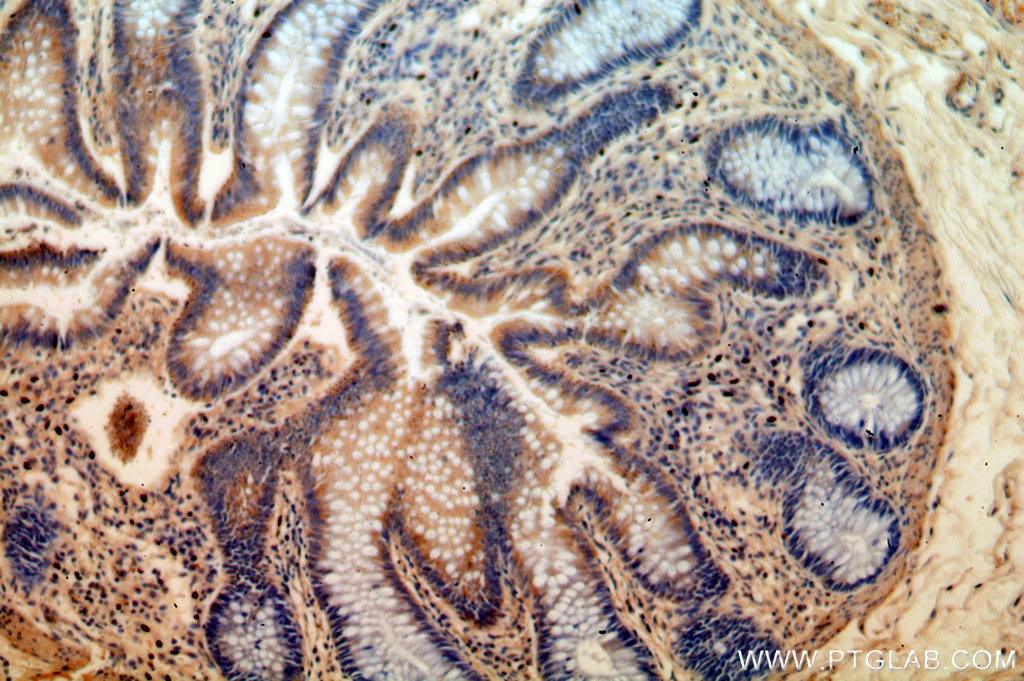
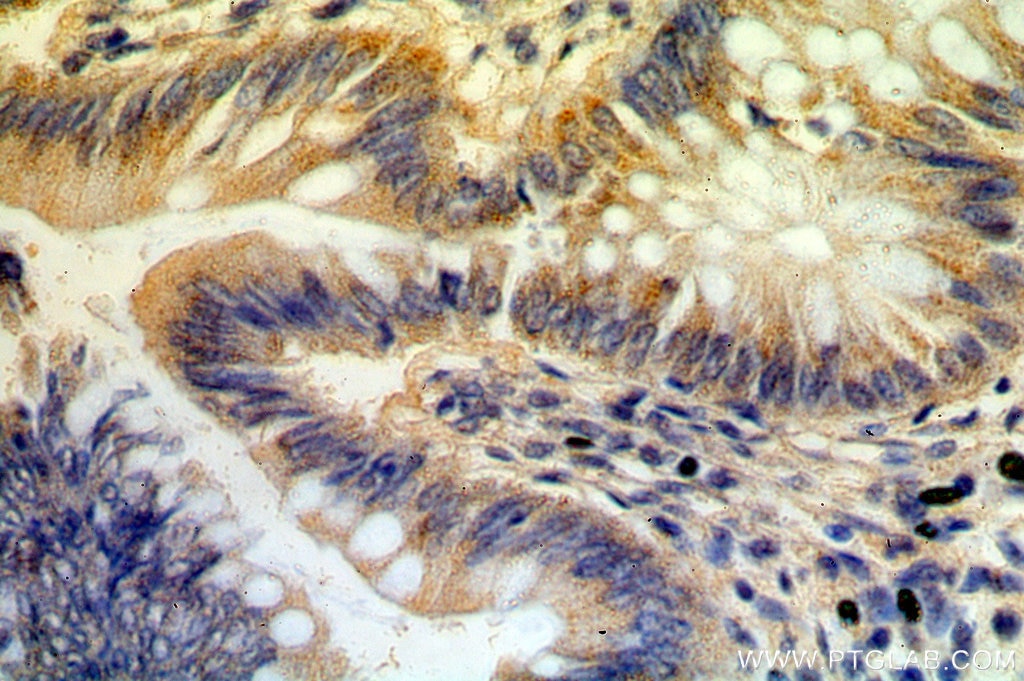
| Positive IHC detected in | human colon tissue Note: suggested antigen retrieval with TE buffer pH 9.0; (*) Alternatively, antigen retrieval may be performed with citrate buffer pH 6.0 |
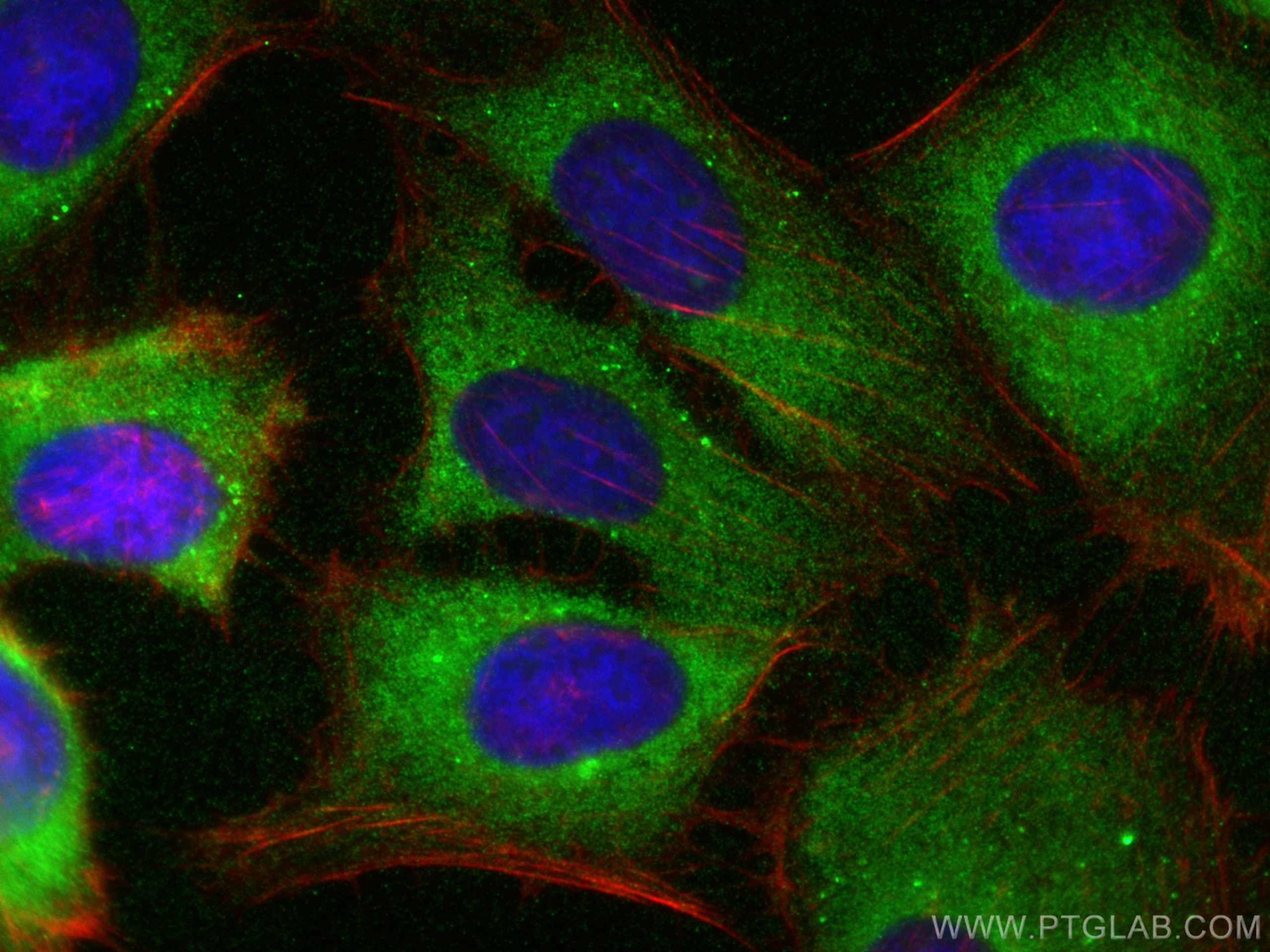
| Positive IF/ICC detected in | U2OS cells |
Recommended dilution
| Application | Dilution |
|---|---|
| Western Blot (WB) | WB : 1:500-1:2000 |
| Immunohistochemistry (IHC) | IHC : 1:20-1:200 |
| Immunofluorescence (IF)/ICC | IF/ICC : 1:50-1:500 |
| It is recommended that this reagent should be titrated in each testing system to obtain optimal results. | |
| Sample-dependent, Check data in validation data gallery. | |
Product Information
18098-1-AP targets B3GNT3 in WB, IHC, IF/ICC, ELISA applications and shows reactivity with human, mouse samples.
| Tested Reactivity | human, mouse |
| Cited Reactivity | human |
| Host / Isotype | Rabbit / IgG |
| Class | Polyclonal |
| Type | Antibody |
| Immunogen |
CatNo: Ag12061 Product name: Recombinant human B3GNT3 protein Source: e coli.-derived, PET28a Tag: 6*His Domain: 34-372 aa of BC066876 Sequence: CKVQEQPPAIPEALAWPTPPTRPAPAPCHANTSMVTHPDFATQPQHVQNFLLYRHYRHFPLLQDVPPSKCAQPVFLLLVIKSSPSNYVRRELLRRTWGRERKVRGLQLRLLFLVGTASNPHEARKVNRLLELEAQTHGDILQWDFHDSFFNLTLKQVLFLQWQETRCANASFVLNGDDDVFAHTDNMVFYLQDHDPGRHLFVGQLIQNVGPIRAFWSKYYVPEVVTQNERYPPYCGGGGFLLSRFTAAALRRAAHVLDIFPIDDVFLGMCLELEGLKPASHSGIRTSGVRAPSQHLSSFDPCFYRDLLLVHRFLPYEMLLMWDALNQPNLTCGNQTQIY Predict reactive species |
| Full Name | UDP-GlcNAc:betaGal beta-1,3-N-acetylglucosaminyltransferase 3 |
| Calculated Molecular Weight | 372 aa, 43 kDa |
| Observed Molecular Weight | 43 kDa |
| GenBank Accession Number | BC066876 |
| Gene Symbol | B3GNT3 |
| Gene ID (NCBI) | 10331 |
| RRID | AB_10596928 |
| Conjugate | Unconjugated |
| Form | Liquid |
| Purification Method | Antigen affinity purification |
| UNIPROT ID | Q9Y2A9 |
| Storage Buffer | PBS with 0.02% sodium azide and 50% glycerol, pH 7.3. |
| Storage Conditions | Store at -20°C. Stable for one year after shipment. Aliquoting is unnecessary for -20oC storage. 20ul sizes contain 0.1% BSA. |
Background Information
Beta-1,3-N-acetylglucosaminyltransferase 3 (B3GNT3) is a type II transmembrane protein located in the Golgi apparatus and contributes to the regulation of L-selectin ligand function, lymphocyte trafficking, and T cell homing. B3GNT3 is overexpressed in breast cancer, and also plays a critical role in the aggressiveness of pancreatic cancer (PMID: 33718036, 30466404). Western blot analysis detected B3GNT3 at an apparent molecular mass of 43 kDa.
Protocols
| Product Specific Protocols | |
|---|---|
| IF protocol for B3GNT3 antibody 18098-1-AP | Download protocol |
| IHC protocol for B3GNT3 antibody 18098-1-AP | Download protocol |
| WB protocol for B3GNT3 antibody 18098-1-AP | Download protocol |
| Standard Protocols | |
|---|---|
| Click here to view our Standard Protocols |
Publications
What published studies show
The B3GNT3 Polyclonal antibody (Cat# 18098-1-AP) has 11 total citations. These appear in journals including Cancer Cell, Cell Oncology, European Journal of Medical Research, BMC Bioinformatics, International Journal of Medical Sciences, Translational Lung Cancer Research, American Journal of Cancer Research, PLoS One, Journal of Clinical Pathology, Translational Cancer Research, and Oncology Letters. The research fields span oncology, covering breast cancer, lung adenocarcinoma, pancreatic cancer, esophageal carcinoma, cervical cancer, and pan-cancer analysis, with focus on glycosylation, prognostic biomarkers, and immune cell infiltration.
| Species | Application | Title |
|---|---|---|
Cancer Cell Eradication of Triple-Negative Breast Cancer Cells by Targeting Glycosylated PD-L1. | ||
Cell Oncol (Dordr) B3GNT3 facilitates NFKB2 processing and non-canonical NF-κB activation to drive lung adenocarcinoma progression.
| ||
Eur J Med Res FUT3-B3GNT3 interaction promotes pancreatic cancer progression and chemoresistance via NF-κB signaling mediated autophagy.
| ||
BMC Bioinformatics A novel glycosylation-related gene signature predicts survival in patients with lung adenocarcinoma | ||
Int J Med Sci Bioinformatics Analysis Reveals a Novel Prognostic Model for Esophageal Squamous Cell Carcinoma | ||
Transl Lung Cancer Res Identifying the prognostic significance of B3GNT3 with PD-L1 expression in lung adenocarcinoma. |






