

Tested Applications
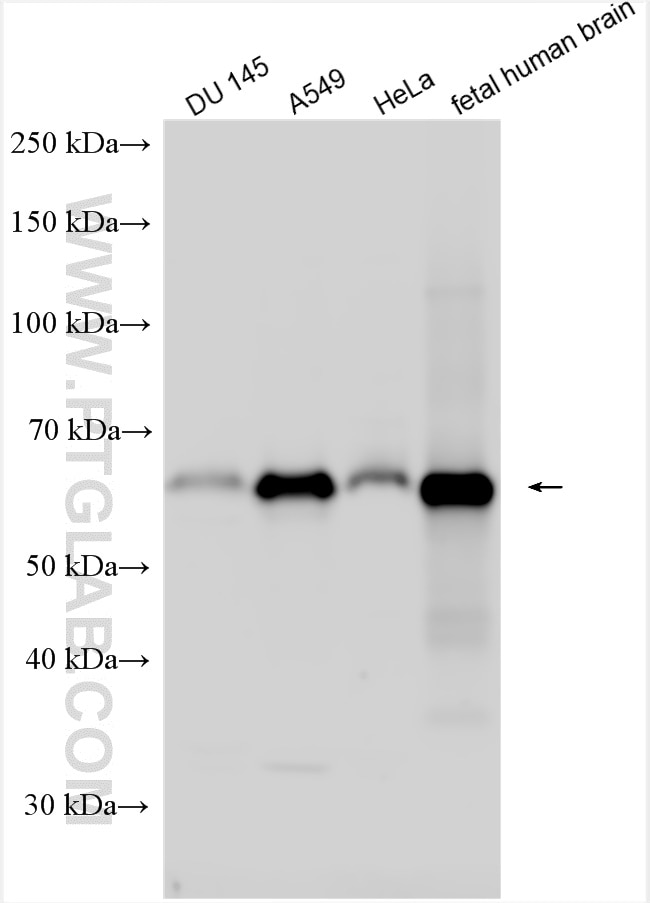
| Positive WB detected in | DU 145 cells, A549 cells, HeLa cells, fetal human brain tissue |
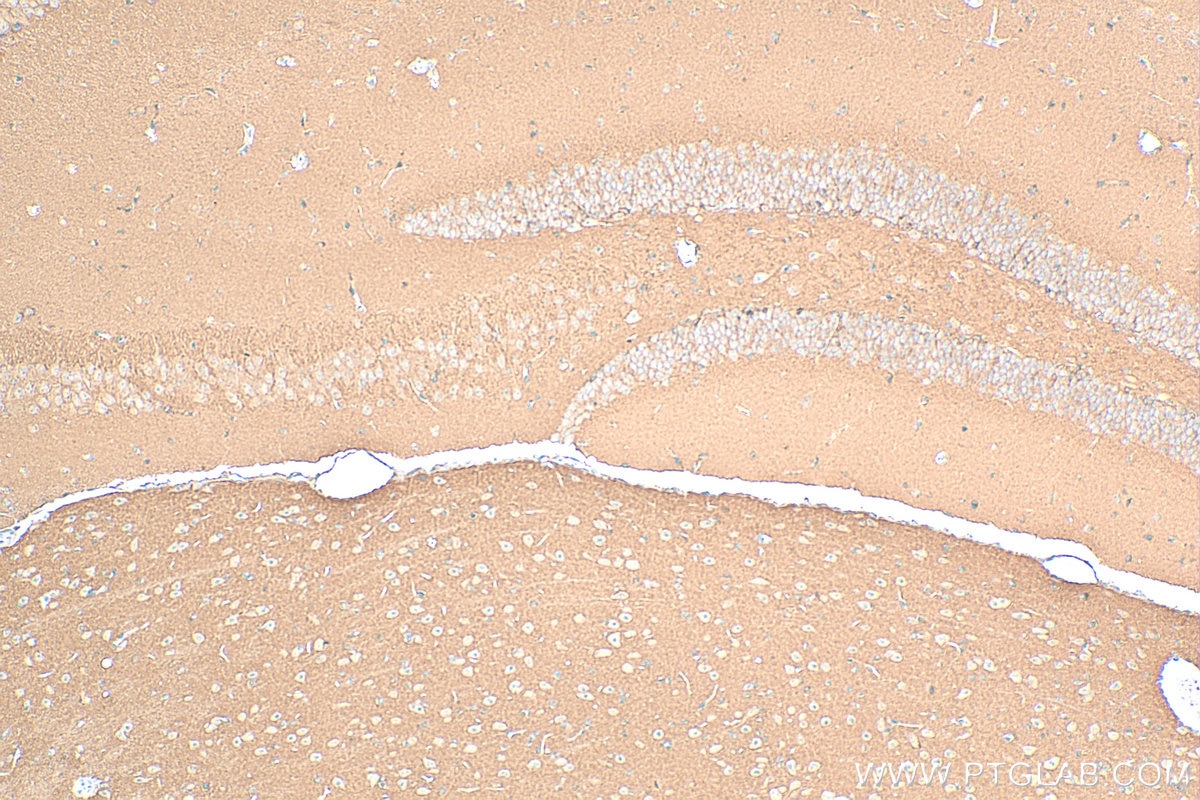
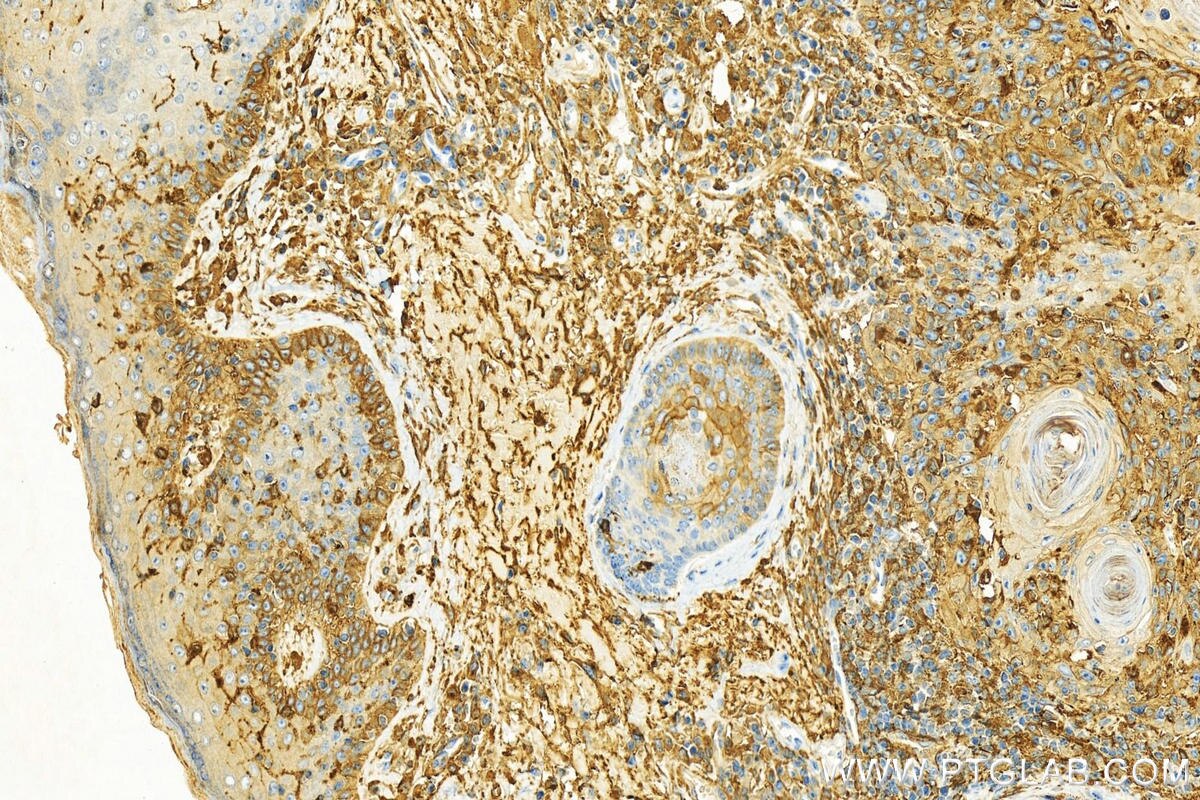
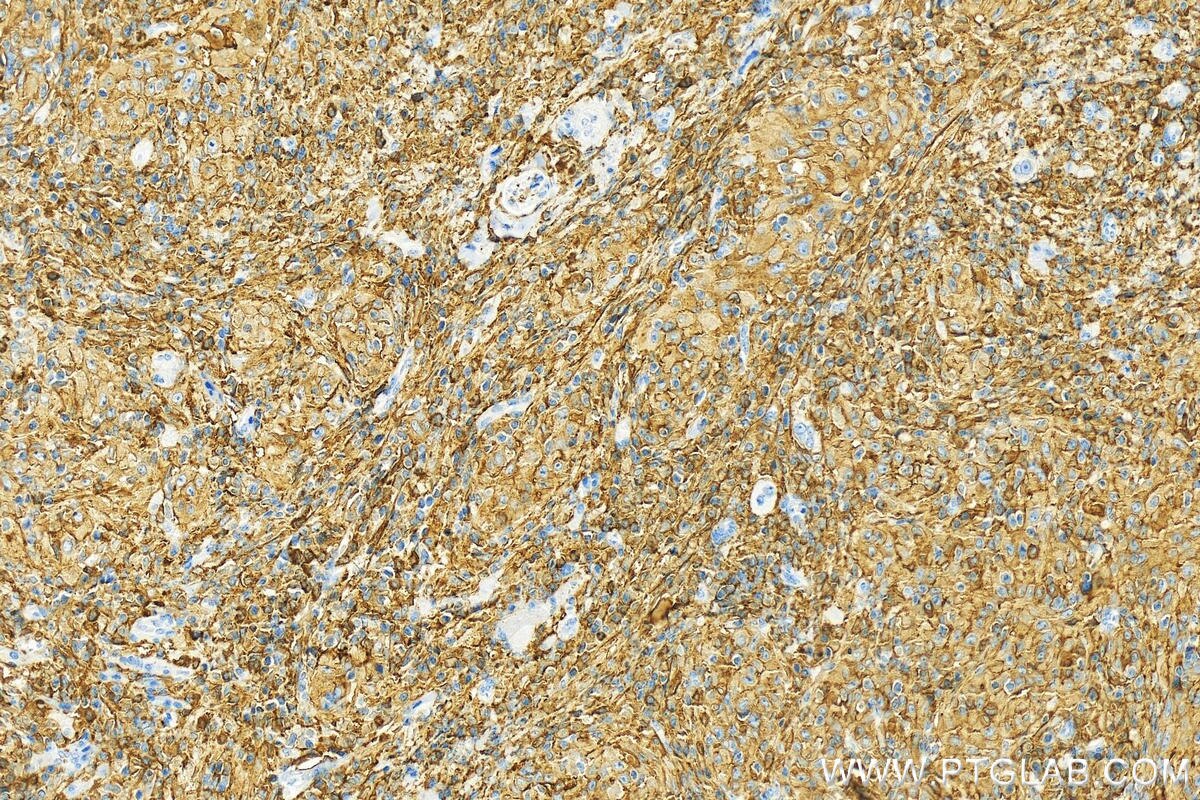
| Positive IHC detected in | human skin cancer tissue, mouse brain tissue Note: suggested antigen retrieval with TE buffer pH 9.0; (*) Alternatively, antigen retrieval may be performed with citrate buffer pH 6.0 |
Recommended dilution
| Application | Dilution |
|---|---|
| Western Blot (WB) | WB : 1:2000-1:16000 |
| Immunohistochemistry (IHC) | IHC : 1:800-1:3200 |
| It is recommended that this reagent should be titrated in each testing system to obtain optimal results. | |
| Sample-dependent, Check data in validation data gallery. | |
Product Information
14880-1-AP targets BASP1 in WB, IHC, IF, ELISA applications and shows reactivity with human samples.
| Tested Reactivity | human |
| Cited Reactivity | human |
| Host / Isotype | Rabbit / IgG |
| Class | Polyclonal |
| Type | Antibody |
| Immunogen |
CatNo: Ag6653 Product name: Recombinant human BASP1 protein Source: e coli.-derived, PGEX-4T Tag: GST Domain: 1-227 aa of BC000518 Sequence: MGGKLSKKKKGYNVNDEKAKEKDKKAEGAATEEEGTPKESEPQAAAEPAEAKEGKEKPDQDAEGKAEEKEGEKDAAAAKEEAPKAEPEKTEGAAEAKAEPPKAPEQEQAAPGPAAGGEAPKAAEAAAAPAESAAPAAGEEPSKEEGEPKKTGAPAAPAAQETKSDGAPASDSKPGSSEAAPSSKETPAATEAPSSTPKAQGPAASAEEPKPVEAPAANSDQTVTVKE Predict reactive species |
| Full Name | brain abundant, membrane attached signal protein 1 |
| Calculated Molecular Weight | 23 kDa |
| Observed Molecular Weight | 55-60 kDa |
| GenBank Accession Number | BC000518 |
| Gene Symbol | BASP1 |
| Gene ID (NCBI) | 10409 |
| RRID | AB_3085444 |
| Conjugate | Unconjugated |
| Form | Liquid |
| Purification Method | Antigen affinity purification |
| UNIPROT ID | P80723 |
| Storage Buffer | PBS with 0.02% sodium azide and 50% glycerol, pH 7.3. |
| Storage Conditions | Store at -20°C. Stable for one year after shipment. Aliquoting is unnecessary for -20oC storage. 20ul sizes contain 0.1% BSA. |
Background Information
BASP1 (brain acid-soluble protein 1), also known as NAP22 or CAP-23, is an evolutionarily conserved intrinsically disordered protein that participates in cell signaling, migration, apoptosis, and gene transcription. It is highly expressed in the nervous system and plays roles in neurodevelopment, synaptic function, and nerve regeneration. BASP1 exhibits context-dependent functions in disease: it acts as a tumor suppressor in gastric cancer by inhibiting the Wnt/β-catenin pathway and in acute myeloid leukemia, while promoting atherosclerosis via vascular smooth muscle cell proliferation and inflammation. It has emerged as a promising therapeutic target and diagnostic biomarker. (PMID: 33426068; 41415108; 33015061)
Protocols
| Product Specific Protocols | |
|---|---|
| IHC protocol for BASP1 antibody 14880-1-AP | Download protocol |
| WB protocol for BASP1 antibody 14880-1-AP | Download protocol |
| Standard Protocols | |
|---|---|
| Click here to view our Standard Protocols |
Publications
What published studies show
The BASP1 Polyclonal antibody (Cat# 14880-1-AP) has 2 citations. One appears in Breast Cancer Research (IF 6.2), investigating TRIM2 as a novel biomarker in breast cancer using IF. The other is in Journal of Gastroenterology and Hepatology (IF 3.5), studying m6A-modified BASP1's role in promoting gastric cancer progression via IL6-induced TAM infiltration, using WB. Both studies were conducted in human samples, covering oncology research fields of breast cancer and gastric cancer.
| Species | Application | Title |
|---|---|---|
Breast Cancer Res Integrated multi-omics analysis and functional validation reveal the role of TRIM2 as a potential novel biomarker in breast cancer. | ||
J Gastroenterol Hepatol m6A-Modified BASP1 Regulates IL6 Expression to Induce TAM Infiltration to Promote Gastric Cancer Progression.
|





