
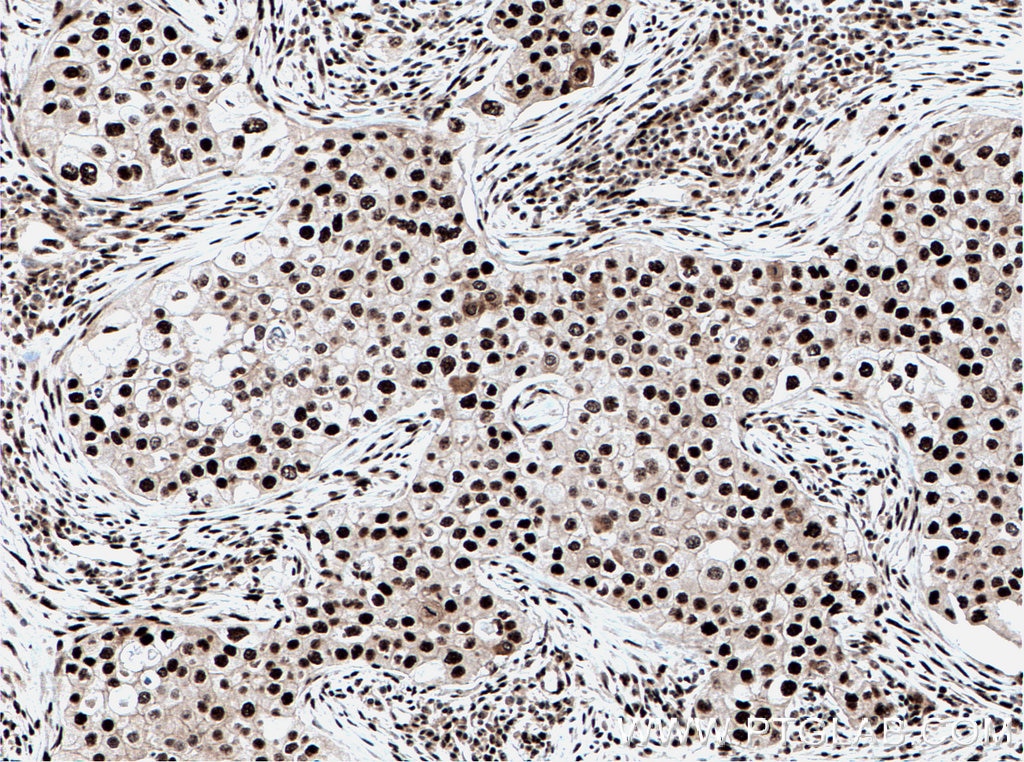
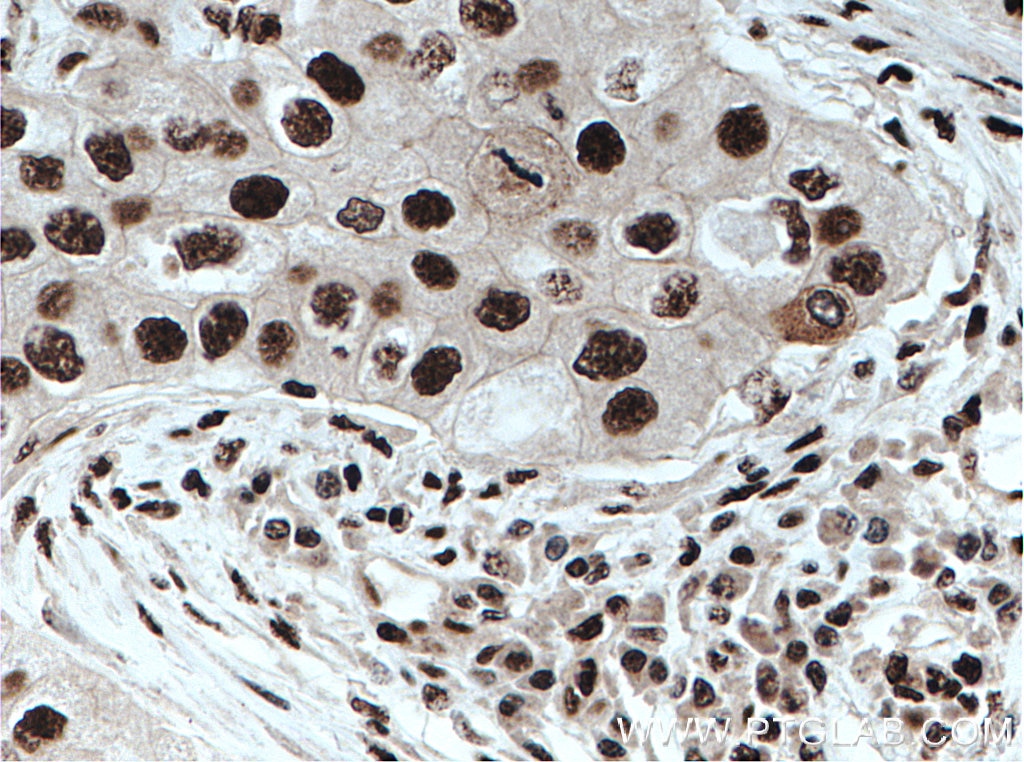

Tested Applications
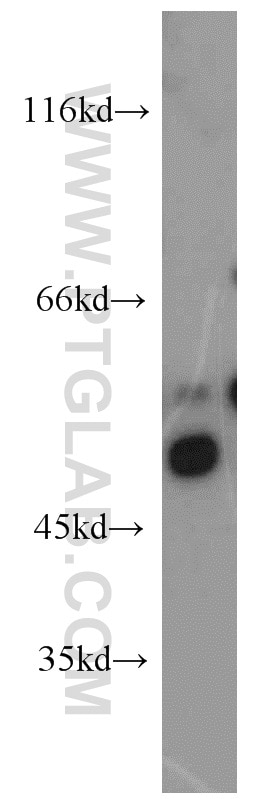
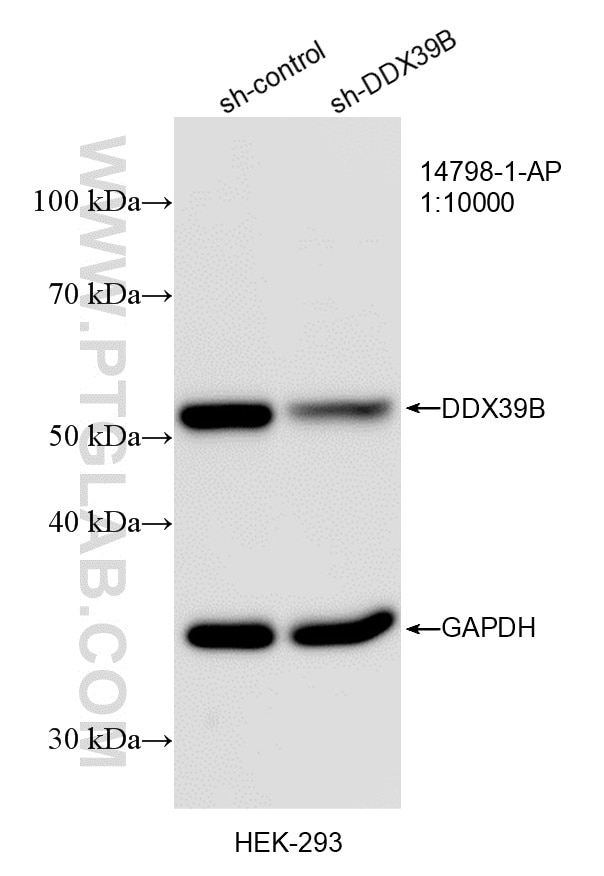
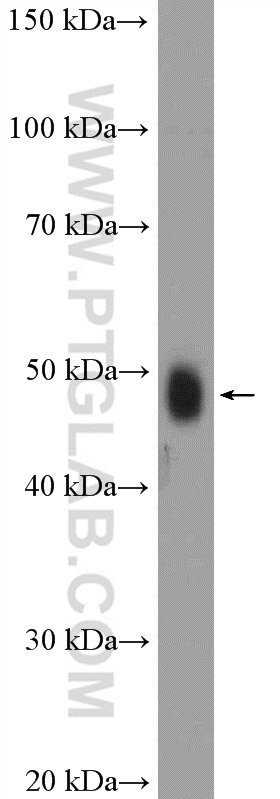
| Positive WB detected in | Jurkat cells, HEK-293 cells, rat spleen tissue |
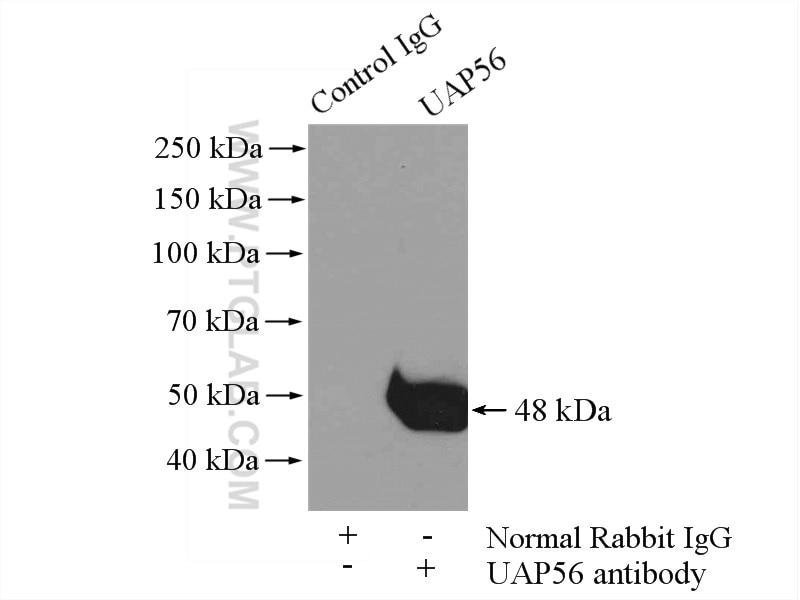
| Positive IP detected in | Jurkat cells |
| Positive IHC detected in | human breast cancer tissue Note: suggested antigen retrieval with TE buffer pH 9.0; (*) Alternatively, antigen retrieval may be performed with citrate buffer pH 6.0 |
Recommended dilution
| Application | Dilution |
|---|---|
| Western Blot (WB) | WB : 1:500-1:2000 |
| Immunoprecipitation (IP) | IP : 0.5-4.0 ug for 1.0-3.0 mg of total protein lysate |
| Immunohistochemistry (IHC) | IHC : 1:50-1:500 |
| It is recommended that this reagent should be titrated in each testing system to obtain optimal results. | |
| Sample-dependent, Check data in validation data gallery. | |
Product Information
14798-1-AP targets BAT1 in WB, IHC, IF, IP, CoIP, ChIP, RIP, ELISA applications and shows reactivity with human, mouse, rat samples.
| Tested Reactivity | human, mouse, rat |
| Cited Reactivity | human, mouse, pig, chicken |
| Host / Isotype | Rabbit / IgG |
| Class | Polyclonal |
| Type | Antibody |
| Immunogen |
CatNo: Ag6512 Product name: Recombinant human BAT1 protein Source: e coli.-derived, PGEX-4T Tag: GST Domain: 80-428 aa of BC000361 Sequence: ILGMDVLCQAKSGMGKTAVFVLATLQQLEPVTGQVSVLVMCHTRELAFQISKEYERFSKYMPNVKVAVFFGGLSIKKDEEVLKKNCPHIVVGTPGRILALARNKSLNLKHIKHFILDECDKMLEQLDMRRDVQEIFRMTPHEKQVMMFSATLSKEIRPVCRKFMQDPMEIFVDDETKLTLHGLQQYYVKLKDNEKNRKLFDLLDVLEFNQVVIFVKSVQRCIALAQLLVEQNFPAIAIHRGMPQEERLSRYQQFKDFQRRILVATNLFGRGMDIERVNIAFNYDMPEDSDTYLHRVARAGRFGTKGLAITFVSDENDAKILNDVQDRFEVNISELPDEIDISSYIEQTR Predict reactive species |
| Full Name | HLA-B associated transcript 1 |
| Calculated Molecular Weight | 53 kDa |
| Observed Molecular Weight | 48 kDa |
| GenBank Accession Number | BC000361 |
| Gene Symbol | BAT1 |
| Gene ID (NCBI) | 7919 |
| RRID | AB_2061854 |
| Conjugate | Unconjugated |
| Form | Liquid |
| Purification Method | Antigen affinity purification |
| UNIPROT ID | Q13838 |
| Storage Buffer | PBS with 0.02% sodium azide and 50% glycerol, pH 7.3. |
| Storage Conditions | Store at -20°C. Stable for one year after shipment. Aliquoting is unnecessary for -20oC storage. 20ul sizes contain 0.1% BSA. |
Background Information
BAT1, is a 428 amino acid protein, which contains one helicase C-terminal domain, one helicase ATP-binding domain and belongs to the DEAD box helicase family. DECD subfamily. DDX39B localizes in the nucleus and cytoplasm. BAT1 is involved in nuclear export of spliced and unspliced mRNA. BAT1 as ATP dependent RNA helicase, may be a translation initiation factor and acts as a negative regulator of inflammatory cytokines. This antibody may cross-react with DDX39A.
Protocols
| Product Specific Protocols | |
|---|---|
| IHC protocol for BAT1 antibody 14798-1-AP | Download protocol |
| IP protocol for BAT1 antibody 14798-1-AP | Download protocol |
| WB protocol for BAT1 antibody 14798-1-AP | Download protocol |
| Standard Protocols | |
|---|---|
| Click here to view our Standard Protocols |
Publications
What published studies show
The DDX39B antibody (Cat# 14798-1-AP) has 18 total citations published in journals including Nature, Cell, Cell Metabolism, Molecular Cell, Genes & Development, Cell Death & Disease, Redox Biology, PLoS Pathogens, and iScience. Associated research fields encompass RNA nuclear export, nucleolar biology, cancer (breast, colorectal, pancreatic, hepatocellular carcinoma), viral infection, RNA helicase function, alternative splicing, ferroptosis, ALS, and early embryogenesis.
| Species | Application | Title |
|---|---|---|
Cell Metab NEAT1 is essential for metabolic changes that promote breast cancer growth and metastasis. | ||
Redox Biol Reduced dynamicity and increased high-order protein assemblies in dense fibrillar component of the nucleolus under cellular senescence | ||
Mol Cell 1The RNA helicase DDX39A binds a conserved structure in chikungunya virus RNA to control infection
| ||
J Exp Clin Cancer Res RETSAT associates with DDX39B to promote fork restarting and resistance to gemcitabine based chemotherapy in pancreatic ductal adenocarcinoma
|







