



Tested Applications
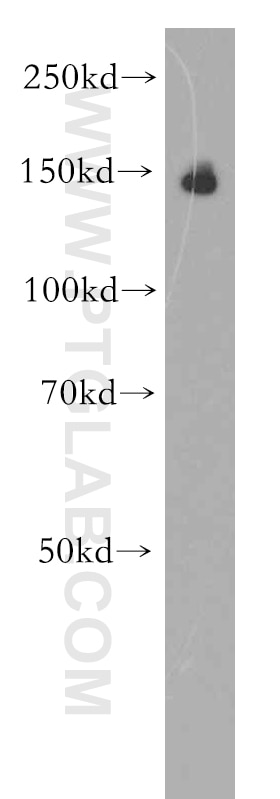
| Positive WB detected in | human brain tissue, COLO 320 cells, SH-SY5Y cells, Y79 cells |
| Positive IHC detected in | human cerebellum tissue, mouse brain tissue Note: suggested antigen retrieval with TE buffer pH 9.0; (*) Alternatively, antigen retrieval may be performed with citrate buffer pH 6.0 |
Recommended dilution
| Application | Dilution |
|---|---|
| Western Blot (WB) | WB : 1:500-1:2000 |
| Immunohistochemistry (IHC) | IHC : 1:50-1:500 |
| It is recommended that this reagent should be titrated in each testing system to obtain optimal results. | |
| Sample-dependent, Check data in validation data gallery. | |
Product Information
19017-1-AP targets Brevican in WB, IHC, IF, ELISA applications and shows reactivity with human, mouse, rat samples.
| Tested Reactivity | human, mouse, rat |
| Cited Reactivity | human, rat |
| Host / Isotype | Rabbit / IgG |
| Class | Polyclonal |
| Type | Antibody |
| Immunogen |
CatNo: Ag13552 Product name: Recombinant human BCAN protein Source: e coli.-derived, PGEX-4T Tag: GST Domain: 23-350 aa of BC010571 Sequence: LEGDSSEDRAFRVRIAGDAPLQGVLGGALTIPCHVHYLRPPPSRRAVLGSPRVKWTFLSRGREAEVLVARGVRVKVNEAYRFRVALPTYPASLTDVSLALNELRPNDSGIYRCEVQHGIDDSSDAVEVKVKGVVFLYREGSARYAFSFSGAQEACARIGAHIATPEQLYAAYLGGYEQCDAGWLSDQTVRYPIQTPREACYGDMDGFPGVRNYGVVDPDDLYDVYCYAEDLNGELFLGDPPEKLTLEEARAYCQERGAEIATTGQLYAAWDGGLDHCSPGWLADGSVRYPIVTPSQRCGGGLPGVKTLFLFPNQTGFPNKHSRFNVY Predict reactive species |
| Full Name | brevican |
| Calculated Molecular Weight | 99 kDa |
| Observed Molecular Weight | 145 kDa, 72kDa, 80 kDa |
| GenBank Accession Number | BC010571 |
| Gene Symbol | BCAN |
| Gene ID (NCBI) | 63827 |
| RRID | AB_10643526 |
| Conjugate | Unconjugated |
| Form | Liquid |
| Purification Method | Antigen affinity purification |
| UNIPROT ID | Q96GW7 |
| Storage Buffer | PBS with 0.02% sodium azide and 50% glycerol, pH 7.3. |
| Storage Conditions | Store at -20°C. Stable for one year after shipment. Aliquoting is unnecessary for -20oC storage. 20ul sizes contain 0.1% BSA. |
Background Information
Brevican is a brain-specific proteoglycan belonging to the aggrecan family that share a number of structural features. Brevican contains a hyaluronic acid-binding domain in its N-terminus and a lectin-like domain in its C-terminus. Expression of brevican is highly specific in the brain and increases as the brain develops. It may play a role in maintaining the extracellular environment of mature brain as a major constituent of the adult brain extracellular matrix (PMID:9117262). Brevican core protein exists as a 145 kDa full-length form and a 80 kDa N terminally truncated form (PMID: 8144512). This antibody can recognize the 72 kDa isoform of target.
Protocols
| Product Specific Protocols | |
|---|---|
| IHC protocol for Brevican antibody 19017-1-AP | Download protocol |
| WB protocol for Brevican antibody 19017-1-AP | Download protocol |
| Standard Protocols | |
|---|---|
| Click here to view our Standard Protocols |
Publications
What published studies show
The Brevican Polyclonal antibody (Cat# 19017-1-AP) has 6 total citations published in Theranostics, Molecular Psychiatry, British Journal of Pharmacology, PLoS Biology, FASEB Journal, and Research Square. The research fields span neurorepair after spinal cord injury, hippocampal molecular profiling in autism spectrum disorder, perineuronal net remodeling under chronic stress, retrosplenial cortical reorganization and memory circuit instability during adolescence, and the role of meprins in brain extracellular matrix and perineuronal nets.
| Species | Application | Title |
|---|---|---|
Theranostics Biomimetic core-shell GelMA microspheres co-delivering ANXA1, NGF, and fibronectin enable phase-matched immunomodulation and neurorepair after spinal cord injury. | ||
Mol Psychiatry Molecular profiling of the hippocampus of children with autism spectrum disorder | ||
Br J Pharmacol Subregion-specific perineuronal net remodelling in the dorsal hippocampus drives vulnerability and resilience to chronic stress: The role of venlafaxine treatment. | ||
PLoS Biol Retrosplenial cortical reorganization during late adolescence introduces instability of contextual memory circuits. | ||
Res Sq Retrosplenial Cortical Reorganization During Late Adolescence Introduces Instability of Episodic Memory Circuits |



