

Tested Applications
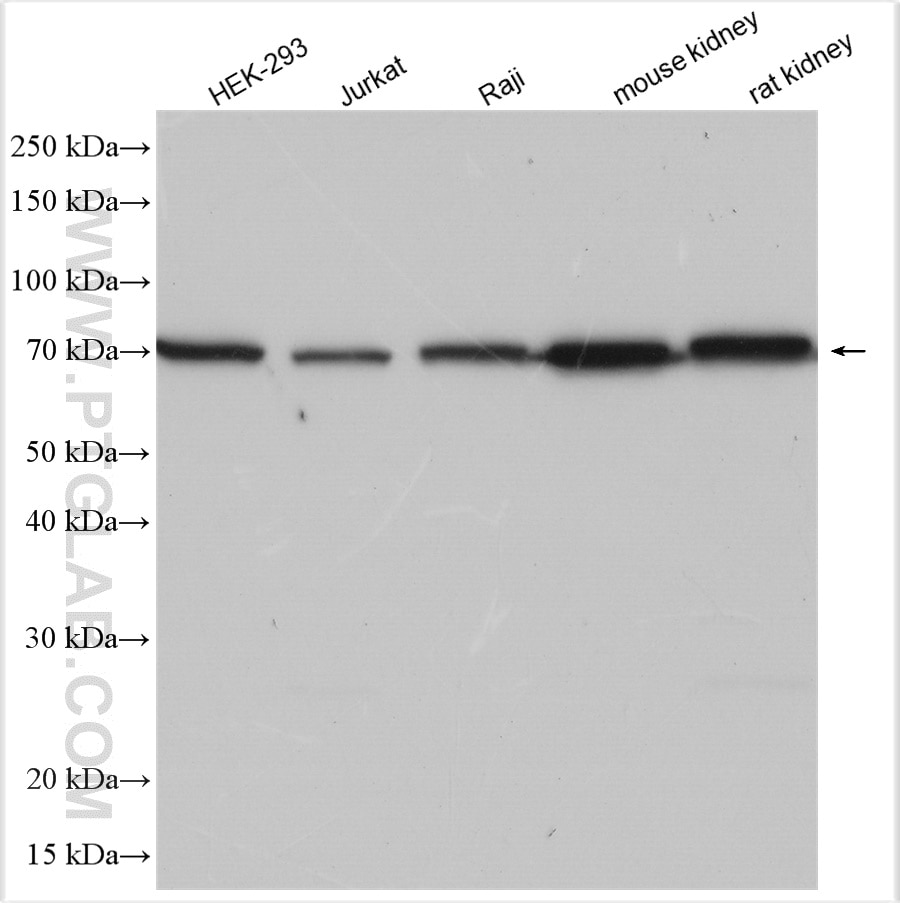
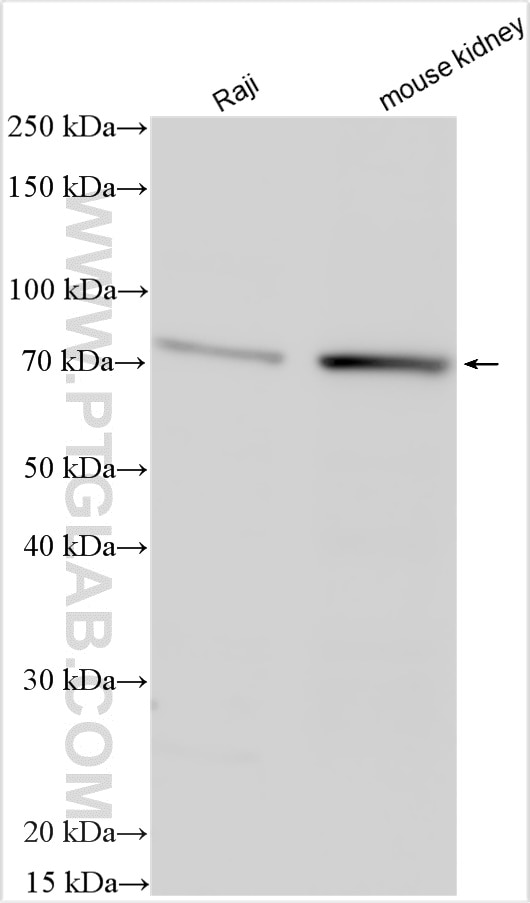
| Positive WB detected in | HEK-293 cells, Raji cells, mouse kidney tissue, Jurkat cells, rat kidney tissue |
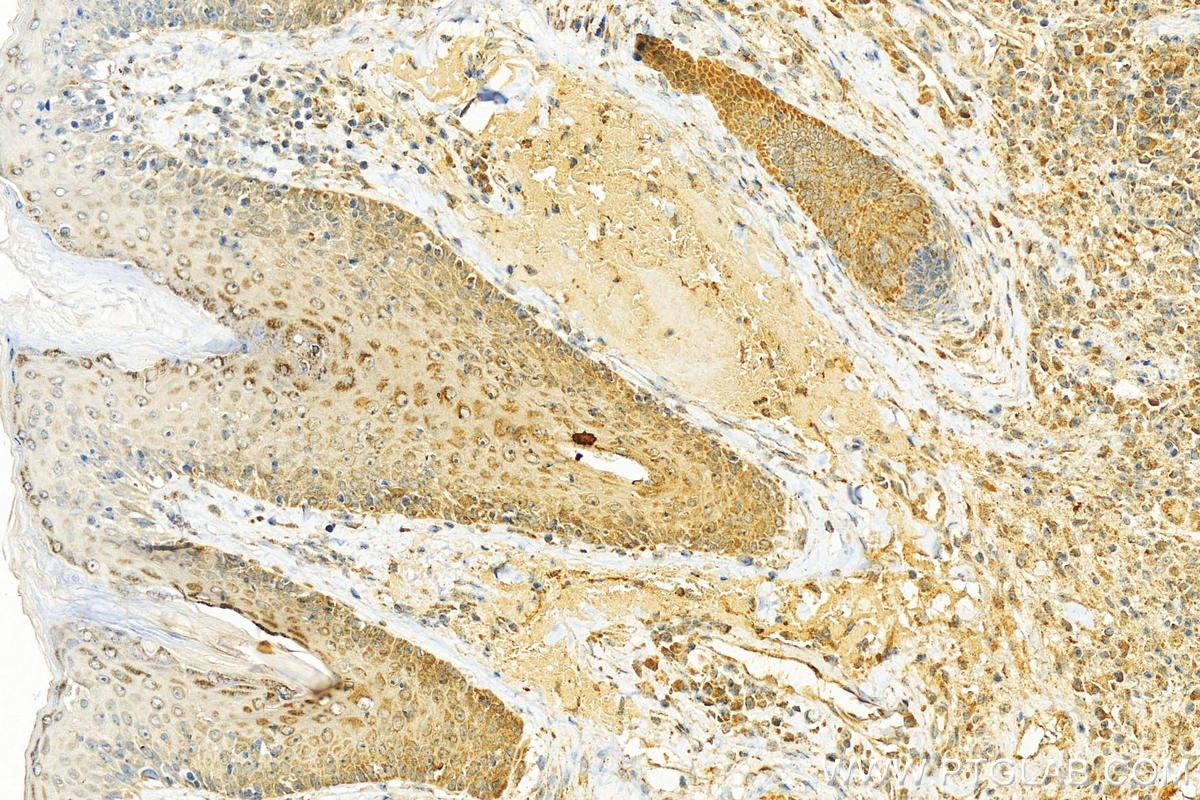
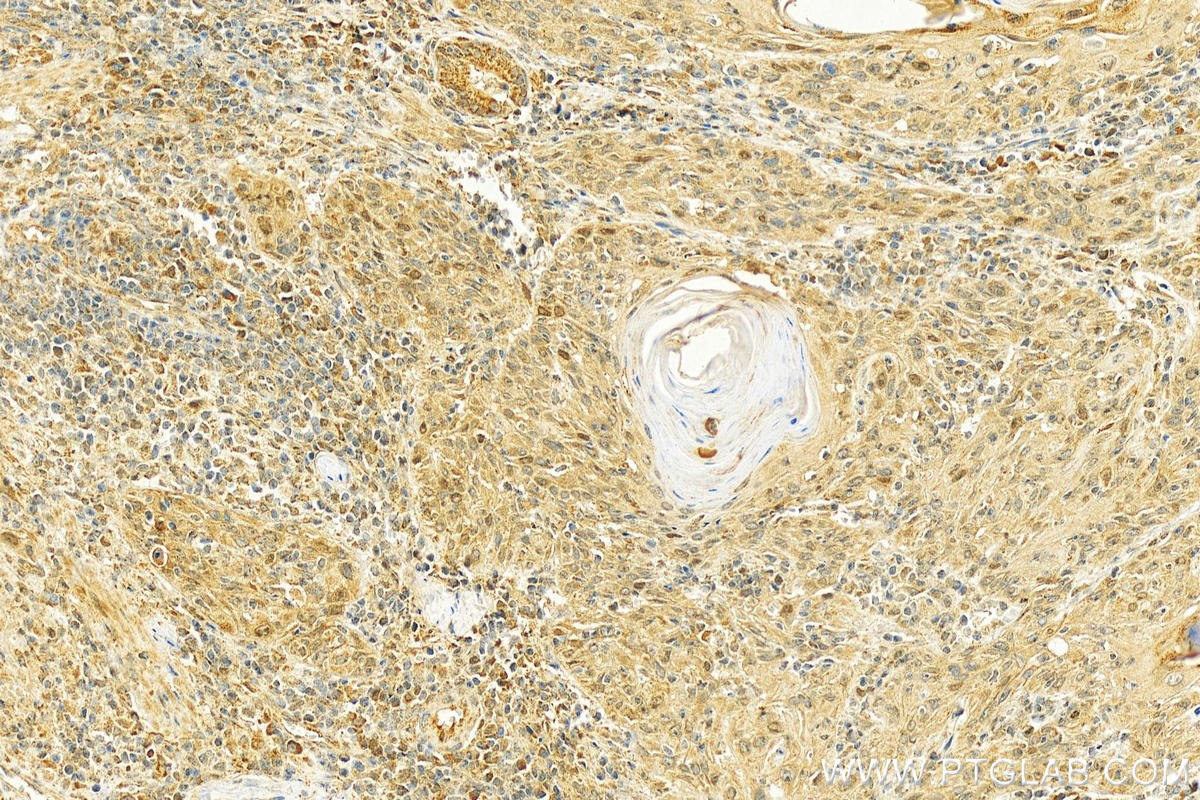
| Positive IHC detected in | human skin cancer tissue Note: suggested antigen retrieval with TE buffer pH 9.0; (*) Alternatively, antigen retrieval may be performed with citrate buffer pH 6.0 |
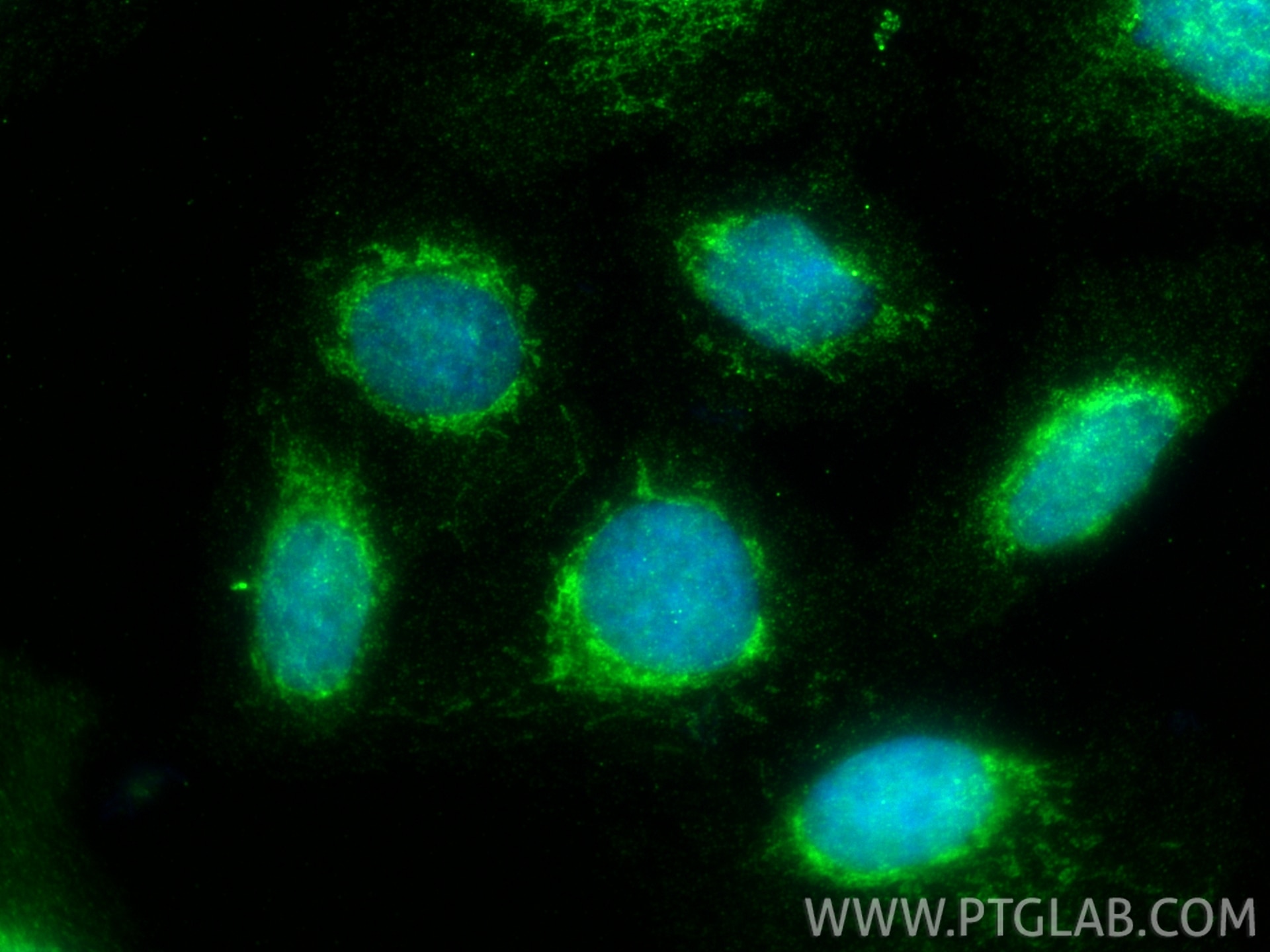
| Positive IF/ICC detected in | U2OS cells |
Recommended dilution
| Application | Dilution |
|---|---|
| Western Blot (WB) | WB : 1:500-1:3000 |
| Immunohistochemistry (IHC) | IHC : 1:150-1:600 |
| Immunofluorescence (IF)/ICC | IF/ICC : 1:200-1:800 |
| It is recommended that this reagent should be titrated in each testing system to obtain optimal results. | |
| Sample-dependent, Check data in validation data gallery. | |
Product Information
12986-1-AP targets BNIP3L in WB, IHC, IF/ICC, ELISA applications and shows reactivity with human, mouse, rat samples.
| Tested Reactivity | human, mouse, rat |
| Cited Reactivity | human, mouse, rat, pig, zebrafish |
| Host / Isotype | Rabbit / IgG |
| Class | Polyclonal |
| Type | Antibody |
| Immunogen |
CatNo: Ag3624 Product name: Recombinant human BNIP3L protein Source: e coli.-derived, PGEX-4T Tag: GST Domain: 1-219 aa of BC001559 Sequence: MSSHLVEPPPPLHNNNNNCEENEQSLPPPAGLNSSWVELPMNSSNGNDNGNGKNGGLEHVPSSSSIHNGDMEKILLDAQHESGQSSSRGSSHCDSPSPQEDGQIMFDVEMHTSRDHSSQSEEEVVEGEKEVEALKKSADWVSDWSSRPENIPPKEFHFRHPKRSVSLSMRKSGAMKKGGIFSAEFLKVFIPSLFLSHVLALGLGIYIGKRLSTPSASTY Predict reactive species |
| Full Name | BCL2/adenovirus E1B 19kDa interacting protein 3-like |
| Calculated Molecular Weight | 24 kDa |
| Observed Molecular Weight | 70 kDa |
| GenBank Accession Number | BC001559 |
| Gene Symbol | BNIP3L |
| Gene ID (NCBI) | 665 |
| RRID | AB_2877901 |
| Conjugate | Unconjugated |
| Form | Liquid |
| Purification Method | Antigen affinity purification |
| UNIPROT ID | O60238 |
| Storage Buffer | PBS with 0.02% sodium azide and 50% glycerol, pH 7.3. |
| Storage Conditions | Store at -20°C. Stable for one year after shipment. Aliquoting is unnecessary for -20oC storage. 20ul sizes contain 0.1% BSA. |
Background Information
BNIP3L, also named as BNIP3A, BNIP3H, NIX and NIP3L. Bnip3L is one of the BH3-containing pro-apoptotic proteins and that it targets the mitochondria when inducing apoptosis. It may function as a tumor suppressor. BNIP3L has Dimer form with MW ~70 kDa.
Protocols
| Product Specific Protocols | |
|---|---|
| IF protocol for BNIP3L antibody 12986-1-AP | Download protocol |
| IHC protocol for BNIP3L antibody 12986-1-AP | Download protocol |
| WB protocol for BNIP3L antibody 12986-1-AP | Download protocol |
| Standard Protocols | |
|---|---|
| Click here to view our Standard Protocols |
Publications
What published studies show
BNIP3L Polyclonal Antibody (Cat# 12986-1-AP) has accumulated 53 citations published in journals including Autophagy, Nature Communications, Cell Reports, Free Radical Biology and Medicine, Journal of Advanced Research, Cell Reports Medicine, International Journal of Molecular Sciences, Antioxidants, Molecules, and others. Associated research fields include mitophagy, autophagy, oxidative stress, neurodegeneration, cardiovascular disease, cancer, liver and kidney injury, reproductive biology, viral infection, aging, diabetes, obesity, and ferroptosis.
| Species | Application | Title |
|---|---|---|
Autophagy Classical swine fever virus hijacks ESCRT-III and VPS4A to promote phagophore closure for accelerating mitophagy. | ||
Autophagy Hypoxia-induced GPCPD1 depalmitoylation triggers mitophagy via regulating PRKN-mediated ubiquitination of VDAC1 | ||
Autophagy Autophagy loss impedes cancer-associated fibroblast activation via downregulating proline biosynthesis.
| ||
Autophagy Pestiviruses utilize pyrimidine metabolism to regulate mitophagy for viral replication. | ||
Autophagy Mitochondrial dysfunction and mitophagy defect triggered by heterozygous GBA mutations. |






