
Tested Applications
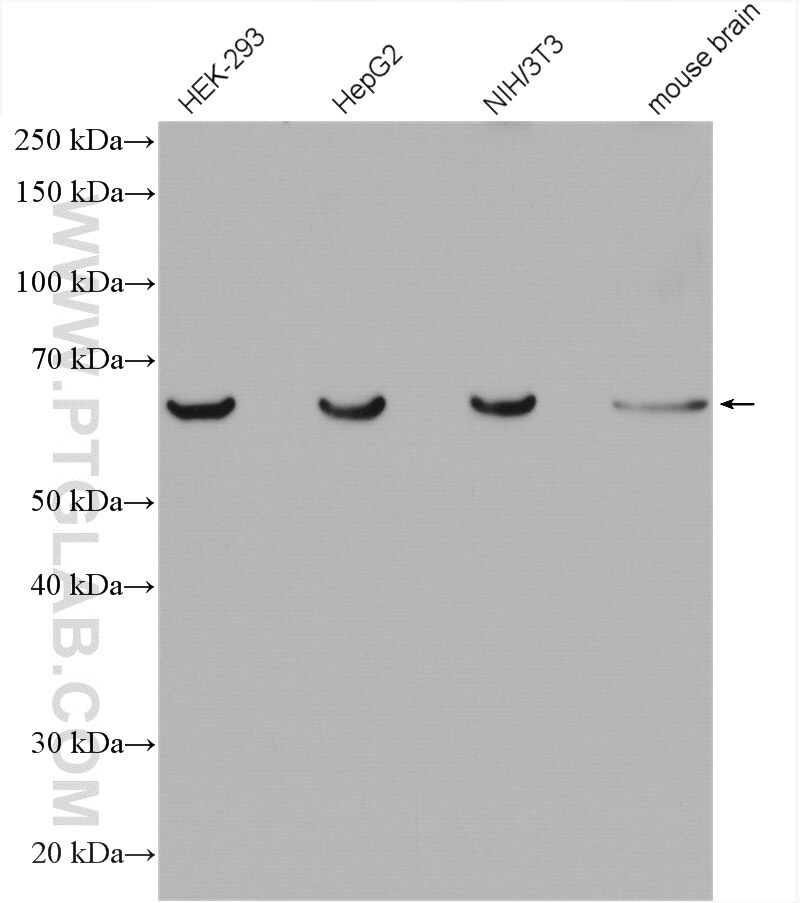
| Positive WB detected in | HEK-293 cells, HepG2 cells, NIH/3T3 cells, mouse brain tissue |
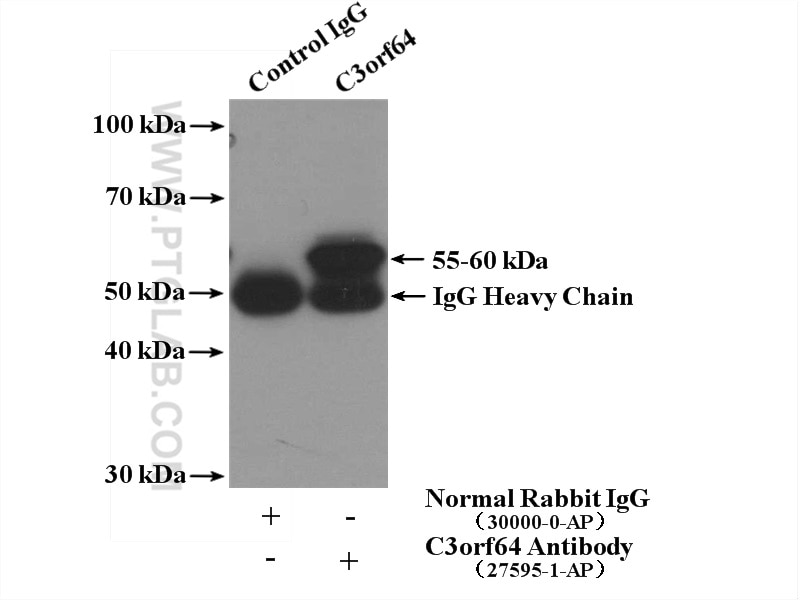
| Positive IP detected in | mouse brain tissue |
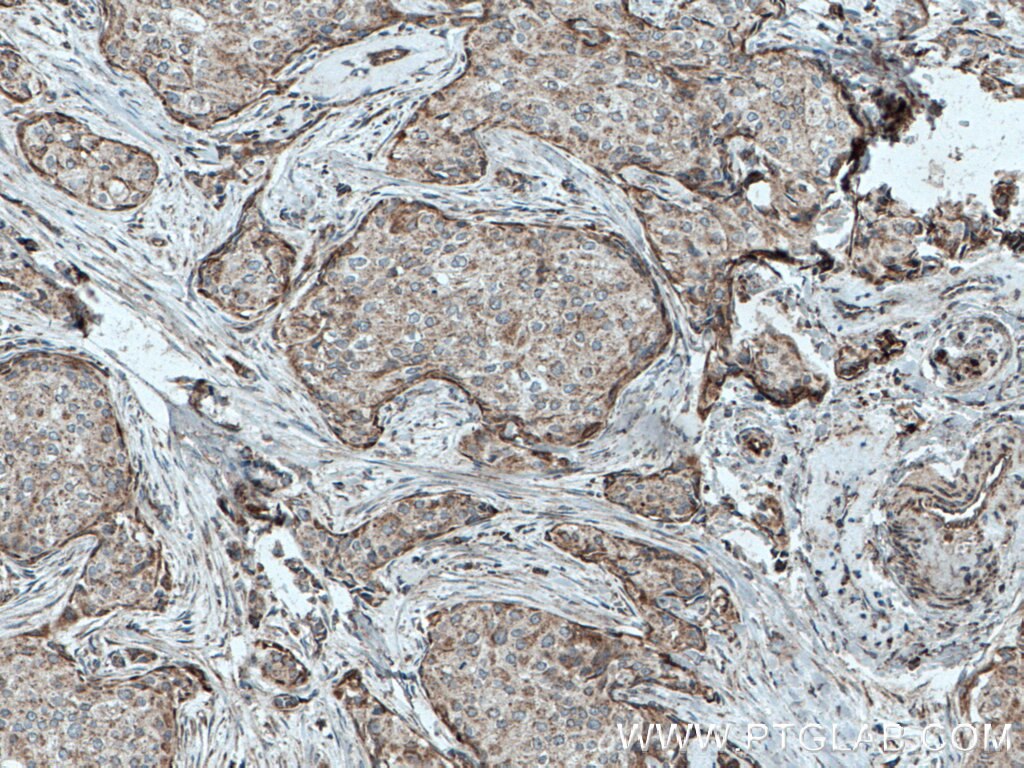
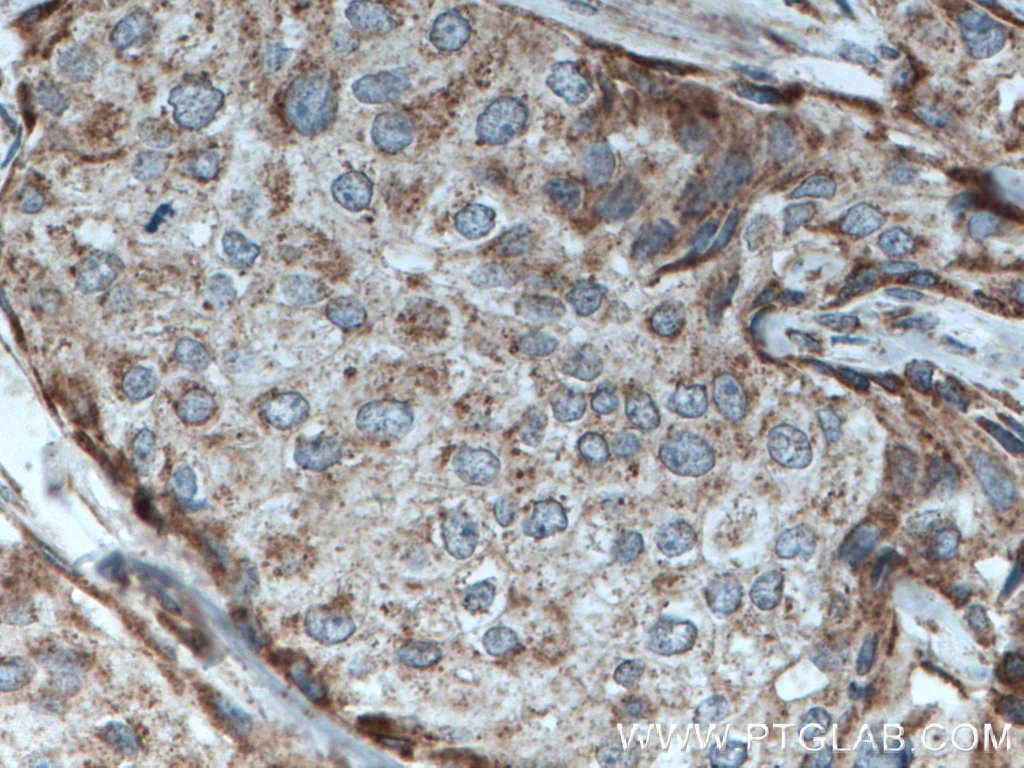
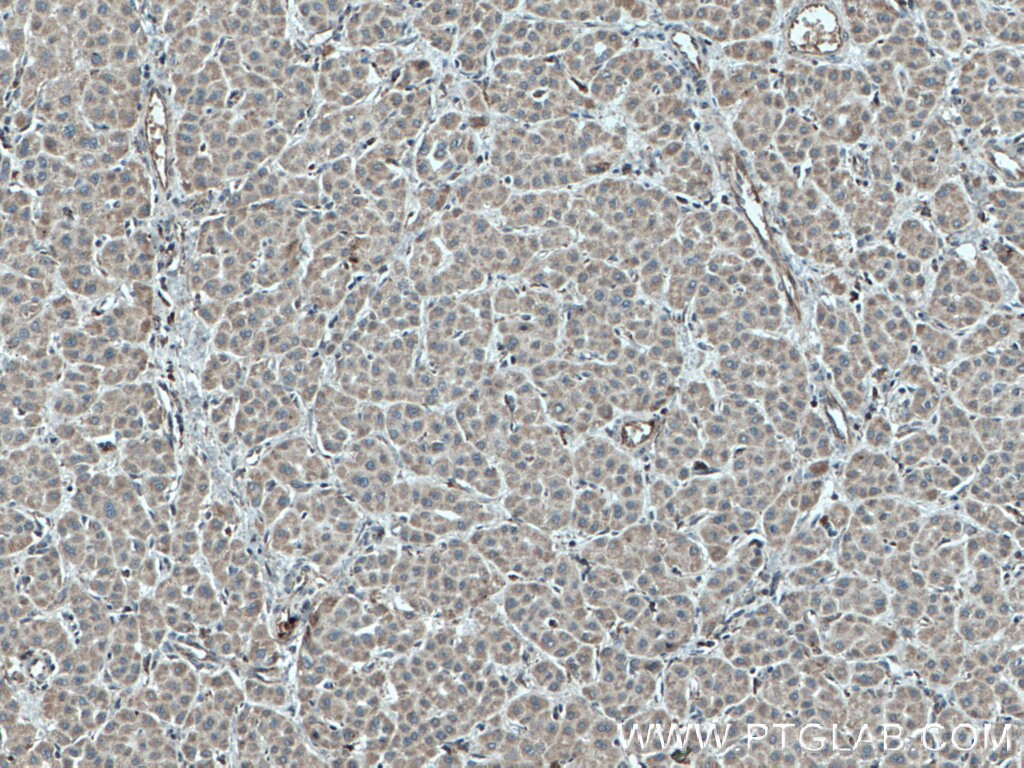
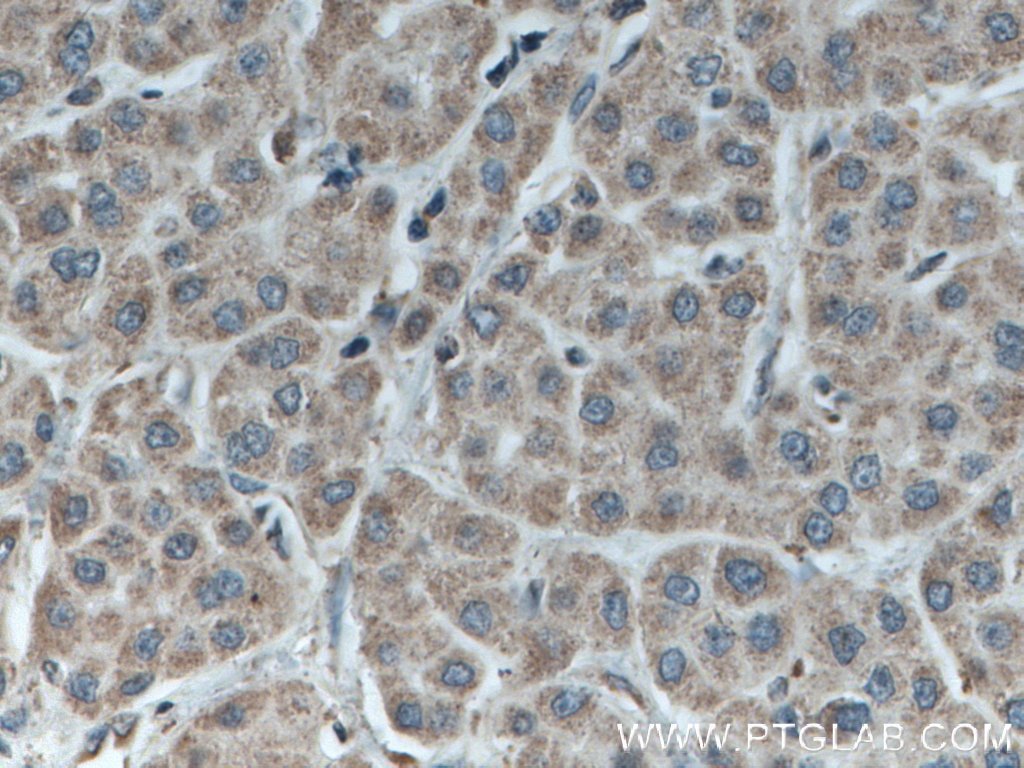
| Positive IHC detected in | human breast cancer tissue, human liver cancer tissue Note: suggested antigen retrieval with TE buffer pH 9.0; (*) Alternatively, antigen retrieval may be performed with citrate buffer pH 6.0 |
Recommended dilution
| Application | Dilution |
|---|---|
| Western Blot (WB) | WB : 1:500-1:3000 |
| Immunoprecipitation (IP) | IP : 0.5-4.0 ug for 1.0-3.0 mg of total protein lysate |
| Immunohistochemistry (IHC) | IHC : 1:50-1:500 |
| It is recommended that this reagent should be titrated in each testing system to obtain optimal results. | |
| Sample-dependent, Check data in validation data gallery. | |
Product Information
27595-1-AP targets EOGT in WB, IHC, IF, IP, ELISA applications and shows reactivity with human, mouse samples.
| Tested Reactivity | human, mouse |
| Cited Reactivity | human, mouse, rat |
| Host / Isotype | Rabbit / IgG |
| Class | Polyclonal |
| Type | Antibody |
| Immunogen |
CatNo: Ag25932 Product name: Recombinant human C3orf64 protein Source: e coli.-derived, PGEX-4T Tag: GST Domain: 18-274 aa of BC060887 Sequence: GQNEAPPNTHSIPGEPLYNYASIRLPEEHIPFFLHNNRHIATVCRKDSLCPYKKHLEKLKYCWGYEKSCKPEFRFGYPVCSYVDMGWTDTLESAEDIFWKQADFGYARERLEEMHVLCQPKETSDSSLVCSRYLQYCRATNLYLDLRNIKRNHDRFKEDFFQSGEIGGHCKLDIRTLTSEGQRKSPLQSWFAELQSYTQLNFRPIEDAKCDIVIEKPTYFMKLDAGVNMYHHFCDFINLYITQHVNNSFSTDVYIVM Predict reactive species |
| Full Name | chromosome 3 open reading frame 64 |
| Observed Molecular Weight | 60-62 kDa |
| GenBank Accession Number | BC060887 |
| Gene Symbol | C3orf64 |
| Gene ID (NCBI) | 285203 |
| RRID | AB_2880919 |
| Conjugate | Unconjugated |
| Form | Liquid |
| Purification Method | Antigen affinity purification |
| UNIPROT ID | Q5NDL2 |
| Storage Buffer | PBS with 0.02% sodium azide and 50% glycerol, pH 7.3. |
| Storage Conditions | Store at -20°C. Stable for one year after shipment. Aliquoting is unnecessary for -20oC storage. 20ul sizes contain 0.1% BSA. |
Background Information
EOGT (EGF Domain-Specific O-Linked N-Acetylglucosamine Transferase) is an endoplasmic reticulum-resident glycosyltransferase that catalyzes O-GlcNAc modification of serine/threonine residues in proteins containing EGF-like repeats, regulating protein folding, maturation, and secretion. EOGT-mediated O-GlcNAc modification is crucial for the functions of ligands and receptors in key developmental signaling pathways such as the Notch and Wnt signaling pathways, influencing cell fate determination, tissue development, and stem cell maintenance. Mutations in the EOGT gene cause congenital disorders of glycosylation, manifesting as neurodevelopmental abnormalities and skeletal malformations. Furthermore, in cell biology and developmental biology research, anti-EOGT antibodies are widely used for studying glycosylation mechanisms, Notch signaling pathway analysis, and exploring developmental disease models.
Protocols
| Product Specific Protocols | |
|---|---|
| IHC protocol for EOGT antibody 27595-1-AP | Download protocol |
| IP protocol for EOGT antibody 27595-1-AP | Download protocol |
| WB protocol for EOGT antibody 27595-1-AP | Download protocol |
| Standard Protocols | |
|---|---|
| Click here to view our Standard Protocols |
Publications
What published studies show
| Species | Application | Title |
|---|---|---|
Nat Commun Macrophage lineage cells-derived migrasomes activate complement-dependent blood-brain barrier damage in cerebral amyloid angiopathy mouse model | ||
J Extracell Vesicles Quantification of urinary podocyte-derived migrasomes for the diagnosis of kidney disease | ||
Adv Sci (Weinh) Bone Marrow Mesenchymal Stem Cell-Derived Dermcidin-Containing Migrasomes enhance LC3-Associated Phagocytosis of Pulmonary Macrophages and Protect against Post-Stroke Pneumonia | ||
Genomics SHCBP1 interacting with EOGT enhances O-GlcNAcylation of NOTCH1 and promotes the development of pancreatic cancer.
| ||
J Transl Med Hypoxic migrasomes drive colorectal cancer liver metastasis by mediating CD5L(+) macrophage efferocytosis via NRP2/PROX1 axis. | ||
Cartilage HSF1 Increases EOGT-Mediated Glycosylation of Notch1 to Promote IL-1β-Induced Inflammatory Injury of Chondrocytes
|







