
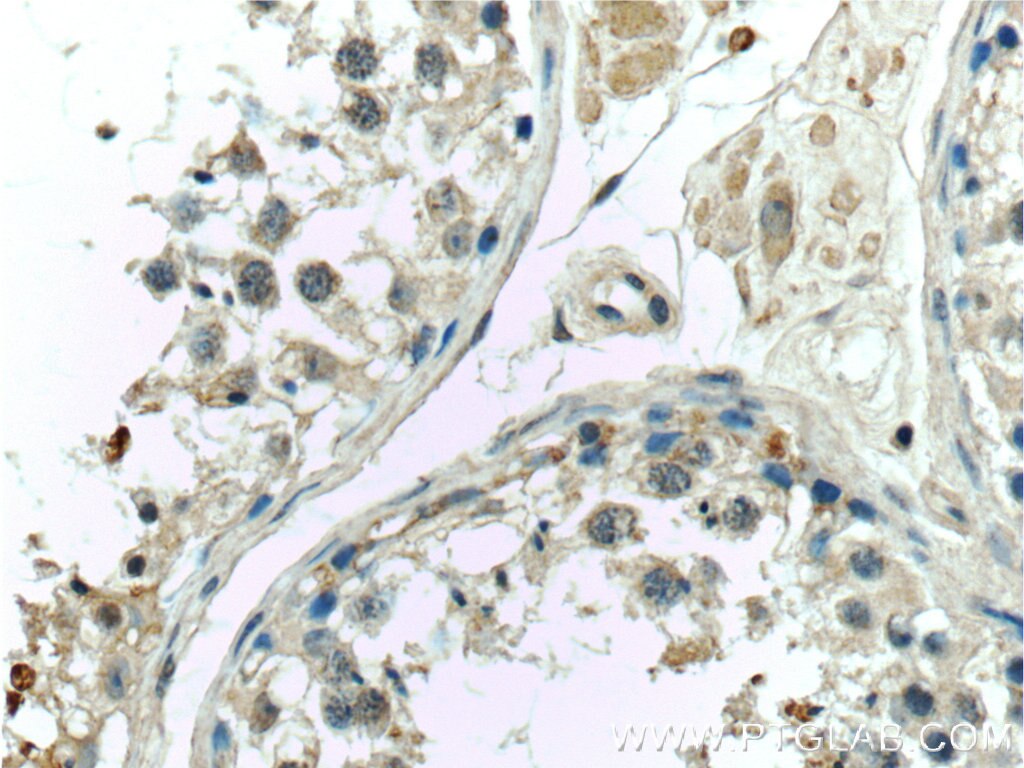

Tested Applications
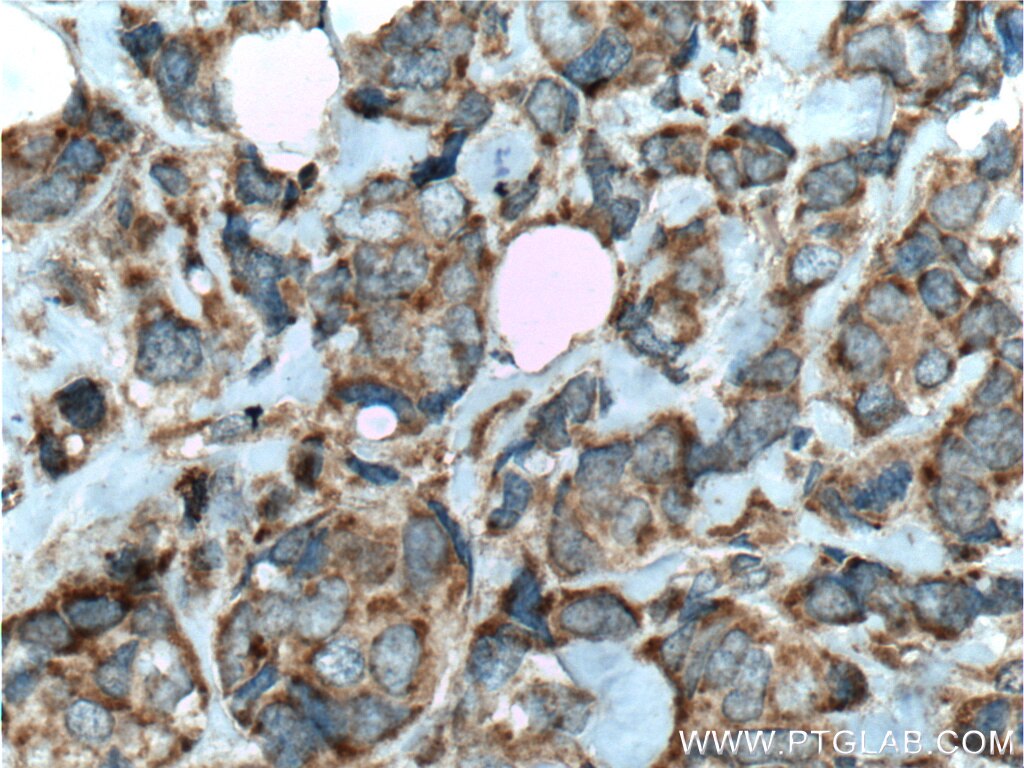
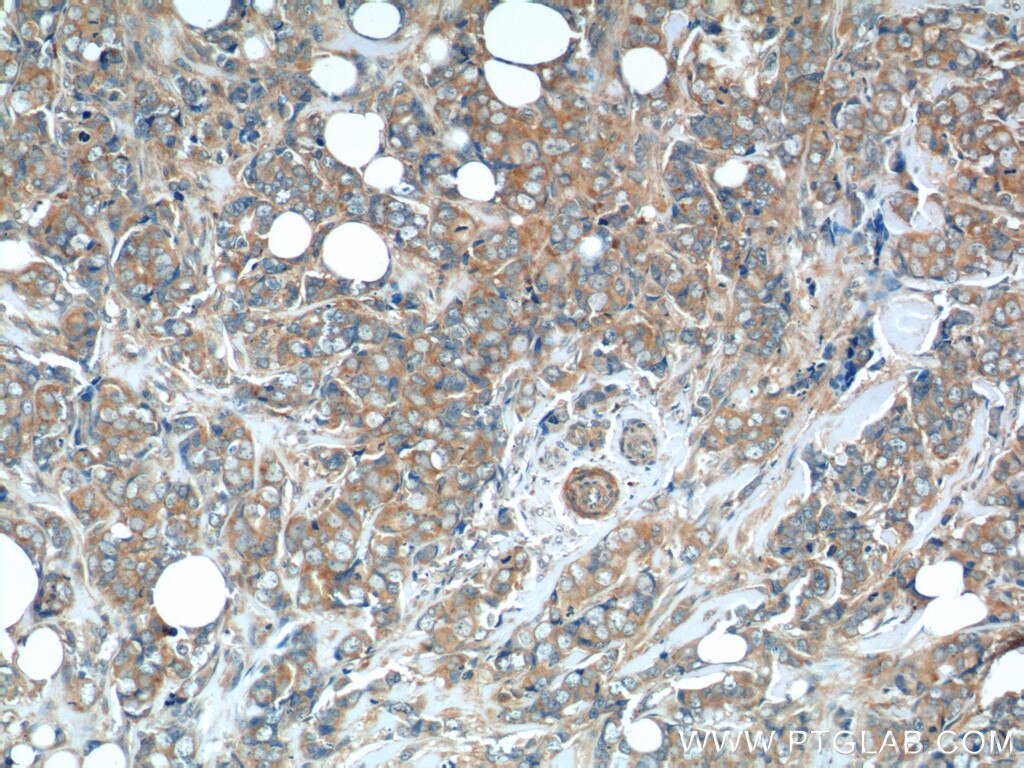
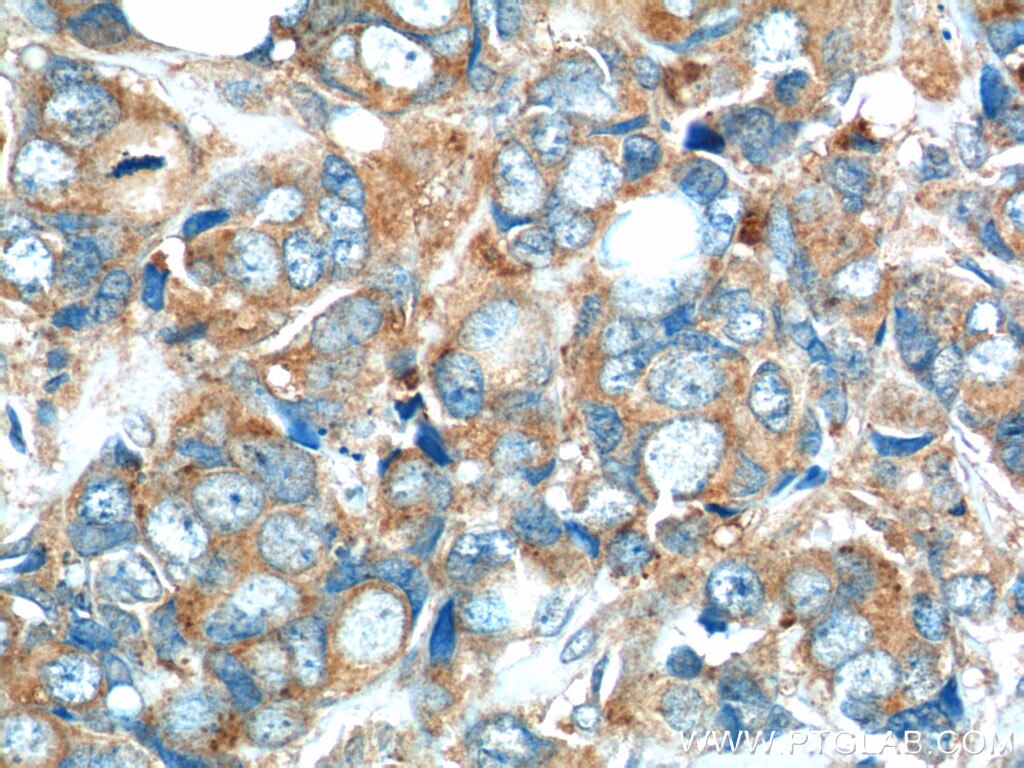
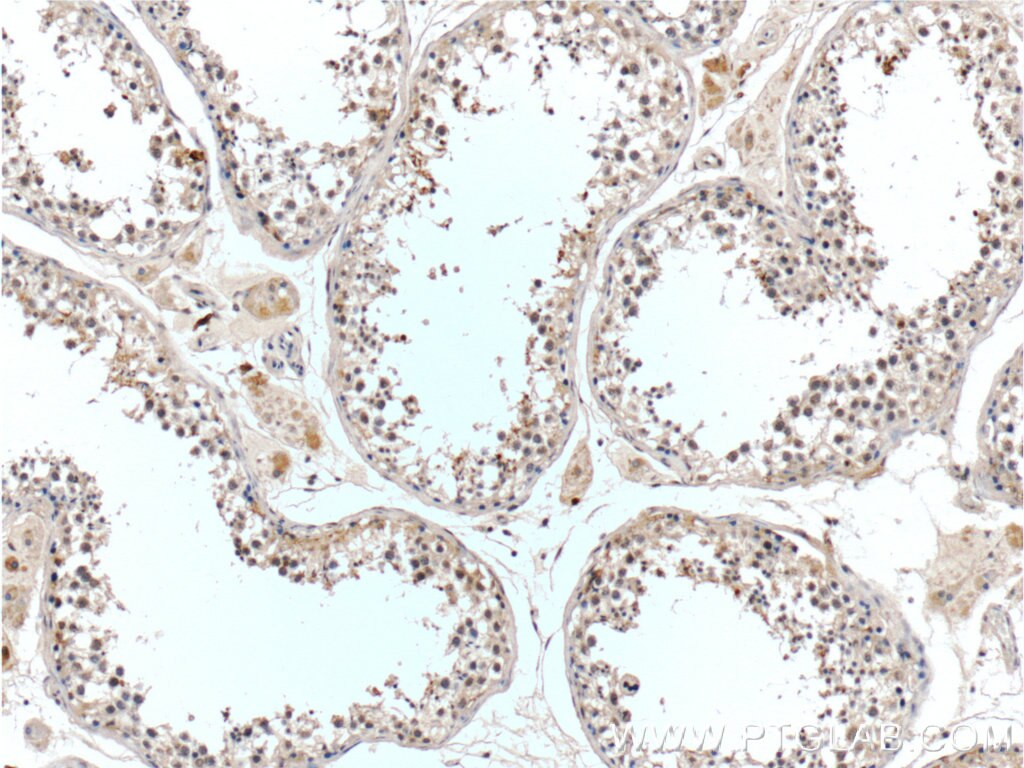
| Positive IHC detected in | human breast cancer tissue, human testis tissue Note: suggested antigen retrieval with TE buffer pH 9.0; (*) Alternatively, antigen retrieval may be performed with citrate buffer pH 6.0 |
Recommended dilution
| Application | Dilution |
|---|---|
| Immunohistochemistry (IHC) | IHC : 1:50-1:500 |
| It is recommended that this reagent should be titrated in each testing system to obtain optimal results. | |
| Sample-dependent, Check data in validation data gallery. | |
Product Information
24214-1-AP targets PPP1R35 in IHC, IF, ELISA applications and shows reactivity with human samples.
| Tested Reactivity | human |
| Cited Reactivity | human |
| Host / Isotype | Rabbit / IgG |
| Class | Polyclonal |
| Type | Antibody |
| Immunogen |
CatNo: Ag18340 Product name: Recombinant human C7orf47 protein Source: e coli.-derived, PET28a Tag: 6*His Domain: 7-253 aa of BC026269 Sequence: ESELKSADGEEAAAVPGPPPEPQVPQLRAPVPEPGLDLSLSPRPDSPQPRHGSPGRRKGRAERRGAARQRRQVRFRLTPPSPVRSEPQPAVPQELEMPVLKSSLALGLELRAAAGSHFDAAKAVEEQLRKSFQIRCGLEESVSEGLNVPRSKRLFRDLVSLQVPEEQVLNAALREKLALLPPQARAPHPKEPPGPGPDMTILCDPETLFYESPHLTLDGLPPLRLQLRPRPSEDTFLMHRTLRRWEA Predict reactive species |
| Full Name | chromosome 7 open reading frame 47 |
| Calculated Molecular Weight | 253 aa, 28 kDa |
| GenBank Accession Number | BC026269 |
| Gene Symbol | C7orf47 |
| Gene ID (NCBI) | 221908 |
| RRID | AB_2879460 |
| Conjugate | Unconjugated |
| Form | Liquid |
| Purification Method | Antigen Affinity purified |
| UNIPROT ID | Q8TAP8 |
| Storage Buffer | PBS with 0.02% sodium azide and 50% glycerol, pH 7.3. |
| Storage Conditions | Store at -20°C. Stable for one year after shipment. Aliquoting is unnecessary for -20oC storage. 20ul sizes contain 0.1% BSA. |
Protocols
| Product Specific Protocols | |
|---|---|
| IHC protocol for PPP1R35 antibody 24214-1-AP | Download protocol |
| Standard Protocols | |
|---|---|
| Click here to view our Standard Protocols |
Publications
What published studies show
The PPP1R35 Polyclonal antibody (Cat# 24214-1-AP) has 1 citation. It was published in eLife (2018), where the antibody was used for immunofluorescence in human samples. The study identified PPP1R35 as a novel centrosomal protein that regulates centriole length in concert with the microcephaly-associated protein RTTN, placing the research in the fields of cell biology, centrosome biology, and neurodevelopmental disorders.
| Species | Application | Title |
|---|---|---|
Elife PPP1R35 is a novel centrosomal protein that regulates centriole length in concert with the microcephaly protein RTTN. |
Reviews
What customers say
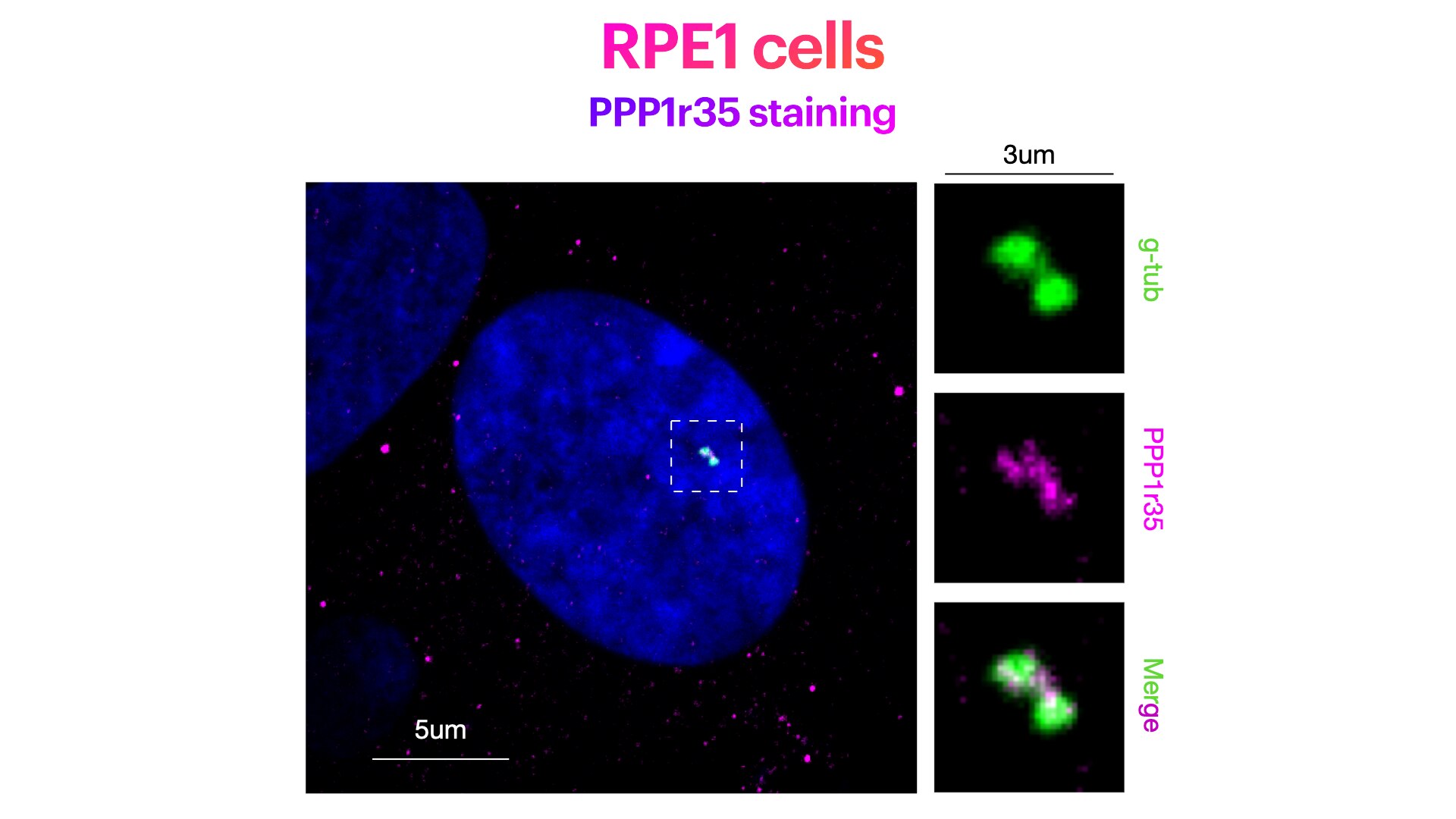
The single review rates the antibody 4/5 for immunofluorescence on human RPE-1 cells. The reviewer notes that centriolar staining is relatively weak in IF, though the antibody performs well for Western blotting. A detailed protocol was shared, including cold methanol fixation, Triton/Tween/SDS permeabilization, 5% BSA blocking, and a 1:300 primary antibody dilution at room temperature, with an Alexa-488 secondary at 1:600. Overall, the antibody is considered functional but may require optimization for robust IF signal.
The reviews below have been submitted by verified Proteintech customers who received an incentive for providing their feedback.
Elisa (Verified Customer) (04-24-2023) | Weak centriolar staining. While this antibody works well for Westernblotting, the expected centriolar staining in IF is rather weak. Yet, this antibody works under the following conditions: RPE1 cells stained for Hoechst (DNA marker, in green), PPP1r35 (centriolar marker, in magenta) and g-Tubulin (pericentriolar matrix marker, in green). RPE1 cells were fixed in cold methanol for 10' at -20C. Cells were then rehydrated with PBS for 5'. Membrane permeabilization was then performed with 0.1% Triton + 0.1% Tween +0.01%SDS in PBS for 5'. Cells were finally incubated with blocking buffer (5% BSA+ 0.1% Tween in PBS) for 30' at RT. Primary antibody was diluted in blocking buffer 1:300 and incubated for 1h at room temperature. Alexa-488-Anti-rabbit was used as secondary antibody (1:600 dilution) (1h at room temperature).
 |






