

Tested Applications
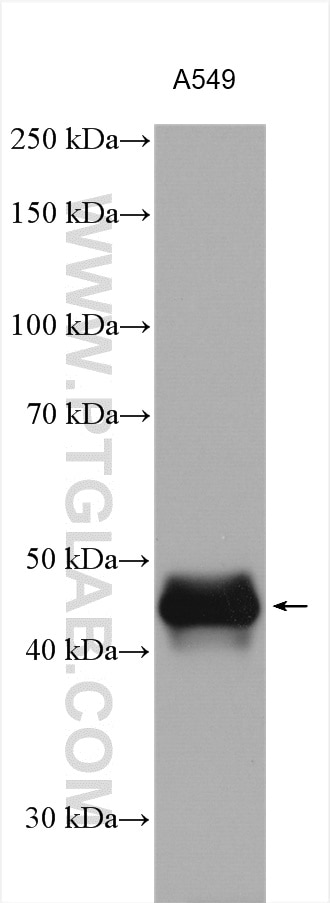
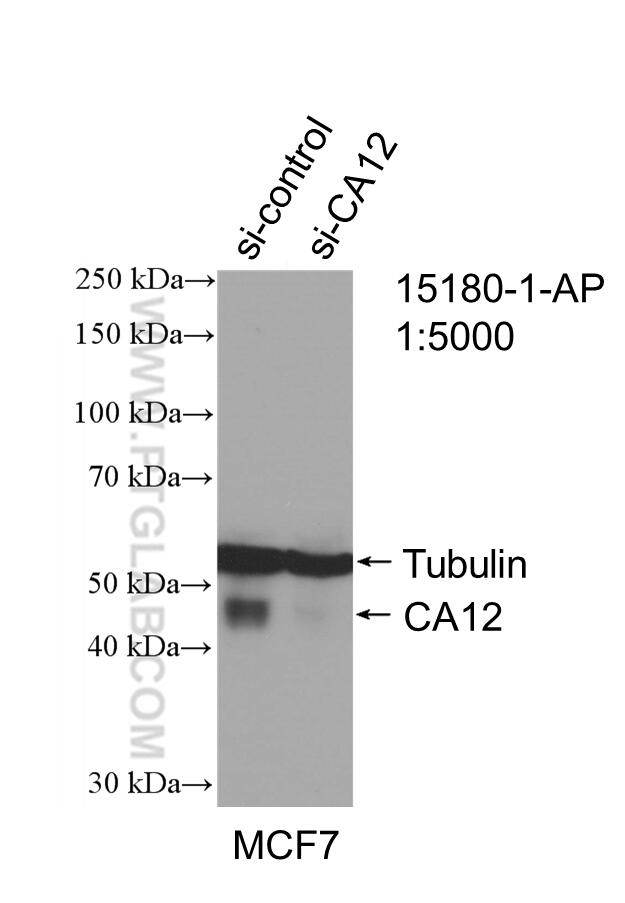
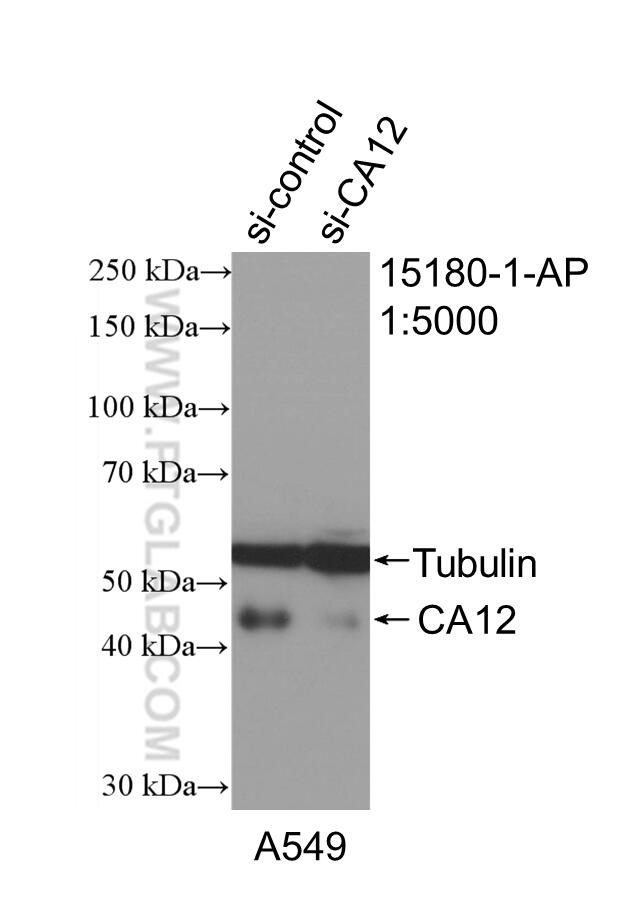
| Positive WB detected in | A549 cells, MCF-7 cells |
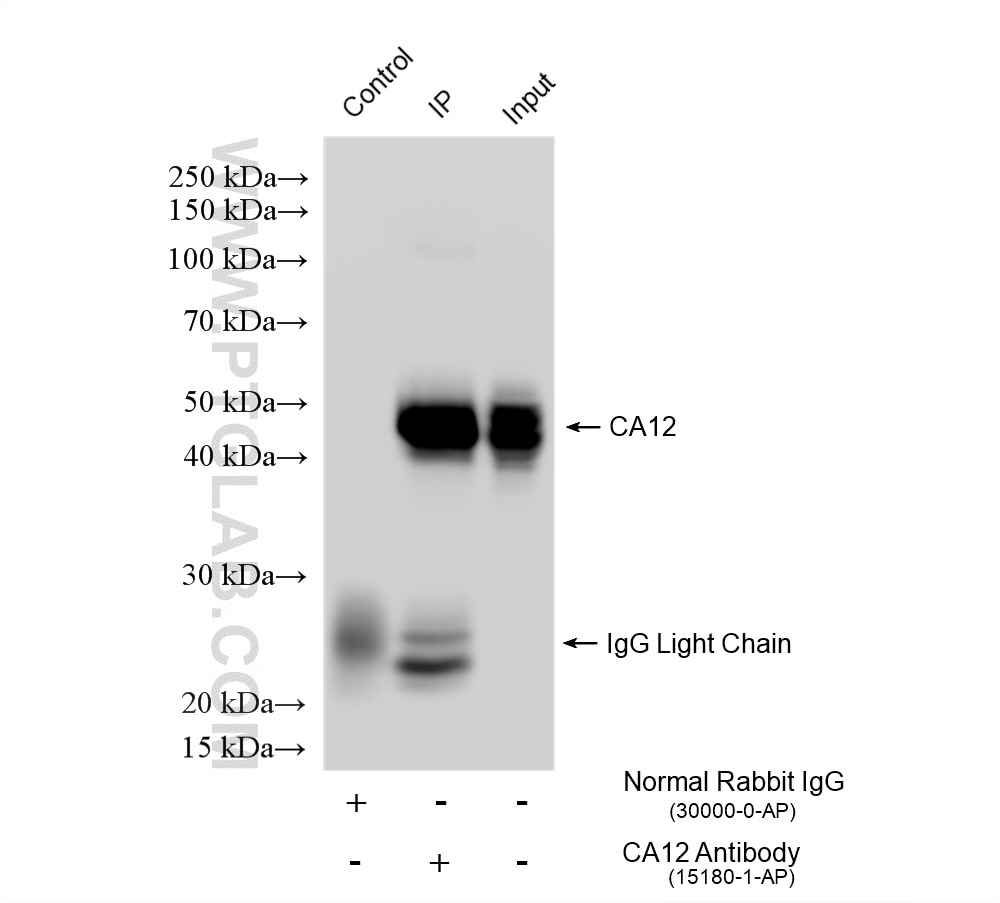
| Positive IP detected in | A549 cells |
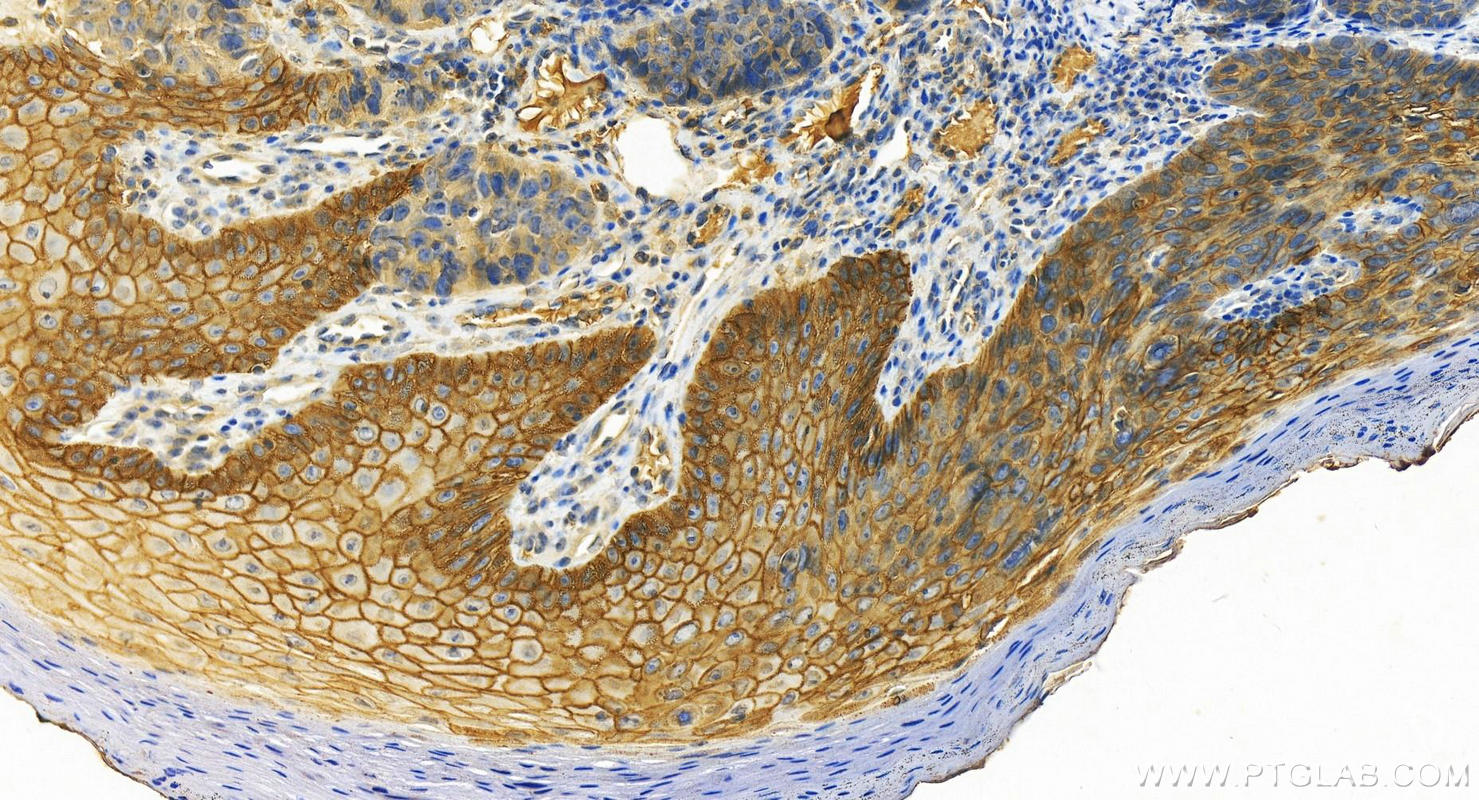
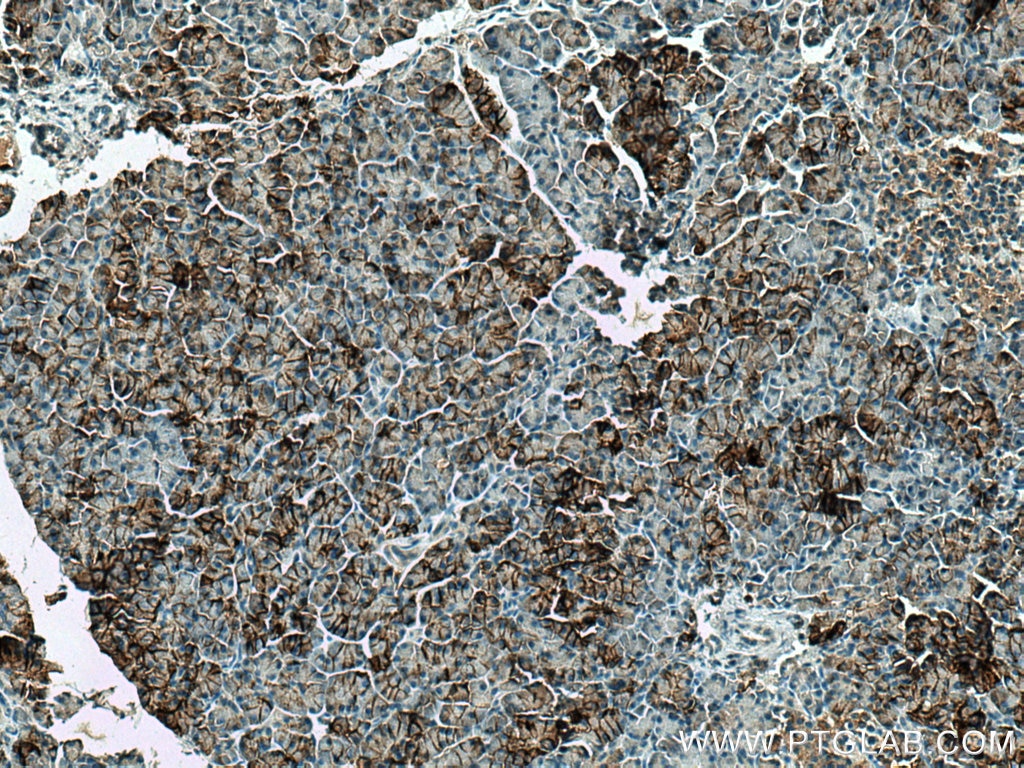
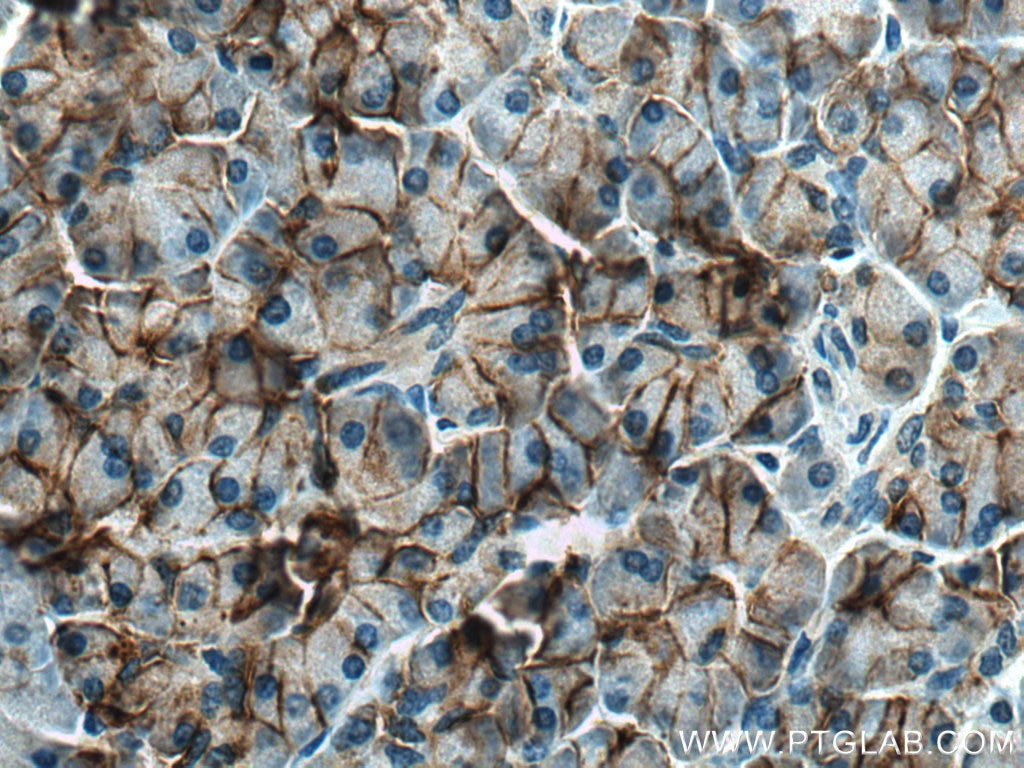
| Positive IHC detected in | human brown disease, human pancreas tissue Note: suggested antigen retrieval with TE buffer pH 9.0; (*) Alternatively, antigen retrieval may be performed with citrate buffer pH 6.0 |
Recommended dilution
| Application | Dilution |
|---|---|
| Western Blot (WB) | WB : 1:2000-1:10000 |
| Immunoprecipitation (IP) | IP : 0.5-4.0 ug for 1.0-3.0 mg of total protein lysate |
| Immunohistochemistry (IHC) | IHC : 1:500-1:2000 |
| It is recommended that this reagent should be titrated in each testing system to obtain optimal results. | |
| Sample-dependent, Check data in validation data gallery. | |
Product Information
15180-1-AP targets CA12 in WB, IHC, IF, IP, ELISA applications and shows reactivity with human, mouse, rat samples.
| Tested Reactivity | human, mouse, rat |
| Cited Reactivity | human, mouse, rat |
| Host / Isotype | Rabbit / IgG |
| Class | Polyclonal |
| Type | Antibody |
| Immunogen |
CatNo: Ag7107 Product name: Recombinant human CA12 protein Source: e coli.-derived, PGEX-4T Tag: GST Domain: 27-293 aa of BC000278 Sequence: VNGSKWTYFGPDGENSWSKKYPSCGGLLQSPIDLHSDILQYDASLTPLEFQGYNLSANKQFLLTNNGHSVKLNLPSDMHIQGLQSRYSATQLHLHWGNPNDPHGSEHTVSGQHFAAELHIVHYNSDLYPDASTASNKSEGLAVLAVLIEMGSFNPSYDKIFSHLQHVKYKGQEAFVPGFNIEELLPERTAEYYRYRGSLTTPPCNPTVLWTVFRNPVQISQEQLLALETALYCTHMDDPSPREMINNFRQVQKFDERLVYTSFSQGI Predict reactive species |
| Full Name | carbonic anhydrase XII |
| Calculated Molecular Weight | 39 kDa |
| Observed Molecular Weight | 44 kDa, 75-80 kDa |
| GenBank Accession Number | BC000278 |
| Gene Symbol | CA12 |
| Gene ID (NCBI) | 771 |
| RRID | AB_2065826 |
| Conjugate | Unconjugated |
| Form | Liquid |
| Purification Method | Antigen affinity purification |
| UNIPROT ID | O43570 |
| Storage Buffer | PBS with 0.02% sodium azide and 50% glycerol, pH 7.3. |
| Storage Conditions | Store at -20°C. Stable for one year after shipment. Aliquoting is unnecessary for -20oC storage. 20ul sizes contain 0.1% BSA. |
Background Information
CA12 belongs to the alpha-carbonic anhydrase family. It reverses the hydration of carbon dioxide. Overexpression of the zinc enzyme CA12 is observed in certain human cancers. The structure reveals a prototypical CA fold; however, two CA12 domains associate to form an isologous dimer, an observation that is confirmed by studies of the enzyme in solution.
Protocols
| Product Specific Protocols | |
|---|---|
| IHC protocol for CA12 antibody 15180-1-AP | Download protocol |
| IP protocol for CA12 antibody 15180-1-AP | Download protocol |
| WB protocol for CA12 antibody 15180-1-AP | Download protocol |
| Standard Protocols | |
|---|---|
| Click here to view our Standard Protocols |
Publications
What published studies show
The CA12 Polyclonal antibody (Cat# 15180-1-AP) has 22 citations across 19 journals including Cell Stem Cell, Advanced Science, Journal of Experimental Medicine, Journal of Physiology, Molecular Oncology, Human Molecular Genetics, Frontiers in Oncology, and others. Research fields span cancer biology (breast, pancreatic, lung, colon, neuroblastoma, multiple myeloma), intervertebral disc degeneration, bicarbonate transport and ion channel biology, cardiotoxicity, wound repair, and hypoxia responses.
| Species | Application | Title |
|---|---|---|
Cell Stem Cell CRISPRi/a screens in human iPSC-cardiomyocytes identify glycolytic activation as a druggable target for doxorubicin-induced cardiotoxicity | ||
J Nanobiotechnology Degenerated nucleus pulposus cells derived exosome carrying miR-27a-3p aggravates intervertebral disc degeneration by inducing M1 polarization of macrophages | ||
Adv Sci (Weinh) Estrogen-Induced LncRNA, LINC02568, Promotes Estrogen Receptor-Positive Breast Cancer Development and Drug Resistance Through Both In Trans and In Cis Mechanisms | ||
Adv Sci (Weinh) Preserving the Immune-Privileged Niche of the Nucleus Pulposus: Safeguarding Intervertebral Discs from Degeneration after Discectomy with Synthetic Mucin Hydrogel Injection | ||
J Ethnopharmacol Matrine injection inhibits pancreatic cancer growth via modulating carbonic anhydrases- a network pharmacology-based study with in vitro validation. |








