

Tested Applications
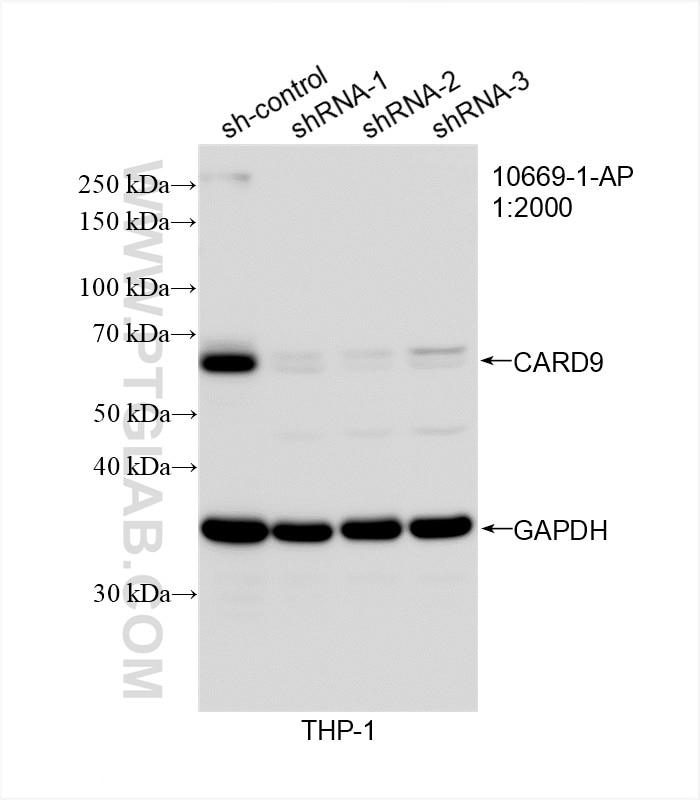
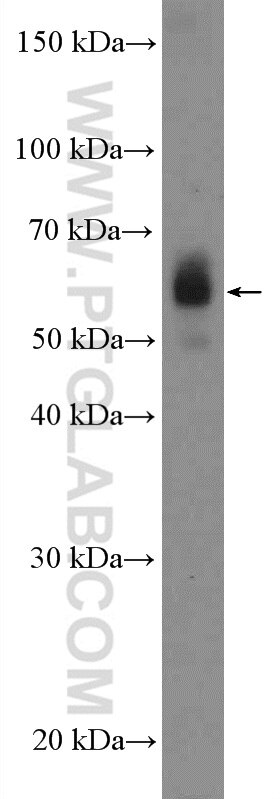
| Positive WB detected in | HL-60 cells, THP-1 cells |
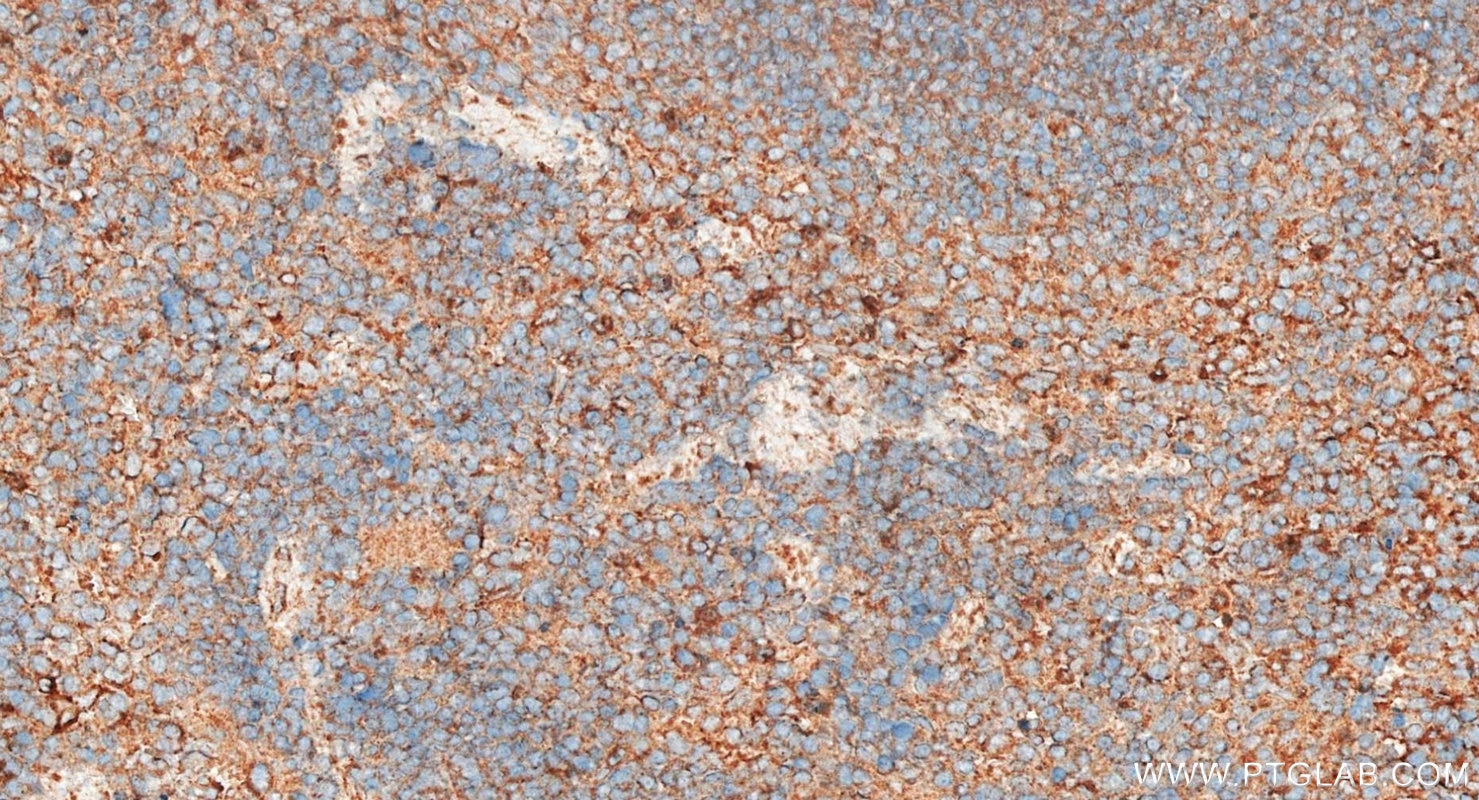
| Positive IHC detected in | mouse spleen tissue Note: suggested antigen retrieval with TE buffer pH 9.0; (*) Alternatively, antigen retrieval may be performed with citrate buffer pH 6.0 |
Recommended dilution
| Application | Dilution |
|---|---|
| Western Blot (WB) | WB : 1:500-1:3000 |
| Immunohistochemistry (IHC) | IHC : 1:50-1:500 |
| It is recommended that this reagent should be titrated in each testing system to obtain optimal results. | |
| Sample-dependent, Check data in validation data gallery. | |
Product Information
10669-1-AP targets CARD9 in WB, IHC, IP, ELISA applications and shows reactivity with human, mouse, rat samples.
| Tested Reactivity | human, mouse, rat |
| Cited Reactivity | human, mouse, rat |
| Host / Isotype | Rabbit / IgG |
| Class | Polyclonal |
| Type | Antibody |
| Immunogen |
CatNo: Ag1057 Product name: Recombinant human CARD9 protein Source: e coli.-derived, PGEX-4T Tag: GST Domain: 193-492 aa of BC008877 Sequence: SEEKGAALMRNRDLQLEIDQLKHSLMKAEDDCKVERKHTLKLRHAMEQRPSQELLWELQQEKALLQARVQELEASVQEGKLDRSSPYIQVLEEDWRQALRDHQEQANTIFSLRKDLRQGEARRLRCMEEKEMFELQCLALRKDSKMYKDRIEAILLQMEEVAIERDQAIATREELHAQHARGLQEKDALRKQVRELGEKADELQLQVFQCEAQLLAVEGRLRRQQLETLVLSSDLEDGSPRRSQELSLPQDLEDTQLSDKGCLAGGGSPKQPFAALHQEQVLRNPHDAGPAGLPGIGAVC Predict reactive species |
| Full Name | caspase recruitment domain family, member 9 |
| Calculated Molecular Weight | 62 kDa |
| Observed Molecular Weight | 55-62 kDa |
| GenBank Accession Number | BC008877 |
| Gene Symbol | CARD9 |
| Gene ID (NCBI) | 64170 |
| RRID | AB_2228323 |
| Conjugate | Unconjugated |
| Form | Liquid |
| Purification Method | Antigen affinity purification |
| UNIPROT ID | Q9H257 |
| Storage Buffer | PBS with 0.02% sodium azide and 50% glycerol, pH 7.3. |
| Storage Conditions | Store at -20°C. Stable for one year after shipment. Aliquoting is unnecessary for -20oC storage. 20ul sizes contain 0.1% BSA. |
Background Information
CARD9, a member of the caspase recruitment domain (CARD) protein family, plays an important regulatory role in cell apoptosis. Defects in CARD9 are the cause of familial candidiasis type 2 (CANDF2) characterized by impaired clearance of fungal infections and results in colonization and infections of the mucosa or skin, predominantly with Candida albicans. CARD9 is highly expressed in spleen and regulate activation of NF-kappa-B by interaction with postive regulator of apoptosis BCL10 via the CARD domain.
Protocols
| Product Specific Protocols | |
|---|---|
| IHC protocol for CARD9 antibody 10669-1-AP | Download protocol |
| WB protocol for CARD9 antibody 10669-1-AP | Download protocol |
| Standard Protocols | |
|---|---|
| Click here to view our Standard Protocols |
Publications
What published studies show
The CARD9 Polyclonal antibody (Cat# 10669-1-AP) has 12 citations published in journals including Blood, Phytomedicine, Frontiers in Immunology, JCI Insight, PLoS Pathogens, Journal of Cellular and Molecular Medicine, Translational Stroke Research, Journal of Clinical Immunology, and Plastic and Reconstructive Surgery. Research fields span CARD9 deficiency-related fungal infections, neuroinflammation and stroke via Dectin-1/TREM1 pathways, ovarian cancer progression through NF-κB activation, and cerebral ischemia-reperfusion injury.
| Species | Application | Title |
|---|---|---|
Blood Invasive fungal infection and impaired neutrophil killing in human CARD9 deficiency. | ||
Phytomedicine Rhubarb ameliorates ischemic stroke-induced tryptophan-kynurenine metabolic reprogramming and neuroinflammation via modulation of the IDO-1/TREM-1 pathway. | ||
Phytomedicine Jasminoidin and ursodeoxycholic acid exert synergistic effect against cerebral ischemia-reperfusion injury via Dectin-1-induced NF-κB activation pathway | ||
Front Immunol TREM1 Regulates Neuroinflammatory Injury by Modulate Proinflammatory Subtype Transition of Microglia and Formation of Neutrophil Extracellular Traps via Interaction With SYK in Experimental Subarachnoid Hemorrhage. | ||
PLoS Pathog CARD9-Dependent Neutrophil Recruitment Protects against Fungal Invasion of the Central Nervous System. |




