

Tested Applications
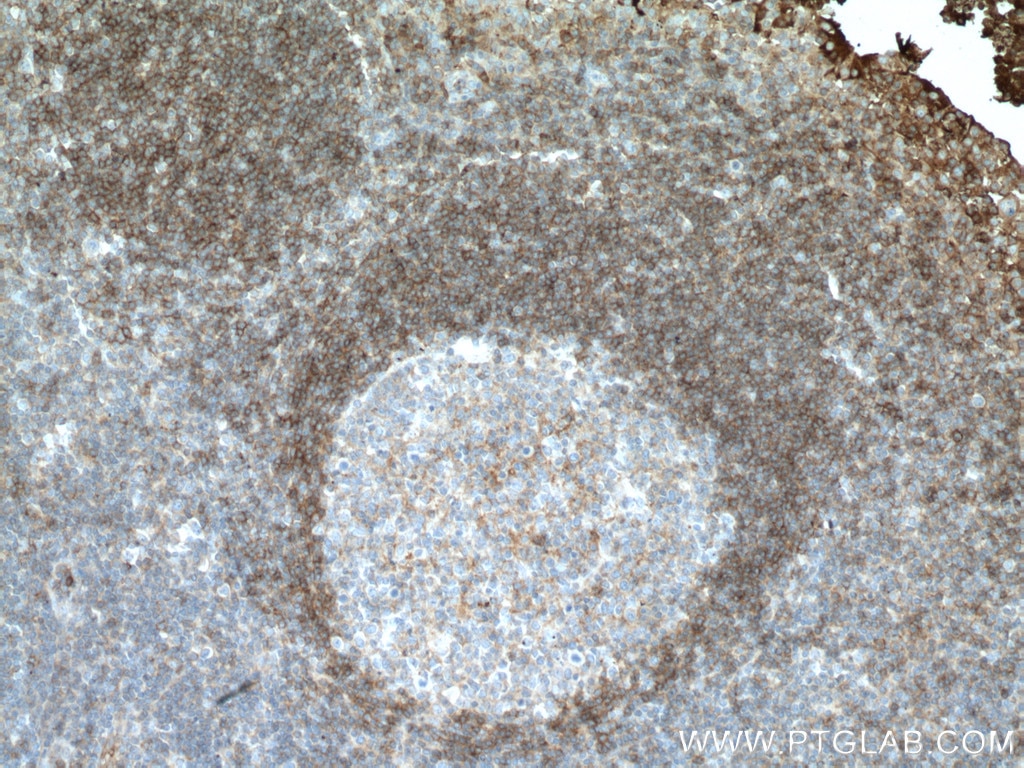
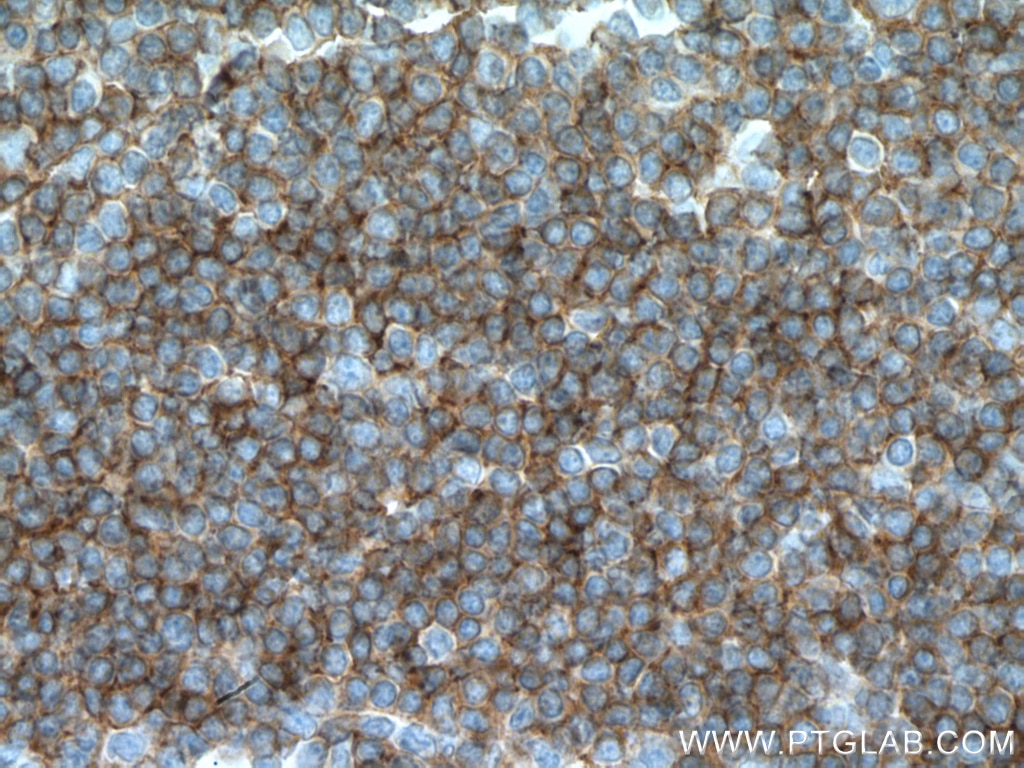
| Positive IHC detected in | human tonsillitis tissue Note: suggested antigen retrieval with TE buffer pH 9.0; (*) Alternatively, antigen retrieval may be performed with citrate buffer pH 6.0 |
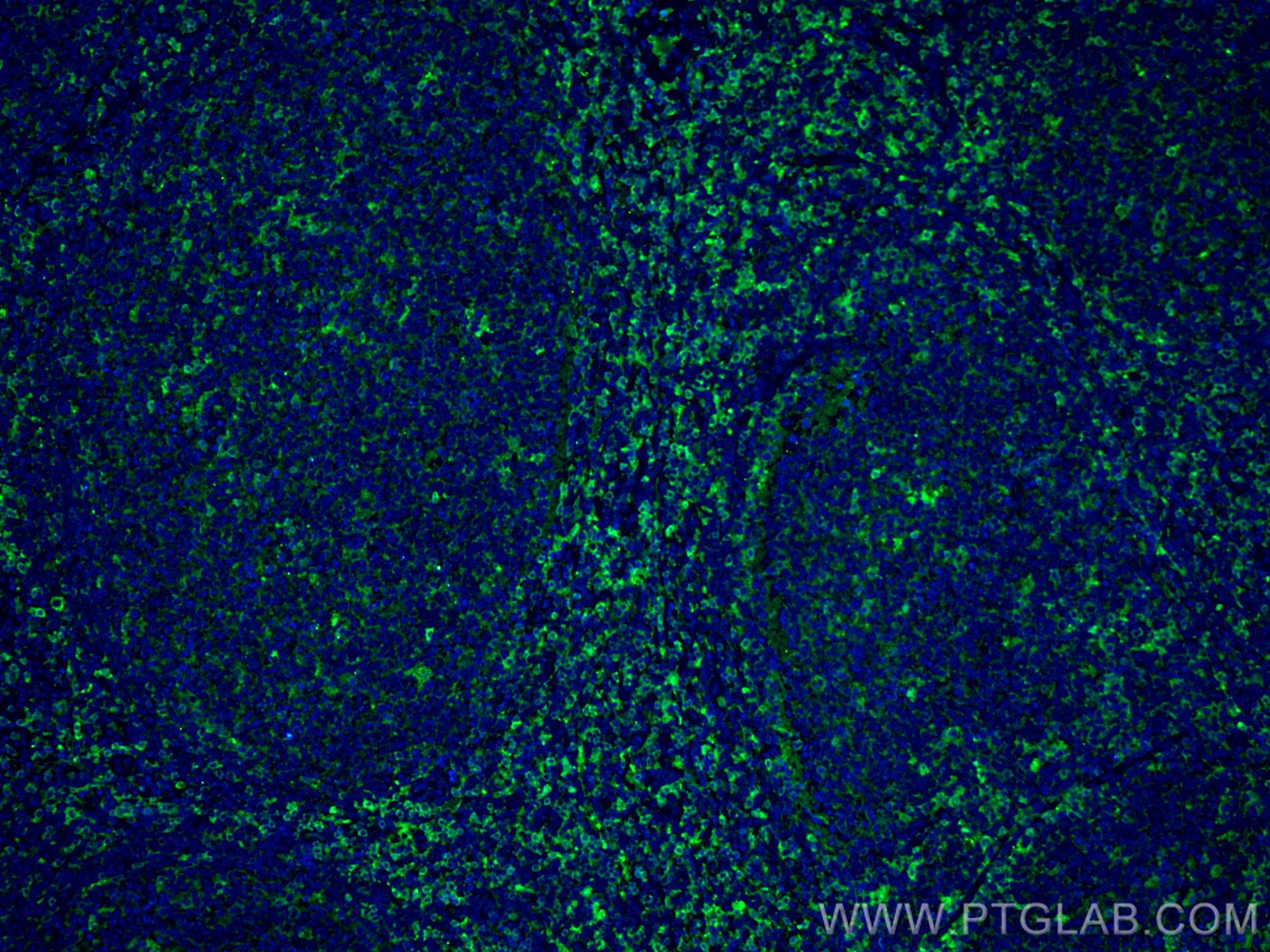
| Positive IF-P detected in | human tonsillitis tissue |
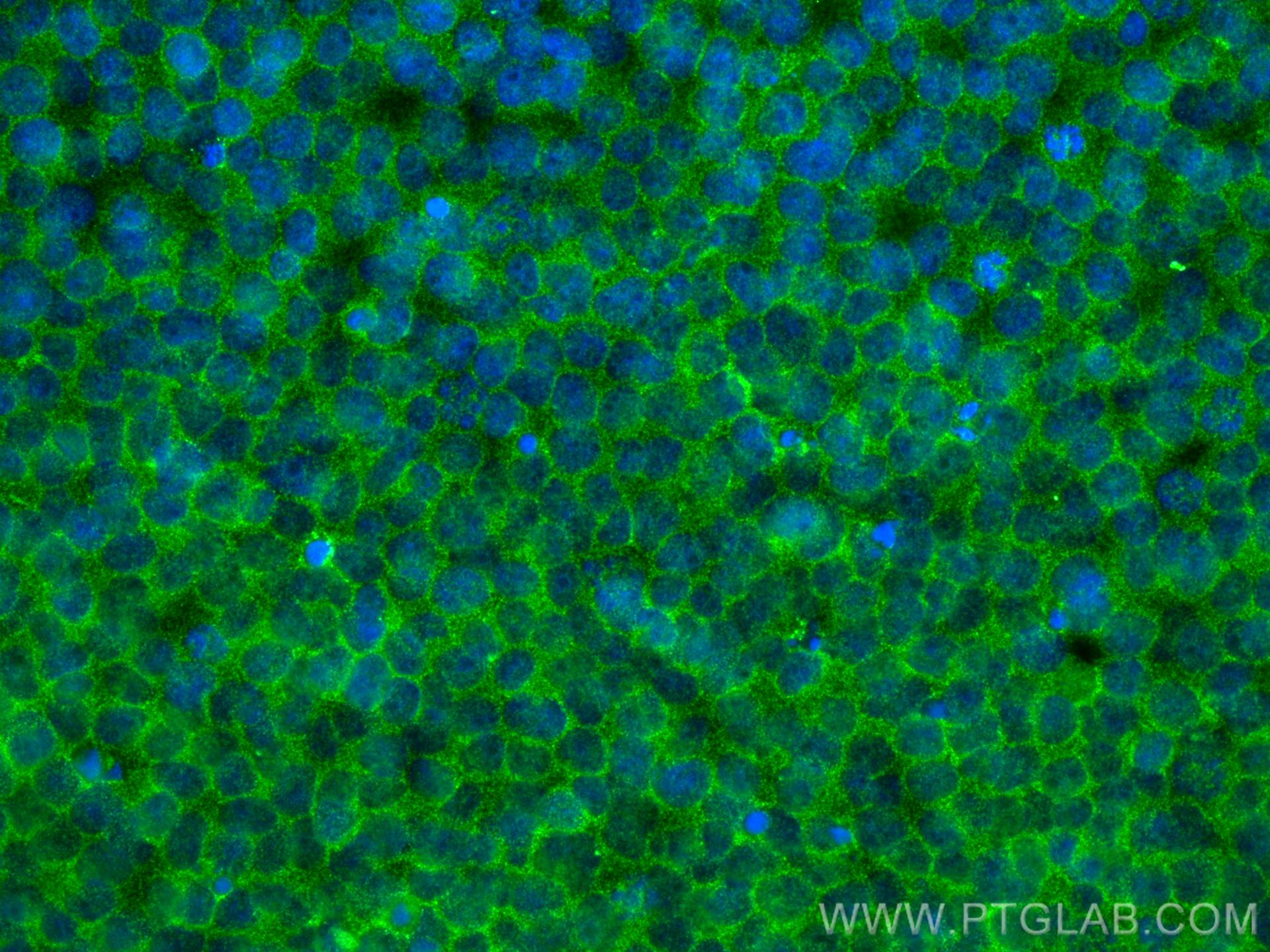
| Positive IF/ICC detected in | Jurkat cells |
Recommended dilution
| Application | Dilution |
|---|---|
| Immunohistochemistry (IHC) | IHC : 1:250-1:1000 |
| Immunofluorescence (IF)-P | IF-P : 1:400-1:1600 |
| Immunofluorescence (IF)/ICC | IF/ICC : 1:400-1:1600 |
| It is recommended that this reagent should be titrated in each testing system to obtain optimal results. | |
| Sample-dependent, Check data in validation data gallery. | |
Product Information
66801-1-Ig targets CCR6 in WB, IHC, IF/ICC, IF-P, ELISA applications and shows reactivity with human samples.
| Tested Reactivity | human |
| Cited Reactivity | human, mouse |
| Host / Isotype | Mouse / IgG2a |
| Class | Monoclonal |
| Type | Antibody |
| Immunogen |
CatNo: Ag24195 Product name: Recombinant human CCR6 protein Source: e coli.-derived, PET28a Tag: 6*His Domain: 1-47 aa of BC037960 Sequence: MSGESMNFSDVFDSSEDYFVSVNTSYYSVDSEMLLCSLQEVRQFSRL Predict reactive species |
| Full Name | chemokine (C-C motif) receptor 6 |
| Calculated Molecular Weight | 42 kDa |
| GenBank Accession Number | BC037960 |
| Gene Symbol | CCR6 |
| Gene ID (NCBI) | 1235 |
| RRID | AB_2882144 |
| Conjugate | Unconjugated |
| Form | Liquid |
| Purification Method | Protein A purification |
| UNIPROT ID | P51684 |
| Storage Buffer | PBS with 0.02% sodium azide and 50% glycerol, pH 7.3. |
| Storage Conditions | Store at -20°C. Stable for one year after shipment. Aliquoting is unnecessary for -20oC storage. 20ul sizes contain 0.1% BSA. |
Background Information
CCR6, also known as CD196, is a C-C chemokine receptor that belongs to family A of G protein-coupled receptor superfamily. It is expressed in most B cells, memory T cells, and some subsets of dendritic cells (PMID: 17057190). CCR6 is a receptor for the C-C type chemokine CCL20 (PMID: 9169459). The ligand-receptor pair CCL20-CCR6 is responsible for the chemoattraction of immature dendritic cells, effector/memory T-cells, and B-cells and plays a role in skin and mucosal surfaces under homeostatic and inflammatory conditions, as well as in pathology, including cancer and rheumatoid arthritis (PMID: 12948524). CCR6 polymorphism has been associated with rheumatoid arthritis susceptibility and CCR6 is involved in IL-17-driven autoimmunity in human diseases (PMID: 20453841).
Protocols
| Product Specific Protocols | |
|---|---|
| IF protocol for CCR6 antibody 66801-1-Ig | Download protocol |
| IHC protocol for CCR6 antibody 66801-1-Ig | Download protocol |
| Standard Protocols | |
|---|---|
| Click here to view our Standard Protocols |
Publications
What published studies show
CCR6 Monoclonal antibody (1C11A9), catalog number 66801-1-Ig, has 6 citations published in Metabolism, Cell Death & Disease, Communications Biology, Neoplasia, Clinical Immunology, and Journal of Immunology Research. The research spans immunology, oncology, and metabolic disease, covering colorectal cancer, oral squamous cell carcinoma, prostate cancer, rheumatoid arthritis, epidermolytic ichthyosis, and metabolic dysfunction-associated steatohepatitis.
| Species | Application | Title |
|---|---|---|
Metabolism The chemokine CCL20 promotes hepatocyte cholesterol deposition during metabolic dysfunction-associated steatohepatitis by regulating OLR1 expression | ||
Cell Death Dis RANKL/RANK signaling recruits Tregs via the CCL20-CCR6 pathway and promotes stemness and metastasis in colorectal cancer | ||
Commun Biol Porphyromonas gingivalis promotes the malignant phenotype of oral squamous cell carcinoma through the recruitment of Treg cells. | ||
Neoplasia Gut microbiota-derived short-chain fatty acids promote prostate cancer progression via inducing cancer cell autophagy and M2 macrophage polarization | ||
Clin Immunol Exploring TH17-mediated inflammation in epidermolytic ichthyosis: Clinical and mechanistic insight | ||
J Immunol Res Cyclodextrin Inhibits Caveolin-1 to Regulate CD4(+) T Cell Subset Differentiation and Ameliorate Rheumatoid Arthritis Progression. |





