
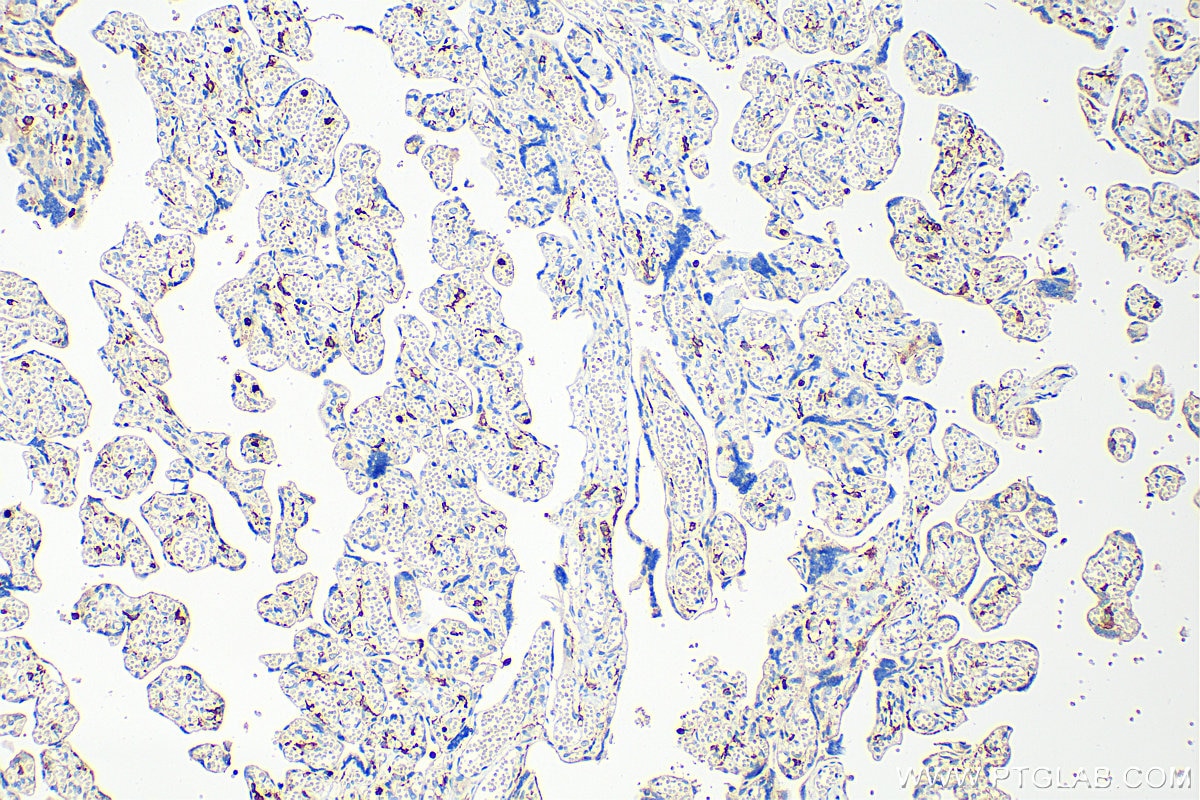
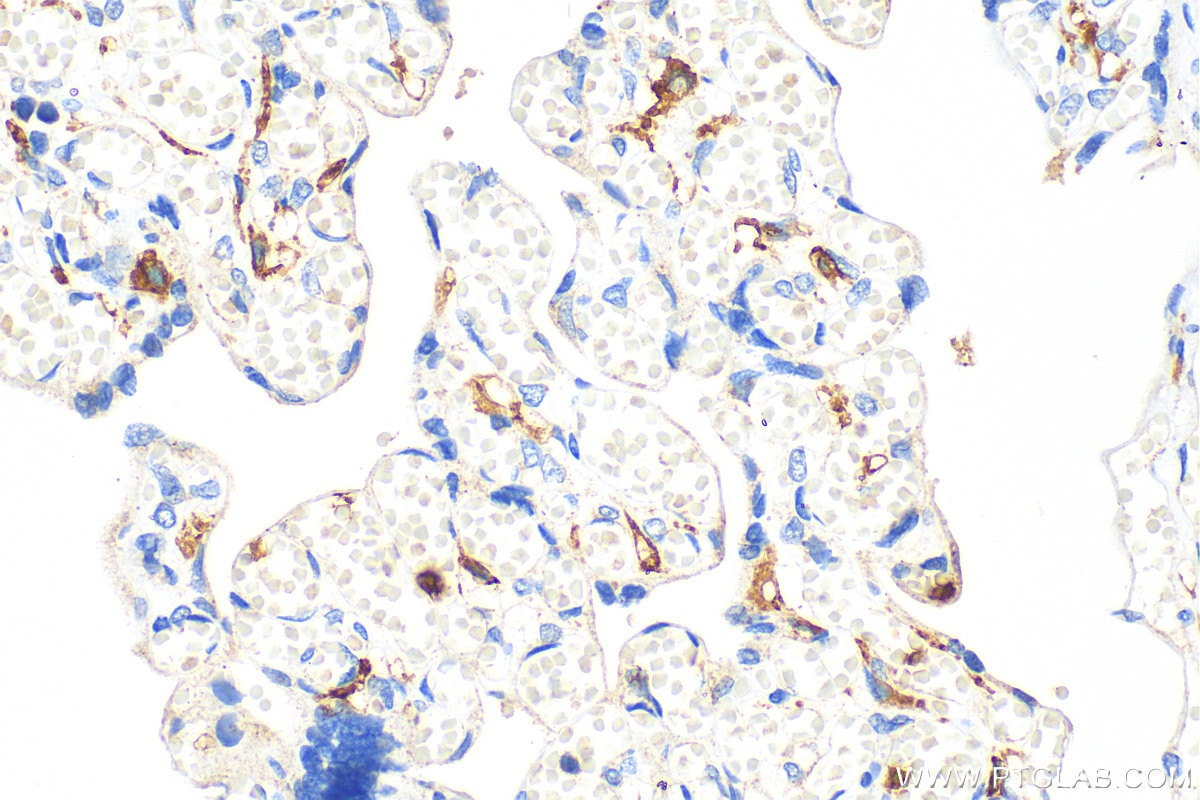
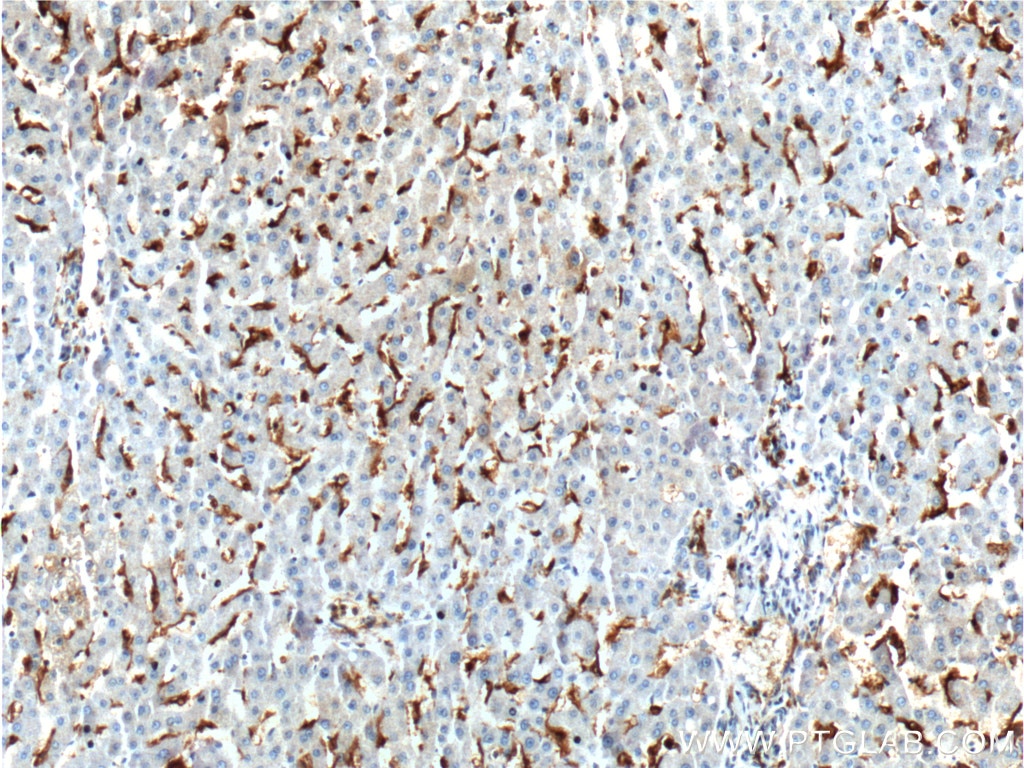
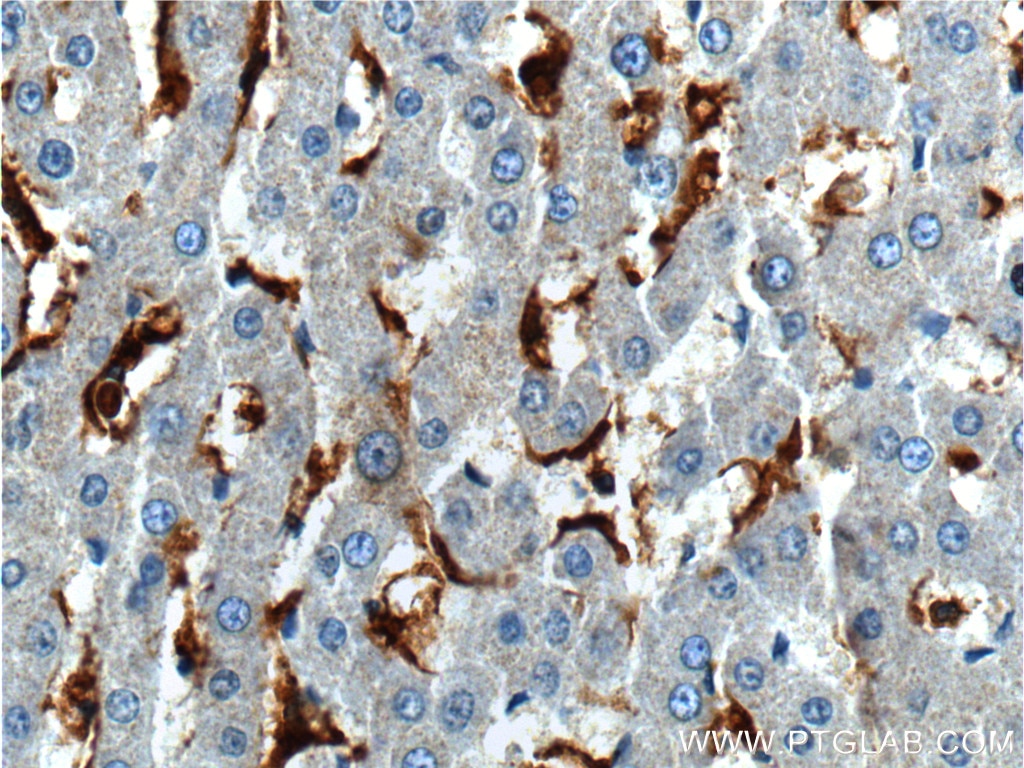
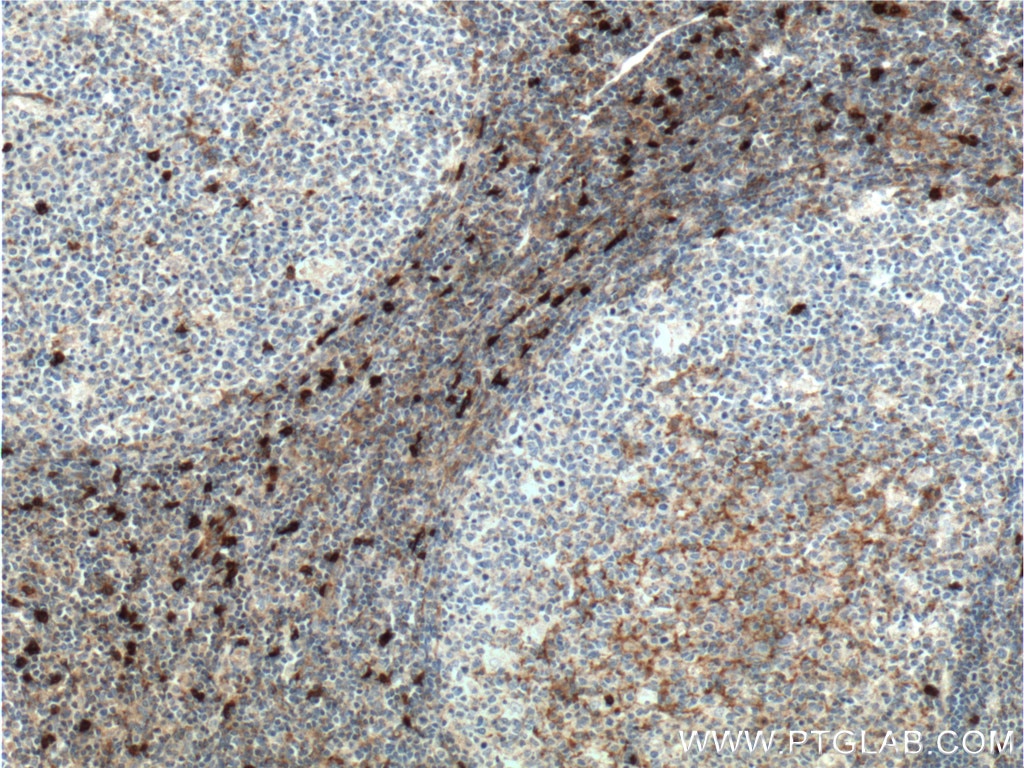
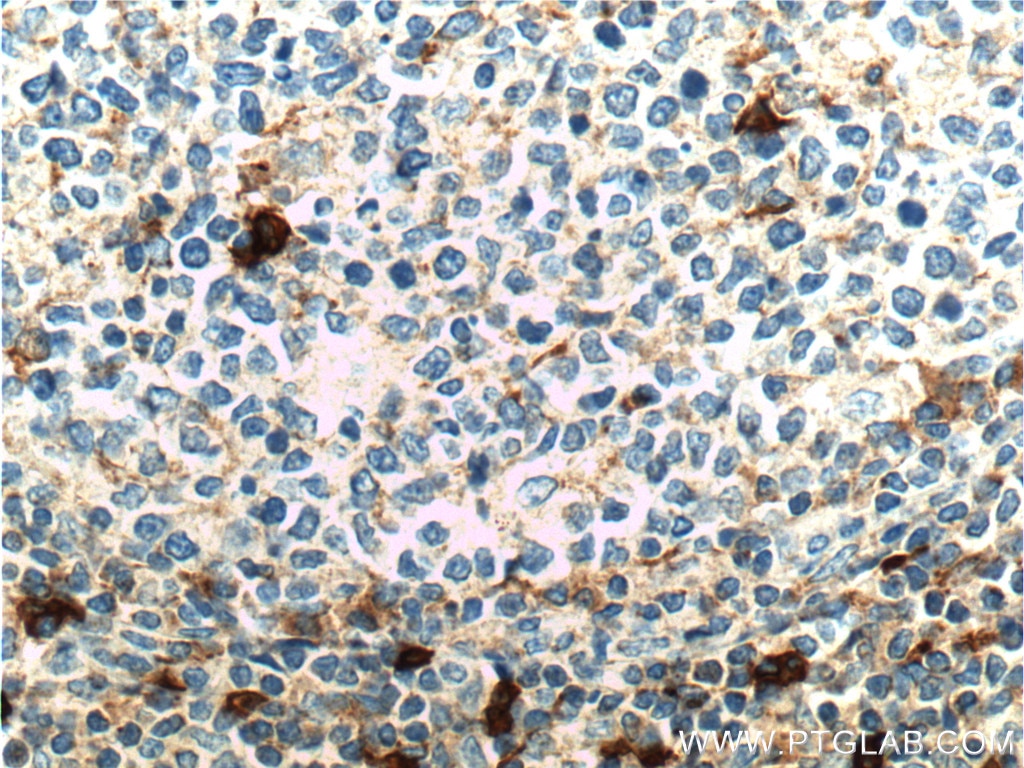
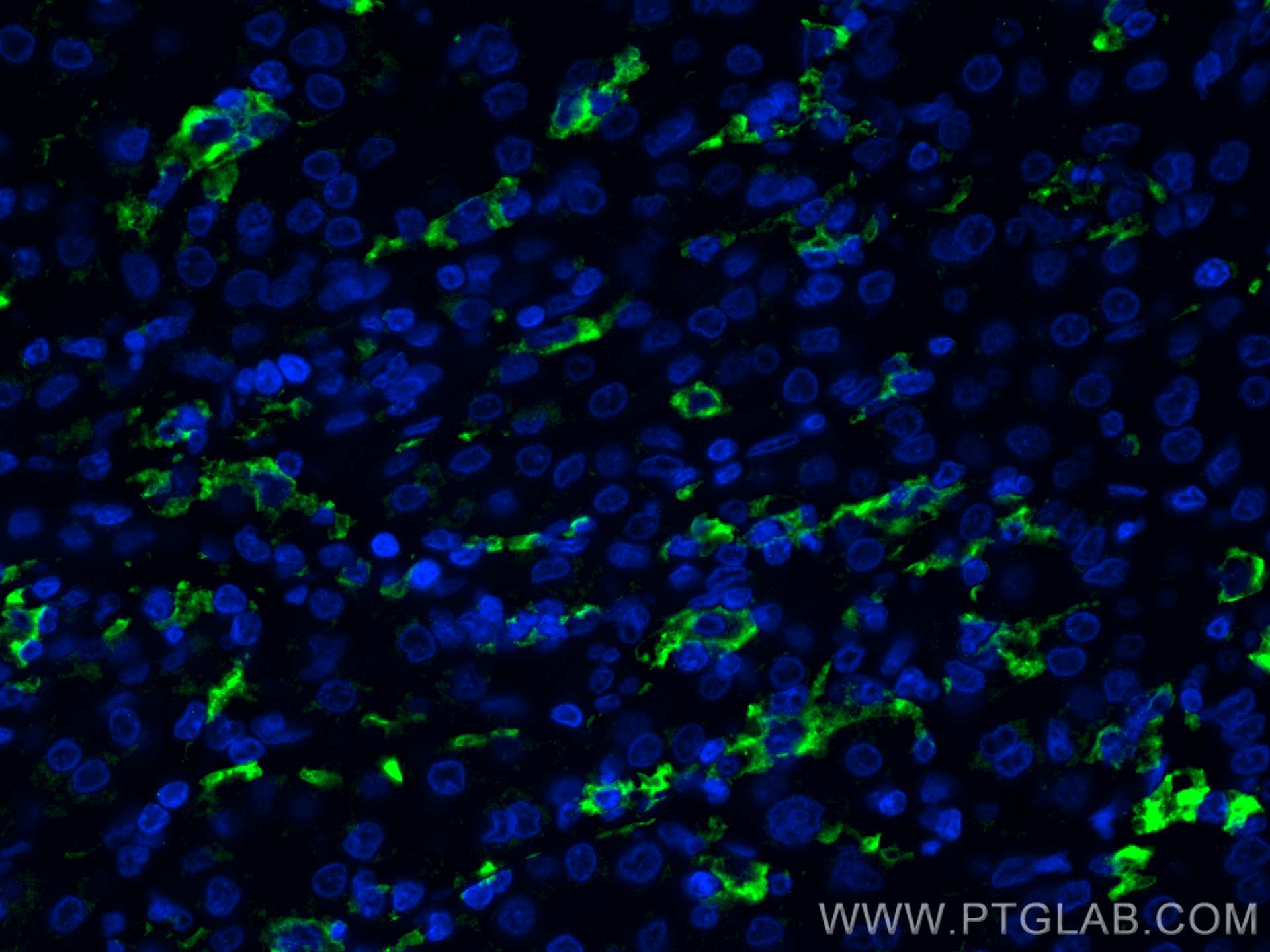

Tested Applications
| Positive IHC detected in | human liver tissue, human placenta tissue, human tonsillitis tissue Note: suggested antigen retrieval with TE buffer pH 9.0; (*) Alternatively, antigen retrieval may be performed with citrate buffer pH 6.0 |
| Positive IF-P detected in | human liver cancer tissue |
Recommended dilution
| Application | Dilution |
|---|---|
| Immunohistochemistry (IHC) | IHC : 1:50-1:500 |
| Immunofluorescence (IF)-P | IF-P : 1:50-1:500 |
| It is recommended that this reagent should be titrated in each testing system to obtain optimal results. | |
| Sample-dependent, Check data in validation data gallery. | |
Product Information
16559-1-AP targets CD16 in IHC, IF-P, ELISA applications and shows reactivity with human samples.
| Tested Reactivity | human |
| Cited Reactivity | human, mouse, rat |
| Host / Isotype | Rabbit / IgG |
| Class | Polyclonal |
| Type | Antibody |
| Immunogen |
CatNo: Ag9787 Product name: Recombinant human CD16 protein Source: e coli.-derived, PGEX-4T Tag: GST Domain: 29-254 aa of BC017865 Sequence: FLEPQWYRVLEKDSVTLKCQGAYSPEDNSTQWFHNESLISSQASSYFIDAATVDDSGEYRCQTNLSTLSDPVQLEVHIGWLLLQAPRWVFKEEDPIHLRCHSWKNTALHKVTYLQNGKGRKYFHHNSDFYIPKATLKDSGSYFCRGLVGSKNVSSETVNITITQGLAVSTISSFFPPGYQVSFCLVMVLLFAVDTGLYFSVKTNIRSSTRDWKDHKFKWRKDPQDK Predict reactive species |
| Full Name | Fc fragment of IgG, low affinity IIIa, receptor (CD16a) |
| Calculated Molecular Weight | 254 aa, 29 kDa |
| Observed Molecular Weight | 50-55 kDa |
| GenBank Accession Number | BC017865 |
| Gene Symbol | CD16a |
| Gene ID (NCBI) | 2214 |
| ENSEMBL Gene ID | ENSG00000203747 |
| RRID | AB_2878279 |
| Conjugate | Unconjugated |
| Form | Liquid |
| Purification Method | Antigen affinity purification |
| UNIPROT ID | P08637 |
| Storage Buffer | PBS with 0.02% sodium azide and 50% glycerol, pH 7.3. |
| Storage Conditions | Store at -20°C. Stable for one year after shipment. Aliquoting is unnecessary for -20oC storage. 20ul sizes contain 0.1% BSA. |
Background Information
CD16 is a 50-70-kDa low affinity Fc receptor found on the surface of natural killer cells, neutrophil polymorphonuclear leukocytes, monocytes and macrophages. CD16 mediates antibody-dependent cellular cytotoxicity (ADCC) and other antibody-dependent responses, such as phagocytosis. CD16 has been identified as Fc receptors FcγRIIIa (CD16a) and FcγRIIIb (CD16b), encoded by two nearly identical genes, FCGR3A and the FCGR3B.
Protocols
| Product Specific Protocols | |
|---|---|
| IF protocol for CD16 antibody 16559-1-AP | Download protocol |
| IHC protocol for CD16 antibody 16559-1-AP | Download protocol |
| Standard Protocols | |
|---|---|
| Click here to view our Standard Protocols |
Publications
What published studies show
The CD16 Polyclonal antibody (Cat# 16559-1-AP) has 68 citations. These appear in journals including Nature Communications, Science Translational Medicine, Theranostics, Advanced Science, Journal of Translational Medicine, Frontiers in Immunology, Brain Research, Neuroscience, and Molecular Neurobiology. Research fields span neuroinflammation and microglial polarization (ischemic stroke, traumatic brain injury, Alzheimer's disease), cancer immunology and tumor microenvironment, immunotherapy, and inflammatory diseases, using applications such as IF, IHC, WB, and flow cytometry.
| Species | Application | Title |
|---|---|---|
Nat Commun A monoclonal antibody that inhibits the shedding of CD16a and CD16b and promotes antibody-dependent cellular cytotoxicity against tumors. | ||
J Adv Res Integrative multi-omics profiling deciphers tumor microenvironment heterogeneity and immunotherapy vulnerabilities in lung neuroendocrine carcinomas | ||
Sci Transl Med Blood-brain barrier disruption, traumatic encephalopathy, and cognitive decline in retired athletes. | ||
Theranostics Effects of prenatal photobiomodulation treatment on neonatal hypoxic ischemia in rat offspring. | ||
Microbiome Tumor-colonized Streptococcus mutans metabolically reprograms tumor microenvironment and promotes oral squamous cell carcinoma | ||
Theranostics Non-invasive photobiomodulation treatment in an Alzheimer Disease-like transgenic rat model. |
Reviews
What customers say
The single review reports a 4-star rating for this antibody used in immunofluorescence on FFPE prostate tissue at a 1:100 dilution. The reviewer found it worked well, using Tris-EDTA pH 9.0 for antigen retrieval. Overall, the feedback is positive, indicating reliable performance in IF applications on formalin-fixed paraffin-embedded samples.
The reviews below have been submitted by verified Proteintech customers who received an incentive for providing their feedback.
Emma (Verified Customer) (11-29-2021) | Works well by IF on FFPE tissue. Antigen retrieval Tris-EDTA pH9.0.
|








