

Tested Applications
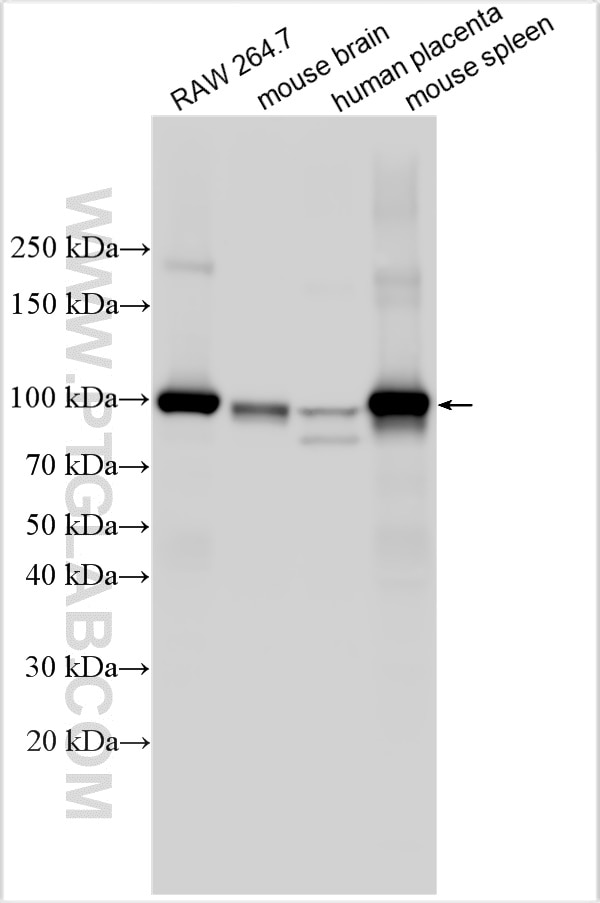
| Positive WB detected in | RAW 264.7 cells, mouse brain tissue, mouse spleen tissue, human placenta tissue |
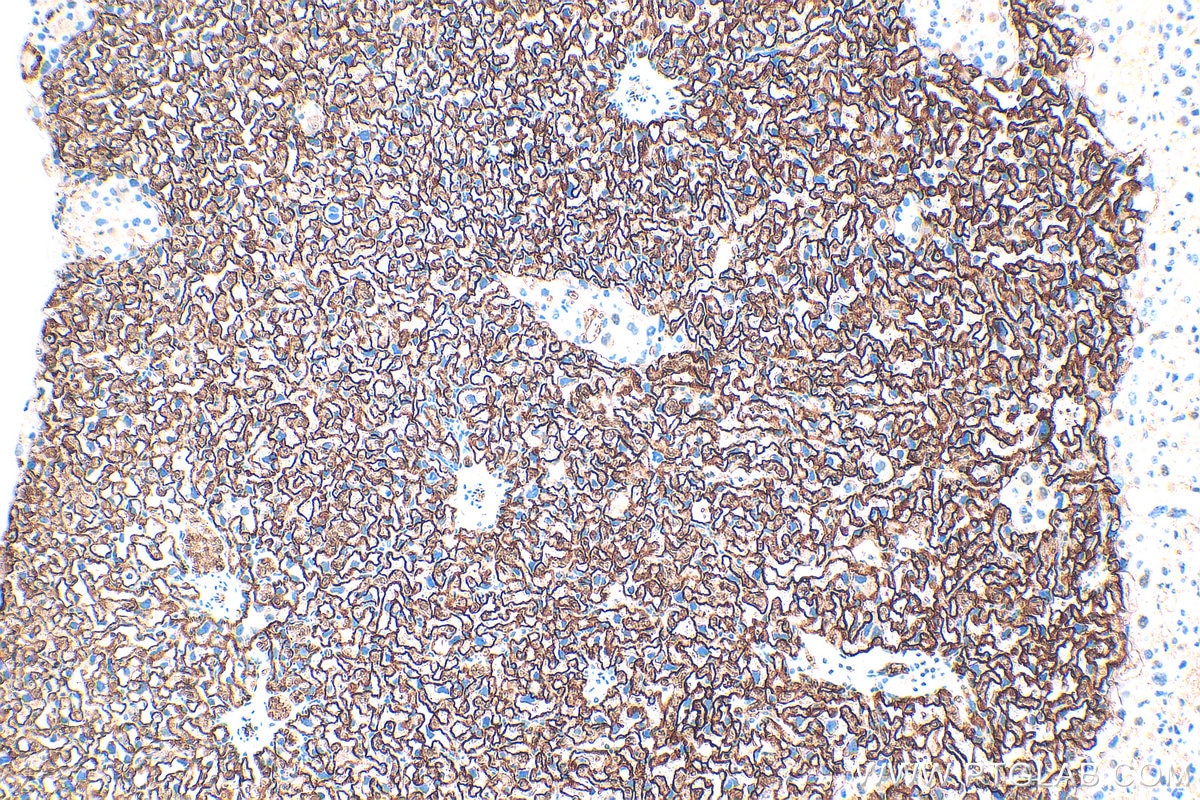
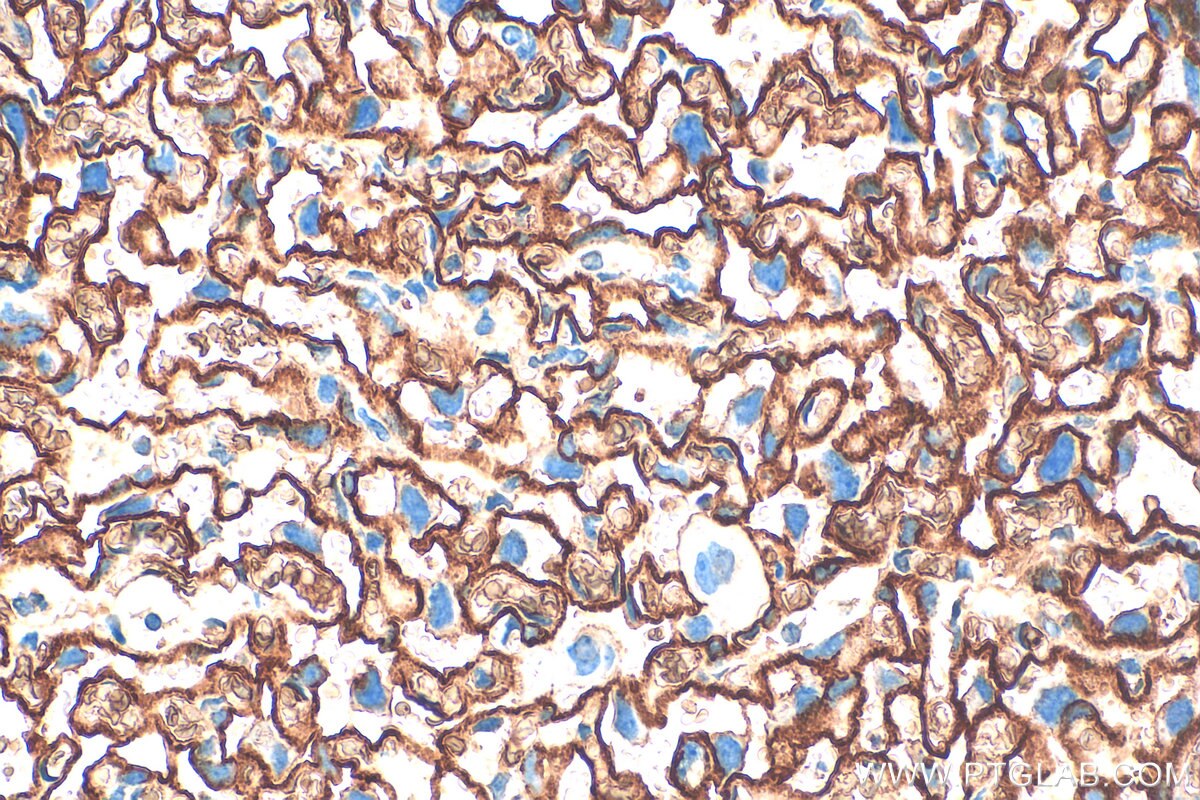
| Positive IHC detected in | mouse placenta tissue Note: suggested antigen retrieval with TE buffer pH 9.0; (*) Alternatively, antigen retrieval may be performed with citrate buffer pH 6.0 |
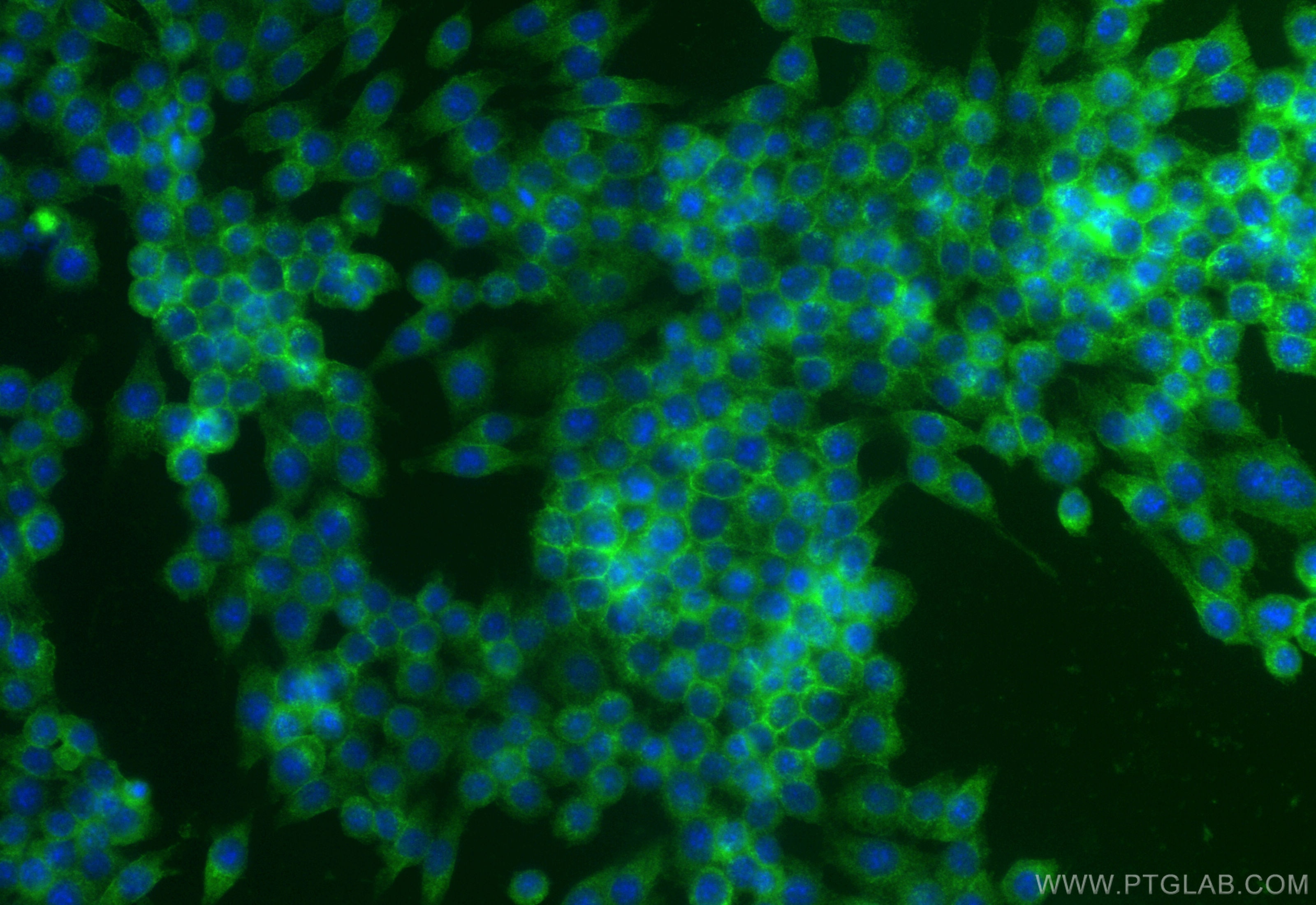
| Positive IF/ICC detected in | RAW 264.7 cells |
Recommended dilution
| Application | Dilution |
|---|---|
| Western Blot (WB) | WB : 1:2000-1:16000 |
| Immunohistochemistry (IHC) | IHC : 1:300-1:1200 |
| Immunofluorescence (IF)/ICC | IF/ICC : 1:50-1:500 |
| It is recommended that this reagent should be titrated in each testing system to obtain optimal results. | |
| Sample-dependent, Check data in validation data gallery. | |
Product Information
32333-1-AP targets CD71 in WB, IHC, IF/ICC, ELISA applications and shows reactivity with human, mouse samples.
| Tested Reactivity | human, mouse |
| Cited Reactivity | human, mouse |
| Host / Isotype | Rabbit / IgG |
| Class | Polyclonal |
| Type | Antibody |
| Immunogen |
CatNo: Eg1064 Product name: Recombinant Mouse Transferrin R protein (His Tag) Source: mammalian cells-derived, pHZ-KIsec-C-6*HIS Tag: N-6*His Domain: 89-763 aa of NM_011638.4 Sequence: CKRVEQKEECVKLAETEETDKSETMETEDVPTSSRLYWADLKTLLSEKLNSIEFADTIKQLSQNTYTPREAGSQKDESLAYYIENQFHEFKFSKVWRDEHYVKIQVKSSIGQNMVTIVQSNGNLDPVESPEGYVAFSKPTEVSGKLVHANFGTKKDFEELSYSVNGSLVIVRAGEITFAEKVANAQSFNAIGVLIYMDKNKFPVVEADLALFGHAHLGTGDPYTPGFPSFNHTQFPPSQSSGLPNIPVQTISRAAAEKLFGKMEGSCPARWNIDSSCKLELSQNQNVKLIVKNVLKERRILNIFGVIKGYEEPDRYVVVGAQRDALGAGVAAKSSVGTGLLLKLAQVFSDMISKDGFRPSRSIIFASWTAGDFGAVGATEWLEGYLSSLHLKAFTYINLDKVVLGTSNFKVSASPLLYTLMGKIMQDVKHPVDGKSLYRDSNWISKVEKLSFDNAAYPFLAYSGIPAVSFCFCEDADYPYLGTRLDTYEALTQKVPQLNQMVRTAAEVAGQLIIKLTHDVELNLDYEMYNSKLLSFMKDLNQFKTDIRDMGLSLQWLYSARGDYFRATSRLTTDFHNAEKTNRFVMREINDRIMKVEYHFLSPYVSPRESPFRHIFWGSGSHTLSALVENLKLRQKNITAFNETLFRNQLALATWTIQGVANALSGDIWNIDNEF Predict reactive species |
| Full Name | transferrin receptor |
| Calculated Molecular Weight | 86kDa |
| Observed Molecular Weight | 90-100 kDa |
| GenBank Accession Number | NM_011638.4 |
| Gene Symbol | CD71 |
| Gene ID (NCBI) | 22042 |
| RRID | AB_3742579 |
| Conjugate | Unconjugated |
| Form | Liquid |
| Purification Method | Antigen affinity Purification |
| UNIPROT ID | Q62351 |
| Storage Buffer | PBS with 0.02% sodium azide and 50% glycerol, pH 7.3. |
| Storage Conditions | Store at -20°C. Stable for one year after shipment. Aliquoting is unnecessary for -20oC storage. 20ul sizes contain 0.1% BSA. |
Background Information
CD71, also known as transferrin receptor protein 1 (TfR1), is a transmembrane glycoprotein composed of two disulfide-linked monomers, each of 90 kDa molecular weight. Each monomer binds one holo-transferrin molecule creating an iron-Tf-TfR complex that enters the cell by endocytosis. CD71 is present on actively proliferating cells and is essential for iron transport into proliferating cells.
Protocols
| Product Specific Protocols | |
|---|---|
| IF protocol for CD71 antibody 32333-1-AP | Download protocol |
| IHC protocol for CD71 antibody 32333-1-AP | Download protocol |
| WB protocol for CD71 antibody 32333-1-AP | Download protocol |
| Standard Protocols | |
|---|---|
| Click here to view our Standard Protocols |
Publications
What published studies show
CD71 Polyclonal antibody (Cat# 32333-1-AP) has 6 total citations appearing in Journal of Hazardous Materials, Free Radical Biology and Medicine, Ecotoxicology and Environmental Safety, International Journal of Molecular Sciences, Experimental Eye Research, and Advanced Healthcare Materials. The research fields center on ferroptosis mechanisms, spanning hepatotoxicity, vascular toxicity, lung cancer, diabetic retinopathy, iron homeostasis regulation, and photothermal immunotherapy.
| Species | Application | Title |
|---|---|---|
Free Radic Biol Med HERC2 as a bidirectional iron metabolism switch: Synergistic NCOA4 stabilization and FBXL5 degradation drive ferroptosis-cascaded hepatotoxicity in Nd(2)O(3) nanoparticles exposure. | ||
Ecotoxicol Environ Saf Yttrium nitrate induces vascular toxicity via ferroptosis: Mechanistic insights into iron dysregulation and lipid peroxidation. | ||
Int J Mol Sci Ginsenoside Rh4 Triggers Ferroptosis in Lung Cancer: Targeting KEAP1/NRF2/HO-1 and Remodeling Gut Microbiota for Butyrate-Mediated ATF3 Activation. | ||
Exp Eye Res Procyanidin C1 modulates microglia cellular iron homeostasis via targeting HuR/ACSL4 pathway and alleviates high-glucose-induced ferroptosis in diabetic retinopathy. | ||
Adv Healthc Mater Zwitterionic Polarization-Engineering Covalent Organic Frameworks for Targeted Ferroptosis-Synergistic Photothermal Immunotherapy. |





