

Tested Applications
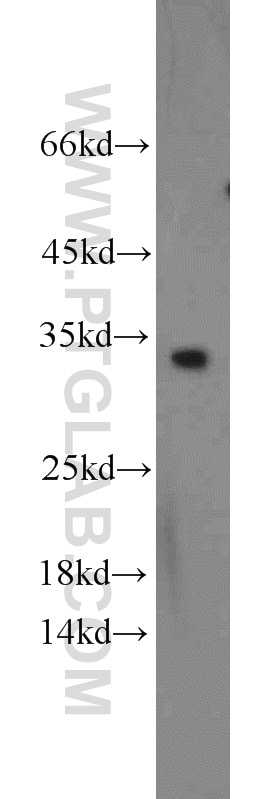
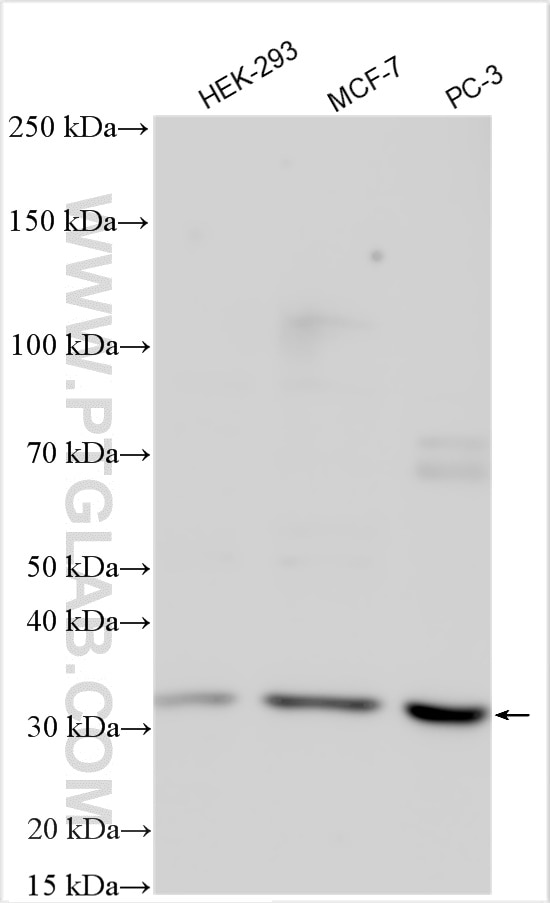
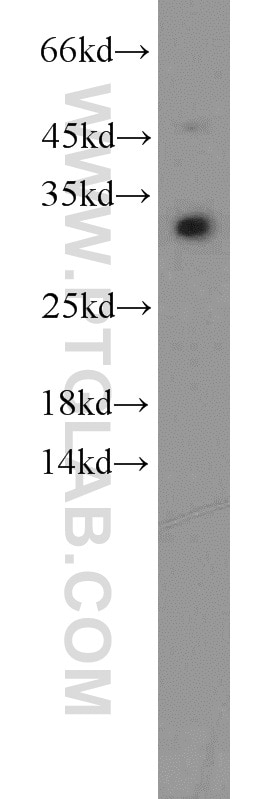
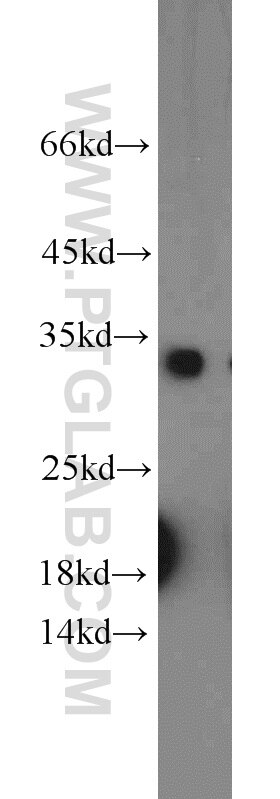
| Positive WB detected in | HEK-293 cells, HeLa cells, MCF-7 cells, PC-3 cells |
Recommended dilution
| Application | Dilution |
|---|---|
| Western Blot (WB) | WB : 1:500-1:3000 |
| It is recommended that this reagent should be titrated in each testing system to obtain optimal results. | |
| Sample-dependent, Check data in validation data gallery. | |
Product Information
11625-1-AP targets CDCA4 in WB, IHC, IF, IP, CoIP, ELISA applications and shows reactivity with human, mouse samples.
| Tested Reactivity | human, mouse |
| Cited Reactivity | human, mouse |
| Host / Isotype | Rabbit / IgG |
| Class | Polyclonal |
| Type | Antibody |
| Immunogen |
CatNo: Ag2214 Product name: Recombinant human CDCA4 protein Source: e coli.-derived, PGEX-4T Tag: GST Domain: 1-241 aa of BC025263 Sequence: MFARGLKRKCVGHEEDVEGALAGLKTVSSYSLQRQSLLDMSLVKLQLCHMLVEPNLCRSVLIANTVRQIQEEMTQDGTWRTVAPQAAERAPLNRLVSTEILCRAAWGQEGAHPAPGLGDGHTQGPVSDLCPVTSAQAPRHLQSSAWEMDGPRENRGSFHKSLDQIFETLETKNPSCMEELFSDVDSPYYDLDTVLTGMMGGARPGPCEGLEGLAPATPGPSSSCKSDLGELDHVVEILVET Predict reactive species |
| Full Name | cell division cycle associated 4 |
| Calculated Molecular Weight | 241 aa, 26 kDa |
| Observed Molecular Weight | 33 kDa |
| GenBank Accession Number | BC025263 |
| Gene Symbol | CDCA4 |
| Gene ID (NCBI) | 55038 |
| RRID | AB_2260414 |
| Conjugate | Unconjugated |
| Form | Liquid |
| Purification Method | Antigen affinity purification |
| UNIPROT ID | Q9BXL8 |
| Storage Buffer | PBS with 0.02% sodium azide and 50% glycerol, pH 7.3. |
| Storage Conditions | Store at -20°C. Stable for one year after shipment. Aliquoting is unnecessary for -20oC storage. 20ul sizes contain 0.1% BSA. |
Background Information
TRIP-Br proteins are a set of proteins with the potential to function in both transcriptional control and cell cycle regulation [PMID:18572021]. CECA4 is a member of TRIP-br family, based on its homologous sequence motifs including SERTA and a PHD-bromo-binding site which interacts with a series of bromodomain containing transcriptional cofactors[PMID:17141982]. When activated by E2F, CDCA4 consequently functions as a suppressor of E2F-responsive promoters to participate the regulation of cell proliferation through the E2F/pRb pathway [PMID:16098148].
Protocols
| Product Specific Protocols | |
|---|---|
| WB protocol for CDCA4 antibody 11625-1-AP | Download protocol |
| Standard Protocols | |
|---|---|
| Click here to view our Standard Protocols |
Publications
What published studies show
The anti-CDCA4 antibody (Cat# 11625-1-AP) has 14 total citations. Publications appear in journals including Cancer Cell, Scientific Reports, Cancer Cell International, Frontiers in Molecular Biosciences, Frontiers in Oncology, Journal of Cancer Research and Clinical Oncology, Thoracic Cancer, Gene, IUBMB Life, Heliyon, Kaohsiung Journal of Medical Sciences, Cell Biochemistry and Function, International Journal of Biological Macromolecules, and Science in Progress. Research fields span lung adenocarcinoma, breast cancer, bladder cancer, B-cell leukemia, hepatocellular carcinoma, EMT, autophagy/mitophagy, and signaling pathway regulation.
| Species | Application | Title |
|---|---|---|
Cancer Cell The DLEU2/miR-15a/16-1 cluster controls B cell proliferation and its deletion leads to chronic lymphocytic leukemia.
| ||
Int J Biol Macromol Novel mechanism of substrate recognition by protein phosphatase PP2A:B55 involving SERTAD family adapter proteins. | ||
Cancer Cell Int CDCA4 suppresses epithelial-mesenchymal transtion (EMT) and metastasis in Non-small cell lung cancer through modulating autophagy.
| ||
Sci Rep Hepatocellular Carcinoma-propagating Cells are Detectable by Side Population Analysis and Possess an Expression Profile Reflective of a Primitive Origin. | ||
Front Mol Biosci Construction of shared gene signature between rheumatoid arthritis and lung adenocarcinoma helps to predict the prognosis and tumor microenvironment of the LUAD patients | ||
Cell Biochem Funct Exosomal MicroRNA-424-5p From Polycystic Ovary Syndrome Follicular Fluid Attenuates Ovarian Inflammation via Targeting the Fibroblast Growth Factor 2/Fibroblast Growth Factor Receptor 1 Axis. |





