
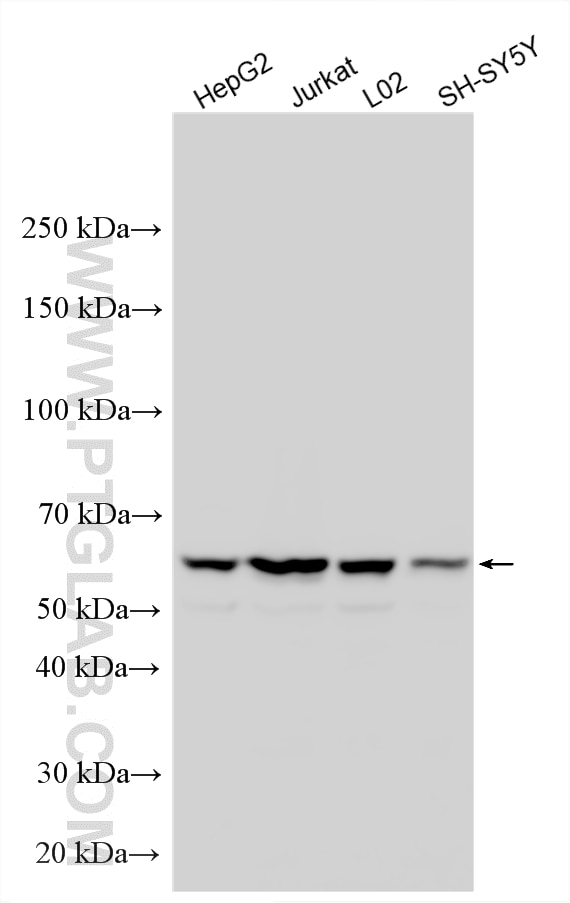
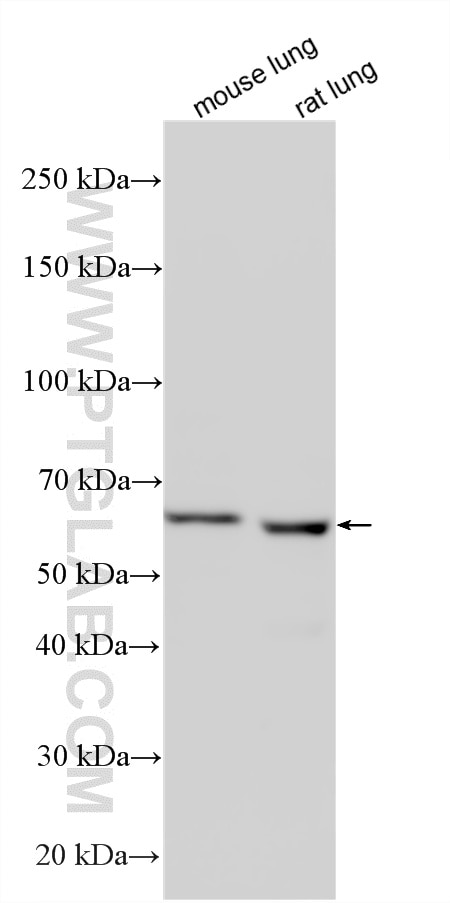
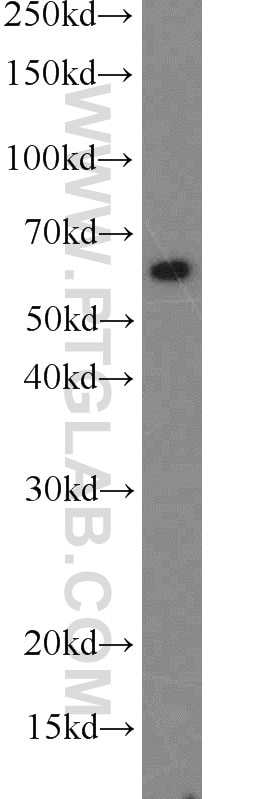
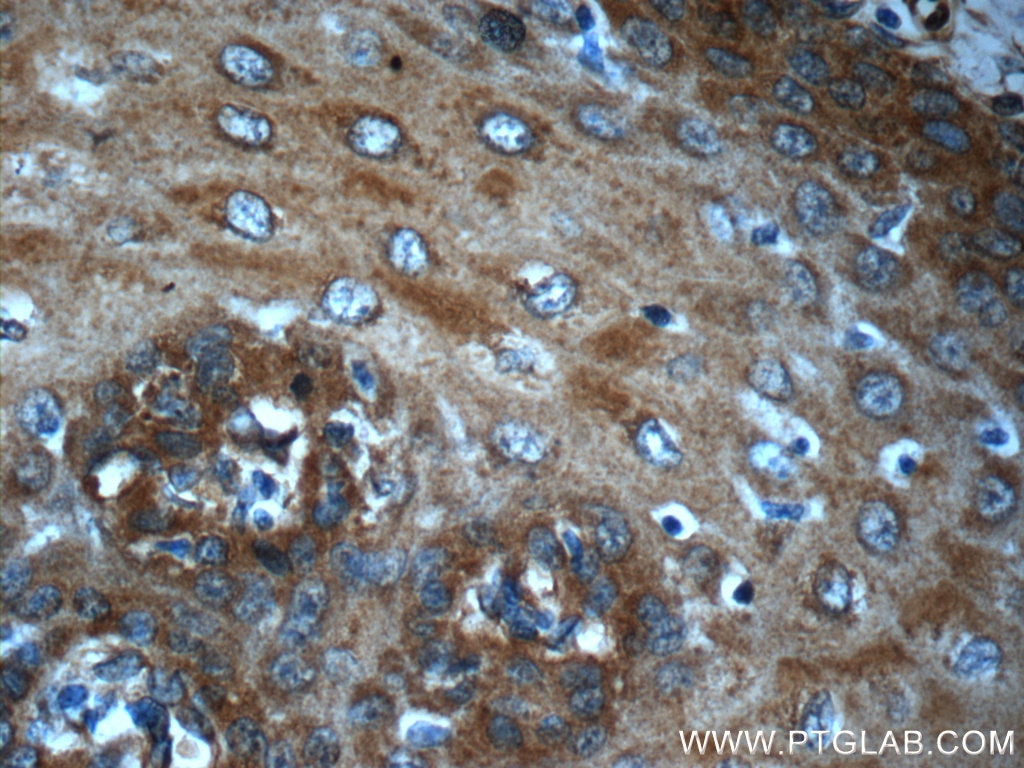

Tested Applications
| Positive WB detected in | HepG2 cells, HT-1080 cells, mouse lung tissue, Jurkat cells, L02 cells, SH-SY5Y cells, rat lung tissue |
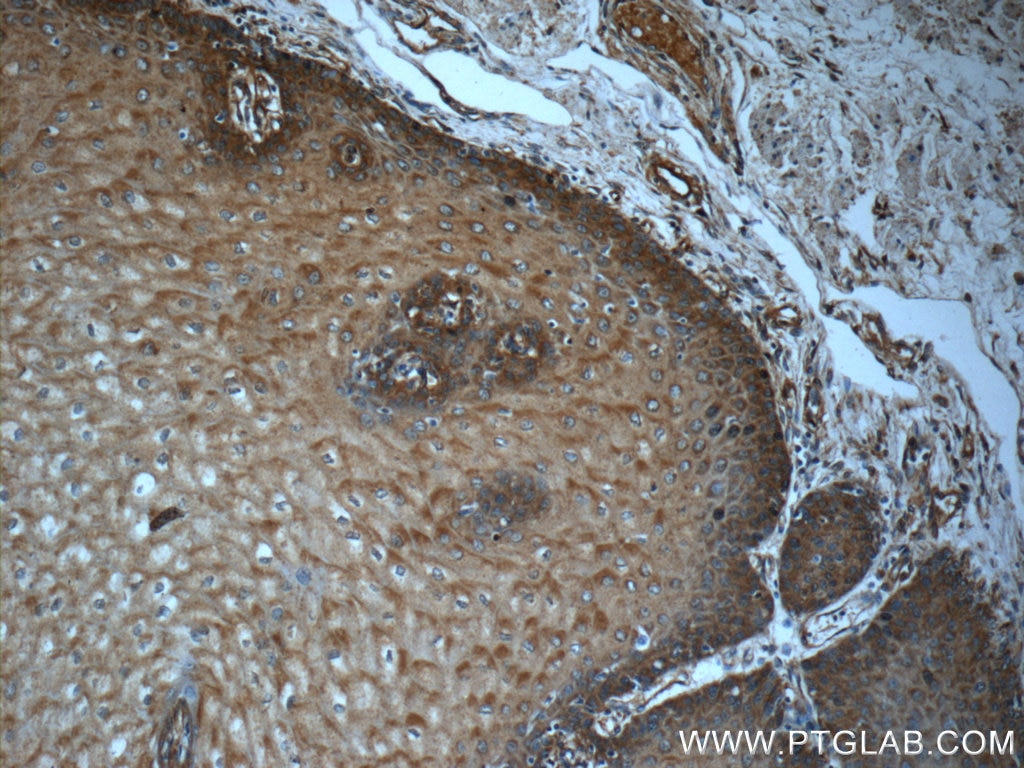
| Positive IHC detected in | human oesophagus tissue Note: suggested antigen retrieval with TE buffer pH 9.0; (*) Alternatively, antigen retrieval may be performed with citrate buffer pH 6.0 |
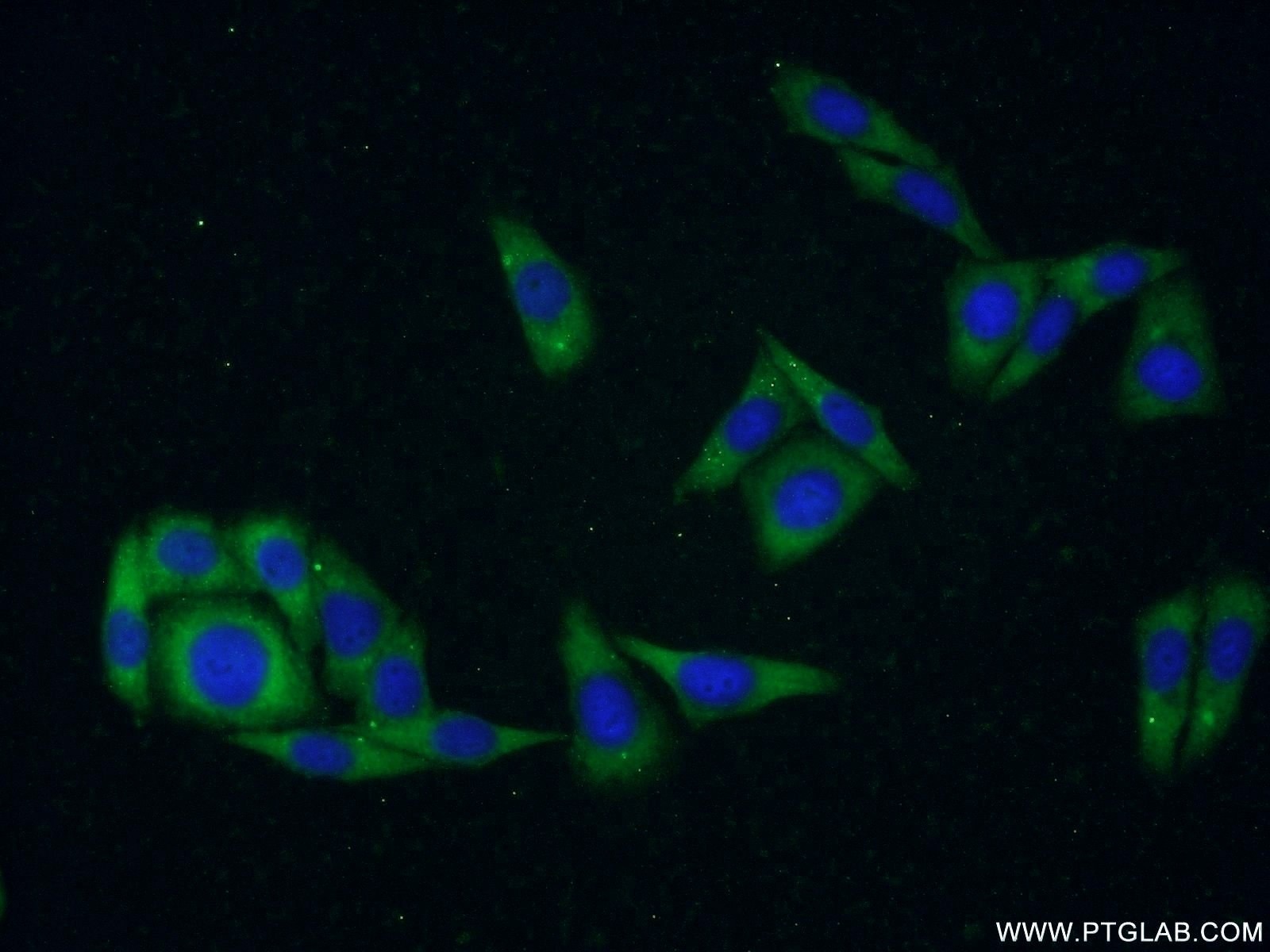
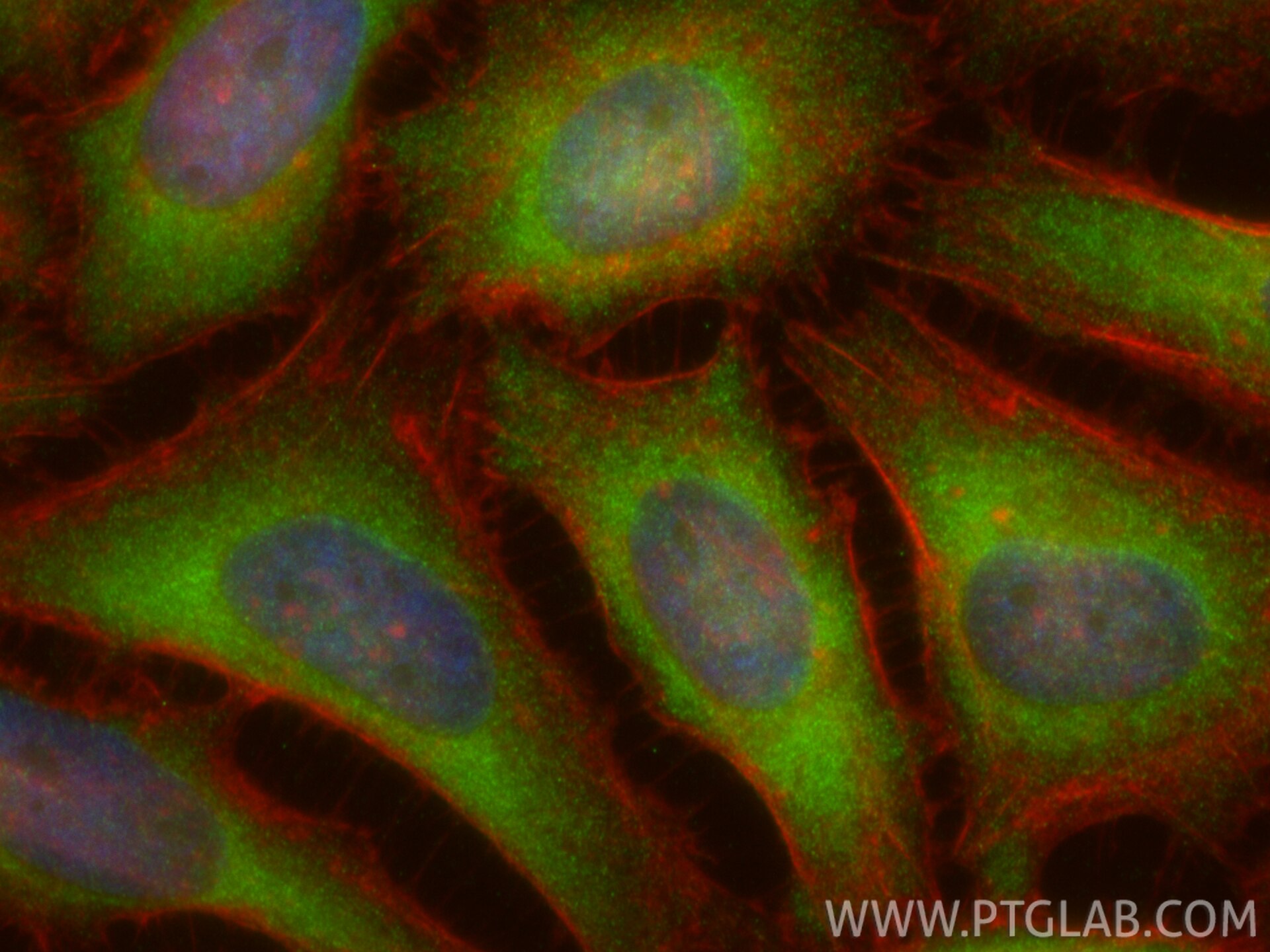
| Positive IF/ICC detected in | HeLa cells, HepG2 cells |
Recommended dilution
| Application | Dilution |
|---|---|
| Western Blot (WB) | WB : 1:2000-1:12000 |
| Immunohistochemistry (IHC) | IHC : 1:50-1:500 |
| Immunofluorescence (IF)/ICC | IF/ICC : 1:200-1:800 |
| It is recommended that this reagent should be titrated in each testing system to obtain optimal results. | |
| Sample-dependent, Check data in validation data gallery. | |
Product Information
22988-1-AP targets CDKAL1 in WB, IHC, IF/ICC, ELISA applications and shows reactivity with human, mouse, rat samples.
| Tested Reactivity | human, mouse, rat |
| Cited Reactivity | human, mouse |
| Host / Isotype | Rabbit / IgG |
| Class | Polyclonal |
| Type | Antibody |
| Immunogen |
CatNo: Ag19060 Product name: Recombinant human CDKAL1 protein Source: e coli.-derived, PET28a Tag: 6*His Domain: 1-357 aa of BC121020 Sequence: MPSASCDTLLDDIEDIVSQEDSKPQDRHFVRKDVVPKVRRRNTQKYLQEEENSPPSDSTIPGIQKIWIRTWGCSHNNSDGEYMAGQLAAYGYKITENASDADLWLLNSCTVKNPAEDHFRNSIKKAQEENKKIVLAGCVPQAQPRQDYLKGLSIIGVQQIDRVVEVVEETIKGHSVRLLGQKKDNGRRLGGARLDLPKIRKNPLIEIISINTGCLNACTYCKTKHARGNLASYPIDELVDRAKQSFQEGVCEIWLTSEDTGAYGRDIGTNLPTLLWKLVEVIPEGAMLRLGMTNPPYILEHLEEMAKILNHPRVYAFLHIPVQSASDSVLMEMKREYCVADFKRVVDFLKEKVPGIT Predict reactive species |
| Full Name | CDK5 regulatory subunit associated protein 1-like 1 |
| Calculated Molecular Weight | 579 aa, 65 kDa |
| Observed Molecular Weight | 60-65 kDa |
| GenBank Accession Number | BC121020 |
| Gene Symbol | CDKAL1 |
| Gene ID (NCBI) | 54901 |
| RRID | AB_2879192 |
| Conjugate | Unconjugated |
| Form | Liquid |
| Purification Method | Antigen Affinity purified |
| UNIPROT ID | Q5VV42 |
| Storage Buffer | PBS with 0.02% sodium azide and 50% glycerol, pH 7.3. |
| Storage Conditions | Store at -20°C. Stable for one year after shipment. Aliquoting is unnecessary for -20oC storage. 20ul sizes contain 0.1% BSA. |
Background Information
Cell cycle progression is controlled, in part, by a family of cyclin dependent kinases (Cdks) that work to phosphorylate key substrates involved in each phase of cell cycle progression. Cdks are the catalytic subunits of serine/threonine protein kinases, a large family of proteins that act as regulators of the eukaryotic cell cycle. CDKAL1 (Cdk5 regulatory subunit associated protein 1-like 1) is a 579 amino acid single-pass membrane protein that contains one TRAM domain and is similar to Cdk5 regulatory subunit associated proteins (CDK5RAPs). Expressed in pancreas, brain and skeletal muscle, CDKAL1 uses iron as a cofactor and is involved in glucose-stimulated INS secretion. Defects in the gene encoding CDKAL1 impair INS secretion and are associated with the development of type 2 diabetes. Multiple isoforms of CDKAL1 exist due to alternative splicing events. This antibody recognizes the 65kd isoform of CDKAL1.
Protocols
| Product Specific Protocols | |
|---|---|
| IF protocol for CDKAL1 antibody 22988-1-AP | Download protocol |
| IHC protocol for CDKAL1 antibody 22988-1-AP | Download protocol |
| WB protocol for CDKAL1 antibody 22988-1-AP | Download protocol |
| Standard Protocols | |
|---|---|
| Click here to view our Standard Protocols |
Publications
What published studies show
The CDKAL1 Polyclonal antibody (Cat# 22988-1-AP) has 3 citations. They appear in J Clin Invest (neuromuscular disorder and Fe-S enzyme biology), Advanced Science (cancer stem-like cell maintenance and translation initiation), and EMBO Journal (podocyte dysfunction and chronic kidney disease). Research fields span neurology, oncology, and nephrology, with applications in WB and IF across human and mouse models.
| Species | Application | Title |
|---|---|---|
J Clin Invest CIAO1 loss of function causes a neuromuscular disorder with compromise of nucleocytoplasmic Fe-S enzymes | ||
Adv Sci (Weinh) CDKAL1 Drives the Maintenance of Cancer Stem-Like Cells by Assembling the eIF4F Translation Initiation Complex | ||
EMBO J CDKAL1 dysfunction impairs lysine codon translation in podocytes and accelerates chronic kidney disease.
|








