
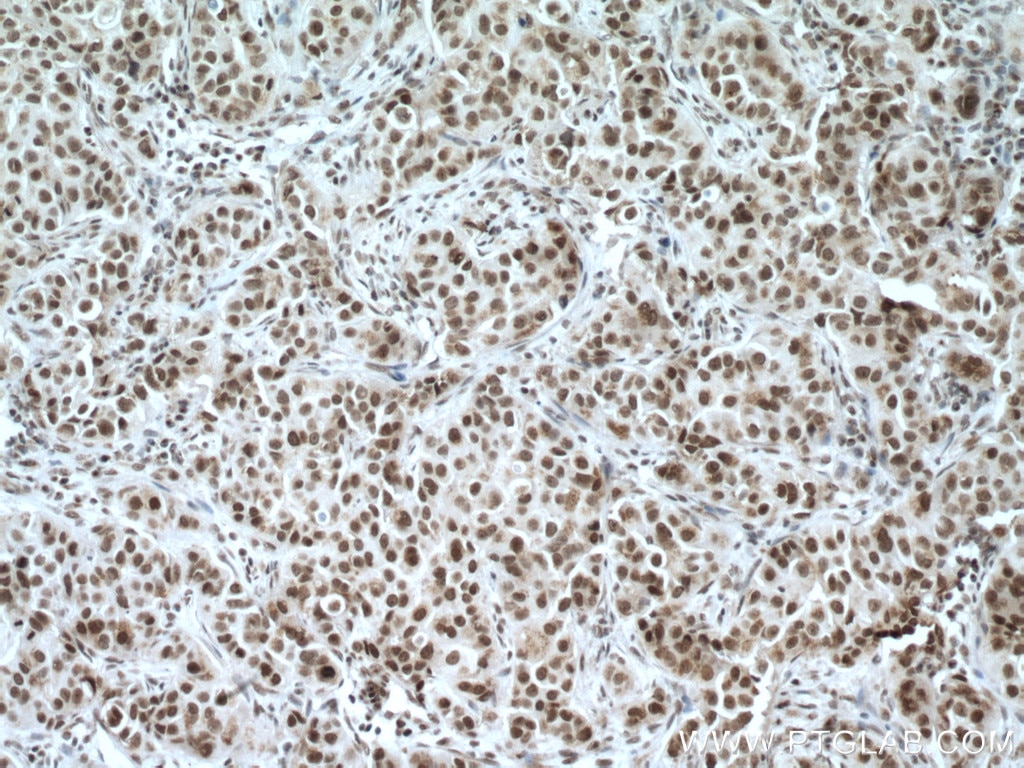
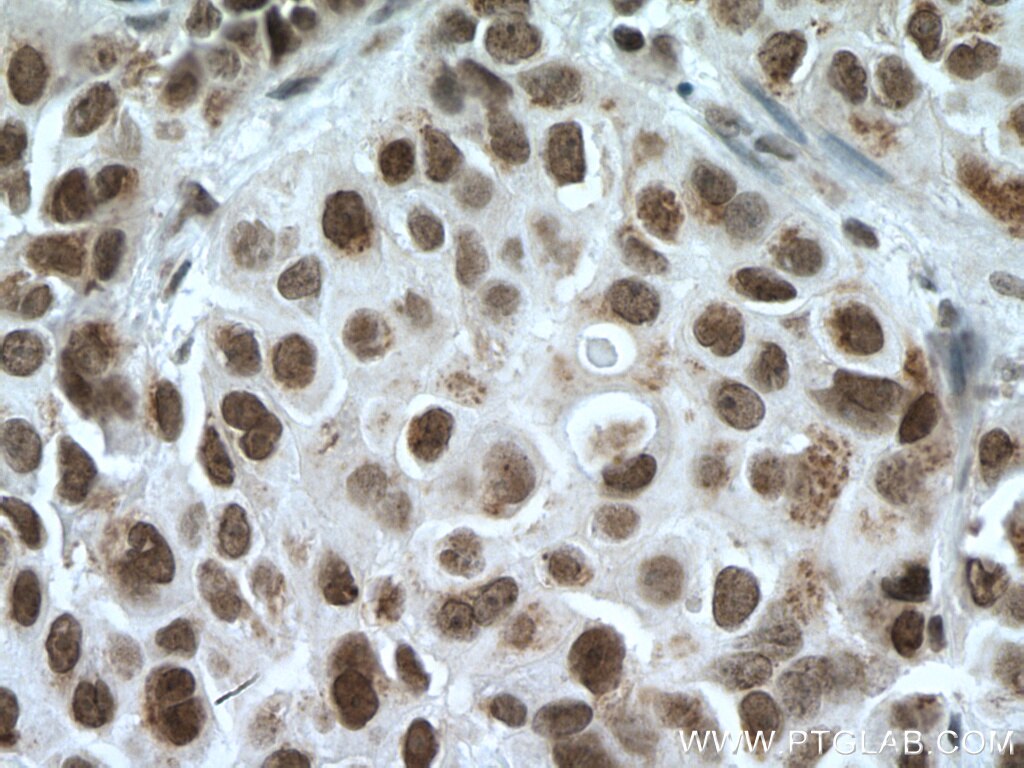
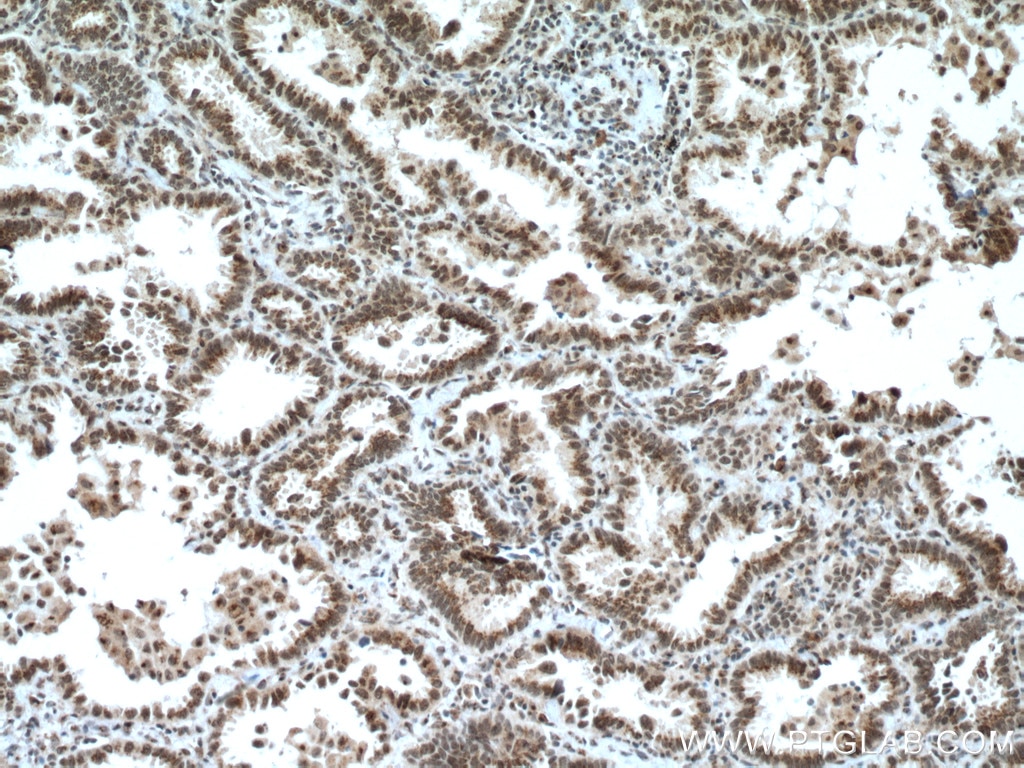
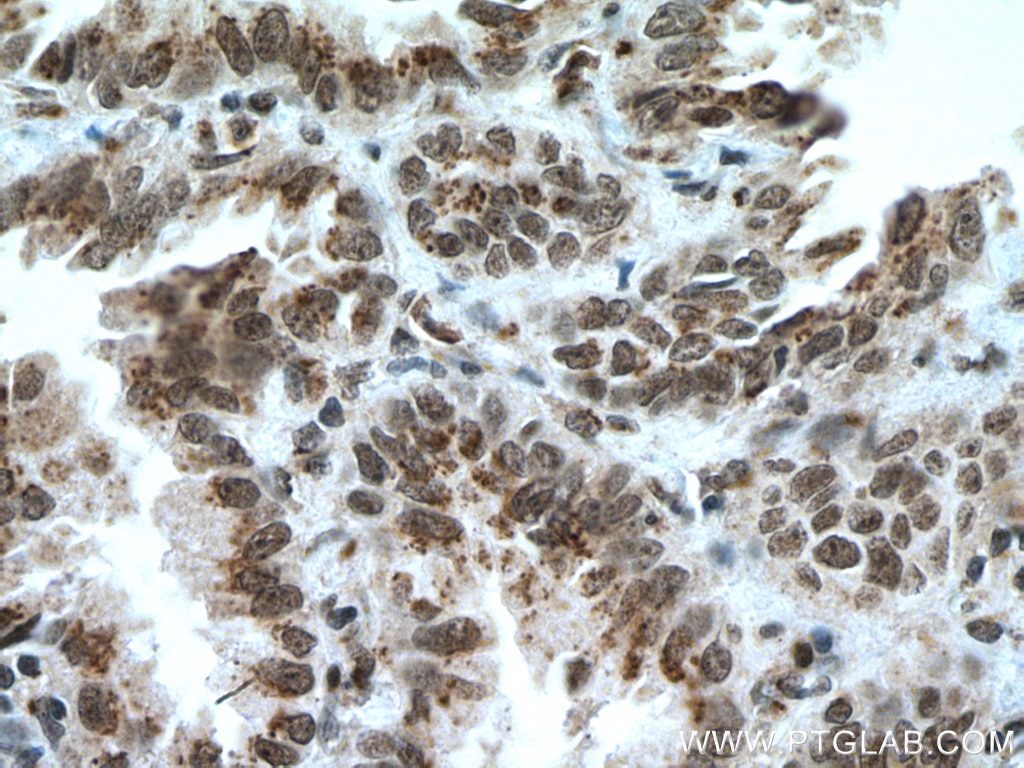

Tested Applications
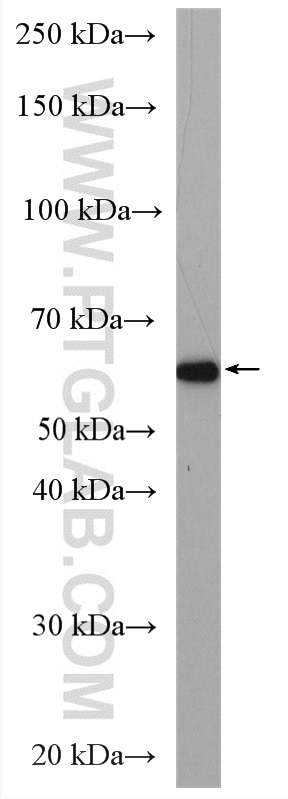
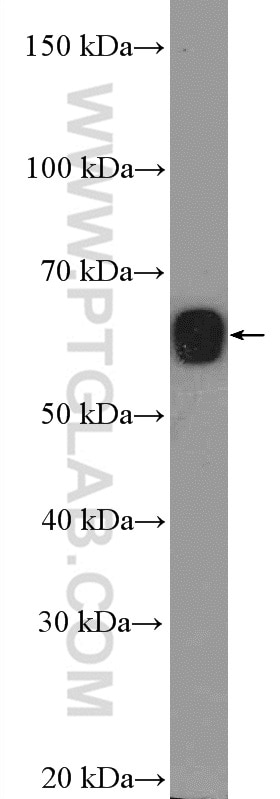
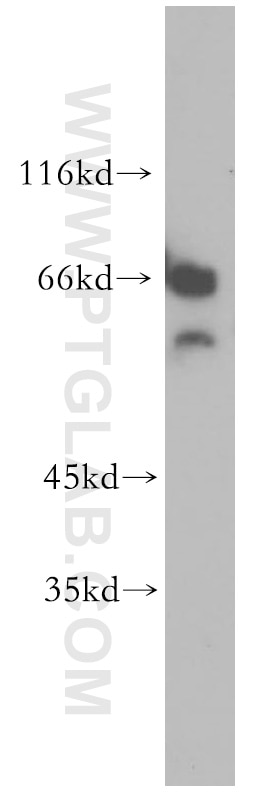
| Positive WB detected in | PC-3 cells, mouse testis tissue, MCF-7 cells |
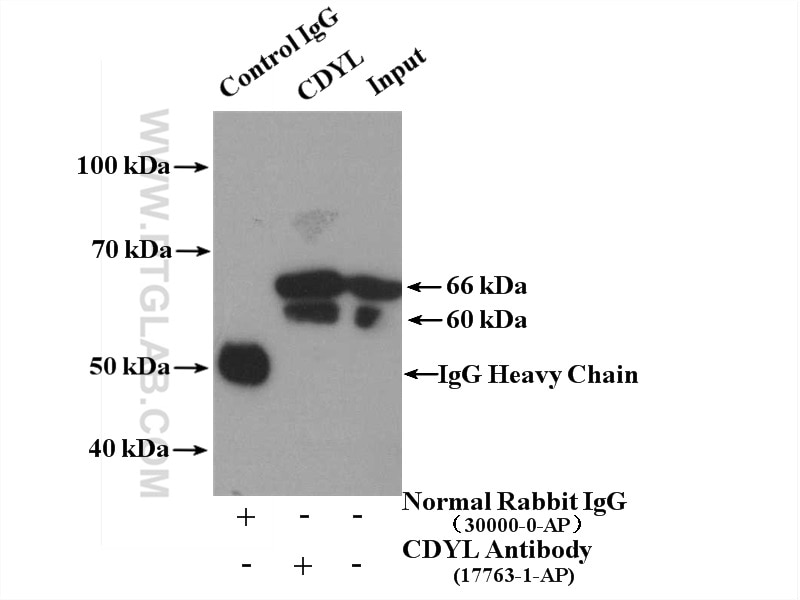
| Positive IP detected in | MCF-7 cells |
| Positive IHC detected in | human breast cancer tissue, human lung cancer tissue Note: suggested antigen retrieval with TE buffer pH 9.0; (*) Alternatively, antigen retrieval may be performed with citrate buffer pH 6.0 |
Recommended dilution
| Application | Dilution |
|---|---|
| Western Blot (WB) | WB : 1:1000-1:6000 |
| Immunoprecipitation (IP) | IP : 0.5-4.0 ug for 1.0-3.0 mg of total protein lysate |
| Immunohistochemistry (IHC) | IHC : 1:50-1:500 |
| It is recommended that this reagent should be titrated in each testing system to obtain optimal results. | |
| Sample-dependent, Check data in validation data gallery. | |
Product Information
17763-1-AP targets CDYL in WB, IHC, IF, IP, ELISA applications and shows reactivity with human, mouse, rat samples.
| Tested Reactivity | human, mouse, rat |
| Cited Reactivity | human, mouse, rat |
| Host / Isotype | Rabbit / IgG |
| Class | Polyclonal |
| Type | Antibody |
| Immunogen |
CatNo: Ag12143 Product name: Recombinant human CDYL protein Source: e coli.-derived, PGEX-4T Tag: GST Domain: 1-362 aa of BC108725 Sequence: MASEELYEVERIVDKRKNKKGKTEYLVRWKGYDSEDDTWEPEQHLVNCEEYIHDFNRRHTEKQKESTLTRTNRTSPNNARKQISRSTNSNFSKTSPKALVIGKDHESKNSQLFAASQKFRKNTAPSLSSRKNMDLAKSGIKILVPKSPVKSRTAVDGFQSESPEKLDPVEQGQEDTVAPEVAAEKPVGALLGPGAERARMGSRPRIHPLVPQVPGPVTAAMATGLAVNGKGTSPFMDALTANGTTNIQTSVTGVTASKRKFIDDRRDQPFDKRLRFSVRQTESAYRYRDIVVRKQDGFTHILLSTKSSENNSLNPEVMREVQSALSTAAADDSKLVLLSAVGSVFCCGLDFIYFIRRLTDDR Predict reactive species |
| Full Name | chromodomain protein, Y-like |
| Calculated Molecular Weight | 544 aa, 61 kDa |
| Observed Molecular Weight | 66 kDa, 60 kDa |
| GenBank Accession Number | BC108725 |
| Gene Symbol | CDYL |
| Gene ID (NCBI) | 9425 |
| RRID | AB_2077197 |
| Conjugate | Unconjugated |
| Form | Liquid |
| Purification Method | Antigen affinity purification |
| UNIPROT ID | Q9Y232 |
| Storage Buffer | PBS with 0.02% sodium azide and 50% glycerol, pH 7.3. |
| Storage Conditions | Store at -20°C. Stable for one year after shipment. Aliquoting is unnecessary for -20oC storage. 20ul sizes contain 0.1% BSA. |
Protocols
| Product Specific Protocols | |
|---|---|
| IHC protocol for CDYL antibody 17763-1-AP | Download protocol |
| IP protocol for CDYL antibody 17763-1-AP | Download protocol |
| WB protocol for CDYL antibody 17763-1-AP | Download protocol |
| Standard Protocols | |
|---|---|
| Click here to view our Standard Protocols |
Publications
What published studies show
The CDYL Polyclonal antibody (Cat# 17763-1-AP) has 10 total citations published in journals including Advanced Science, Cancer Letters, Acta Pharmacologica Sinica, Oncogene, Cell Reports, Translational Psychiatry, Drug Design, Development and Therapy, Endocrinology, Andrology, and BMC Immunology. Research fields span neuronal excitability and nociception, glioma immunology, acute kidney injury, lung cancer and cuproptosis, cortical organoid development, fear memory, hepatic fibrosis, spermiogenesis, male infertility, and rheumatoid arthritis.
| Species | Application | Title |
|---|---|---|
Adv Sci (Weinh) Cdyl Deficiency Brakes Neuronal Excitability and Nociception through Promoting Kcnb1 Transcription in Peripheral Sensory Neurons. | ||
Cancer Lett CDYL knockdown reduces glioma development through an antitumor immune response in the tumor microenvironment
| ||
Acta Pharmacol Sin Chromodomain Y-like (CDYL) inhibition ameliorates acute kidney injury in mice by regulating tubular pyroptosis | ||
Oncogene OTUB1/CDYL axis-mediated epigenetic repression of SOX18 facilitates lung cancer progression by inhibiting FDX1-dependent cuproptosis. | ||
Cell Rep The chromodomain protein CDYL confers forebrain identity to human cortical organoids by inhibiting neuronatin
| ||
Transl Psychiatry Activity-dependent phosphorylation of CDYL by CDK5 regulates fear memory in mice |









