
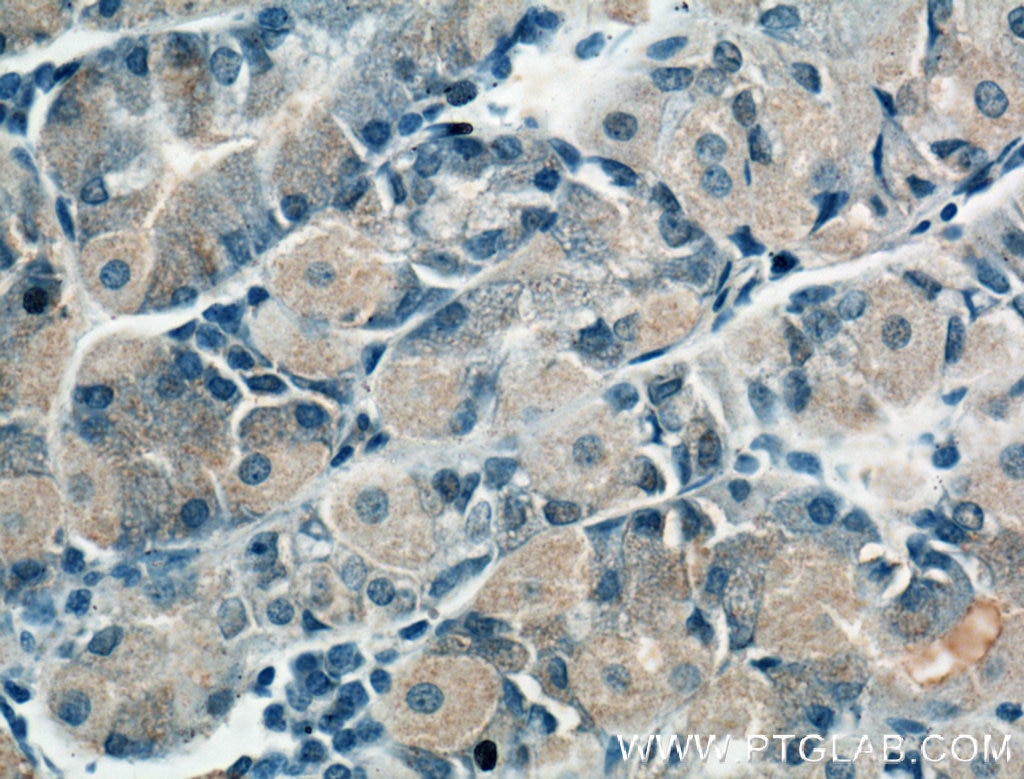

Tested Applications
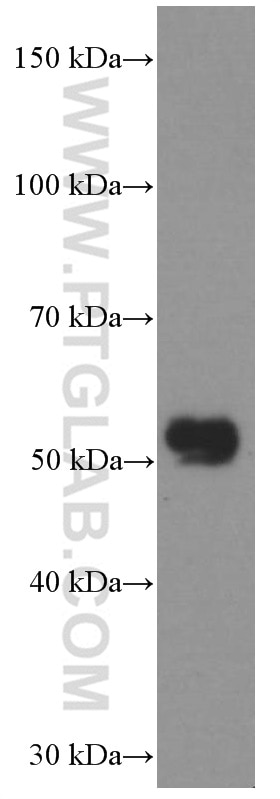
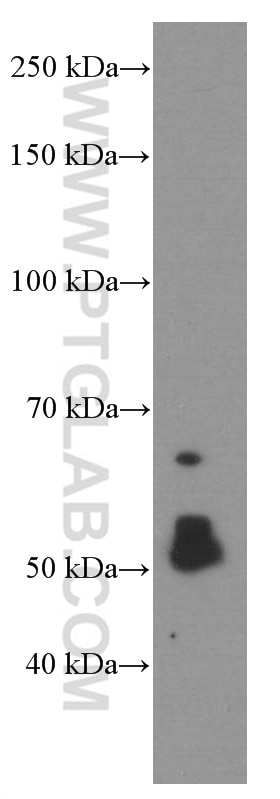
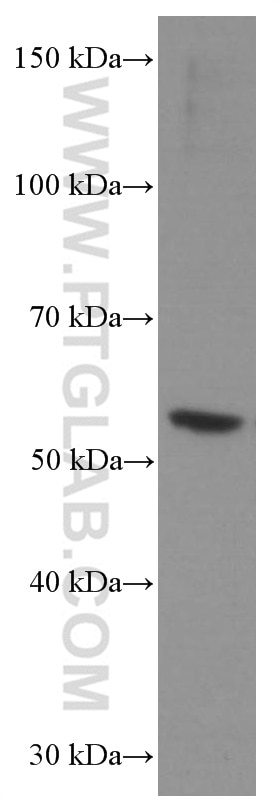
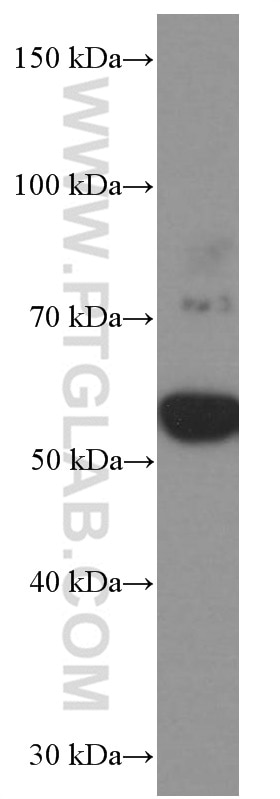
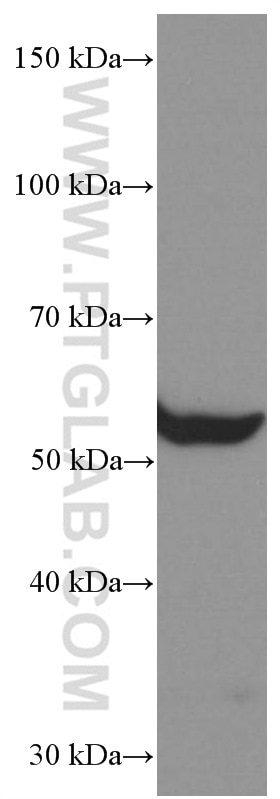
| Positive WB detected in | mouse skeletal muscle tissue, human skeletal muscle tissue, C2C12 cell, pig skeletal muscle tissue, A549 cells |
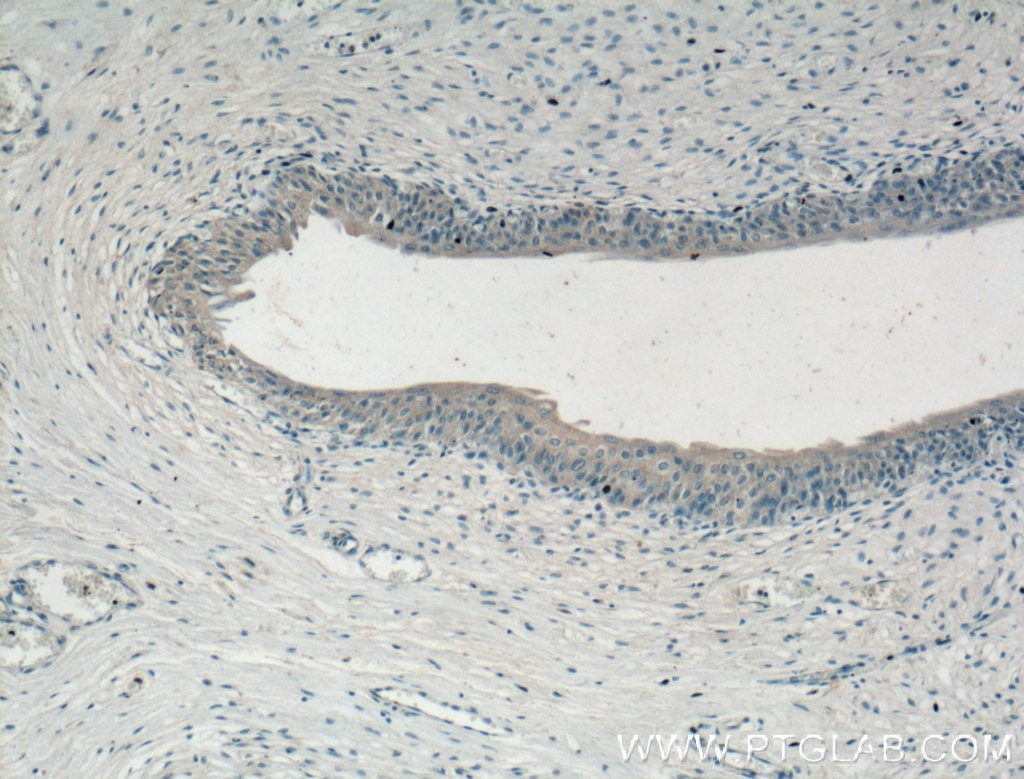
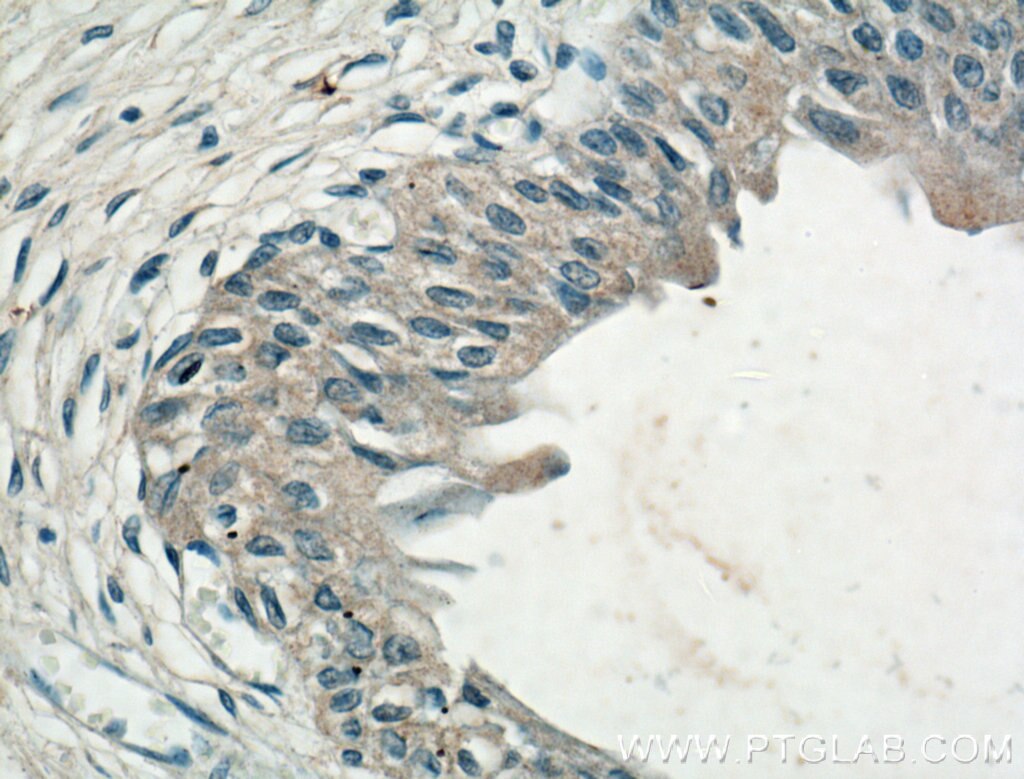
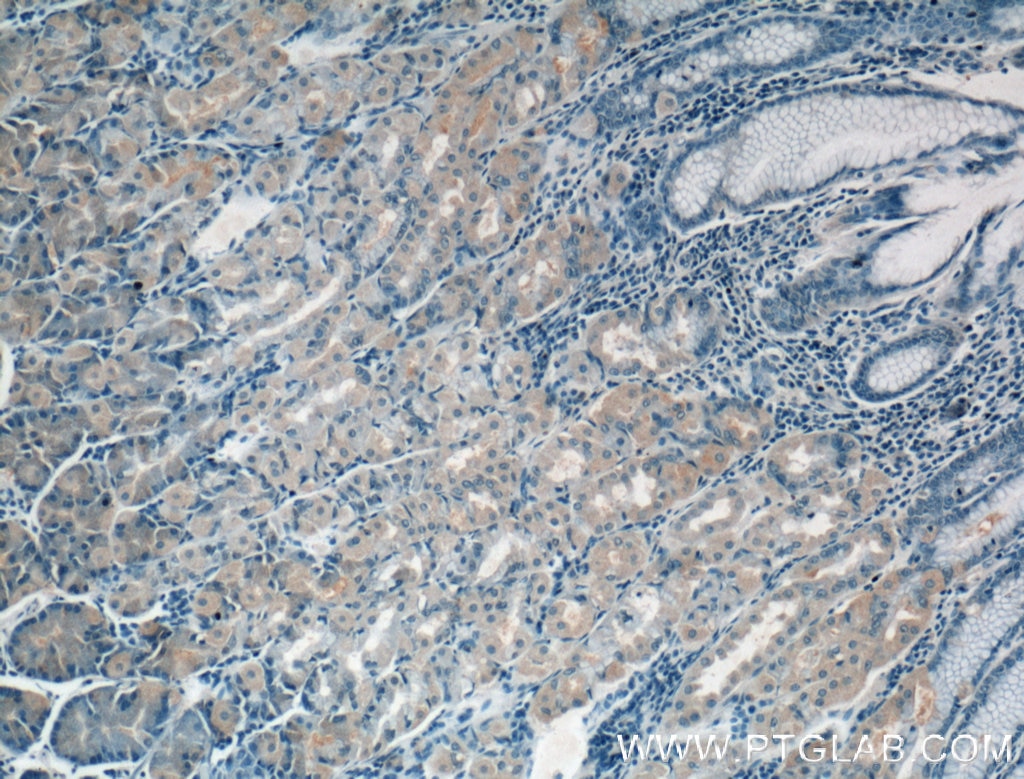
| Positive IHC detected in | human bladder tissue, human stomach tissue Note: suggested antigen retrieval with TE buffer pH 9.0; (*) Alternatively, antigen retrieval may be performed with citrate buffer pH 6.0 |
Recommended dilution
| Application | Dilution |
|---|---|
| Western Blot (WB) | WB : 1:1000-1:4000 |
| Immunohistochemistry (IHC) | IHC : 1:50-1:500 |
| It is recommended that this reagent should be titrated in each testing system to obtain optimal results. | |
| Sample-dependent, Check data in validation data gallery. | |
Product Information
66363-1-Ig targets CHRNA5 in WB, IHC, IF, ELISA applications and shows reactivity with human, mouse, pig samples.
| Tested Reactivity | human, mouse, pig |
| Cited Reactivity | human, mouse, rat |
| Host / Isotype | Mouse / IgG2a |
| Class | Monoclonal |
| Type | Antibody |
| Immunogen |
CatNo: Ag4447 Product name: Recombinant human CHRNA5 protein Source: e coli.-derived, PGEX-4T Tag: GST Domain: 32-251 aa of BC033639 Sequence: GAQRGLSEPSSIAKHEDSLLKDLFQDYERWVRPVEHLNDKIKIKFGLAISQLVDVDEKNQLMTTNVWLKQEWIDVKLRWNPDDYGGIKVIRVPSDSVWTPDIVLFDNADGRFEGTSTKTVIRYNGTVTWTPPANYKSSCTIDVTFFPFDLQNCSMKFGSWTYDGSQVDIILEDQDVDKRDFFDNGEWEIVSATGSKGNRTDSCCWYPYVTYSFVIKRLPL Predict reactive species |
| Full Name | cholinergic receptor, nicotinic, alpha 5 |
| Calculated Molecular Weight | 468 aa, 53 kDa |
| Observed Molecular Weight | 53 kDa |
| GenBank Accession Number | BC033639 |
| Gene Symbol | CHRNA5 |
| Gene ID (NCBI) | 1138 |
| RRID | AB_2881743 |
| Conjugate | Unconjugated |
| Form | Liquid |
| Purification Method | Protein A purification |
| UNIPROT ID | P30532 |
| Storage Buffer | PBS with 0.02% sodium azide and 50% glycerol, pH 7.3. |
| Storage Conditions | Store at -20°C. Stable for one year after shipment. Aliquoting is unnecessary for -20oC storage. 20ul sizes contain 0.1% BSA. |
Background Information
Nicotinic acetylcholine receptors (nAChRs), such as CHRNA5, are members of a superfamily of ligand-gated ion channels that mediate fast signal transmission at synapses. The nAChRs are thought to be (hetero)pentamers composed of homologous subunits. Variants in the CHRNA5 gene are associated with nicotine dependence and lung cancer risk.
Protocols
| Product Specific Protocols | |
|---|---|
| IHC protocol for CHRNA5 antibody 66363-1-Ig | Download protocol |
| WB protocol for CHRNA5 antibody 66363-1-Ig | Download protocol |
| Standard Protocols | |
|---|---|
| Click here to view our Standard Protocols |
Publications
What published studies show
Anti-CHRNA5 antibody (Cat# 66363-1-Ig) has 16 citations across 14 journals including Cell Death & Disease, Cell Communications & Signaling, Journal of Investigative Dermatology, Cell Molecular Life Sciences, Communications Biology, Cancer Immunology & Immunotherapy, Toxicology, Carcinogenesis, Neuromolecular Medicine, Clinical & Experimental Metastasis, Molecular Carcinogenesis, Food and Chemical Toxicology, Human Cell, and Archives of Dermatological Research. Research fields primarily focus on nicotine-related lung adenocarcinoma progression, immune escape, head and neck cancer, psoriasis, melanoma, and neurobiology.
| Species | Application | Title |
|---|---|---|
Cell Death Dis Nicotine-induced CHRNA5 activation modulates CES1 expression, impacting head and neck squamous cell carcinoma recurrence and metastasis via MEK/ERK pathway | ||
Cell Commun Signal Alpha5 nicotinic acetylcholine receptor mediated immune escape of lung adenocarcinoma via STAT3/Jab1-PD-L1 signalling | ||
J Invest Dermatol Chrna5 is overexpressed in psoriasis patients and promotes psoriasis-like inflammation in mouse models.
| ||
Cell Mol Life Sci Acetylcholine promotes chronic stress-induced lung adenocarcinoma progression via α5-nAChR/FHIT pathway
| ||
Cancer Immunol Immunother Nicotine promotes M2 macrophage polarization through α5-nAChR/SOX2/CSF-1 axis in lung adenocarcinoma
| ||
Commun Biol Nicotinic acetylcholine receptors regulate growth hormone in pituitary somatotrophs of tigers |










