

Tested Applications
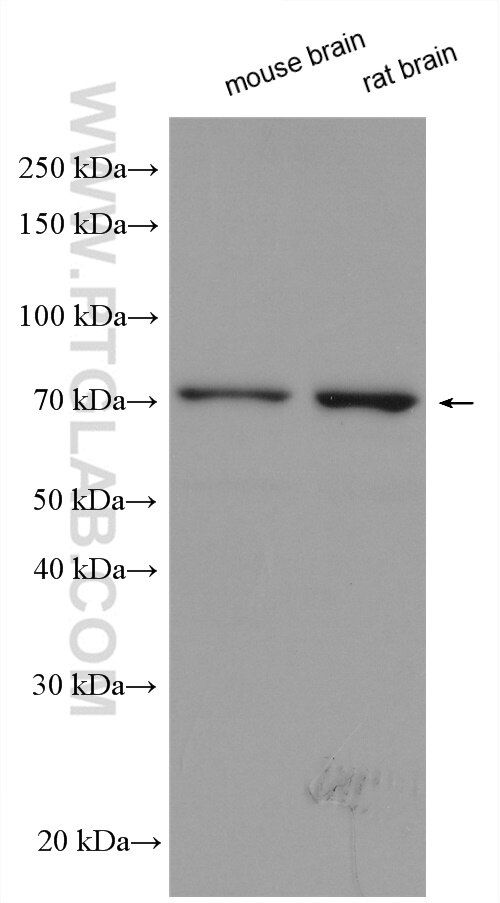
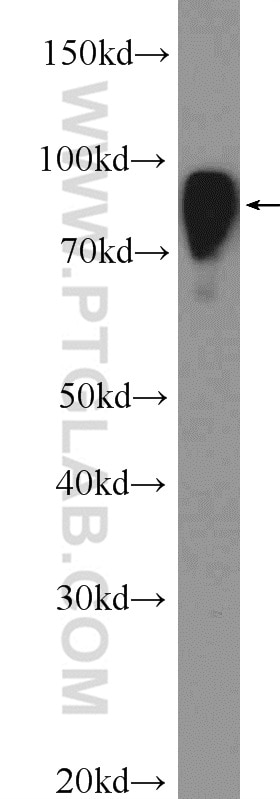
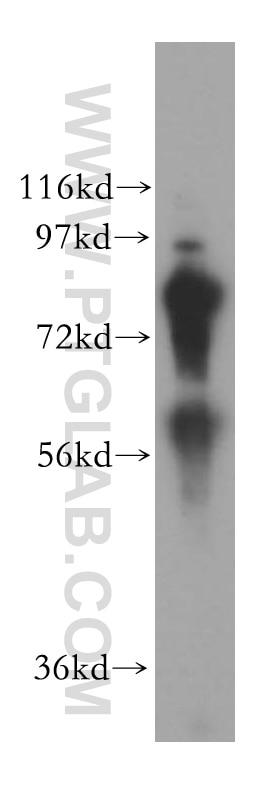
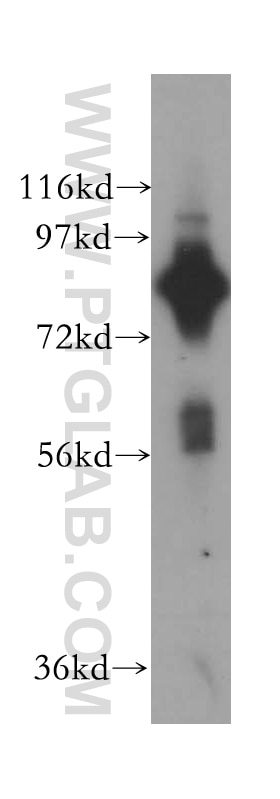
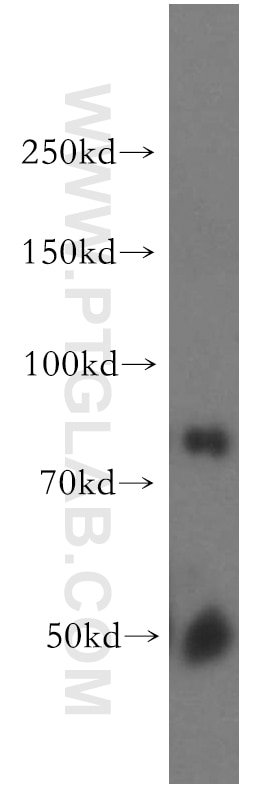
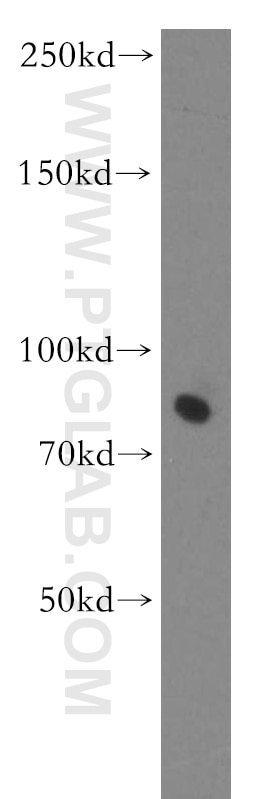
| Positive WB detected in | mouse brain tissue, HEK-293 cells, human pancreas tissue, mouse kidney tissue, mouse pancreas tissue, rat brain tissue |
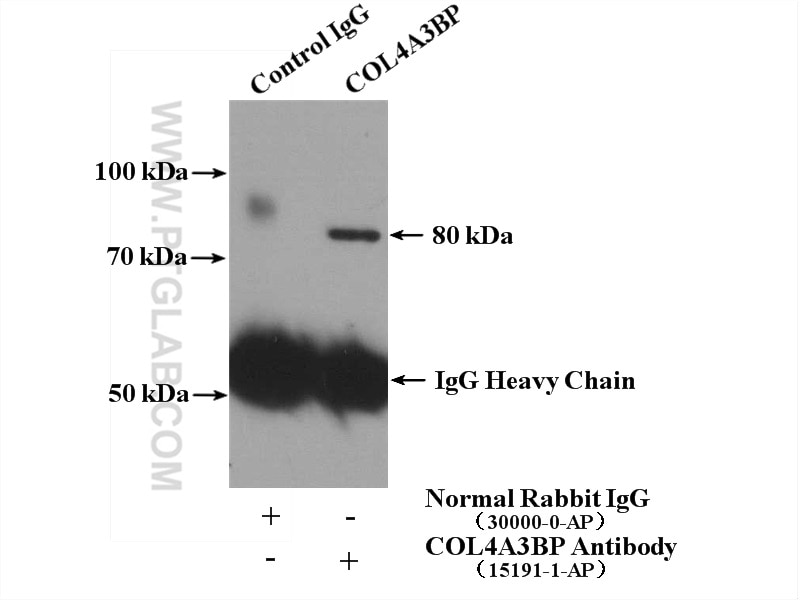
| Positive IP detected in | mouse brain tissue |
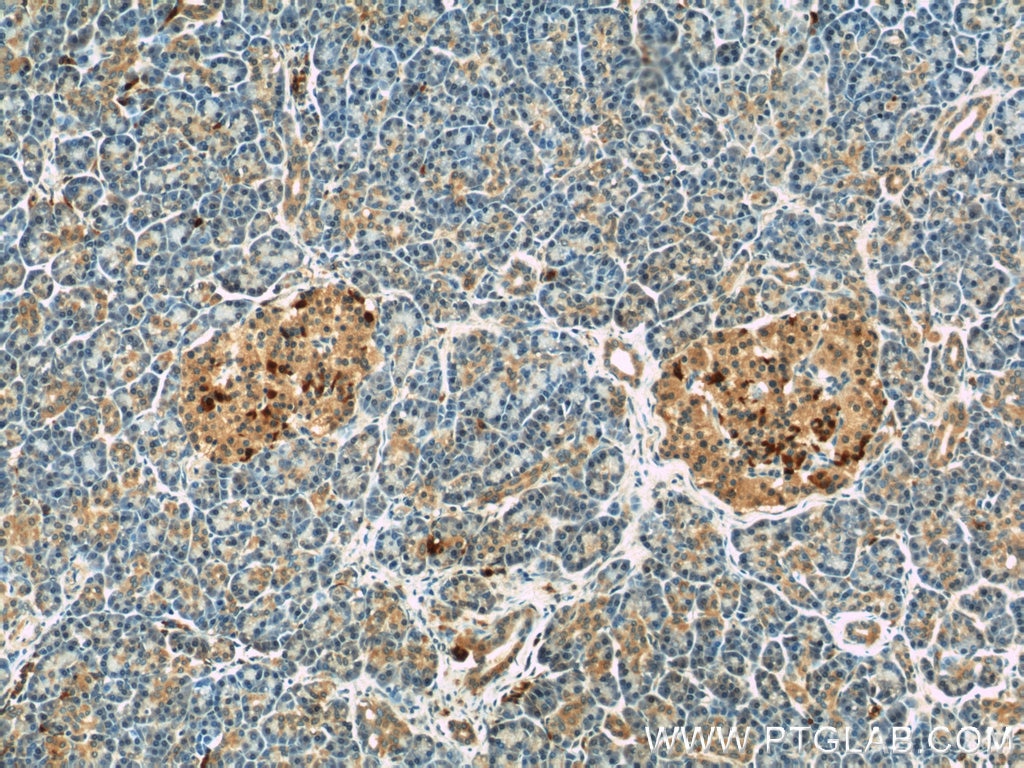
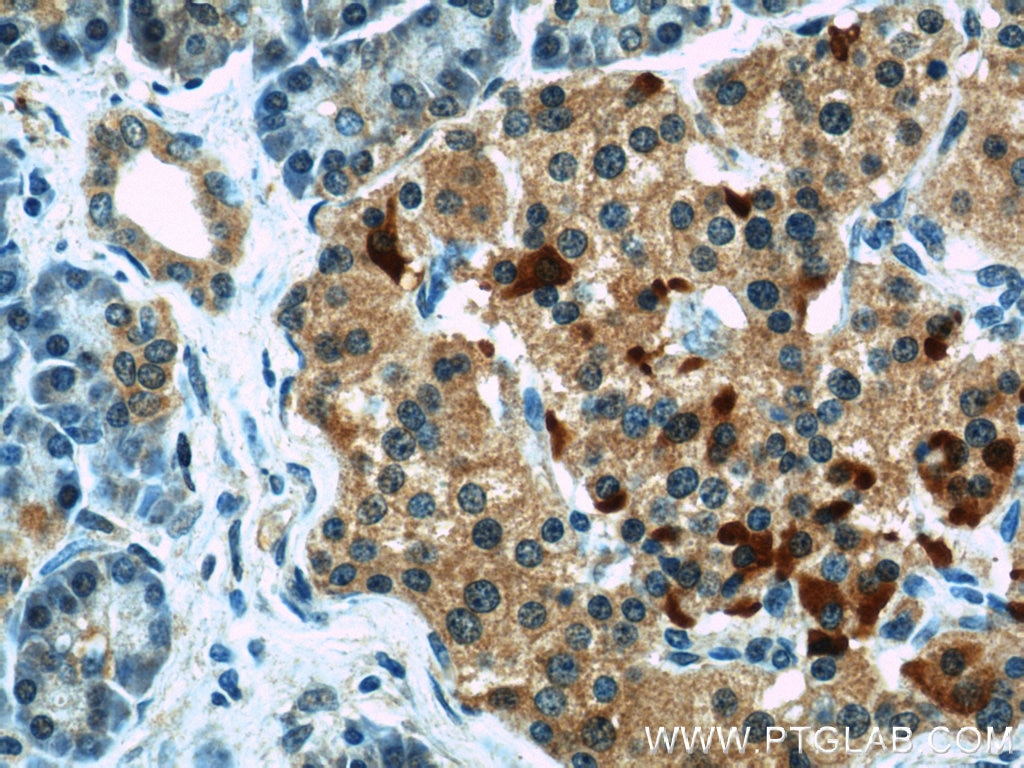
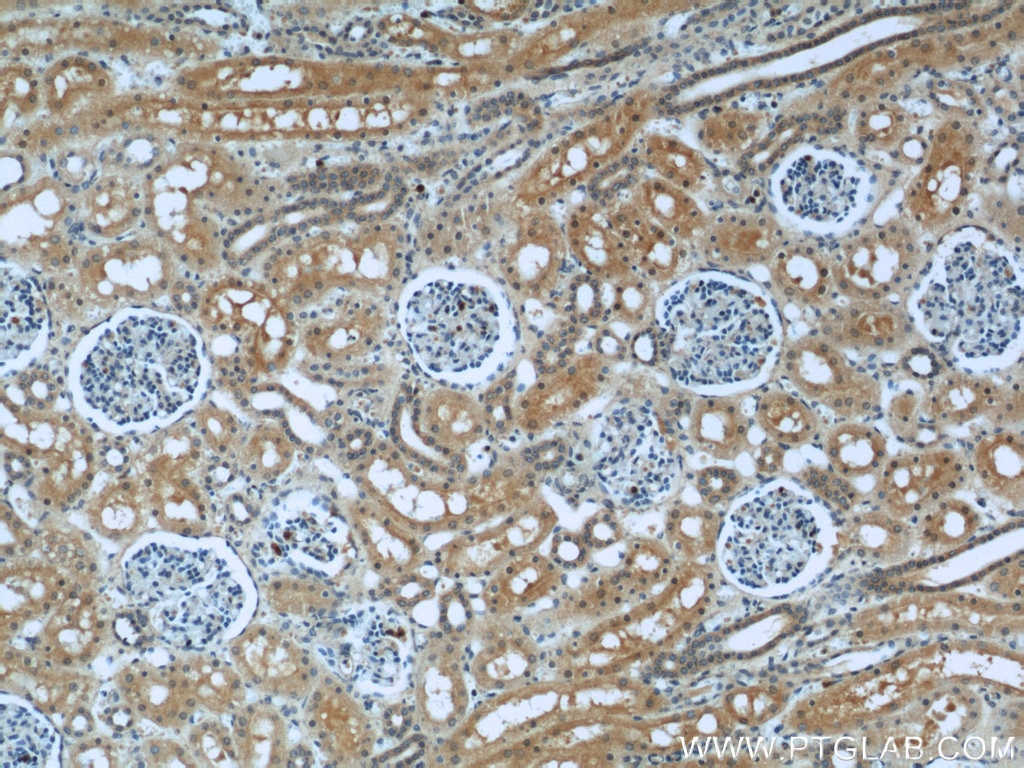
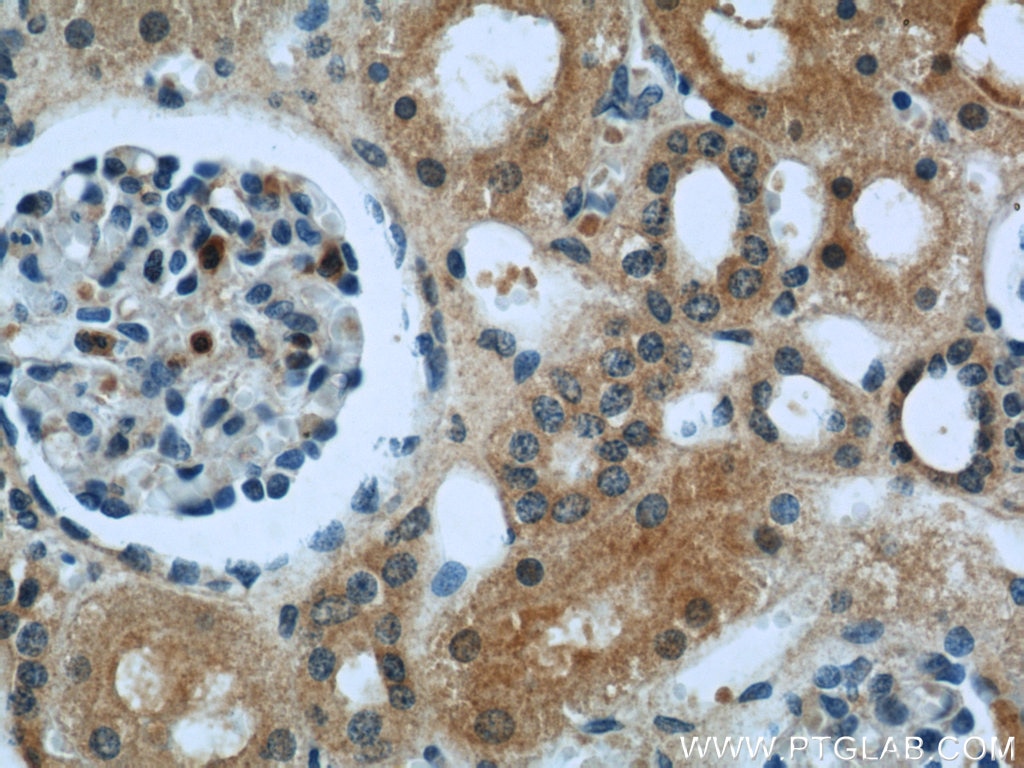
| Positive IHC detected in | human pancreas tissue, human kidney tissue Note: suggested antigen retrieval with TE buffer pH 9.0; (*) Alternatively, antigen retrieval may be performed with citrate buffer pH 6.0 |
Recommended dilution
| Application | Dilution |
|---|---|
| Western Blot (WB) | WB : 1:2000-1:10000 |
| Immunoprecipitation (IP) | IP : 0.5-4.0 ug for 1.0-3.0 mg of total protein lysate |
| Immunohistochemistry (IHC) | IHC : 1:50-1:500 |
| It is recommended that this reagent should be titrated in each testing system to obtain optimal results. | |
| Sample-dependent, Check data in validation data gallery. | |
Product Information
15191-1-AP targets COL4A3BP in WB, IHC, IP, ELISA applications and shows reactivity with human, mouse, rat samples.
| Tested Reactivity | human, mouse, rat |
| Cited Reactivity | human, mouse, rat |
| Host / Isotype | Rabbit / IgG |
| Class | Polyclonal |
| Type | Antibody |
| Immunogen |
CatNo: Ag7277 Product name: Recombinant human COL4A3BP protein Source: e coli.-derived, PGEX-4T Tag: GST Domain: 372-598 aa of BC000102 Sequence: EEMVQNHMTYSLQDVGGDANWQLVVEEGEMKVYRREVEENGIVLDPLKATHAVKGVTGHEVCNYFWNVDVRNDWETTIENFHVVETLADNAIIIYQTHKRVWPASQRDVLYLSVIRKIPALTENDPETWIVCNFSVDHDSAPLNNRCVRAKINVAMICQTLVSPPEGNQEISRDNILCKITYVANVNPGGWAPASVLRAVAKREYPKFLKRFTSYVQEKTAGKPILF Predict reactive species |
| Full Name | collagen, type IV, alpha 3 (Goodpasture antigen) binding protein |
| Calculated Molecular Weight | 71 kDa |
| Observed Molecular Weight | 80-89 kDa |
| GenBank Accession Number | BC000102 |
| Gene Symbol | COL4A3BP |
| Gene ID (NCBI) | 10087 |
| RRID | AB_2082664 |
| Conjugate | Unconjugated |
| Form | Liquid |
| Purification Method | Antigen affinity purification |
| UNIPROT ID | Q9Y5P4 |
| Storage Buffer | PBS with 0.02% sodium azide and 50% glycerol, pH 7.3. |
| Storage Conditions | Store at -20°C. Stable for one year after shipment. Aliquoting is unnecessary for -20oC storage. 20ul sizes contain 0.1% BSA. |
Background Information
COL4A3BP(Collagen type IV alpha-3-binding protein) is also named as CERT, STARD11. CERT extracts ceramide from the ER and carries it to the Golgi apparatus in a non-vesicular manner and that a particularly efficient cycle of CERT movement for trafficking of ceramide may proceed at membrane contact sites between the ER and the Golgi apparatus(PMID:17314061). This protein has 3 isoforms produced by alternative splicing.
Protocols
| Product Specific Protocols | |
|---|---|
| IHC protocol for COL4A3BP antibody 15191-1-AP | Download protocol |
| IP protocol for COL4A3BP antibody 15191-1-AP | Download protocol |
| WB protocol for COL4A3BP antibody 15191-1-AP | Download protocol |
| Standard Protocols | |
|---|---|
| Click here to view our Standard Protocols |
Publications
What published studies show
The COL4A3BP (CERT/STARD11) polyclonal antibody (Cat# 15191-1-AP) has 10 citations spanning journals including Cell Reports, PLoS Biology, Oncogenesis, Journal of Biological Chemistry, eLife, Archives of Biochemistry and Biophysics, Renal Failure, Analyst, Ecotoxicology and Environmental Safety, and Acta Biochimica et Biophysica Sinica. Research fields cover ceramide/lipid transport, oncology (GIST, HCC, prostate cancer), myocardial infarction, diabetic nephropathy, and extracellular vesicle biogenesis.
| Species | Application | Title |
|---|---|---|
Cell Rep Golgi retention and oncogenic KIT signaling via PLCγ2-PKD2-PI4KIIIβ activation in gastrointestinal stromal tumor cells
| ||
PLoS Biol Genome-wide identification of modulators of Chlamydia trachomatis parasitophorous vacuole stability highlights an important role for sphingolipid supply | ||
Ecotoxicol Environ Saf The PPARβ/CERK/C1P signaling pathway is a potential mechanism by which antimony exposure promotes prostate cancer cell proliferation | ||
Oncogenesis Ablation of sphingosine kinase 2 suppresses fatty liver-associated hepatocellular carcinoma via downregulation of ceramide transfer protein | ||
Acta Biochim Biophys Sin (Shanghai) Exogenous hydrogen sulfide inhibits apoptosis by regulating endoplasmic reticulum stress-autophagy axis and improves myocardial reconstruction after acute myocardial infarction. | ||
J Biol Chem StAR-related lipid transfer domain 11 (STARD11)-mediated ceramide transport mediates extracellular vesicle biogenesis. |












