

Tested Applications
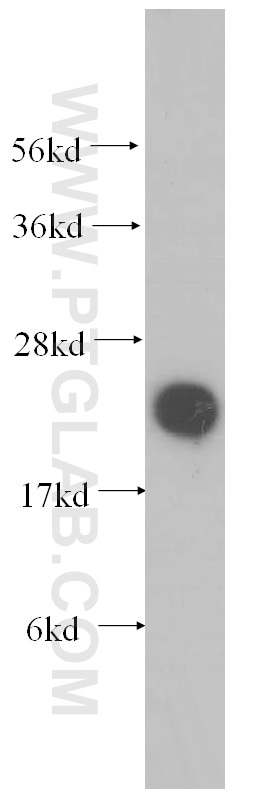
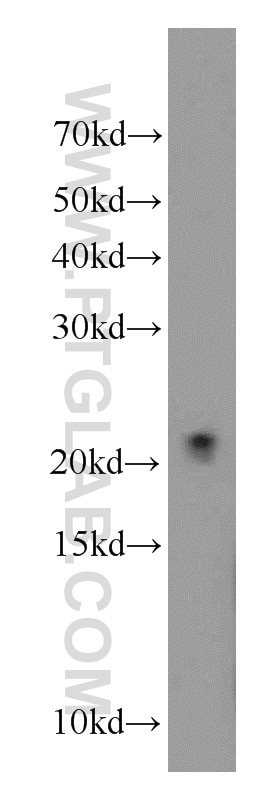
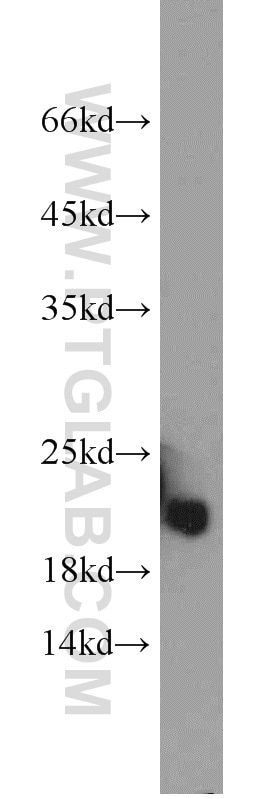
| Positive WB detected in | mouse liver tissue, mouse heart tissue |
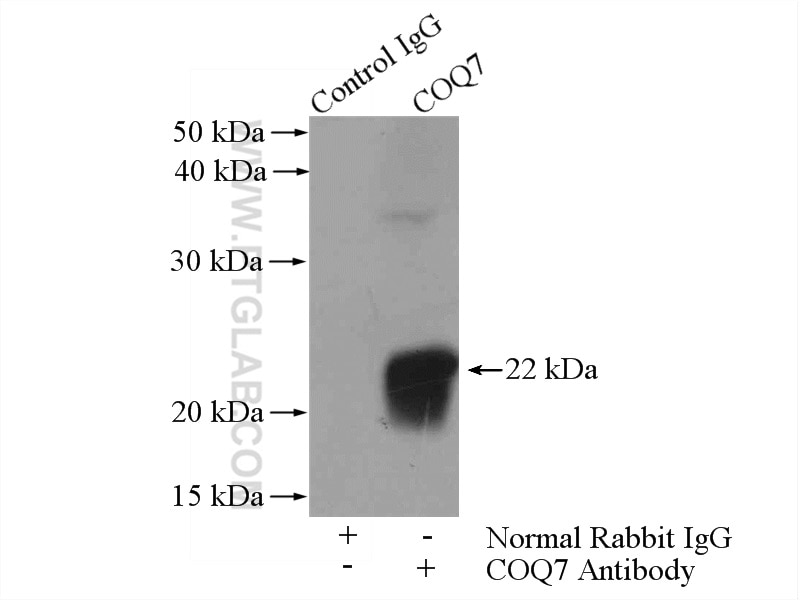
| Positive IP detected in | mouse liver tissue |
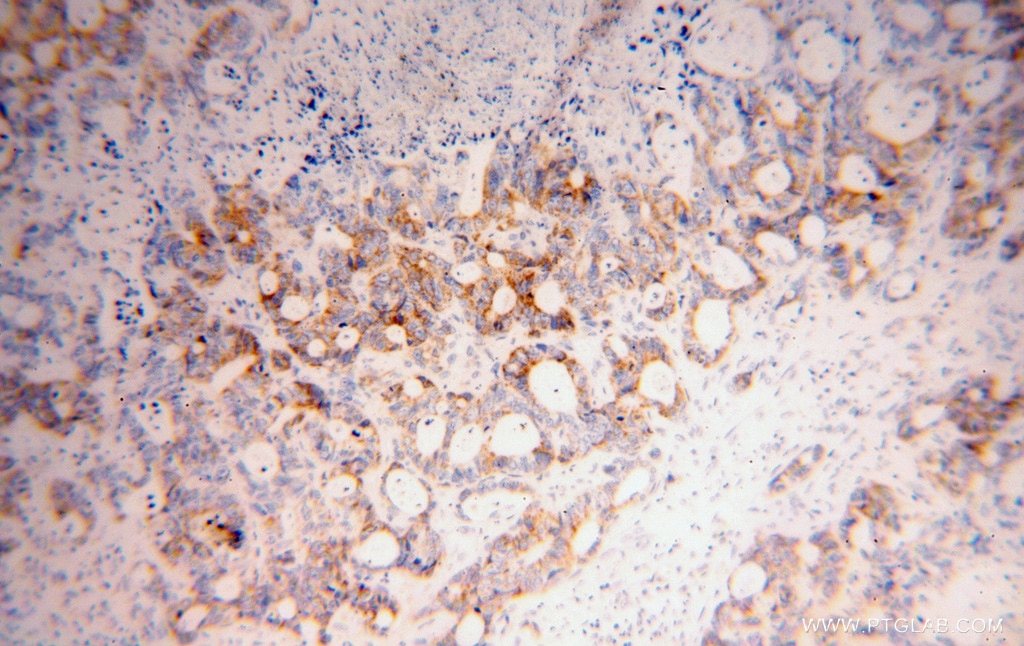
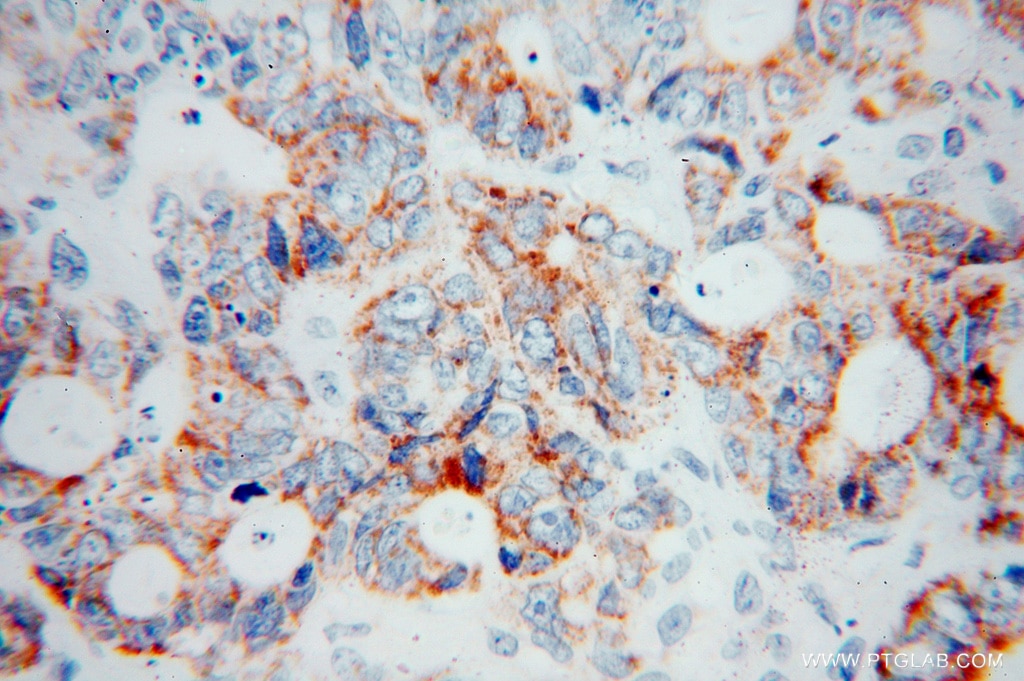
| Positive IHC detected in | human liver cancer tissue Note: suggested antigen retrieval with TE buffer pH 9.0; (*) Alternatively, antigen retrieval may be performed with citrate buffer pH 6.0 |
Recommended dilution
| Application | Dilution |
|---|---|
| Western Blot (WB) | WB : 1:500-1:1000 |
| Immunoprecipitation (IP) | IP : 0.5-4.0 ug for 1.0-3.0 mg of total protein lysate |
| Immunohistochemistry (IHC) | IHC : 1:20-1:200 |
| It is recommended that this reagent should be titrated in each testing system to obtain optimal results. | |
| Sample-dependent, Check data in validation data gallery. | |
Product Information
15083-1-AP targets COQ7 in WB, IHC, IF, IP, ELISA applications and shows reactivity with human, mouse, rat samples.
| Tested Reactivity | human, mouse, rat |
| Cited Reactivity | human, mouse, rat |
| Host / Isotype | Rabbit / IgG |
| Class | Polyclonal |
| Type | Antibody |
| Immunogen |
CatNo: Ag7161 Product name: Recombinant human COQ7 protein Source: e coli.-derived, PGEX-4T Tag: GST Domain: 1-217 aa of BC003185 Sequence: MSCAGAAAAPRLWRLRPGARRSLSAYGRRTSVRFRSSGMTLDNISRAAVDRIIRVDHAGEYGANRIYAGQMAVLGRTSVGPVIQKMWDQEKDHLKKFNELMVTFRVRPTVLMPLWNVLGFALGAGTALLGKEGAMACTVAVEESIAHHYNNQIRTLMEEDPEKYEELLQLIKKFRDEELEHHDIGLDHDAELAPAYAVLKSIIQAGCRVAIYLSERL Predict reactive species |
| Full Name | coenzyme Q7 homolog, ubiquinone (yeast) |
| Calculated Molecular Weight | 24 kDa |
| Observed Molecular Weight | 20~24 kDa |
| GenBank Accession Number | BC003185 |
| Gene Symbol | COQ7 |
| Gene ID (NCBI) | 10229 |
| RRID | AB_2082207 |
| Conjugate | Unconjugated |
| Form | Liquid |
| Purification Method | Antigen affinity purification |
| UNIPROT ID | Q99807 |
| Storage Buffer | PBS with 0.02% sodium azide and 50% glycerol, pH 7.3. |
| Storage Conditions | Store at -20°C. Stable for one year after shipment. Aliquoting is unnecessary for -20oC storage. 20ul sizes contain 0.1% BSA. |
Background Information
COQ7(Ubiquinone biosynthesis protein COQ7 homolog) catalyzes the production of coenzyme Q (CoQ) in mitochondria. The predicted protein contains 179 amino acids, is mostly helical, and contains an alpha-helical membrane insertion. It has a potential N-glycosylation site, a phosphorylation site for protein kinase C and another for casein kinase II, and 3 N-myristoylation sites. This protein has 2 isoforms produced by alternative splicing with MW 20-24 kDa.
Protocols
| Product Specific Protocols | |
|---|---|
| IHC protocol for COQ7 antibody 15083-1-AP | Download protocol |
| IP protocol for COQ7 antibody 15083-1-AP | Download protocol |
| WB protocol for COQ7 antibody 15083-1-AP | Download protocol |
| Standard Protocols | |
|---|---|
| Click here to view our Standard Protocols |
Publications
What published studies show
The COQ7 Polyclonal antibody (Cat# 15083-1-AP) has 31 citations across journals including Nature Metabolism, Nature Cell Biology, Nature Communications, Redox Biology, JCI, Brain, EMBO Molecular Medicine, Cell Reports, and others. Research fields span CoQ10 biosynthesis, mitochondrial disease, lipid metabolism, neurodegenerative and neuromuscular disorders, aging, inflammation, nucleotide synthesis, and cardioprotection.
| Species | Application | Title |
|---|---|---|
Nat Metab Uridine-sensitized screening identifies demethoxy-coenzyme Q and NUDT5 as regulators of nucleotide synthesis | ||
Nat Cell Biol A nuclear role for the respiratory enzyme CLK-1 in regulating mitochondrial stress responses and longevity. | ||
Redox Biol The Q-junction and the inflammatory response are critical pathological and therapeutic factors in CoQ deficiency. | ||
J Clin Invest ADCK4 mutations promote steroid-resistant nephrotic syndrome through CoQ10 biosynthesis disruption.
| ||
Brain Homozygous COQ7 mutation: a new cause of potentially treatable distal hereditary motor neuropathy |
Reviews
What customers say
The single review for this product is highly positive, rated 5 stars. The reviewer used it for Western Blot at a 1:2000 dilution on mouse and human fibroblasts, mouse tissues, and human muscle biopsy samples. They described the antibody as "super clean and works great," indicating strong specificity and reliable performance in their experiments.
The reviews below have been submitted by verified Proteintech customers who received an incentive for providing their feedback.
Ying (Verified Customer) (04-26-2021) | It's super clean and works great.
|







