

Tested Applications
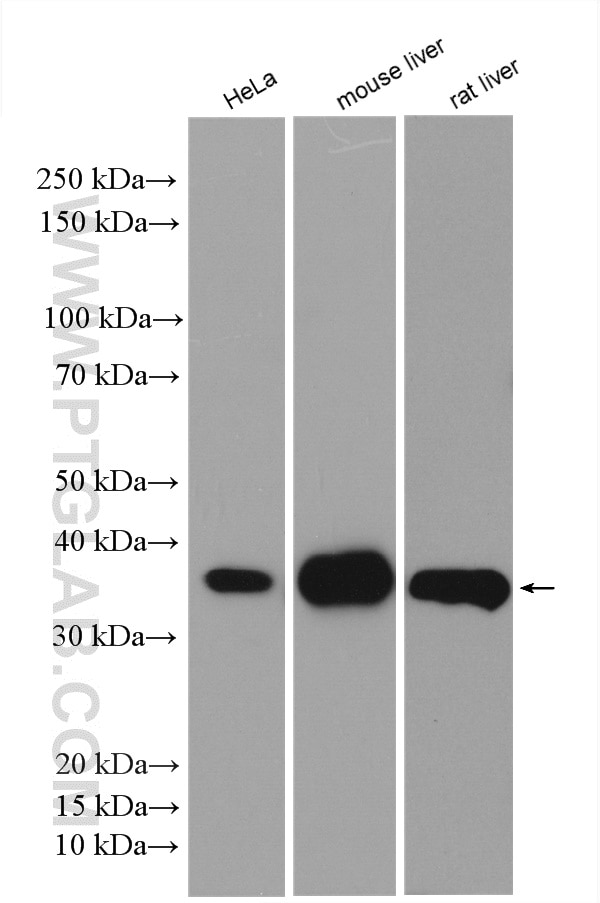
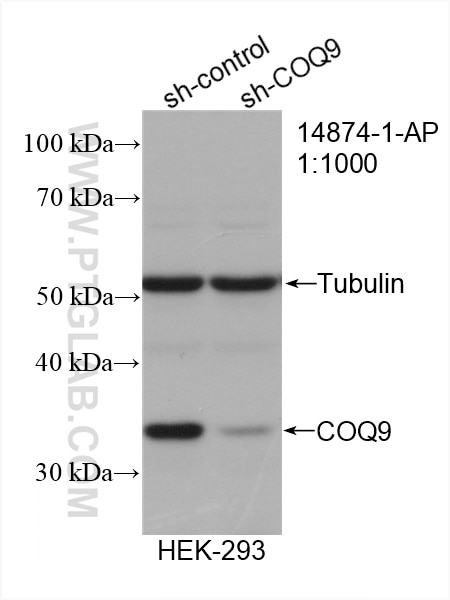
| Positive WB detected in | HeLa cells, HEK-293 cells, mouse liver tissue, rat liver tissue |
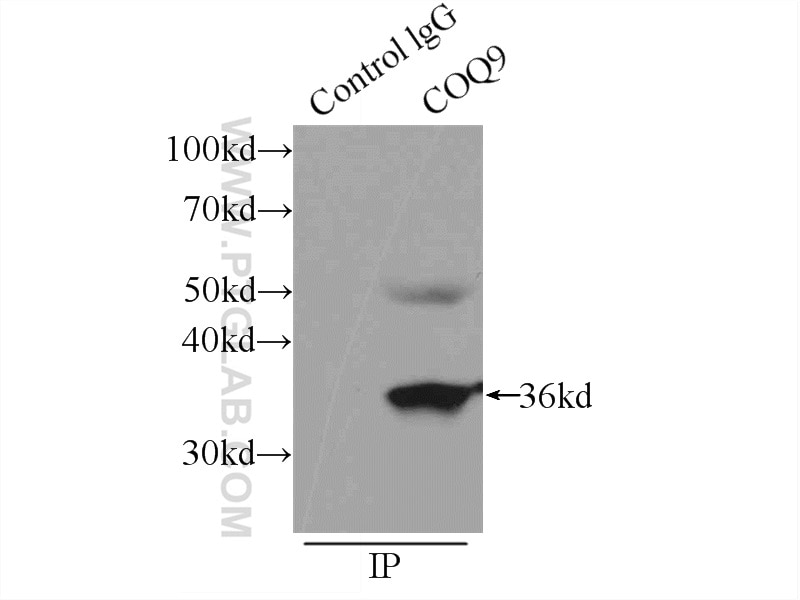
| Positive IP detected in | HeLa cells |
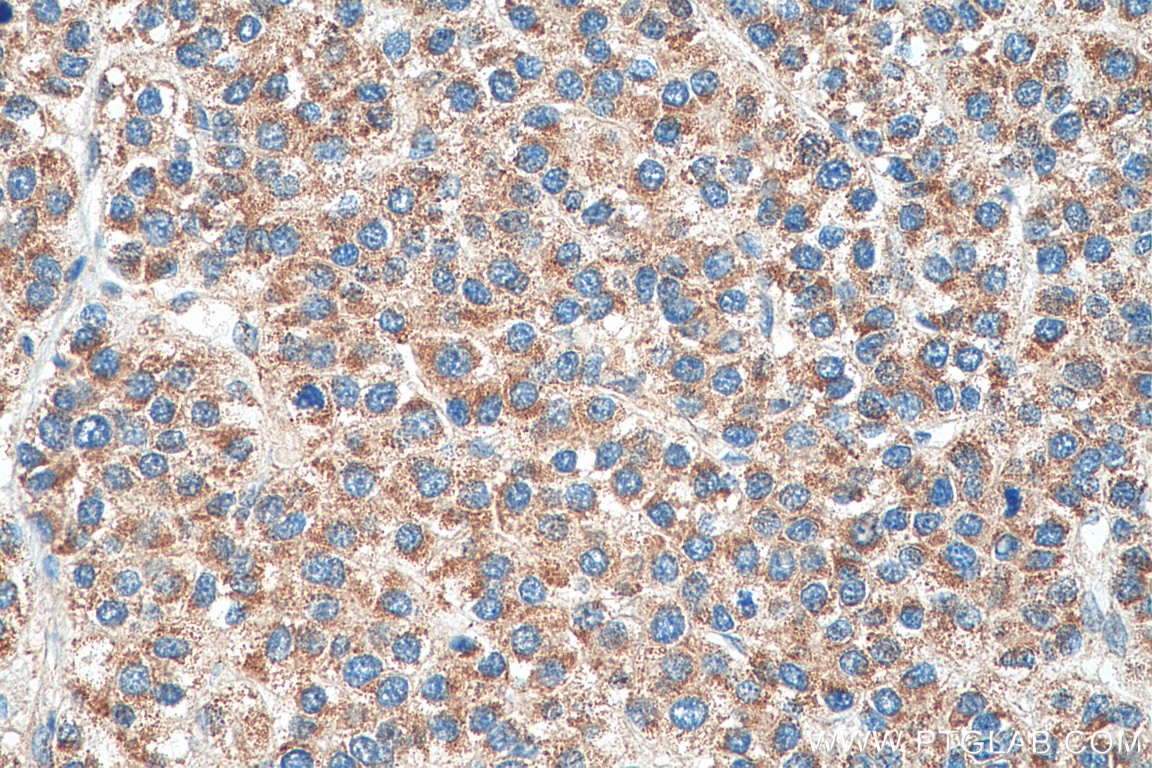
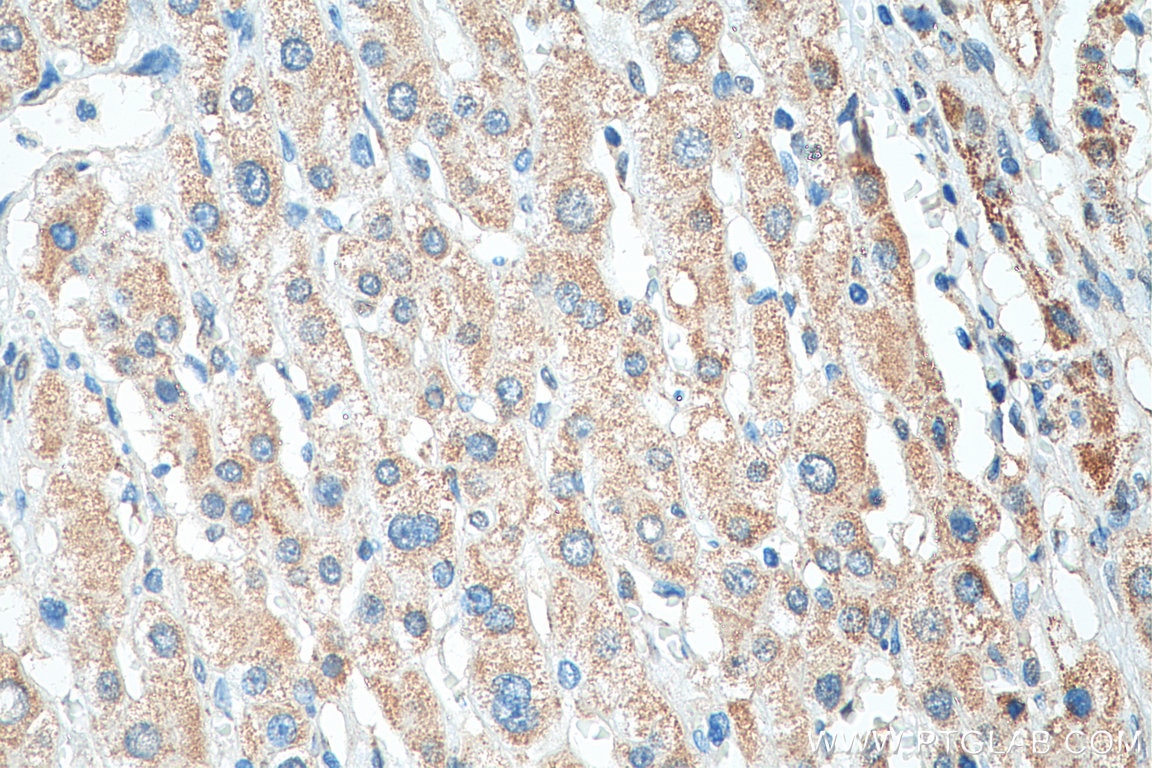
| Positive IHC detected in | human liver cancer tissue Note: suggested antigen retrieval with TE buffer pH 9.0; (*) Alternatively, antigen retrieval may be performed with citrate buffer pH 6.0 |
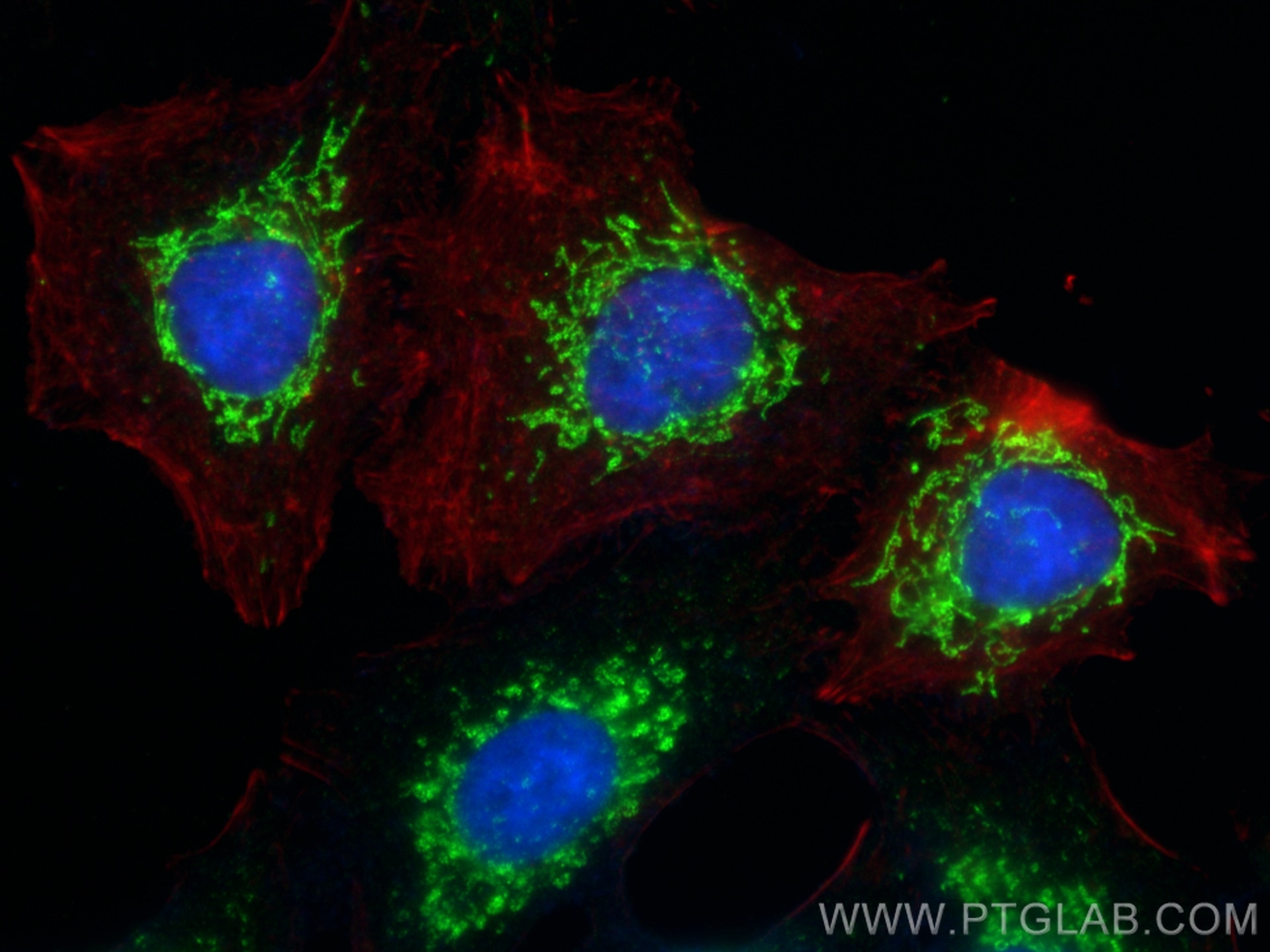
| Positive IF/ICC detected in | A549 cells |
Recommended dilution
| Application | Dilution |
|---|---|
| Western Blot (WB) | WB : 1:500-1:2000 |
| Immunoprecipitation (IP) | IP : 0.5-4.0 ug for 1.0-3.0 mg of total protein lysate |
| Immunohistochemistry (IHC) | IHC : 1:50-1:500 |
| Immunofluorescence (IF)/ICC | IF/ICC : 1:50-1:500 |
| It is recommended that this reagent should be titrated in each testing system to obtain optimal results. | |
| Sample-dependent, Check data in validation data gallery. | |
Product Information
14874-1-AP targets COQ9 in WB, IHC, IF/ICC, IP, ELISA applications and shows reactivity with human, mouse, rat samples.
| Tested Reactivity | human, mouse, rat |
| Cited Reactivity | human, mouse, rat |
| Host / Isotype | Rabbit / IgG |
| Class | Polyclonal |
| Type | Antibody |
| Immunogen |
CatNo: Ag6645 Product name: Recombinant human COQ9 protein Source: e coli.-derived, PGEX-4T Tag: GST Domain: 1-318 aa of BC064946 Sequence: MAAAAVSGALGRAGWRLLQLRCLPVARCRQALVPRAFHASAVGLRSSDEQKQQPPNSFSQQHSETQGAEKPDPESSHSPPRYTDQGGEEEEDYESEEQLQHRILTAALEFVPAHGWTAEAIAEGAQSLGLSSAAASMFGKDGSELILHFVTQCNTRLTRVLEEEQKLVQLGQAEKRKTDQFLRDAVETRLRMLIPYIEHWPRALSILMLPHNIPSSLSLLTSMVDDMWHYAGDQSTDFNWYTRRAMLAAIYNTTELVMMQDSSPDFEDTWRFLENRVNDAMNMGHTAKQVKSTGEALVQGLMGAAVTLKNLTGLNQRR Predict reactive species |
| Full Name | coenzyme Q9 homolog (S. cerevisiae) |
| Calculated Molecular Weight | 36 kDa |
| Observed Molecular Weight | 36 kDa |
| GenBank Accession Number | BC064946 |
| Gene Symbol | COQ9 |
| Gene ID (NCBI) | 57017 |
| RRID | AB_2082218 |
| Conjugate | Unconjugated |
| Form | Liquid |
| Purification Method | Antigen affinity purification |
| UNIPROT ID | O75208 |
| Storage Buffer | PBS with 0.02% sodium azide and 50% glycerol, pH 7.3. |
| Storage Conditions | Store at -20°C. Stable for one year after shipment. Aliquoting is unnecessary for -20oC storage. 20ul sizes contain 0.1% BSA. |
Background Information
COQ9, also named as C16orf49, HSPC326, and PSEC0129, is a 318 amino acid protein, which belongs to the COQ9 family. COQ9 localizes in the Mitochondrion and is involved in the biosynthesis of coenzyme Q COQ9 has abilities to improve left ventricular performance and to reduce myocardial infarct size and cardiomyocyte apoptosis.
Protocols
| Product Specific Protocols | |
|---|---|
| IF protocol for COQ9 antibody 14874-1-AP | Download protocol |
| IHC protocol for COQ9 antibody 14874-1-AP | Download protocol |
| IP protocol for COQ9 antibody 14874-1-AP | Download protocol |
| WB protocol for COQ9 antibody 14874-1-AP | Download protocol |
| Standard Protocols | |
|---|---|
| Click here to view our Standard Protocols |
Publications
What published studies show
The COQ9 Polyclonal antibody (Cat# 14874-1-AP) has 10 citations spanning journals including Cell, Mol Cell, J Clin Invest, J Am Soc Nephrol, J Cell Biol, J Biol Chem, Front Physiol, Mol Genet Metab, J Med Genet, and Food Funct. Research fields cover mitochondrial biology, coenzyme Q biosynthesis, ER–mitochondria membrane contacts, CoQ10 deficiency disorders, nephrotic syndrome, colorectal cancer metabolism, and neuroimaging phenotypes. Applications cited include WB and IF in human, mouse, and rat samples.
| Species | Application | Title |
|---|---|---|
Cell MTFP1 controls mitochondrial fusion to regulate inner membrane quality control and maintain mtDNA levels | ||
Mol Cell BRD4-mediated ER membrane contact creates functionally distinct mitochondrial subtypes. | ||
J Clin Invest COQ6 mutations in human patients produce nephrotic syndrome with sensorineural deafness. | ||
J Am Soc Nephrol ADCK4 Deficiency Destabilizes the Coenzyme Q Complex, Which Is Rescued by 2,4-Dihydroxybenzoic Acid Treatment. | ||
Food Funct Kaempferol exerts anti-colorectal cancer effects through its multi-target mediated glucose metabolism remodeling. | ||
J Cell Biol Coenzyme Q biosynthetic proteins assemble in a substrate-dependent manner into domains at ER-mitochondria contacts. |
Reviews
What customers say
The single available review rates the antibody 5 out of 5 stars. The user reported using it at a 1:2000 dilution for Western Blot on mouse macrophage cell extracts, noting that it works well for westerns of cultured mouse cells. Overall, the feedback is positive, highlighting reliable performance in WB applications with mouse cell samples.
The reviews below have been submitted by verified Proteintech customers who received an incentive for providing their feedback.
Ying (Verified Customer) (03-31-2021) | This antibody works well for our westerns of cultured mouse cell extracts.
|







