

Tested Applications
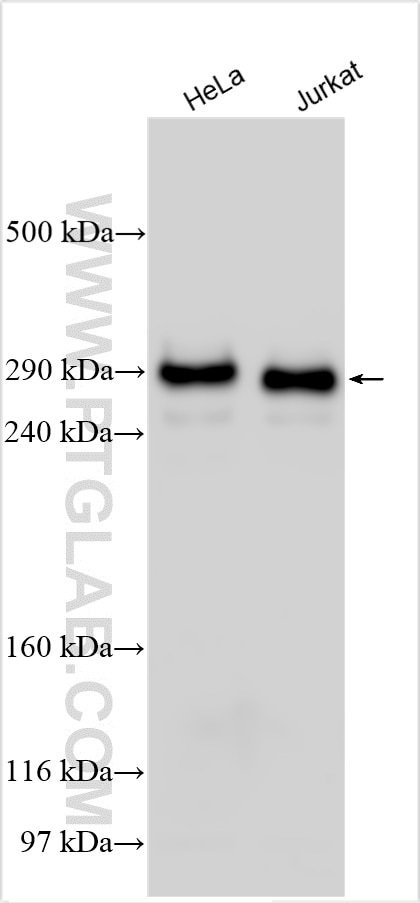
| Positive WB detected in | HeLa cells, Jurkat cells |
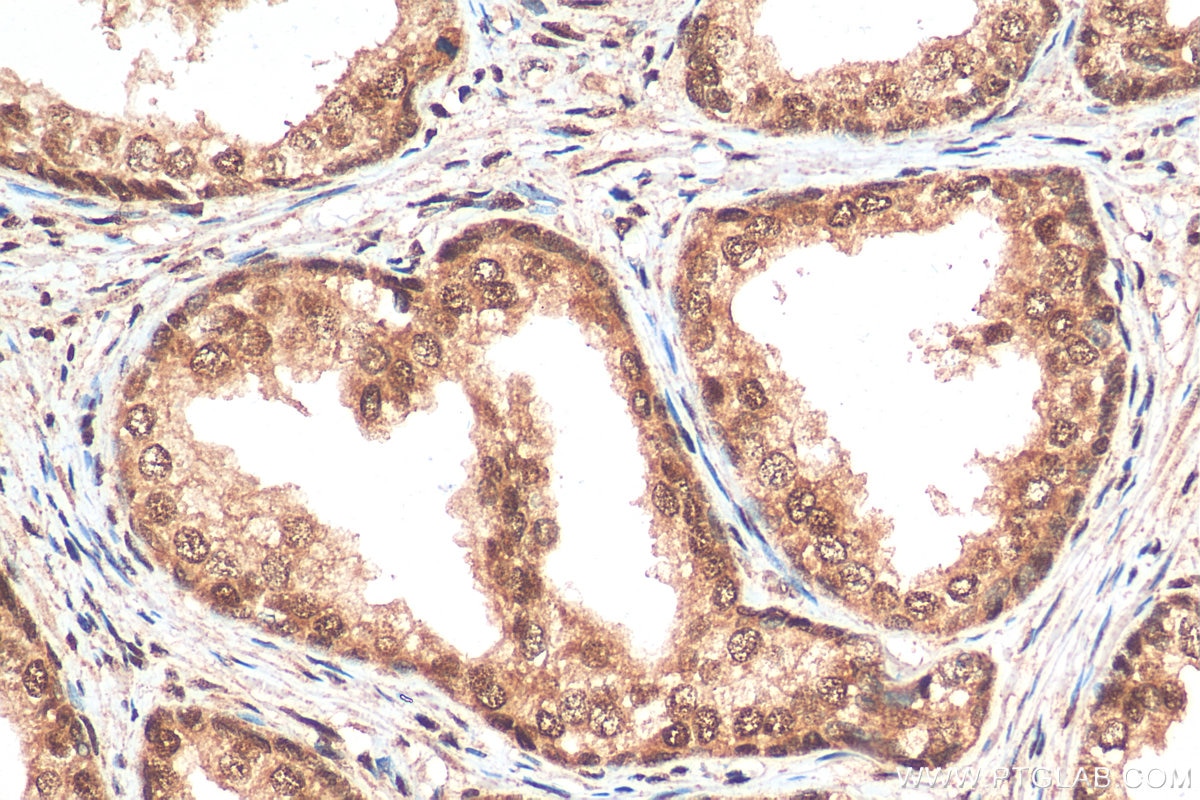
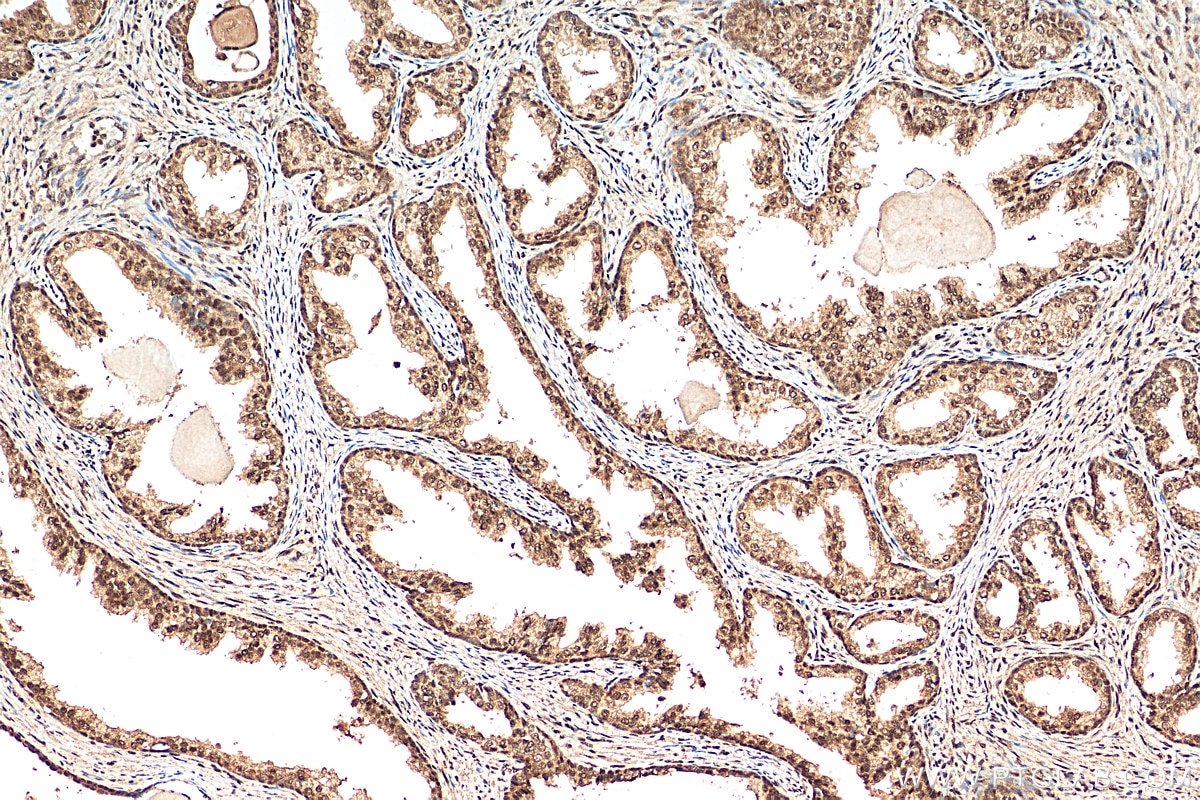
| Positive IHC detected in | human prostate cancer tissue Note: suggested antigen retrieval with TE buffer pH 9.0; (*) Alternatively, antigen retrieval may be performed with citrate buffer pH 6.0 |
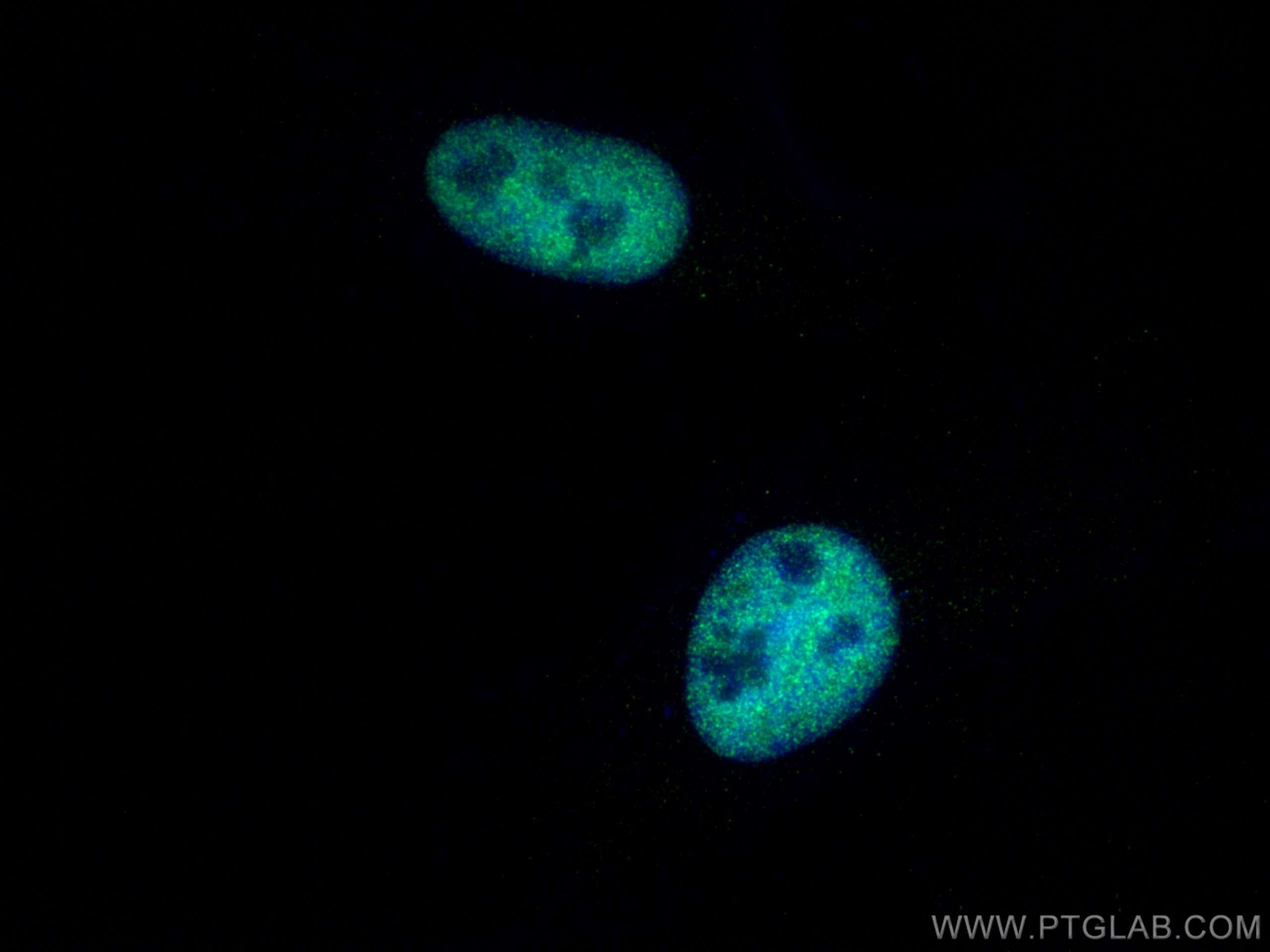
| Positive IF/ICC detected in | HeLa cells |
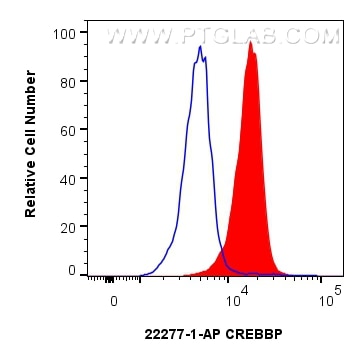
| Positive FC (Intra) detected in | HeLa cells |
Recommended dilution
| Application | Dilution |
|---|---|
| Western Blot (WB) | WB : 1:1000-1:4000 |
| Immunohistochemistry (IHC) | IHC : 1:150-1:600 |
| Immunofluorescence (IF)/ICC | IF/ICC : 1:400-1:1600 |
| Flow Cytometry (FC) (INTRA) | FC (INTRA) : 0.25 ug per 10^6 cells in a 100 µl suspension |
| It is recommended that this reagent should be titrated in each testing system to obtain optimal results. | |
| Sample-dependent, Check data in validation data gallery. | |
Product Information
22277-1-AP targets CREBBP in WB, IHC, IF/ICC, CoIP, ELISA applications and shows reactivity with human samples.
| Tested Reactivity | human |
| Cited Reactivity | human, mouse |
| Host / Isotype | Rabbit / IgG |
| Class | Polyclonal |
| Type | Antibody |
| Immunogen |
Peptide Predict reactive species |
| Full Name | CREB binding protein |
| Calculated Molecular Weight | 265 kDa |
| Observed Molecular Weight | 290 kDa |
| GenBank Accession Number | NM_004380 |
| Gene Symbol | CREBBP |
| Gene ID (NCBI) | 1387 |
| RRID | AB_3085692 |
| Conjugate | Unconjugated |
| Form | Liquid |
| Purification Method | Antigen affinity purification |
| UNIPROT ID | Q92793 |
| Storage Buffer | PBS with 0.02% sodium azide and 50% glycerol, pH 7.3. |
| Storage Conditions | Store at -20°C. Stable for one year after shipment. Aliquoting is unnecessary for -20oC storage. 20ul sizes contain 0.1% BSA. |
Background Information
The acetyltransferase CREB-binding protein (CREBBP; also known as CBP or KAT2A) and E1A-binding protein P300 (EP300; also known as P300 or KAT2B) are two closely related regulators. Both are widely expressed within and outside the hematopoietic system and serve as tumor activators or suppressors depending on the situation. CREBBP/EP300 regulate various key physiological functions, including cell apoptosis, proliferation and differentiation, DNA repair, and somatic cell reprogramming.
Protocols
| Product Specific Protocols | |
|---|---|
| FC protocol for CREBBP antibody 22277-1-AP | Download protocol |
| IF protocol for CREBBP antibody 22277-1-AP | Download protocol |
| IHC protocol for CREBBP antibody 22277-1-AP | Download protocol |
| WB protocol for CREBBP antibody 22277-1-AP | Download protocol |
| Standard Protocols | |
|---|---|
| Click here to view our Standard Protocols |
Publications
What published studies show
CREBBP Polyclonal Antibody (Cat# 22277-1-AP) has 14 citations published in journals including Molecular Cell, Oncogene, Cell Reports, Journal of Medicinal Chemistry, Drug Resistance Updates, Journal of Virology, American Journal of Cancer Research, and others. The research spans oncology (breast, bladder, prostate, colorectal, lung, and pancreatic cancer), neuroscience, cardiology, virology, immunotherapy, and ischemic stroke. Cited applications include WB, IHC, and CoIP in human and mouse samples.
| Species | Application | Title |
|---|---|---|
Drug Resist Updat ITPKB suppresses ER calcium release to promote CXCL9 expression and enhance immunotherapy sensitivity in triple-negative breast cancer. | ||
Oncogene ACSL5 regulated acetyl-CoA to promote bladder cancer cellular senescence via 53BP1 acetylation. | ||
Cell Rep The nBAF complex subunit CREST/SS18L1 regulates hippocampal memory processes via tyrosine 397 and histone acetyltransferase CBP. | ||
Cell Rep Delactylation of the tumor suppressor ARHGDIB drives metastasis and chemoresistance in bladder cancer. | ||
Cell Rep A cancer-specific antigen drives histone acetylation by stabilizing the acetyltransferases. |
Reviews
What customers say
One reviewer (Lili D.) tested this antibody for Western Blot on human cell lines at a 1:1000 dilution (Lot 00048233) and reported that it did not work for them, giving it a low rating of 1 out of 5.
The reviews below have been submitted by verified Proteintech customers who received an incentive for providing their feedback.
Lili (Verified Customer) (01-28-2026) | The antibody didn't really work for me unfortunately.
|






